MEXC Digest #34: Look East for a Change

For the better part of a decade, "what's the Fed doing" has been the only question that mattered. This week, it wasn't even the most interesting one.


New and Noteworthy

SKHYON: Ondo's tokenized version of SK Hynix, mirroring SKHY's economic exposure without holding the actual shares.

MUU: Direxion's new leveraged ETF chasing 2x Micron's (MU) daily return via swaps and options. Leverage cuts both ways.


[Get Early Access]{https://www.mexc.com/announcements/new-listings}


Five Things You Need to Know

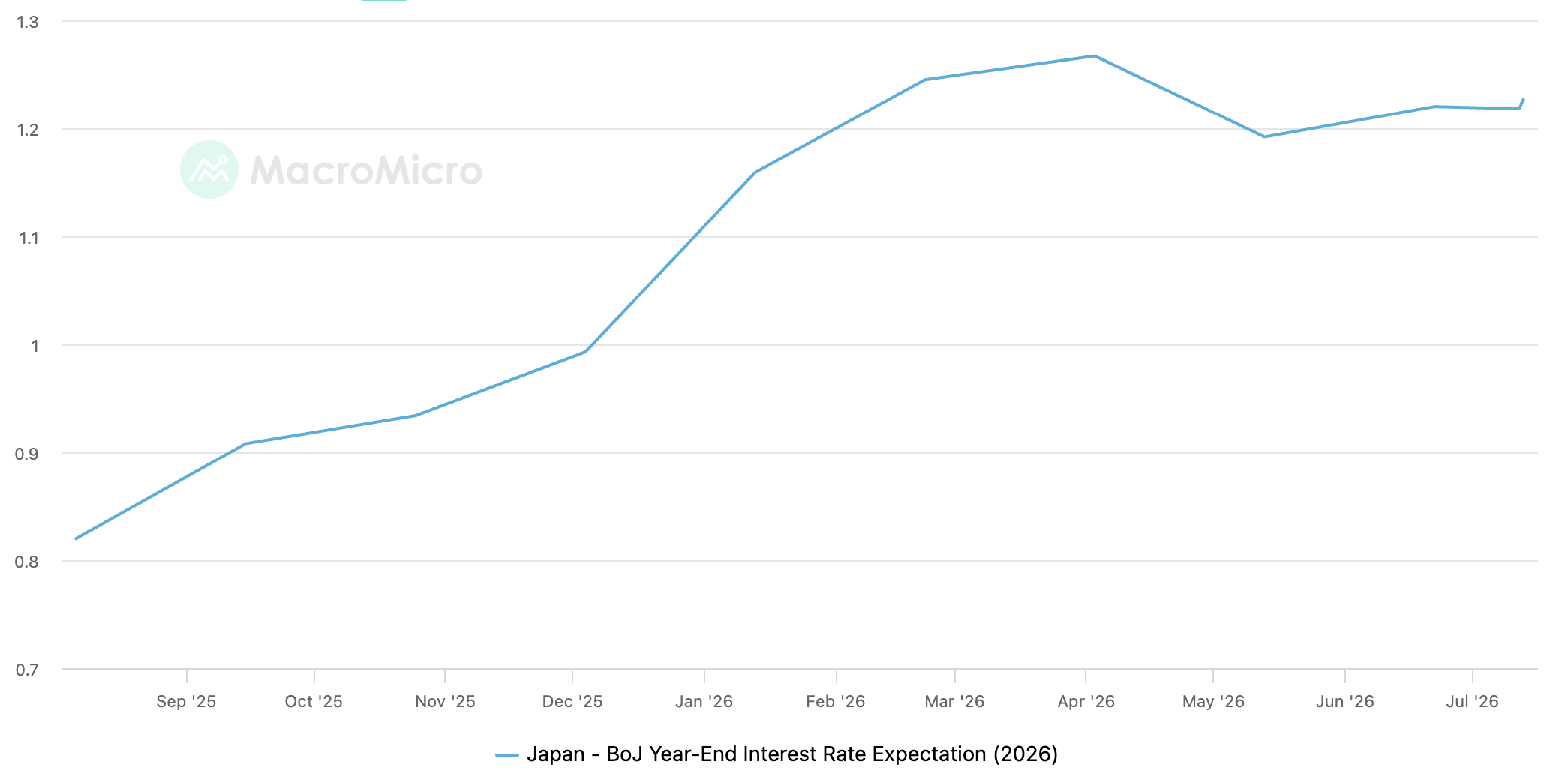
Japan is quietly rewriting the rules. The Bank of Japan looks set to push rates to 1.25% sometime between October and January, with whispers of 1.5–1.75% floating around for next year. For a country that's been synonymous with free money since roughly forever, that's a genuine regime change. Add in Tokyo's push to get domestic pension giants (GPIF and its $1.7 trillion war chest included) to buy more Japanese assets, and you've got the ingredients for something bigger than a headline: the slow unwind of the yen carry trade that's been quietly funding risk assets everywhere. Nobody's ringing an alarm bell yet, but this is the kind of thing that matters more in six months than it does today.


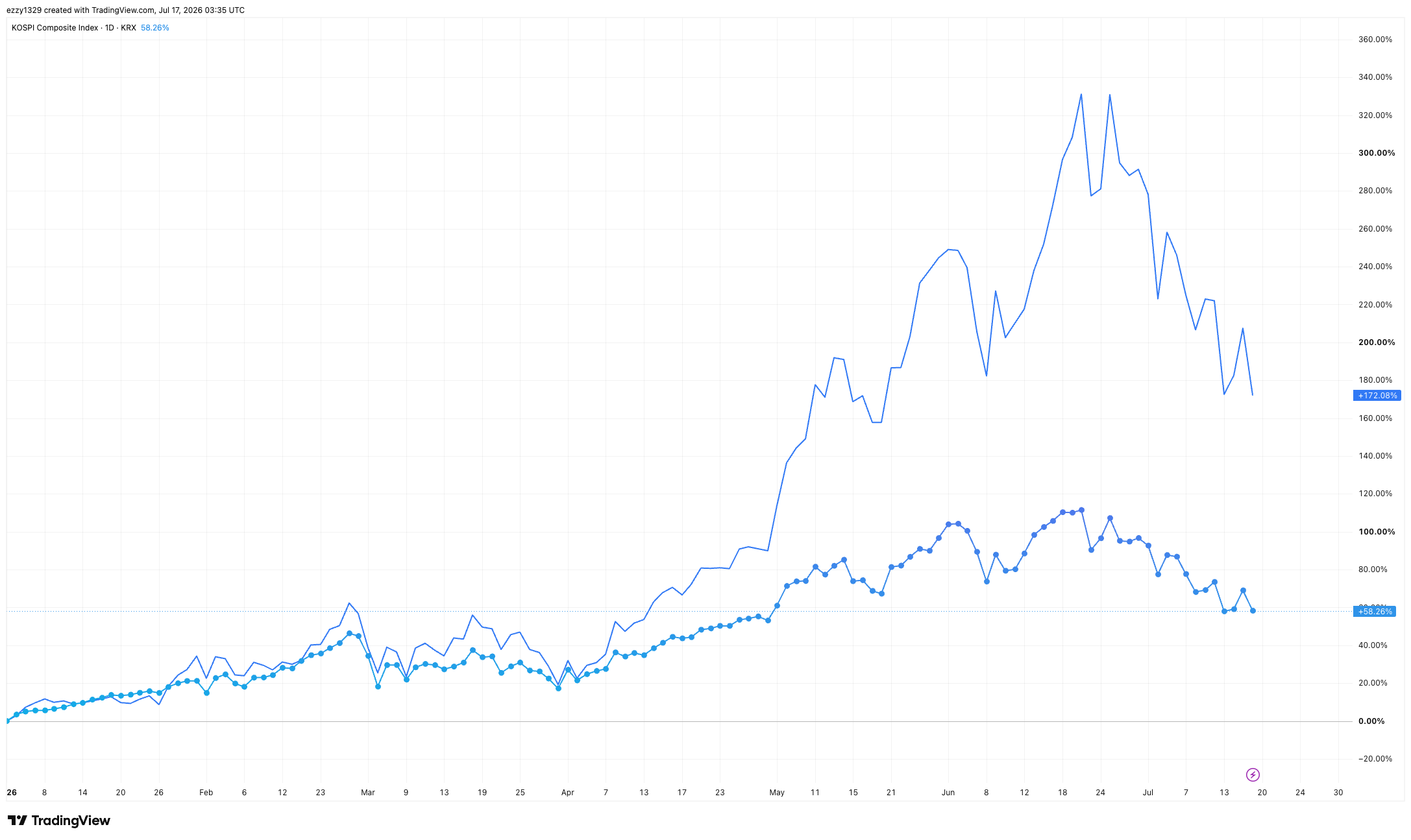
Korea just found out what happens when the music slows. SK Hynix, the poster child of the AI hardware boom, took a hit after the Bank of Korea's first rate hike since 2023, and the KOSPI followed it down. One red day doesn't make a trend, but it's forcing a question the AI trade has mostly avoided: how much of this rally is earnings, and how much is just cheap money looking for a home? Nothing about AI demand has changed. What's changing is how forgiving the market is willing to be about paying for it.


China, meanwhile, is not interested in the debate. While everyone else argues about whether AI valuations have gotten ahead of themselves, Chinese firms are heads-down building the next round. Memory chipmaker ChangXin is reportedly lining up an $8.6 billion IPO, potentially Asia's biggest listing this year, and DeepSeek is said to be raising $1.5 billion at a valuation near $71 billion, with an eye on going public in 2026 or 2027. Translation: China's AI ambitions have graduated from research papers to term sheets.


Bitcoin heard the good news, and then started asking questions. On paper, this should have been a good week for risk assets.

U.S. inflation continued to cool, with June CPI posting its largest monthly decline since April 2020 and producer prices falling by the most since mid-2022. Bitcoin initially responded more enthusiastically than major equity indices, suggesting markets remain highly sensitive to expectations around monetary policy.
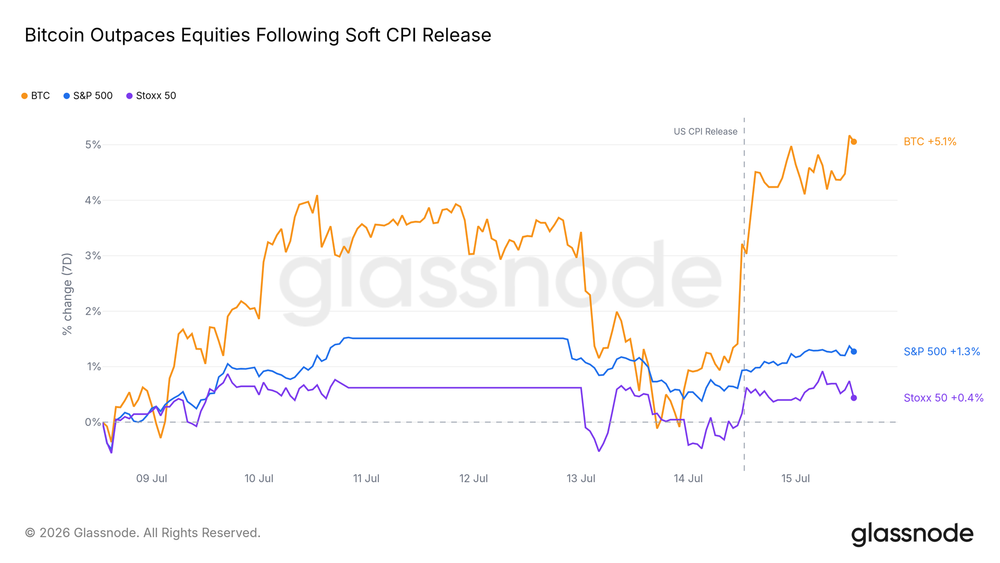


Consider this: rising oil prices revived concerns that inflation may not be fully behind us, while on-chain positioning points to a market that still lacks conviction. Bitcoin continues to trade above its realized price, typically a constructive sign, but remains below the average entry price of many buyers from the past five months, leaving a sizeable pocket of potential selling pressure overhead. Funding rates remain above neutral, while options traders have sharply reduced downside protection, with the put-call ratio falling to its lowest level this year. In other words, traders are becoming more optimistic. Price, however, hasn't fully confirmed the story.


On-chain, for real this time. Not long ago, tokenized securities were treated as one of finance's more ambitious experiments. Gradually, it stopped being a pitch deck. Robinhood's blockchain has seen transaction volumes surge, while the Depository Trust & Clearing Corporation (DTCC), the backbone of U.S. securities settlement, completed its first production tokenized stock and Treasury transactions involving JPMorgan, BlackRock, and Goldman Sachs. Take it as an early sign that some of the world's largest financial institutions are beginning to integrate blockchain into real market infrastructure.


Unpopular Opinion: If Stripe and PayPal Ever Join Forces, It Won't Be About Payments

The market reaction to Stripe's reported $53 billion bid for PayPal—made jointly with private equity firm Advent International, at $60.50 a share—followed the usual script: consolidation, scale, one less competitor to worry about. PayPal's stock jumped double digits anyway. Boards are reportedly working with Goldman Sachs and Evercore to weigh their options, which is corporate-speak for "we're taking this seriously."


We think the interesting story is what the deal says about where money is actually heading. For most of their history, Stripe and PayPal solved the same problem differently, moving money faster and with less friction. Lately, they've been converging on something bigger: who controls the stablecoin stack. Stripe's acquisition of Bridge gave it the plumbing, the rails that let digital dollars move across blockchains as easily as a card swipe moves across Visa's network. It's since gone further, building its own blockchain (Tempo) and joining Mastercard, Visa, and BlackRock on a rival stablecoin project called Open USD.


PayPal took the other route, becoming one of the first major payment companies to issue its own dollar-backed stablecoin, PYUSD, currently the eighth-largest in the category, according to CoinGecko.
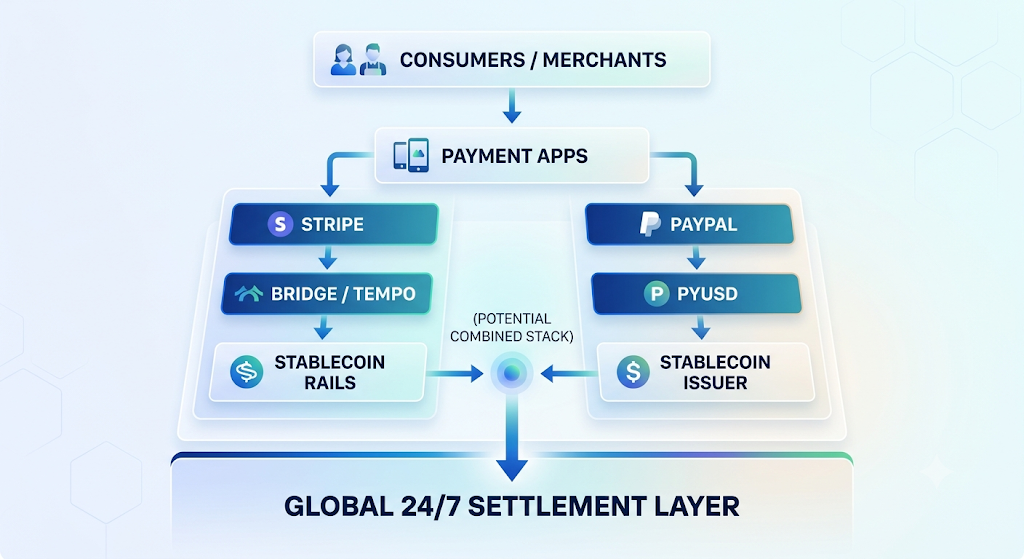


Put those pieces under one roof, and you're not just buying market share. You're assembling a company that can issue digital dollars, move them globally, and settle transactions around the clock, largely outside the traditional banking rails that payments have relied on for decades.


That's why this matters regardless of whether the deal closes. For years, crypto argued stablecoins would become the internet's native payment layer, while traditional finance treated the idea as a curiosity. That debate is over. The one replacing it. Who owns the infrastructure underneath is just getting started, and banks, asset managers, and payment giants are all elbowing for position.


One Surprising Number: Mid-Five Figures
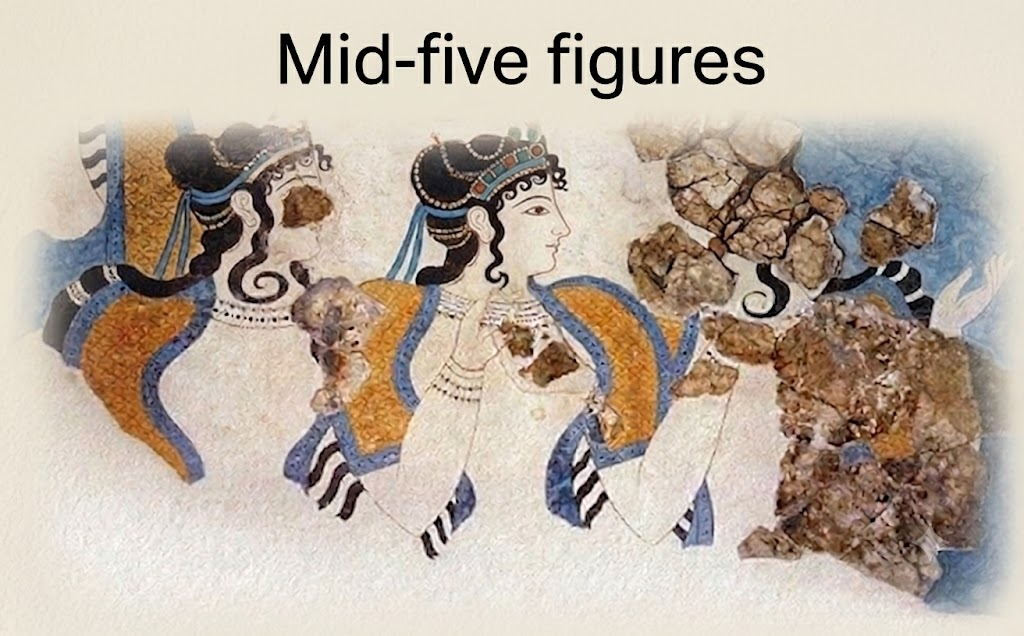

That's roughly what it cost to make Odysseus: The Fall, a full 135-minute film, using AI video generator Kling and Google's Nano Banana for imagery and core frames, with Claude handling the language editing. Call it $50,000, generously.


Christopher Nolan's The Odyssey opened in theaters this week, at a cost of roughly $250 million. Same story, same week, five thousand times the budget.


Before You Go

Football Fiesta: The World Cup comes down to Argentina vs. Spain this Sunday, and MEXC's $1,000,000 Football Fiesta comes down with it. Make match predictions, build your streak, and unlock rewards from first-prediction bonuses to combo perks before the final whistle.


Stay Updated

Follow us on Telegram to be notified whenever a new digest drops.


[Follow MEXC on Telegram]{https://t.me/MEXC_OfficialAnnouncements}


Coin Icon
Sign up now to receive 10,000 USDT in new user rewards

Subscribe to MEXC Digest

Weekly market moves, listings & insights, straight to your inbox.
By subscribing, you agree to receive MEXC newsletters and email updates, and to our Privacy Policy. The content provided is for informational purposes only and does not constitute investment advice.

Join MEXC on Telegram

Get the latest listings, events, and updates in real time, straight from our official Telegram channel.

MEXC Digest #34: Look East for a Change

For the better part of a decade, "what's the Fed doing" has been the only question that mattered. This week, it wasn't even the most interesting one.


New and Noteworthy

SKHYON: Ondo's tokenized version of SK Hynix, mirroring SKHY's economic exposure without holding the actual shares.

MUU: Direxion's new leveraged ETF chasing 2x Micron's (MU) daily return via swaps and options. Leverage cuts both ways.


[Get Early Access]{https://www.mexc.com/announcements/new-listings}


Five Things You Need to Know

Japan is quietly rewriting the rules. The Bank of Japan looks set to push rates to 1.25% sometime between October and January, with whispers of 1.5–1.75% floating around for next year. For a country that's been synonymous with free money since roughly forever, that's a genuine regime change. Add in Tokyo's push to get domestic pension giants (GPIF and its $1.7 trillion war chest included) to buy more Japanese assets, and you've got the ingredients for something bigger than a headline: the slow unwind of the yen carry trade that's been quietly funding risk assets everywhere. Nobody's ringing an alarm bell yet, but this is the kind of thing that matters more in six months than it does today.


Korea just found out what happens when the music slows. SK Hynix, the poster child of the AI hardware boom, took a hit after the Bank of Korea's first rate hike since 2023, and the KOSPI followed it down. One red day doesn't make a trend, but it's forcing a question the AI trade has mostly avoided: how much of this rally is earnings, and how much is just cheap money looking for a home? Nothing about AI demand has changed. What's changing is how forgiving the market is willing to be about paying for it.


China, meanwhile, is not interested in the debate. While everyone else argues about whether AI valuations have gotten ahead of themselves, Chinese firms are heads-down building the next round. Memory chipmaker ChangXin is reportedly lining up an $8.6 billion IPO, potentially Asia's biggest listing this year, and DeepSeek is said to be raising $1.5 billion at a valuation near $71 billion, with an eye on going public in 2026 or 2027. Translation: China's AI ambitions have graduated from research papers to term sheets.


Bitcoin heard the good news, and then started asking questions. On paper, this should have been a good week for risk assets.

U.S. inflation continued to cool, with June CPI posting its largest monthly decline since April 2020 and producer prices falling by the most since mid-2022. Bitcoin initially responded more enthusiastically than major equity indices, suggesting markets remain highly sensitive to expectations around monetary policy.


Consider this: rising oil prices revived concerns that inflation may not be fully behind us, while on-chain positioning points to a market that still lacks conviction. Bitcoin continues to trade above its realized price, typically a constructive sign, but remains below the average entry price of many buyers from the past five months, leaving a sizeable pocket of potential selling pressure overhead. Funding rates remain above neutral, while options traders have sharply reduced downside protection, with the put-call ratio falling to its lowest level this year. In other words, traders are becoming more optimistic. Price, however, hasn't fully confirmed the story.


On-chain, for real this time. Not long ago, tokenized securities were treated as one of finance's more ambitious experiments. Gradually, it stopped being a pitch deck. Robinhood's blockchain has seen transaction volumes surge, while the Depository Trust & Clearing Corporation (DTCC), the backbone of U.S. securities settlement, completed its first production tokenized stock and Treasury transactions involving JPMorgan, BlackRock, and Goldman Sachs. Take it as an early sign that some of the world's largest financial institutions are beginning to integrate blockchain into real market infrastructure.


Unpopular Opinion: If Stripe and PayPal Ever Join Forces, It Won't Be About Payments

The market reaction to Stripe's reported $53 billion bid for PayPal—made jointly with private equity firm Advent International, at $60.50 a share—followed the usual script: consolidation, scale, one less competitor to worry about. PayPal's stock jumped double digits anyway. Boards are reportedly working with Goldman Sachs and Evercore to weigh their options, which is corporate-speak for "we're taking this seriously."


We think the interesting story is what the deal says about where money is actually heading. For most of their history, Stripe and PayPal solved the same problem differently, moving money faster and with less friction. Lately, they've been converging on something bigger: who controls the stablecoin stack. Stripe's acquisition of Bridge gave it the plumbing, the rails that let digital dollars move across blockchains as easily as a card swipe moves across Visa's network. It's since gone further, building its own blockchain (Tempo) and joining Mastercard, Visa, and BlackRock on a rival stablecoin project called Open USD.


PayPal took the other route, becoming one of the first major payment companies to issue its own dollar-backed stablecoin, PYUSD, currently the eighth-largest in the category, according to CoinGecko.


Put those pieces under one roof, and you're not just buying market share. You're assembling a company that can issue digital dollars, move them globally, and settle transactions around the clock, largely outside the traditional banking rails that payments have relied on for decades.


That's why this matters regardless of whether the deal closes. For years, crypto argued stablecoins would become the internet's native payment layer, while traditional finance treated the idea as a curiosity. That debate is over. The one replacing it. Who owns the infrastructure underneath is just getting started, and banks, asset managers, and payment giants are all elbowing for position.


One Surprising Number: Mid-Five Figures


That's roughly what it cost to make Odysseus: The Fall, a full 135-minute film, using AI video generator Kling and Google's Nano Banana for imagery and core frames, with Claude handling the language editing. Call it $50,000, generously.


Christopher Nolan's The Odyssey opened in theaters this week, at a cost of roughly $250 million. Same story, same week, five thousand times the budget.


Before You Go

Football Fiesta: The World Cup comes down to Argentina vs. Spain this Sunday, and MEXC's $1,000,000 Football Fiesta comes down with it. Make match predictions, build your streak, and unlock rewards from first-prediction bonuses to combo perks before the final whistle.


Stay Updated

Follow us on Telegram to be notified whenever a new digest drops.


[Follow MEXC on Telegram]{https://t.me/MEXC_OfficialAnnouncements}



Coin Icon
Sign up now to receive 10,000 USDT in new user rewards

Subscribe to MEXC Digest

Weekly market moves, listings & insights, straight to your inbox.
By subscribing, you agree to receive MEXC newsletters and email updates, and to our Privacy Policy. The content provided is for informational purposes only and does not constitute investment advice.

Join MEXC on Telegram

Get the latest listings, events, and updates in real time, straight from our official Telegram channel.
Stay up-to-date on the latest MEXC listings, delistings, trading events, and product updates. Discover new tokens, Launchpad projects, Earn opportunities, AI-powered tools, and futures trading enhancements on the MEXC platform.Stay up-to-date on the latest MEXC listings, delistings, trading events, and product updates. Discover new tokens, Launchpad projects, Earn opportunities, AI-powered tools, and futures trading enhancements on the MEXC platform.