Overview
Global financial markets, institutional currency desks, and digital asset liquidity providers are intensely focused on Washington as the Federal Open Market Committee convenes for its pivotal policy meeting on September 15 and 16. Structural divergences in recent inflation prints have triggered speculation across certain trading desks regarding whether the central bank might stage a surprise rate hike to curtail lingering price pressures across energy and service components. However, empirical market pricing, interest rate derivatives, and macroeconomic fundamentals tell an entirely different story. Futures markets have assigned an effective zero percent probability to a rate hike, shifting the core analytical debate toward whether the central bank will keep benchmark borrowing costs steady or signal future policy adjustments. Because this meeting includes an updated Summary of Economic Projections and dot plot, the event represents a structural catalyst for re-anchoring forward interest rate expectations across cross-asset markets.
Key Takeaways
Federal funds futures markets have completely priced out any probability of an interest rate hike for the September 2026 meeting. Market pricing derived from interest rate derivatives demonstrates that traders are overwhelmingly positioned for a benchmark rate pause, with remaining capital debating future easing trajectories.
Macroeconomic data highlights that monetary policy resides comfortably within restrictive territory. While August headline inflation registered a transient energy-driven uptick, core consumer price indicators remain disciplined, and labor market metrics confirm that wage pressures are not generating secondary inflation waves.
The central analytical focus of this meeting rests on the revised dot plot rather than the immediate rate decision. Projections regarding the terminal rate for 2026 and 2027 will determine the trajectory of real yields and establish the sovereign benchmark against which global financial assets are discounted.
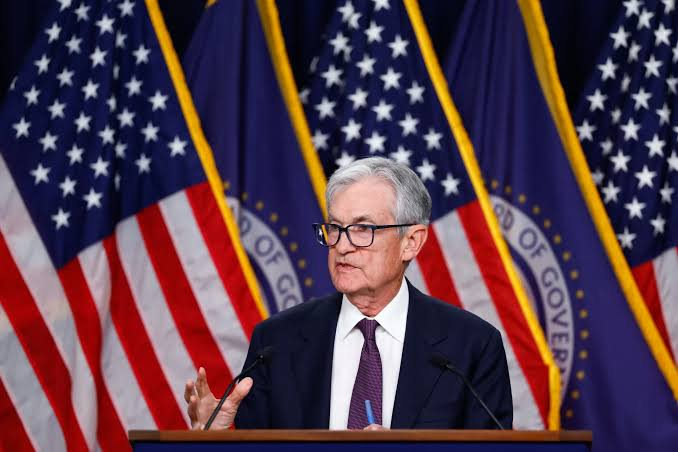
Digital asset market liquidity continues to demonstrate heightened correlation with macroeconomic monetary policy expectations. Bitcoin and broader decentralized asset order books have absorbed macroeconomic volatility with resilience, positioning major trading pairs for decisive volatility expansion once Federal Reserve Chair Jerome Powell concludes his press conference.
Macro Backdrop: The Economic Landscape Confronting the September 2026 FOMC
Inflation Persistence and Labor Market Equilibrium
Following multiple quarters of high nominal interest rates, the
Federal Reserve enters its September meeting balancing both sides of its statutory mandate. According to data published by the
U.S. Bureau of Labor Statistics in its
Consumer Price Index report, headline inflation advanced by 0.4 percent on a monthly basis in August, bringing the twelve-month unadjusted rate to 3.4 percent, largely propelled by volatile energy commodities. Conversely, the core index, which strips out food and energy costs, remained stable at 2.4 percent annualized. This bifurcation confirms that inflationary stickiness is driven by isolated supply adjustments rather than broad-based aggregate demand pressures.
Simultaneously, the domestic labor market has progressed toward organic equilibrium. Nonfarm payroll expansion has modulated toward long-run sustainable averages, while average hourly earnings growth has decelerated to levels historically consistent with the two percent long-term inflation objective. As noted in economic coverage by
Reuters, premier institutional economists view this labor cooling as validation that policy conditions are adequately restrictive, eliminating any empirical justification for additional policy tightening that could inadvertently disrupt banking credit stability.
Federal Reserve Calendar Dynamics and Policy Lag Transmission
Under the official
FOMC meeting schedule, the September gathering is among the quarterly meetings accompanied by formal macroeconomic projections. The transmission mechanism of monetary policy inherently operates with substantial and variable lags, typically requiring twelve to eighteen months to permeate commercial real estate lending, syndicated debt issuance, and consumer credit channels.
Reporting from
Bloomberg emphasizes that monetary policymakers are acutely conscious of cumulative policy restraint. While central bank officials continue to highlight data dependence, reactive policy moves based on single-month commodity fluctuations would risk over-tightening into economic sectors already exhibiting debt service friction.
Market Pricing: Why Interest Rate Futures Virtually Rule Out a September Rate Hike
CME FedWatch Implied Probabilities and Futures Signals
The most precise indicator of institutional consensus is the pricing of 30-day federal funds futures contracts traded on the
CME Group. Quantitative modeling through the
CME FedWatch Tool demonstrates that market participants assign a near-absolute probability to the target range remaining unchanged in September, while the probability of a 25 basis point rate increase is pinned at zero percent.
This absolute pricing structure reflects calculated liquidity provisioning. In historical market cycles, if the central bank intended to execute an unexpected monetary tightening, committee members would systematically recalibrate market expectations through public addresses prior to the pre-meeting blackout period. No voting member signaled support for rate increases heading into the communications blackout.
Treasury Yield Dynamics and Money Market Adjustments
Sovereign bond markets reinforce the thesis that the tightening cycle has concluded. Benchmark interest rate metrics published by the
U.S. Department of the Treasury via its
Treasury Yield Curve data confirm that two-year and ten-year yields are consolidating within familiar historical bounds rather than pricing in upward shifts in the terminal policy rate.
Analysis published by the
Financial Times illustrates that short-dated government paper continues to trade under the assumption that the Federal Reserve has reached its policy peak. Consequently, the core debate among asset managers is duration management and positioning for the eventual timing of rate cuts, rather than hedging against incremental rate hikes.
Cross-Asset Transmission: How Policy Expectations Reshape Crypto Market Liquidity
Dollar Index Dynamics and Bitcoin Valuation Elasticity
Digital assets function as a sensitive proxy for marginal global fiat liquidity. When capital markets price out the threat of an immediate rate hike, downward momentum on the trade-weighted dollar index alleviates valuation pressure on dollar-denominated risk assets. Decentralized digital assets, spearheaded by
Bitcoin, demonstrate an inverse correlation with real Treasury yields, with capital allocations accelerating whenever real yield expansion stalls.
Furthermore, proof-of-stake layer-one foundations, including
Ethereum, maintain a dynamic yield equilibrium relative to risk-free sovereign debt. As expectations of monetary tightening fade, the relative yield spread between native decentralized staking and traditional short-term paper stabilizes, supporting decentralized protocol balance sheets.
Institutional Order Book Depth and Derivatives Positioning
Leading up to the September FOMC announcement, institutional cryptocurrency liquidity providers have adopted disciplined risk parameters. According to digital asset analysis by
CoinDesk, implied volatility profiles in options markets indicate that institutional traders are primarily managing event-risk skew, utilizing protective options combinations to insulate balance sheets against sudden press conference rhetoric.
On competitive international trading platforms such as
MEXC, order book liquidity across spot and perpetual markets exhibits healthy bid depth across major technical support clusters. As tracked by
CoinMarketCap and
CoinGecko, overall trade turnover has experienced standard pre-event compression, confirming that market participants are patiently awaiting regulatory and monetary clarity before deploying fresh risk capital.
Forward Variables and Scenario Pathways
Baseline Scenario: Benchmark Rate Pause with Hawkish Guidance
Under the baseline scenario, the Federal Reserve leaves the federal funds target range unchanged while delivering calibrated communication designed to discourage market participants from pricing in aggressive near-term easing. If the accompanying dot plot preserves a cautious approach toward subsequent meetings without projecting further rate hikes, risk assets are anticipated to process the resolution constructively. Sovereign debt yields would likely moderate, providing a steady liquidity backdrop for cryptocurrency markets to resume trend expansion.
Stress Scenario: Persistent Hawkish Rhetoric and Risk Asset Re-Pricing
The primary risk scenario involves a hawkish pause where the central bank leaves rates unaltered but elevates its medium-term inflation projections in response to recent headline readings. If the dot plot signals that benchmark rates will stay elevated for a prolonged duration into 2027, short-term bond yields could spike, prompting brief liquidations across speculative futures positions. However, because this does not represent an overt monetary contraction through an active rate hike, historical cycle data suggests such corrections tend to be temporary volatility spikes rather than structural bear transitions.
Exclusive View from James Mitchell
When evaluating macro liquidity cycles alongside quantitative market indicators, the prevailing retail debate regarding whether the Federal Reserve will raise rates in September fundamentally misinterprets institutional order flow. The mathematical probability of a rate increase is non-existent within the derivatives space. The critical variable that traders must evaluate is the interaction between central bank balance sheet normalization and structural liquidity absorption in short-term funding markets.
From a technical chart perspective, Bitcoin has spent the recent trading window carving out a compressed consolidation structure beneath major historical pivot levels, with daily Bollinger Bands tightening to levels that typically precede multi-week directional expansions. On-chain distribution metrics reveal that long-term holder supply remains largely inactive, showing no evidence of systematic distribution by foundational balance sheets. This cohort behavior demonstrates that conviction capital views policy delays as temporal noise rather than a degradation of core asset thesis.
Looking ahead, market participants must focus intently on the committee's forward neutral rate projections. Should the Federal Reserve revise its long-run neutral rate projection upward, it implies that the eventual terminal easing floor will be higher than in prior economic expansions. Under such a regime, alpha generation in digital assets will favor protocols with verifiable economic moats and sustainable fee structures over speculative high-beta tokens reliant entirely on excessive leverage.
FAQ
What is the probability of the Federal Reserve raising interest rates in September 2026?
Federal funds futures markets monitored via the CME FedWatch Tool indicate an effective zero percent probability of an interest rate increase at the September 2026 meeting. Market consensus and Federal Reserve communications reflect that the policy rate is already sufficiently restrictive, meaning the central bank does not intend to raise rates further at this juncture.
Why is the market debating between a rate pause and a rate cut for September 2026?
The market debate centers on the dual mandate of the central bank. Proponents of a rate cut argue that real rates have become excessively restrictive as inflation moderates, creating unnecessary risk for commercial credit and labor stability. Conversely, advocates for maintaining a pause argue that persistent service sector inflation and commodity volatility warrant prolonged caution before easing financial conditions.
How did the recent inflation data influence FOMC deliberations?
The August Consumer Price Index report reflected a moderate increase in headline figures driven by volatile energy commodities, bringing the twelve-month rate to 3.4 percent. However, core inflation remained composed at 2.4 percent. Because central bank officials prioritize core trends over transient commodity spikes, the data did not provide sufficient reason to abandon the current policy stance.
How does the Federal Reserve rate decision impact cryptocurrency liquidity?
The Federal Reserve rate decision governs the cost of dollar capital across institutional markets. A confirmed rate pause or accommodative forward guidance reduces the yield advantage of holding cash and short-dated sovereign debt, encouraging capital to flow into liquid alternative assets like Bitcoin. A unexpectedly hawkish message temporarily increases the cost of capital, dampening speculative leverage.
Why is the Summary of Economic Projections dot plot critical at this meeting?
The dot plot visually outlines each FOMC participant's forecast for the federal funds rate over the next several years. The September release is vital because it establishes whether policymakers expect to commence rate cuts in late 2026 or defer adjustments into 2027, serving as a pricing benchmark for global discount rates and risk asset valuations.
How should traders manage risk around FOMC announcement volatility?
Institutional risk management during central bank release days entails reducing leverage multiples before the policy statement, establishing explicit stop-loss levels outside short-term noise boundaries, and avoiding speculative entries during the initial algorithmic reaction. Prudent allocators typically wait for Chair Powell's press conference to conclude and for daily trading volumes to stabilize before initiating structural positions.
Disclaimer
The information, analysis, and views contained in this article are presented exclusively for academic, educational, and informational purposes and do not constitute investment advice, financial planning, legal counsel, tax guidance, or trading recommendations. Cryptocurrency assets, digital derivatives, and financial market instruments involve exceptional volatility and substantial financial risk. Prices may experience rapid fluctuations due to shifts in macroeconomic policy, regulatory developments, and broader liquidity conditions, potentially resulting in the complete loss of invested capital. Past performance, quantitative models, chart setups, and on-chain metrics do not guarantee or predict future market results. Readers must conduct comprehensive independent research and carefully evaluate their personal financial condition and risk tolerance prior to engaging in any capital transactions. The MEXC Crypto Pulse editorial team and its associated corporate entities accept no liability for any direct or indirect financial losses resulting from the use of the material presented herein.
About the Author
James Mitchell specializes in technical analysis, market trends, and trading strategies for both Bitcoin and altcoins. Based in London, he has over 10 years of experience in financial markets. Before joining MEXC Learn, James worked as a senior analyst at a leading European investment firm, where he developed expertise in risk management and quantitative trading. His transition to cryptocurrency markets began in 2017, and he has since become recognized for his data-driven approach. He holds a Master's degree in Financial Economics from the London School of Economics. His analytical approach combines traditional technical analysis with on-chain metrics to provide readers with actionable insights. Areas of expertise encompass technical analysis, market trends and cycles, trading strategies, Bitcoin and altcoin analysis, and risk management.
Research References