


What Exactly is Ethereum and Why Should You Care?
Ethereum (ETH) is a blockchain-based cryptocurrency that powers the Ethereum decentralized platform, focused on enabling programmable smart contracts and decentralized applications (dApps). Launched in July 2015, Ethereum was developed to address the limitations of Bitcoin's scripting language by introducing a more flexible, Turing-complete environment for developers. With its robust smart contract functionality, Ethereum enables users to create, deploy, and interact with decentralized applications, ensuring security, transparency, and automation across a wide range of industries. As the native digital currency of the platform, Ether (ETH) serves as the fuel that drives all operations within the Ethereum ecosystem.
Meet the Team: Who's Building Ethereum and Their Track Record
Ethereum was founded in 2014 by Vitalik Buterin, along with co-founders Gavin Wood, Joseph Lubin, Anthony Di Iorio, Charles Hoskinson, and Mihai Alisie. The team brought together expertise in cryptography, computer science, and finance, with backgrounds ranging from academic research to early involvement in the Bitcoin community. Their vision was to create a platform that could democratize access to decentralized computing and financial services through the innovative application of blockchain technology.
Since its inception, Ethereum has achieved several significant milestones, including raising over $18 million in its 2014 crowdsale, launching its mainnet in July 2015, and introducing major upgrades such as the London Upgrade (EIP-1559) and The Merge, which transitioned the network from Proof of Work to Proof of Stake. Strategic partnerships with leading technology firms and the rapid growth of the DeFi and NFT sectors have positioned Ethereum as a foundational layer for the decentralized economy, with ETH tokens becoming essential digital assets in the blockchain space.
Ethereum Ecosystem: Products That Make It Work
The Ethereum ecosystem consists of several interconnected products that work together to provide a comprehensive solution for developers, enterprises, and end-users. The core offerings include:
1. Ethereum Mainnet: The primary blockchain network of Ethereum, enabling the deployment and execution of smart contracts and dApps. This platform allows users to transfer value, interact with decentralized protocols, and participate in governance, all secured by the Ethereum consensus mechanism. The mainnet supports thousands of projects and millions of users, making it one of the leading solutions in the blockchain industry.
2. Ethereum Virtual Machine (EVM): The EVM is the computation engine that processes smart contracts on the Ethereum network. It allows developers to write decentralized applications in various programming languages, ensuring compatibility and security across the ecosystem. The EVM's flexibility has made it the standard for many other blockchains, fostering interoperability and innovation.
3. Layer 2 Solutions: These are scaling technologies built on top of Ethereum to increase transaction throughput and reduce costs. Solutions like rollups and sidechains enable faster, cheaper transactions while maintaining the security of the mainnet. This approach creates a seamless experience for users and developers, supporting the growth of DeFi, gaming, and enterprise applications.
These components work together to create a comprehensive environment where ETH serves as the utility and governance token that powers all interactions within the network, fostering a self-sustaining and rapidly growing ecosystem. The value of Ether tokens is closely tied to the network's adoption and utility across these various products.
Real Problems Ethereum Solves (With Examples)
The blockchain and finance sectors currently face several critical challenges that Ethereum aims to solve through its innovative approach:
1. Lack of Programmability in Digital Assets: Traditional cryptocurrencies like Bitcoin offer limited scripting capabilities, restricting the development of complex financial products. This limitation hinders innovation and the creation of decentralized applications. Ethereum addresses this by providing a Turing-complete programming environment, enabling the creation of sophisticated smart contracts and dApps that leverage ETH tokens as their native currency.
2. Centralization of Financial Services: Many financial services are controlled by centralized entities, leading to inefficiencies, high costs, and limited access for underserved populations. Ethereum's decentralized infrastructure allows anyone to build and use financial products without intermediaries, reducing costs and increasing accessibility. The ETH token facilitates these peer-to-peer transactions without requiring traditional banking infrastructure.
3. Transparency and Trust Issues: Traditional systems often lack transparency, making it difficult to verify transactions and enforce agreements. Ethereum's public blockchain ensures that all transactions and smart contracts are transparent and immutable, fostering trust among participants. Every Ether transaction is recorded on the blockchain, creating an auditable history of activity.
Ethereum addresses these pain points through its programmable blockchain, enabling decentralized finance (DeFi), transparent governance, and open innovation. By leveraging smart contracts and a global network of validators, Ethereum provides a secure, efficient, and inclusive platform for users worldwide, with the ETH token serving as both a medium of exchange and a store of value within this ecosystem.
Ethereum Tokenomics: Supply, Distribution & Your Benefits
The total issuance of Ethereum (ETH) is approximately 120.7 million ETH as of August 2025. The proportional distribution of ETH is as follows:
- Genesis (Crowdsale + Other): 72,009,990.50 ETH (about 59.8% of total supply)
- Mining Block Rewards: 47,223,894.59 ETH (about 39.2%)
- Mining Uncle Rewards: 3,139,986.13 ETH (about 2.6%)
- Eth2 Staking Rewards: 2,587,248.09 ETH (about 2.1%)
- Burnt Fees: -4,510,890.89 ETH (burned, reducing total supply)
Current total supply: 120,450,228.42 ETH, which aligns closely with other sources reporting 120.7 million ETH.
Distribution Breakdown
| Source | Amount (ETH) | Approx. % of Total Supply |
|---|---|---|
| Genesis (Crowdsale + Other) | 72,009,990.50 | 59.8% |
| Mining Block Rewards | 47,223,894.59 | 39.2% |
| Mining Uncle Rewards | 3,139,986.13 | 2.6% |
| Eth2 Staking Rewards | 2,587,248.09 | 2.1% |
| Burnt Fees | -4,510,890.89 | -3.7% (burned) |
Additional Context
- Ethereum's supply is not capped; it is subject to ongoing issuance and burning mechanisms, especially after the London Upgrade (EIP-1559) and The Merge, which introduced deflationary dynamics by burning transaction fees.
- The current circulating supply is nearly equal to the total supply, as most ETH is liquid and tradable.
- Official website: ethereum.org
- White paper: Ethereum White Paper
If you need more granular breakdowns (e.g., by address or contract), those are available via block explorers like Etherscan.
Within the ecosystem, ETH serves multiple functions:
- Transaction Fees: ETH is used to pay for transaction execution and smart contract deployment on the network.
- Staking: Users can stake ETH tokens to secure the network and earn rewards, especially after the transition to Proof of Stake.
- Governance: ETH holders can participate in protocol upgrades and governance decisions through on-chain voting mechanisms.
Ethereum implements a decentralized governance model, allowing the community to propose and vote on protocol changes. Staking Ether not only secures the network but also provides participants with rewards, with APY rates varying based on network conditions and total staked supply.
Bottom Line: Is Ethereum Worth Your Attention?
Ethereum stands as an innovative and foundational solution in the blockchain sector, addressing key challenges through its programmable smart contracts and robust decentralized ecosystem. With its growing user base, institutional adoption, and continuous technological upgrades, Ethereum demonstrates significant potential to transform how individuals and organizations interact with digital finance and decentralized applications. As the second-largest cryptocurrency by market cap, ETH tokens represent both a technological investment and exposure to the broader growth of blockchain technology.
Ready to start trading Ethereum? Our comprehensive 'Ethereum Trading Complete Guide: From Getting Started to Hands-On Trading' walks you through everything you need to know—from Ethereum fundamentals and wallet setup to advanced trading strategies and risk management techniques. Whether you're new to cryptocurrency or an experienced trader, this step-by-step guide will equip you with knowledge on MEXC's secure platform. Discover how to maximize your Ether potential today!
Description:Crypto Pulse is powered by AI and public sources to bring you the hottest token trends instantly. For expert insights and in-depth analysis, visit MEXC Learn.
The articles shared on this page are sourced from public platforms and are provided for reference only. They do not represent the position or views of MEXC. All rights belong to MEXC. If you believe any content infringes upon the rights of a third party, please contact [email protected] for prompt removal. MEXC does not guarantee the accuracy, completeness, or timeliness of any content and is not responsible for any actions taken based on the information provided. The content does not constitute financial, legal, or other professional advice, nor should it be interpreted as a recommendation or endorsement by MEXC. For expert insights and in-depth analysis, visit MEXC Learn.
Learn More About Ethereum
View More
Will Ethereum Price Recover After a 60% Drop? ETH Price Prediction for June 2026
Ethereum Governance Debate: Why a $1 Billion ETH-Aligned Organization Is Being Discussed
BitMine’s 5.28M ETH Treasury Shows How Ethereum Is Becoming a Corporate Balance Sheet Asset
Latest Updates on Ethereum
View More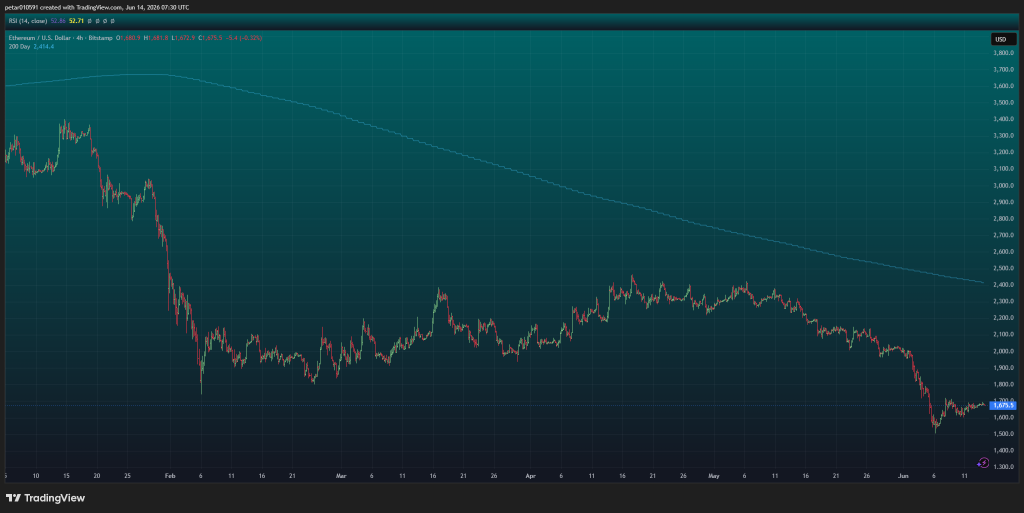
Time to Buy Ethereum? ETH on Track for 2nd Worst First Half – But Analyst Says Yes
XRP price holds above $1 as ETF demand outpaces Bitcoin, ETH for 5 weeks

Ethereum holds just above $1680 after dropping below a key support! What are market analysts watching now?


HOT
Currently trending cryptocurrencies that are gaining significant market attention
Crypto Prices
The cryptocurrencies with the highest trading volume
Newly Added
Recently listed cryptocurrencies that are available for trading