Good earnings are no longer enough to push stocks higher. As investors reassess risk, positioning and deleveraging are starting to matter more than fundamentals. When everyone wants to get a little less aggressive, what gets sold first?
Stay Updated
Follow us on Telegram to be notified whenever a new digest drops.
[Follow MEXC on Telegram]{https://t.me/MEXC_OfficialAnnouncements}
New and Noteworthy
• GRVT Is Here: The world's first licensed perpetual DEX has entered the trading lineup—one to watch as on-chain trading evolves.
• AEON Joins the Market: Trade AEON, a new crypto settlement project building infrastructure for the next wave of adoption.
• More Index Futures, 0 Fees: XLV and BITO are now available, giving you more ways to take positions across healthcare and Bitcoin exposure.
[Get Early Access]{https://www.mexc.com/announcements/new-listings}
Five Things You Need to Know
Markets don't always sell their weakest names first. Often they sell what everyone already owns. Turns out being popular has its downsides, even for stocks. That's the AI trade right now.
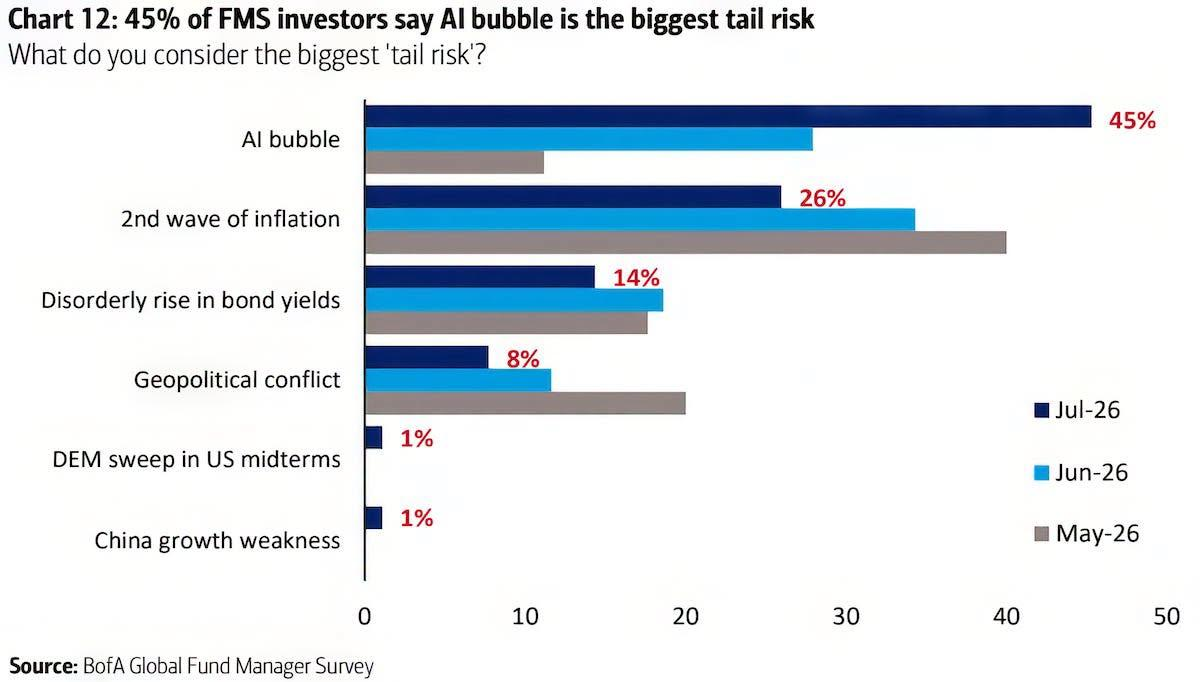
Bank of America's latest Global Fund Manager Survey shows 45% of managers now call an AI bubble the market's biggest tail risk, well ahead of inflation (26%) or disorderly bond yields (14%). Even sharper: a record 82% call long semiconductors the world's most crowded trade. Apparently everyone got the same memo.
This isn't a loss of faith in AI. Most managers still expect hyperscalers to keep spending aggressively, and nearly half don't think AI stocks are in a bubble at all. What's changed is the math: when everyone owns the same winners, good news barely moves anything, while a small stumble can trigger broad selling.
That helps explain why several AI and semiconductor leaders struggled to extend gains despite reporting solid results. Nobody rewrote their model of the future overnight. Hedge funds just entered summer over-leveraged and crowded into the same names, making the popular trade the easy one to sell.
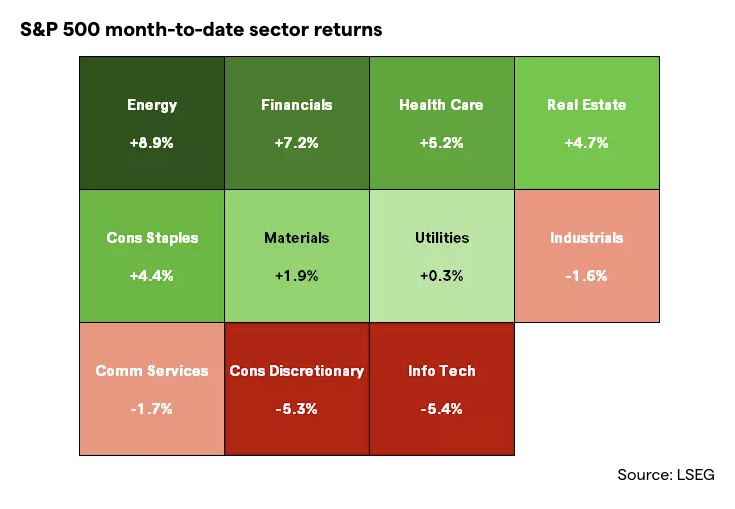
When a crowded trade unwinds, the money flips sides. Since the market peaked in early June, the Magnificent Seven fell more than 8% and semiconductors dropped about 19%. Yet roughly two-thirds of S&P 500 companies gained, eight of the eleven sectors moved higher, and the equal-weight index rose nearly 4%. Healthcare and financials, both largely ignored during the AI rally, led the bounce.
At first glance, that looks as though investors discovered new conviction in the rest of the market. The more likely explanation? Yesterday's winners were funding today's rebound. Market-neutral funds that were long momentum winners and short the laggards got hit on both sides at once: their longs fell, their shorts rose, and managers cut exposure to control the damage. The Morgan Stanley Sector-Neutral Momentum Index reportedly dropped 17.4% in four sessions, and Asia-focused long-short funds fell about 18.6% for July, on pace for their worst month on record.
Once losses reach that scale, selling becomes self-reinforcing. Funds reduce their profitable long positions to lower gross exposure. They also buy back shorts that are rising against them. That combination pushes crowded winners lower while lifting stocks that had previously lagged, even when little has changed in the underlying earnings outlook for either group.
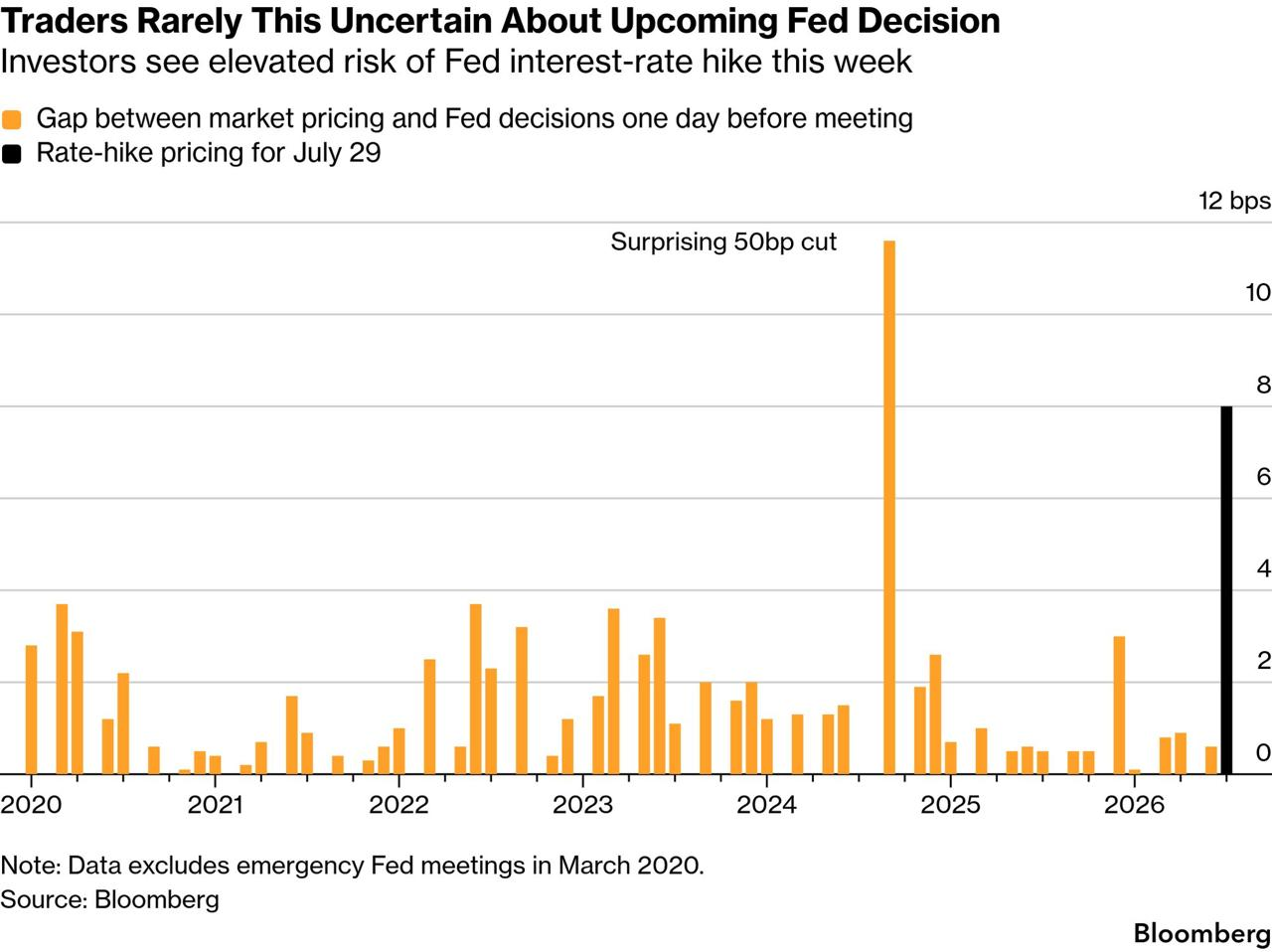
Central banks delivered plenty of decisions this week, just none that gave investors a reason to put risk back on. The Fed held rates at 3.50%–3.75%, the Bank of England held at 3.75%, and the Bank of Japan left its policy rate at 1%. All as expected, but unchanged rates didn't mean unchanged uncertainty.
The complication is new Fed chair Kevin Warsh, whose hawkish reputation sits uneasily against his own argument that stronger productivity could let the economy grow without stoking inflation. July's meeting didn't settle which version is running the Fed: three officials dissented in favor of a hike, the most since 2016, while Warsh gave no clear signal on what comes next. Markets tried pricing the ambiguity themselves—September hike odds briefly hit 77%, the 30-year yield reached a 19-year high near 5.24%, and stocks fell before recovering.
Warsh has also pulled back from forward guidance, leaving markets to read data without a clear reaction function—so every print now carries outsized weight. With no fresh catalyst, funds were left doing what earlier sections describe: cutting leverage, trimming crowded longs, covering shorts.
Bitcoin has quietly clawed back much of this month's losses, climbing toward $65,000 after the Fed held rates steady and AI-spending optimism returned. The asset itself shows no signs of broad capitulation.
The businesses built around it tell a different story. Coinbase posted its third straight quarterly loss, with transaction revenue down 21% year-over-year as spot trading kept slowing. Robinhood, despite record overall revenue, saw crypto revenue fall 38% year-over-year as retail money shifted toward equities, options, and event contracts.
Bitcoin can stay resilient even as the broader crypto ecosystem cools, so long as investors get more selective about where they put capital.
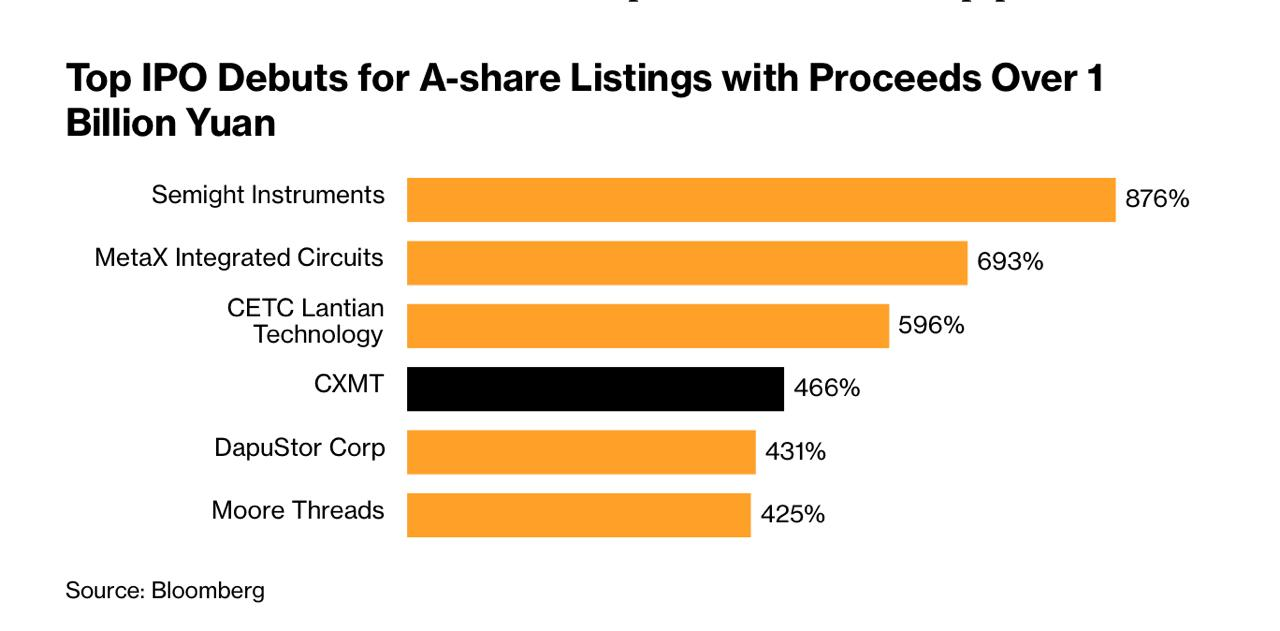
A 466% first-day rally usually signals a successful IPO. For CXMT, it may show the opposite. China's largest memory-chip maker raised up to $9.8 billion pricing shares at RMB 8.66, which closed the first session at RMB 49, valuing the company near $488 billion. IPO investors landed a windfall; CXMT sold those same shares for less than a fifth of their closing price.
Bloomberg Opinion called it a flop. CXMT priced at roughly 2.4 times book value, below where global peers trade, despite being China's only real DRAM challenger. Half the offering went to strategic institutions with long lock-ups, so cheap pricing cushioned them, while CXMT captured only a fraction of demand it could have funded itself. Compare that to SpaceX, which rose 20% on debut after raising $86 billion, capturing most of the demand upfront.
Memory-chip competition runs on scale and capital, and CXMT's proceeds remain modest next to Korean rivals. The first-day surge speaks to how poorly the IPO converted demand into funding.
Unpopular Opinion: The IPO Premium Is Dead
Buying an IPO used to come with a simple bet: the good stuff happens after the ribbon-cutting, and early buyers get a cut of it. That bet hasn't paid off in years.
Apollo dug into Jay Ritter's IPO database and found every U.S. listing cohort since 2019 has trailed the broader market over three years. The damage in 2020, 2021, and 2022 was ugly, market-adjusted returns of roughly -79%, -69%, and -72%. Even 2019, the "normal" year before the pandemic distorted everything, couldn't beat the index.
Blame higher rates if you want, but that's only part of it. Companies now spend years longer in private hands. Venture capital, private equity, and sovereign wealth funds have enough dry powder to build a company into a global giant long before it ever needs a stock ticker. Even the famous first-day "pop," historically around 19%, mostly rewards whoever got the allocation, not whoever bought once the stock actually started trading. Retail investors show up late to a party where the good drinks are already gone.
Some IPOs still work, obviously. Companies with real cash flow, genuine moats, and founders who keep control of the board, SpaceX, or OpenAI if it ever lists, have historically crushed the average debut. Large tech IPOs trail the market by only about two points over three years, and the ones with dual-class shares have actually beaten it. But these are the ones investors remember precisely because they're rare. CXMT's listing added a new wrinkle to the story. A monster first-day rally used to mean the company nailed its debut. Increasingly, it just means bankers priced the deal too cheaply, and billions of dollars quietly walked out the door to whoever got shares at the offering price. A huge pop these days often says more about how few shares were actually available than about how good the business is.
Call it the unpopular truth: going public used to be chapter one. Now it often reads more like the epilogue.
One Surprising Number
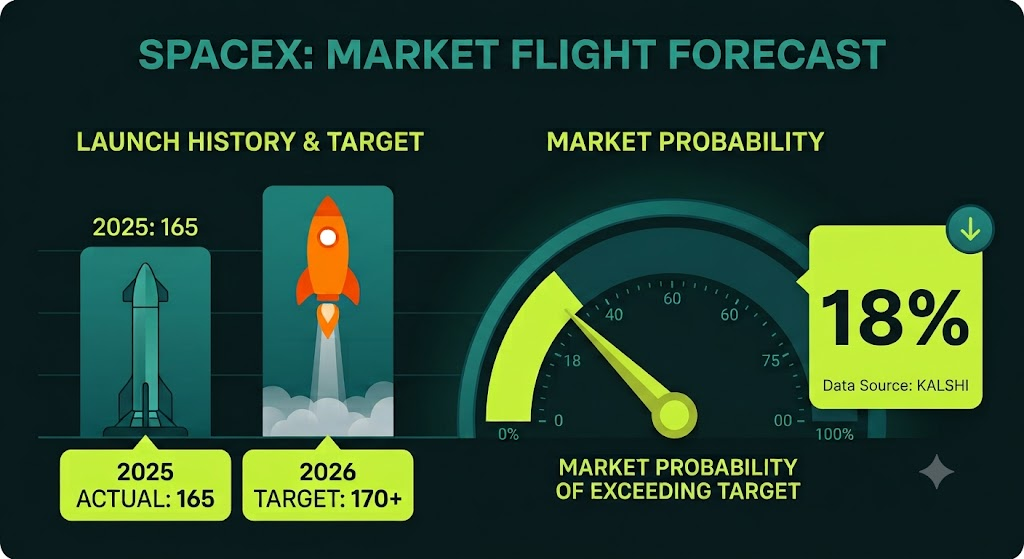
18%
That's what Kalshi traders give SpaceX to top 170 launches this year, roughly what it flew in 2025. As of July 29.
SpaceX keeps making absurd numbers look routine. But the market says most people don't expect a repeat.
Before You Go
The market is turning into a battleground of predictions and strategies. Join the ${Up/Down Crypto Events Carnival Week}[https://www.mexc.com/announcements/article/up-down-crypto-events-carnival-week-17827791537017]$ and compete for a share of $1,000,000 in rewards, or explore AI-powered trading in the MEXC AI Trading Showdown with $500,000 up for grabs.
[More Events]{https://www.mexc.com/announcements/latest-events/ongoing}