Not Your Keys, Not Your $330M: How Zondacrypto Turned User Wealth into a Digital Graveyard
Poland’s largest crypto exchange is sitting on $334 million in Bitcoin, but it cannot touch it. The coins are right there, on-chain, publicly visible at a single address. They just belong to a man who sold the business in 2021 and disappeared in March 2022. The Zondacrypto crisis isn’t a story about a hack. It’s a story about how CEX architecture works when the person holding the keys decides to leave.
Zondacrypto — a centralized exchange serving over a million customers and the dominant player in Polish retail crypto — started showing cracks in December 2025, when withdrawal requests began taking days instead of minutes. Management called it high demand and blamed new security protocols. Nobody panicked yet. By late March 2026, a dedicated whistleblower site had launched just to collect user complaints. Shortly after, blockchain analysts published what the exchange wouldn’t say out loud: Bitcoin holdings across Zondacrypto’s known hot wallets had gone from 55.7 BTC in August 2024 to 0.086 BTC by April 2026. A 99.7% collapse, in plain sight, over nineteen months.
On April 17, CEO Przemysław Kral posted a video meant to end the speculation. He revealed the address of a cold wallet holding 4,503 BTC, roughly $334 million. His argument: the coins are there, the exchange is solvent, stop panicking. The problem landed in the next sentence. Kral admitted Zondacrypto cannot move those coins. The private key was never transferred when the founder, Sylwester Suszek, sold the business in 2021. Suszek disappeared in March 2022 and has not been heard from since. His own family cannot confirm whether he is alive. Poland’s National Prosecutor’s Office has opened a formal criminal investigation.
No one hacked Zondacrypto. There was no exploit, no protocol failure, no black swan market event. Over a million customers are frozen out because one man, who once held the keys, is nowhere to be found. That is not a bug in the system. That is the system.
The Architecture Was the Risk
Every centralized exchange runs on the same foundational assumption: someone you’ve never met will always be there to authorize your withdrawal. That someone has a name, a passport, and a life outside the office. When Mt. Gox collapsed in 2014, it lost 850,000 BTC. When FTX imploded in 2022, $8 billion in customer funds evaporated. BitMarket, another Polish exchange, shut down in 2019 under similar circumstances — its co-founder was later found dead, the funds unrecoverable.
The common thread across all these cases isn’t fraud by definition. It’s dependency: a structural requirement that a human being remain accessible, cooperative, and alive.
Zondacrypto operated for years, processed real volume, and had real customers. It still collapsed under the weight of a single point of failure that nobody had tested until it failed.
The Alternative That Existed the Whole Time
Self-custodial infrastructure operates under a different set of principles than traditional exchanges. When you swap through a non-custodial platform, you aren’t opening a deposit account or surrendering your assets for long-term storage. The process is built on a “transit” model: funds are sent from your private wallet and, once the exchange is executed, are delivered directly back to an address under your full control.
SimpleSwap has operated on this model since 2018. Unlike centralized exchanges (CEX) that maintain pooled customer balances in permanent corporate wallets, SimpleSwap functions as a secure bridge. While the platform facilitates the transaction, it does not provide “accounts” for storing user wealth. This architectural choice eliminates the single greatest risk in crypto: losing access to your savings due to a platform’s internal systems or management failing.
“We often get asked: what happens to user funds if something goes wrong on your side? The answer lies in our architecture: your primary assets are never stored with us. We act as a secure gateway that handles the technical execution, but we never assume long-term custody. There is no corporate vault holding your savings, and no founder who could disappear with your keys, because you remain the ultimate owner of your funds before and after the swap. It’s a model designed to provide exchange liquidity without accumulating custodial risk.”
— Stefan Lauer, Head of Infrastructure, SimpleSwap
The 6,000+ integrations built on SimpleSwap’s infrastructure — including Exodus, Tangem, Cake Wallet, and Tonkeeper — chose this non-custodial approach for exactly this reason. When you’re building a wallet that millions of people trust with real money, the swap layer must be a transparent bridge, not a black box that holds onto customer assets.
How to Check Who Actually Holds Your Keys
The Zondacrypto situation is a useful prompt to verify your own setup. The distinction between custodial and non-custodial is straightforward in principle and often obscured in practice.
If you have a username and password but no seed phrase, the platform holds your keys. Full stop. Your balance is an entry in their database, not an asset on-chain that you control.
A seed phrase doesn’t automatically mean self-custody either — some services generate and store the phrase on your behalf. The test is whether you can import that seed phrase into a different wallet application and access your funds without the original service. If you can’t, custody is still with them.
Proof of reserves, which several exchanges have adopted post-FTX, shows that a platform holds assets equal to its liabilities. It doesn’t show who controls the keys to those assets, or whether those keys are distributed across multiple signatories, or what happens if the primary keyholder becomes unavailable. Proof of reserves is a snapshot of a balance sheet, not a guarantee of access.
Non-custodial swaps go one level further: your funds move directly between addresses you control, and the swap infrastructure never touches the principal. The platform can confirm the route, quote the rate, and execute the exchange, all without your assets passing through an address it owns.
The question underneath the Zondacrypto headlines is one every crypto user can answer right now: Do you know who holds your keys? If the answer involves trusting that someone you’ve never met remains available indefinitely, this situation isn’t an anomaly. It’s a structural preview of what CEX custody looks like when the human dependency fails.


You May Also Like
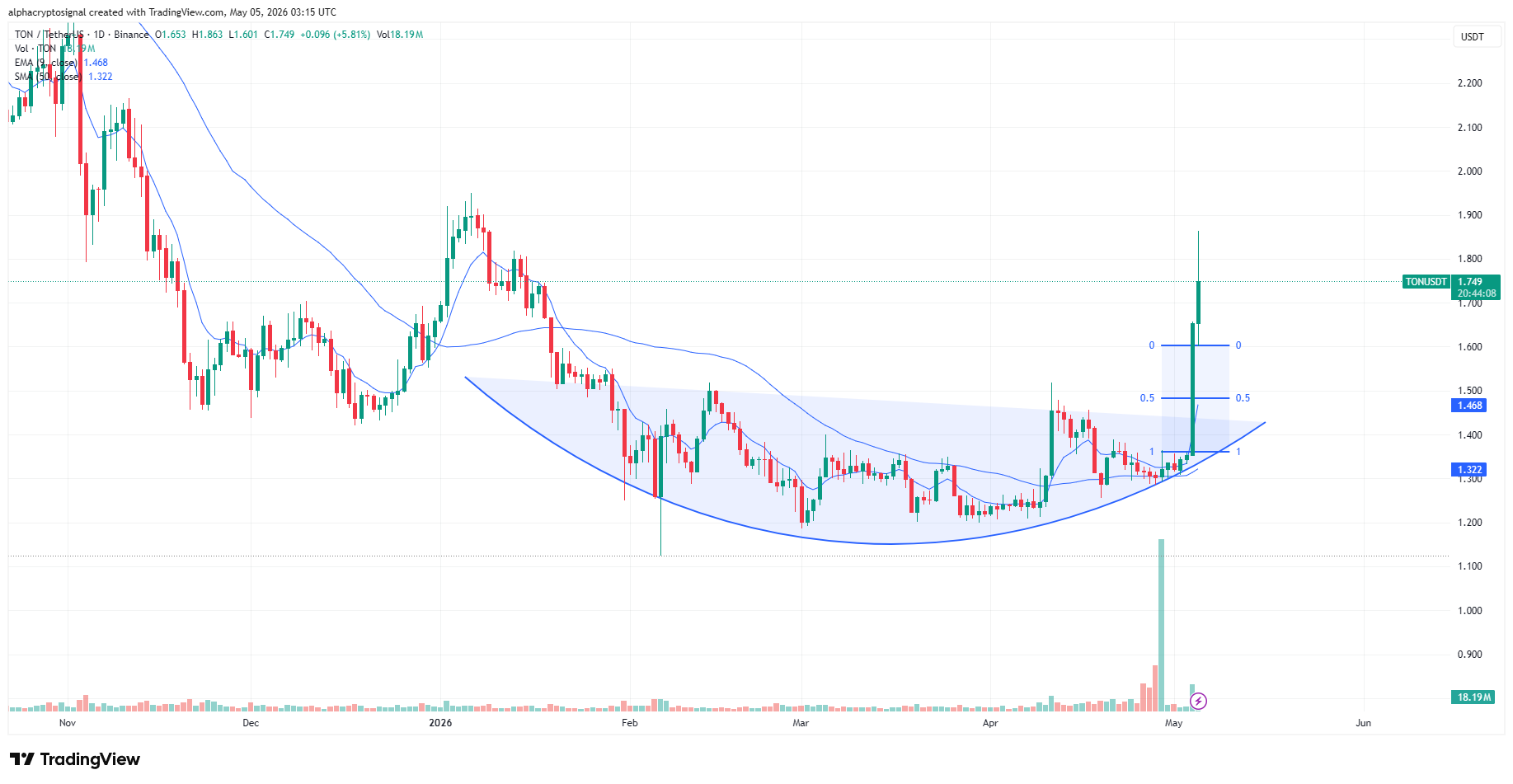
What’s Behind the 25% Toncoin (TON) Price Rally Today?

BTC Price Shaky Near $67K While Oil Surges on Middle East Tensions: What's Next? (April 2 Update)