

Pi Network Block Explorer Shows Strange Spike in Failed Transactions During Upgrade
Pi Network is once again attracting significant attention across the Crypto community after unusual activity was observed on the Pi Block Explorer, showing a temporary spike in failed transactions during recent network activity.
According to community observations shared by @pitown89, Block 26751741 recorded 499 failed transactions, followed by Block 26751742 with 208 failed transactions. Shortly after this spike, the number of failed transactions reportedly returned to zero, creating confusion among some users monitoring network stability.
The sudden change has sparked widespread discussion within the Pi Network community, with many questioning whether the anomaly was a technical issue or part of a deeper system process occurring within the blockchain infrastructure.
Temporary Transaction Failures Raise Questions
In most blockchain ecosystems, a sudden spike in failed transactions can be interpreted in several ways, including network congestion, validation errors, or temporary node synchronization issues.
However, in this case, community analysts suggest a different explanation tied to ongoing protocol level changes within the Pi Network infrastructure.
The key detail that drew attention was the immediate return of failed transaction counts to zero after the spike, indicating that the disruption was short lived and highly localized in timing.
This pattern led many observers to believe that the event may not have been a conventional network error.
Instead, it may have been connected to internal system operations taking place during a protocol upgrade phase.
Connection to Protocol 23 Upgrade Activity
One of the most widely discussed explanations within the community links the transaction anomaly to the ongoing Protocol 23 upgrade.
Pi Network has been gradually implementing infrastructure improvements aimed at enhancing scalability, performance, and ecosystem functionality.
Protocol upgrades in blockchain systems often involve significant backend changes, including data structure updates, node synchronization adjustments, and validation rule modifications.
During such transitions, temporary disruptions can occur as nodes adapt to new operational requirements.
According to the community explanation, nodes may have been reprocessing historical data, converting it into a new format, and writing it back into the updated system structure.
This process is often compared to renovating a house while still living inside it, where essential functions continue but with temporary limitations during the upgrade.
Why Failed Transactions May Appear During Upgrades
In blockchain networks, nodes are responsible for validating and processing transactions in real time.
When a major protocol upgrade is underway, these nodes may need to pause or limit processing activity while synchronization and data conversion tasks are performed.
During this period, incoming transactions may be temporarily rejected or delayed to ensure consistency and prevent data corruption.
This can result in a visible spike in failed transactions on block explorers, even though the underlying issue is not a permanent system failure.
Instead, it reflects protective mechanisms designed to maintain network integrity during transitions.
If the Pi Network upgrade was actively modifying node behavior at the time, this could explain why transactions were temporarily marked as failed before the system stabilized again.
Community Interpretation and Technical Debate
The Pi Network community has responded with mixed interpretations of the event.
Some users initially expressed concern, interpreting the spike in failed transactions as a potential sign of instability or network malfunction.
However, others quickly pointed out the timing and pattern of the data, suggesting it aligns more closely with structured upgrade behavior rather than random failure.
This debate highlights an ongoing challenge in blockchain ecosystems where real time data is publicly visible but not always easily interpreted without technical context.
In decentralized systems, block explorers provide transparency, but they do not always explain the underlying cause of observed anomalies.
As a result, community interpretation often plays a significant role in shaping public perception.
The Role of Node Synchronization in Blockchain Upgrades
Node synchronization is one of the most critical components in any blockchain upgrade process.
When a protocol update is introduced, nodes must align their databases with new rules, data formats, and validation logic.
This synchronization process ensures that all participants in the network operate under the same updated protocol version.
However, during synchronization, temporary inconsistencies can appear.
These inconsistencies may manifest as delayed transactions, rejected operations, or unusual activity patterns in block explorer data.
In the case of Pi Network, the reported spike in failed transactions may reflect this synchronization phase occurring in real time across multiple nodes.
 |
| Source: Xpost |
Stability Returns After Upgrade Activity
One of the most important details in the reported observation is that failed transaction counts returned to zero shortly after the spike.
This suggests that the network was able to stabilize quickly once the upgrade-related processes were completed or moved past the affected blocks.
In blockchain systems, rapid stabilization after a temporary anomaly is generally considered a positive sign, indicating that the network can recover efficiently from internal changes.
If the interpretation linking the event to Protocol 23 upgrade activity is accurate, then the quick return to normal operation could be seen as evidence of successful system adaptation rather than failure.
Broader Implications for Pi Network Development
The incident highlights the complexity of maintaining and upgrading large scale blockchain systems.
Pi Network is currently transitioning through a phase where infrastructure improvements are essential for long term ecosystem growth.
As the network evolves toward supporting more applications, decentralized services, and real world utility, protocol upgrades become necessary to ensure scalability and performance.
Temporary disruptions or anomalies during such upgrades are not uncommon in blockchain development, especially when systems are undergoing deep structural changes.
For Pi Network, the ability to manage upgrades while maintaining overall network stability will be an important factor in long term ecosystem confidence.
Community Confidence and Future Expectations
Despite initial confusion, many community members view the event as part of normal blockchain evolution rather than a cause for concern.
The explanation linking the spike to Protocol 23 upgrade activity has helped reduce speculation about potential network issues.
Instead, attention has shifted toward the broader implications of the upgrade itself, including improved performance, better scalability, and enhanced ecosystem capabilities.
As Pi Network continues to develop its infrastructure, future upgrades are expected to play a key role in shaping the functionality of the ecosystem.
Conclusion: A Temporary Anomaly During a Major Transition
The unusual spike in failed transactions observed on Pi Block Explorer appears to be closely linked to ongoing protocol level changes rather than a permanent network issue.
If the interpretation provided by community analysis is accurate, the event reflects a temporary phase of system adaptation during a major upgrade process.
As with many blockchain ecosystems undergoing development, such moments highlight both the complexity and the continuous evolution of decentralized infrastructure.
For Pi Network, the focus now shifts back to long term development goals, including scalability, application growth, and real world utility expansion as the ecosystem continues progressing through its next stages.
hoka.news – Not Just Crypto News. It’s Crypto Culture.
Writer @Victoria
Victoria Hale is a writer focused on blockchain and digital technology. She is known for her ability to simplify complex technological developments into content that is clear, easy to understand, and engaging to read.
Through her writing, Victoria covers the latest trends, innovations, and developments in the digital ecosystem, as well as their impact on the future of finance and technology. She also explores how new technologies are changing the way people interact in the digital world.
Her writing style is simple, informative, and focused on providing readers with a clear understanding of the rapidly evolving world of technology.
Disclaimer:
The articles on HOKA.NEWS are here to keep you updated on the latest buzz in crypto, tech, and beyond—but they’re not financial advice. We’re sharing info, trends, and insights, not telling you to buy, sell, or invest. Always do your own homework before making any money moves.
HOKA.NEWS isn’t responsible for any losses, gains, or chaos that might happen if you act on what you read here. Investment decisions should come from your own research—and, ideally, guidance from a qualified financial advisor. Remember: crypto and tech move fast, info changes in a blink, and while we aim for accuracy, we can’t promise it’s 100% complete or up-to-date.
Stay curious, stay safe, and enjoy the ride! hokanews.com


You May Also Like
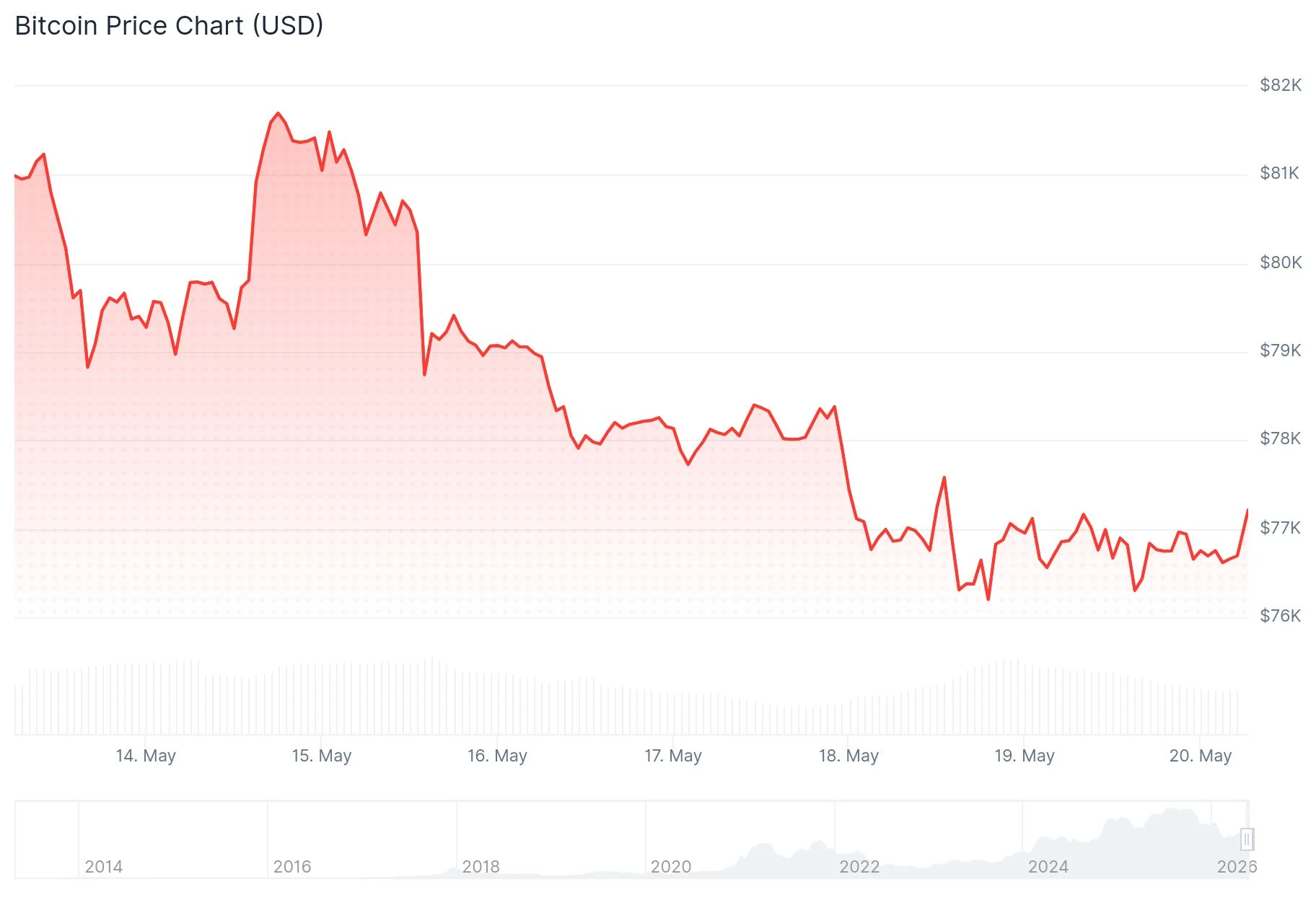
Bitcoin (BTC) Hovers Above $77K Amid Iran Diplomacy and Rising Treasury Yields

Beyond Cleaning: What Else You Must Check Before Moving Out




