

Japan’s Bullion Lobby on the Rise: What the JBMA Does — and Why Hong Kong’s New Gold Clearing House Changes Everything
While the crypto world obsesses over ETF inflows and halving cycles, the center of power in the traditional hard-money market is quietly shifting: gold is moving from West to East — physically and institutionally. Right in the middle of it: a small but exceptionally well-connected organization from Tokyo that wants to put Japan back on the map of the global precious metals trade — the Japan Bullion Market Association (JBMA). And in July 2026 of all months, a new gold clearing house goes live in Hong Kong that could shake the very foundations of the Western-dominated gold trade.
What is the JBMA?
The Japan Bullion Market Association (一般社団法人日本貴金属マーケット協会) is the industry body of the Japanese precious metals market. Its stated mission: to promote and develop the bullion market in Japan and create new business opportunities for the industry.
In concrete terms, that means:
- Education and knowledge transfer: The JBMA organizes workshops, lectures, symposiums and study groups on the precious metals markets and offers training and certification programs.
- Market intelligence: The association continuously publishes market reports — including daily analyses and international research content such as the well-known “In Gold We Trust” report by Incrementum, as well as reports from the Tokyo Financial Exchange.
- Networking function: The JBMA connects Japanese and international players — from refineries and banks to exchanges. Its members include the Osaka Exchange (part of the Japan Exchange Group), where Japan’s gold futures are traded today, as well as the World Platinum Investment Council.
- International reach: In 2025, the JBMA hosted a networking reception in Tokyo together with the Japan Exchange Group and Brink’s Japan — as a prelude to the LBMA/LPPM Global Precious Metals Conference in Kyoto. The next industry gathering, “Japan Bullion Market Networking 2026,” has been announced for November 2026.
The man behind the JBMA
The association is led by Yuichi Ikemizu — known in the market simply as “Bruce.” Ikemizu is one of Asia’s most experienced gold traders: he started his career as a gold trader at Sumitomo Corporation, followed by stints at Credit Suisse, Mitsui & Co. and Standard Bank. Until 2019, he headed the Tokyo branch of ICBC Standard Bank. This network — spanning London, Shanghai and Tokyo — is the JBMA’s real capital.
Why does the JBMA matter?
Japan is one of Asia’s oldest and most developed gold markets: the Tokyo Gold Exchange was founded back in 1982, gold futures have traded on the Osaka Exchange since 2020, and Japanese gold savings schemes (Gold Accumulation Plans) have been a mass-market phenomenon since the 1980s. Internationally, however, Tokyo has recently played a supporting role — the action was in London, New York and, increasingly, Shanghai.
This is exactly where the JBMA comes in: it is the institutional voice reconnecting Japan’s precious metals industry with the world — with the LBMA in the West and the rising trading hubs in the East. At a time when central banks worldwide hold roughly 40,000 tonnes of gold and are increasingly diversifying their reserves away from the US dollar, such a bridging function is strategically valuable.
What it means for Asia: the center of gravity moves east
Asia is the world’s largest consumer of physical gold — led by China and India. Yet the infrastructure for institutional wholesale trading — clearing, settlement, price discovery — has historically been located almost entirely in the West. As early as 2024, the World Gold Council observed that the “center of gravity” of the gold market had shifted eastward.
What has been missing so far is the market infrastructure to institutionalize that shift. Organizations like the JBMA in Tokyo, the Shanghai Gold Exchange in China and now the new clearing house in Hong Kong are building exactly that infrastructure — each player with its own role, but with a shared direction: more liquidity, more pricing power and more sovereignty for Asia in the gold trade.
The game changer: Hong Kong’s gold clearing house launches in July 2026
The real bombshell is landing in Hong Kong these very days: the Hong Kong Precious Metals Central Clearing Company (PMCC) — a wholly government-owned entity chaired by the Secretary for Financial Services and the Treasury — is launching its new gold clearing system in July 2026. According to media reports, the first settlement is expected to be processed in early July.
The key facts:
- LBMA model, Asian control: The system mirrors London’s infrastructure and operates with “unallocated accounts” — participants hold claims on gold holdings without physical bars having to move with every trade. That makes institutional trading fast and cheap.
- A heavyweight board: Eleven banks sit on the clearing company’s board, including Chinese institutions such as ICBC and Bank of China, alongside HSBC, JPMorgan and UBS.
- The Shanghai connection: As early as January 2026, the PMCC signed a cooperation agreement with the Shanghai Gold Exchange — including collaboration on physical delivery, warehousing and system design. This lays the groundwork for a more renminbi-based Asian gold market.
- Massive storage expansion: Hong Kong plans to increase its gold storage capacity roughly tenfold over the next three years, from around 200 to more than 2,000 tonnes. Reports suggest substantial quantities of gold were already flown from London, the US and Europe to Asia ahead of the launch.
- The geopolitical dimension: Central banks from countries aligned with the Belt and Road Initiative have been explicitly invited to participate. Gold settled in Hong Kong does not pass through New York or London clearing systems — and thus sits beyond the reach of Western sanction mechanisms.
What does this mean for Japan and the JBMA?
For Tokyo, Hong Kong’s push is both an opportunity and a wake-up call. On the one hand, the entire Asian gold trade benefits from deeper liquidity during Asian trading hours — including Japanese banks, trading houses and refineries that until now depended on London for large-volume settlement. On the other hand, the pressure on Japan is growing to make its own market more attractive if it wants to be more than a spectator in the new Asian gold ecosystem.
This is exactly where the JBMA becomes a key player: as an association with a direct line to the LBMA, to the Japan Exchange Group and — through Ikemizu’s ICBC background — into the Chinese banking sector, it is well positioned to negotiate Japan’s role in this new architecture. Whether Tokyo eventually plugs into the Hong Kong clearing system, pushes its own settlement solutions or positions itself as a neutral quality and refining hub — the course will be set in committees and at networking events of the kind the JBMA organizes.
The crypto angle
For the Bitcoin community, this development matters for two reasons. First: the emergence of non-Western settlement infrastructure for gold is part of the same macro trend driving Bitcoin — the search for neutral, sanction-resistant systems for storing and settling value outside the dollar system. Second: tokenized gold products already exist in Hong Kong, such as HSBC’s Gold Token. While these digital products are not yet connected to the new clearing system, a robust physical clearing infrastructure could eventually become the foundation layer for tokenized commodity products at scale.
The irony of the story: while Bitcoin set out to make clearing houses obsolete, Asia’s gold offensive shows just how much geopolitical firepower lies in the question of who controls settlement. Whether it’s bars in Hong Kong vaults or satoshis on the blockchain — the message is the same: trust in the old, Western-dominated financial architecture is crumbling. And Asia is already building the replacement.
Sources:
- Japan Bullion Market Association — About/English page: https://jbma.net/english/
- JBMA — Mission & activities: https://jbma.net/about/mission/
- JBMA — Member list: https://jbma.net/membership/members/
- JBMA — Japan Bullion Market Networking Party 2025 (with JPX & Brink’s Japan): https://jbma.net/networking2025_en/
- Bloomberg — “Hong Kong Targets July Launch for New Gold-Clearing System” (May 20, 2026): https://www.bloomberg.com/news/articles/2026-05-20/hong-kong-targets-july-launch-for-new-gold-clearing-system
- South China Morning Post — “Hong Kong to launch long-awaited gold clearing and settlement system next week” (July 3, 2026): https://www.scmp.com/business/markets/article/3359239/hong-kong-launch-long-awaited-gold-clearing-and-settlement-system-next-week-sources
- Money Metals — “Hong Kong Gold Clearing House Set to Begin Operation as Gold Trade Shifts West to East” (May 21, 2026): https://www.moneymetals.com/news/2026/05/21/hong-kong-gold-clearing-house-set-to-begin-operation-004930
- Japan Exchange Group — Gold Standard Futures overview (history of the Japanese gold market): https://www.jpx.co.jp/english/derivatives/products/precious-metals/gold-standard-futures/index.html
- Hong Kong’s New Gold-Clearing System: A Geopolitical Challenge to London’s Centuries-Old Dominance
The post Japan’s Bullion Lobby on the Rise: What the JBMA Does — and Why Hong Kong’s New Gold Clearing House Changes Everything appeared first on Bitcoin News Asia.


You May Also Like

Trump tells Netanyahu, ‘You’re f—ing crazy’ and Wall Street sees it as a sign he’s losing patience with the war and wants it done
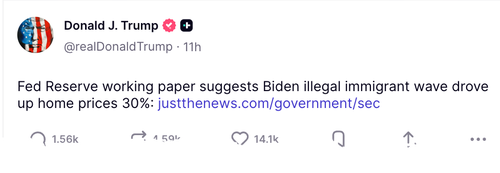
Biden's Illegal Alien Invasion Sparked 30% Home Price Growth, 20% Rent Growth: Fed Paper

SPARC AI Overwatch Platform Demonstrates Long-Range Maritime Targeting in Major Test



