Wells Fargo: ‘YOLO’ Trade Could Drive $150B into Bitcoin, Risk Assets
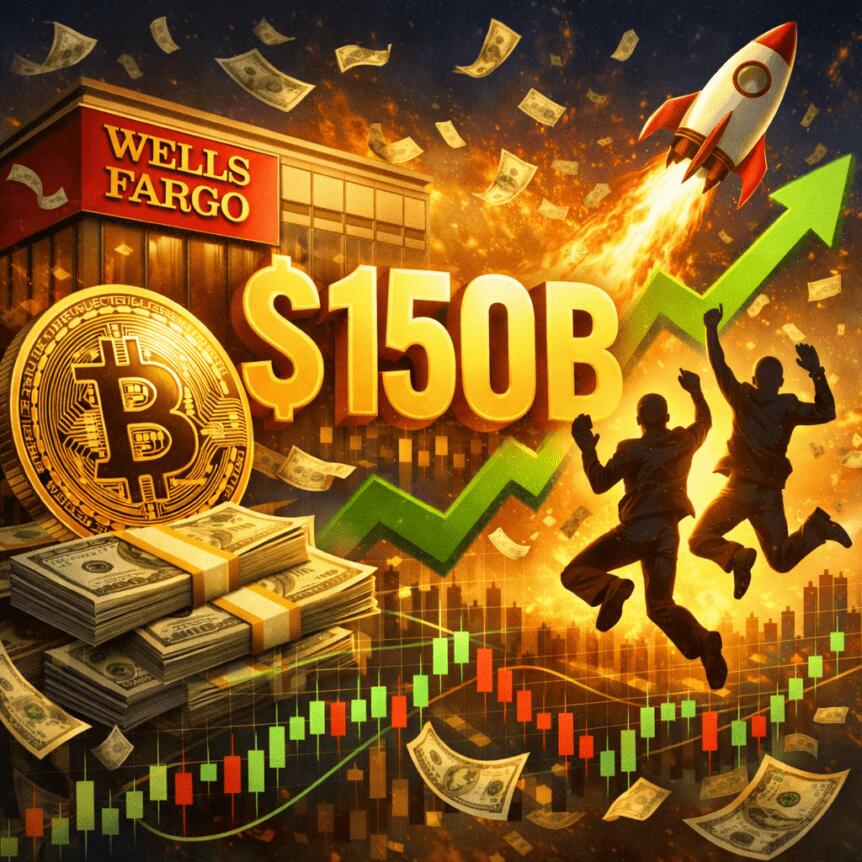
US tax filers may see bigger refunds in 2026 compared with previous years, a development one Wall Street strategist said could lift risk appetite for tech stocks and digital assets favored by retail investors. In a note cited by CNBC, Wells Fargo analyst Ohsung Kwon estimated that a wave of larger refunds could revive the so‑called “YOLO” trade, with as much as $150 billion potentially flowing into equities and Bitcoin by the end of March. The extra cash could be most visible among higher-income consumers, according to the note.
Key takeaways
- The Wells Fargo projection suggests up to $150 billion in fresh liquidity could reach equities and Bitcoin by the end of March, signaling a potential near‑term risk-on push if refunds materialize as expected.
- Higher‑income households are identified as the primary beneficiaries of the refund wave, which could amplify appetite for volatile, high‑beta assets alongside traditional tech bets.
- Liquidity may flow into Bitcoin and stocks popular with retail traders, including platforms like Robinhood and large cap names such as Boeing, depending on how sentiment evolves.
- Crypto demand remains sentiment‑driven: positive momentum could attract new funds, while lack of enthusiasm may prompt investors to shift to assets with stronger near‑term momentum.
- The macro backdrop includes policy changes tied to the One Big Beautiful Bill Act, signed in mid‑2025, which policymakers argued would trim federal spending and reshape tax refunds in 2025 and beyond.
Tickers mentioned: $BTC, $ETH
Sentiment: Neutral
Price impact: Neutral
Market context: In liquidity cycles, tax refunds frequently influence risk appetite, and 2026 could test how retail cash infusions translate into crypto and tech equity demand amid shifting policy signals and macro dynamics.
Why it matters
The intersection of tax policy, consumer liquidity, and retail trading trends has long shaped short‑term risk sentiment in crypto markets. If the refund wave materializes as projected, Bitcoin and other digital assets could see fresh attention from buyers who previously favored high‑growth tech stocks. The timing is notable because refunds are expected to be most visible among higher‑income segments, a cohort historically more active in discretionary investing. This could amplify trading activity in early spring, with price action potentially moving in tandem with broader equity flows as investors rebalance portfolios around tax season liquidity.
On the policy side, the so‑called One Big Beautiful Bill Act, signed on July 4, 2025, is cited as a driver of larger refunds in 2025 and beyond. Proponents argued the measure would curb federal spending and reshape the fiscal landscape, creating a more favorable environment for household cash returns during tax filing periods. The exact allocation of this liquidity remains uncertain, but the implication is that macro signals could feed through to risk assets, including digital currencies, if investor confidence strengthens alongside improving sentiment in crypto markets.
From a market‑structure perspective, the narrative dovetails with ongoing activity from both retail traders and large holders. While some liquidity could tilt toward Bitcoin and equities, others may seek alternative assets with strong momentum or social traction. Observers note that the retail‑oriented ecosystem—platforms and apps that higher‑income consumers already use—could be pivotal in determining where the money lands. The dynamic is further complicated by divergent views on crypto’s near‑term trajectory, with “smart money” positioning painting a mixed picture of risk tolerance in the current cycle.
What to watch next
- Monitor the February–March refund cycle for material evidence of inflows into Bitcoin and consumer tech equities, as highlighted in the Wells Fargo note reported by CNBC.
- Track sentiment indicators across crypto markets; if retail sentiment turns positive, expect increased on‑ramps into digital assets and a potential uptick in on‑chain activity.
- Watch whale and smart‑money behavior for Bitcoin and Ether to gauge whether larger players are dialing up or dialing back exposure as liquidity shifts emerge.
- Observe policy developments and fiscal signals tied to the One Big Beautiful Bill Act to assess any shifts in tax refunds that could influence liquidity cycles.
- Observe the performance of retail‑favorable names like Robinhood and Boeing, which were cited as potential beneficiaries of broader liquidity recovery in a risk‑on environment.
Sources & verification
- CNBC coverage of Wells Fargo analyst Ohsung Kwon’s note on a potential $150 billion refund‑driven inflow into equities and Bitcoin by the end of March 2026.
- Nansen data on “smart money” positioning, including Bitcoin net short exposure and Ether accumulation across multiple wallets.
- The One Big Beautiful Bill Act, signed into law on July 4, 2025, which proponents say shaped tax refund dynamics in 2025 and onward.
Tax refunds, sentiment and the crypto liquidity swing in 2026
As 2026 unfolds, a wave of larger tax refunds could reshape the risk appetite that has underpinned a portion of the crypto market in recent years. Wells Fargo’s Ohsung Kwon, in a note highlighted by CNBC, argues that an acceleration in refunds could reignite a “YOLO” trading mindset among investors who are flush with tax cash. He estimates that as much as $150 billion could move into equities and Bitcoin by the end of March, with the strongest buoyancy likely concentrated among higher‑income households. The framing is important: this is not a guaranteed market impulse, but a liquidity signal that could steer behavior if consumer confidence remains intact and risk appetite returns after a period of uncertainty.
Bitcoin (BTC) demand, the analyst notes, could be highly sentiment dependent. If retail investors rally around crypto assets, new funds might flow into the space, potentially lifting demand for tokens across the sector. Conversely, if sentiment falters, investors may pivot toward assets with more immediate momentum and social traction. The study highlights a dynamic tension: crypto markets often ride the same liquidity waves as the broader stock market, but the timing and magnitude of inflows can diverge based on macro cues and the perceived staying power of the rally.
Adding nuance, Nicolai Sondergaard, a research analyst at Nansen, emphasizes that sentiment acts as a gating factor. “If sentiment starts to come around and retail sees positive upwards momentum in crypto assets, I see that as increasing the likelihood of funds flowing in this direction,” he told Cointelegraph. The caveat is clear: a lack of enthusiasm could encourage retail traders to seek assets with stronger near‑term momentum, potentially dampening crypto inflows even if refunds are robust. The outcome hinges not just on the size of the refunds but on how widely the wind shifts from caution to confidence across the retail trading ecosystem.
The macro backdrop remains complex. The policy shift tied to the One Big Beautiful Bill Act, signed into law in 2025, is frequently cited as a contributor to the broader liquidity environment. While the bill’s supporters framed it as a measure to trim federal spending and reallocate resources, critics warned of unintended consequences for the pace and distribution of tax refunds. In practice, liquidity—in the form of refunds and discretionary cash—can influence trading dynamics across both traditional equities and digital assets. In this context, crypto developers and market participants are watching not only on‑chain data but also the evolving policy landscape that could redefine the cushion of available capital for speculative bets.
On the supply side, market participants have shown a bifurcated stance. While some whales continue to accumulate spot Ether across multiple wallets, the smart‑money cohort has been net short on Bitcoin for a sizable cumulative amount, according to Nansen’s metrics. The divergence underscores a market where large holders are positioning for different outcomes than the broader retail narrative. It also implies that any rebound in risk appetite could be tested by how quickly the composition of buyers shifts from traders favoring short‑term profits to investors willing to hold through volatility. In the near term, the liquidity landscape remains unsettled, and the pace of inflows will likely hinge on a confluence of sentiment, policy signals, and on‑chain activity.
What to watch next (summary)
- Early‑spring refund data and corresponding flows into Bitcoin and select equities to confirm the magnitude of the YOLO bid.
- Shifts in retail sentiment toward crypto assets, as evidenced by on‑chain activity and exchange flows.
- Whale activity and smart‑money positioning for Bitcoin and Ether to gauge whether accumulation or unwind is prevailing.
- Policy updates related to tax refunds and federal spending to assess how fiscal changes influence liquidity dynamics.
- Market reactions in retail‑oriented platforms and names tied to high retail engagement, reflecting the broader risk‑on environment.
This article was originally published as Wells Fargo: ‘YOLO’ Trade Could Drive $150B into Bitcoin, Risk Assets on Crypto Breaking News – your trusted source for crypto news, Bitcoin news, and blockchain updates.
You May Also Like

World Order Shift Sparks New Crypto Cycle, Analyst Predicts

A Netflix ‘KPop Demon Hunters’ Short Film Has Been Rated For Release