

Bitcoin Options Skew Turns Bearish: What the $60K Put Wall Says After the Washout
Bitcoin’s options market flipped decisively defensive around the June washout, and traders are fixated on a dense wall of $60,000 puts. This piece breaks down what a bearish skew really means, why the $60K strike matters, and how dealer hedging can sway spot.
Whether you manage risk with options or just track their signals for spot entries, understanding skew and open interest clusters can help you avoid chasing noise and prepare for fast moves.
Quick Answer
Bearish skew tells us that downside protection is in demand and that dealers may be positioned so their hedging could amplify moves if key strikes break. On Deribit, more than $1.2B notional in $60K BTC puts concentrates risk; a clean break below can trigger additional hedging that leans into selling pressure. The June washout purged leverage but left options positioning sensitive around $60K—this area can act as a magnet (pin) or an air pocket if it fails.
- Over $5.3B in leveraged longs were liquidated during 1–5 June 2026, sharpening downside reflexes (CoinDesk).
- Glassnode saw put-rich skew and subdued front-end vol into late May, a defensive setup that preceded the selloff (NewsBTC).
- Deribit flagged $1.2B+ OI at the $60K put strike; a break risks dealer hedging that accelerates selling (KuCoin).
- Outcomes near $60K often bifurcate: pinning around the strike or fast extension if it gives way.
What does a bearish options skew actually signal in Bitcoin?
Skew measures the relative cost of downside vs upside options. When 25-delta puts price richer than equivalent calls, the market is paying up for protection, and dealers are more likely short downside convexity. In that state, spot drops can force dealers to sell more futures/spot to hedge—reinforcing the move.
Into late May, Glassnode noted a defensive posture: one-week implied volatility slipped to ~31% from ~39%, one-month realized hovered near 27% while one-month implied sat around 35%, and the 25-delta skew briefly hit ~24% to puts—clearly put-rich (NewsBTC). That combination says traders were buying crash insurance even as front-end vol compressed—classic caution.
Bearish skew is not a guarantee of more downside. It is an options-market “risk map” showing where demand for protection concentrates and where dealer hedging may amplify moves. When skew is extreme, it can also set the stage for sharp mean-reversions if danger passes and protection is unwound.
Why does the $60,000 put wall matter and how can it influence spot?
Large open interest at a single strike creates a gravitational field. When price approaches, dealers’ hedging needs can increase: if dealers are short those puts, spot drifting lower often compels them to sell more delta (futures/spot) to stay hedged. That feedback can “pull” price toward the strike into expiry (pin risk), or, on a decisive break, accelerate the move lower.
Deribit’s commercial team highlighted that more than $1.2B notional in open interest sits at the $60K BTC put strike, and the exchange’s CCO warned a clean break could force dealer hedging that speeds up selling (KuCoin). The “wall” is less a physical barrier than a zone where hedging flows can intensify quickly.
It can cut both ways. Price hovering just above the wall can magnetize to $60K as puts decay. Yet if macro or positioning pressure shoves BTC below, that same wall can turn into an air pocket until new bids or profit-taking on puts softens flows.
How did June’s washout reset positioning, and what’s left on the board?
The early-June selloff liquidated more than $5.3B in leveraged long positions across crypto derivatives, with about $1.4B flushed on Friday, 5 June 2026 alone—a classic deleveraging wave that dragged BTC toward $60K (CoinDesk).
Deleveraging often reduces reflexive buy-side fuel on dips (fewer forced buyers) but can also lessen the intensity of the next downside if the weak hands are already cleared. What remains is options-centric: the concentration at $60K and a skew term structure that turned protective in late May. Glassnode also flagged a short-gamma cluster near $75K with roughly $3.2B of negative exposure in May, underscoring how flows can flip across strikes depending on where spot lands (NewsBTC).
Put differently: leverage got reset, but the options map still matters. As long as the $60K put wall is heavy and skew remains put-rich, intraday order flow near that level can be more directional and faster.
What are the plausible paths from here: pin, slide, or squeeze?
Markets near dense open interest tend to resolve into a handful of recognizable patterns. None are guaranteed, but each has telltale signs in options and futures data.
Scenario Options tells Dealer flow bias Spot behavior Key risks Pin around $60K Front-end IV bleeds; skew eases; put OI rolls or decays Dynamic hedging stabilizes; smaller net selling Choppy, mean-reverting around strike Macro surprise reignites vol Slide below $60K Skew stays put-rich; downside IV upticks; put OI grows More selling to hedge short puts (short gamma) Faster downside extensions, thin bids Air pocket until new demand emerges Squeeze higher Skew normalizes; calls bid; put interest monetized Dealer buy-backs as short gamma flips Sharp rallies into overhead strikes Fade if follow-through lacks
Watch how implied volatility trades relative to realized volatility and how skew behaves into key prints. Glassnode’s May read—one-month RV ~27% vs IV ~35%—showed traders paying a premium for protection before the break (NewsBTC). After a washout, that premium can either deflate (pin), hold bid (slide), or rotate into upside risk (squeeze).
How can traders read the options board without overfitting the signal?
Options are a map, not a compass. Focus on a small set of repeatable tells rather than trying to reverse-engineer every block trade. The goal is to identify when hedging flows are likely to matter more than usual.
- Check skew percentiles: Is 25-delta skew extreme vs its own history? Put-rich extremes often coincide with crowded protection.
- Compare IV vs RV: IV materially above RV can signal premium for insurance; watch for gaps to close post-catalyst.
- Plot OI by strike and expiry: Clusters near round numbers ($60K, $65K, $70K) are where pin or break dynamics intensify.
- Watch term structure: Front-end kink up = short-horizon fear; a smooth curve suggests calmer hands.
- Observe futures basis and funding: Negative or compressing basis during skew stress reinforces defensive flows.
Cross-check data across multiple dashboards to reduce blind spots. Remember that OTC flow and cross-exchange positioning can offset what a single venue shows; treat any one data source as partial.
Should hedgers or long-term holders change tactics at $60K?
For institutions managing drawdown risk, the $60K wall is a natural place to review hedges. Some pursue protective puts just under spot, others prefer collars (selling upside to finance downside) to reduce net premium. Structuring around known OI cliffs can help, but it doesn’t eliminate gap risk.
Long-only allocators often stagger hedges by time (monthly ladder) rather than concentrate at a single strike, aiming to avoid cliff effects on expiries. Shorter-dated hedges can be rolled if skew remains rich, while longer tenors may be more cost-efficient if fear is local to the front end.
Whatever the approach, bind it to a process: what triggers a hedge add, what triggers monetization, and how volatility regime shifts (calm vs stressed) change your playbook.
Common Mistakes
- Reading skew as a timing tool. Skew signals demand for protection, not direction on a clock. Pair it with IV/RV, basis, and flows.
- Ignoring expiry gravity. Big strikes near weekly/monthly expiries can pin price; don’t assume breakouts hold into settlement.
- Over-hedging at the wall. Concentrating all hedges at $60K can create the very cliff you fear; consider staggered strikes/tenors.
- Forgetting liquidity gaps. A clean break can travel far before liquidity replenishes; use stops and avoid excessive leverage.
- Using one venue’s OI as gospel. Cross-venue and OTC flows can offset visible concentrations; triangulate data.
For more market structure explainers and on-chain context, visit Crypto Daily.
Frequently Asked Questions
Does a big put wall always mean price will fall into it?
No. It often acts as a magnet into expiry, but strong spot demand, catalysts, or dealers hedging in anticipation can keep price above the wall. It’s a probabilistic flow zone, not fate.
What could quickly invalidate the bearish skew?
An upside catalyst that lifts realized volatility (RV) and forces short-dated call demand can normalize skew. Large-scale monetization of puts—profit-taking or rolling up—can also unwind put richness.
How do expiries change the picture around $60K?
As time decay bites, put gamma rises near-the-money. Into weekly/monthly settlements, hedging flows can dominate intraday action. After expiry, the field resets—pin effects can vanish abruptly.
Is dealer gamma the same as open interest?
No. OI shows where contracts sit; dealer gamma shows how hedgers’ P&L responds to price moves. A large OI cluster can matter less if dealers are already well-hedged or positioned the other way.
Could OTC trades offset the Deribit $60K wall risk?
Potentially. Unseen OTC collars or dispersion hedges can neutralize some on-screen exposure. That’s why cross-referencing venue data and watching price/vol reactions to tests of $60K is essential.
Why did downside feel faster after the washout?
With $5.3B in longs liquidated in early June, reflexive dip-buying from leverage was reduced, and put-rich skew meant hedging flows were biased to sell on weakness—both can make drops feel faster.
Disclaimer: This article is provided for informational purposes only. It is not offered or intended to be used as legal, tax, investment, financial, or other advice.


You May Also Like
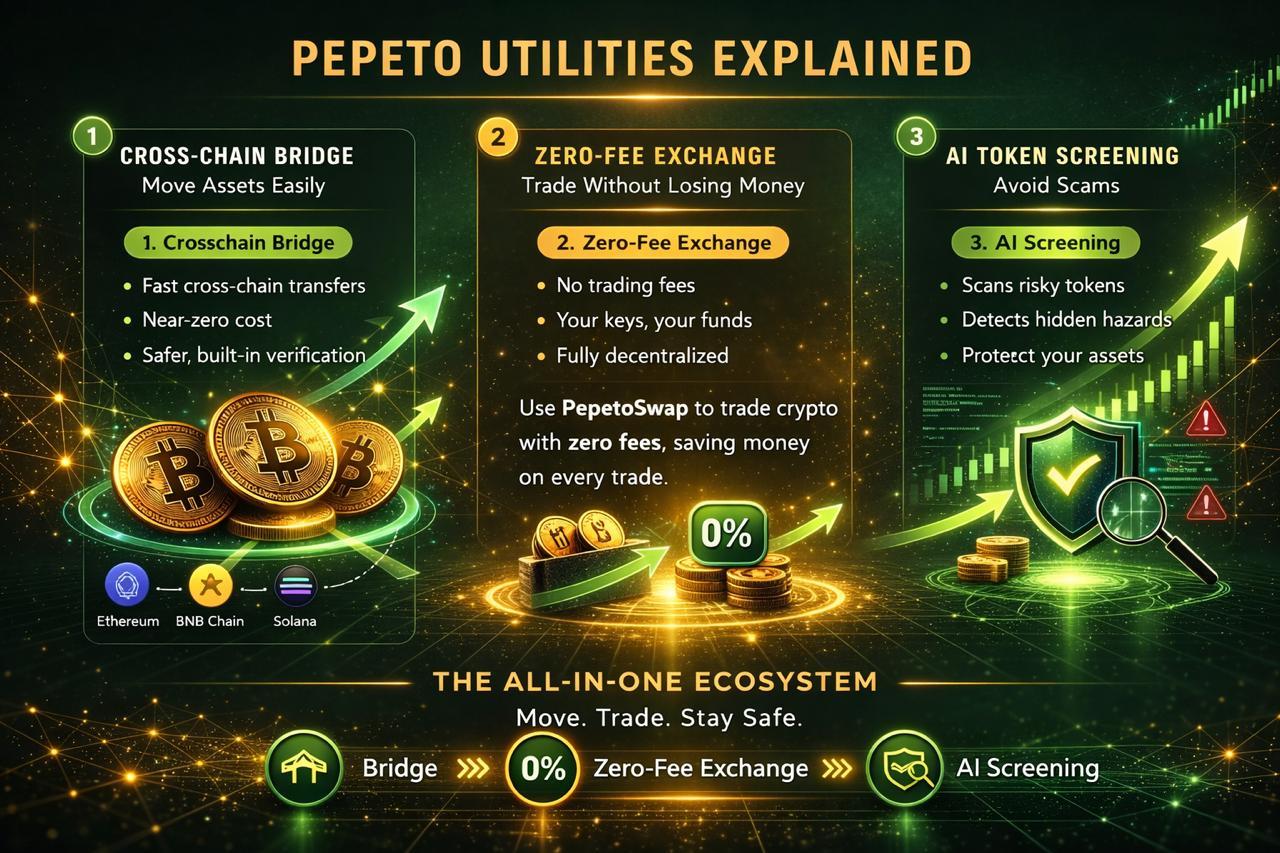
Ethereum Price Prediction: Pepeto Raises Above $8.1M While ETH Drops Below $2,100 and SOL Faces Pressure

Gate Update: World Cup Predictions, TradFi Milestones, And A $2M Stock Gala

Next Crypto to Explode: Why Bitcoin Hyper Can Solve BTC’s Problems During an Uncertain Market



