

What the Evidence Actually Says About the Sweepstakes Casino Model
A reader who spends time on crypto platforms eventually runs into the same odd pitch from a different direction. An app shows up that looks like an online casino, plays like an online casino, and yet insists it is free, legal in most of the country, and nothing like the offshore crypto-betting sites that ask for a wallet connection and a deposit. The instinct of anyone who reads token whitepapers for fun is to be suspicious. Free and legal usually means the cost is hidden somewhere, and the somewhere is usually in the fine print.
So this is an investigation rather than a recommendation. The question is narrow and worth answering with documents instead of vibes: how can a product that looks like a slot lobby be lawful in roughly two-thirds of US states while a Bitcoin casino with the same games is not? The answer involves a specific piece of consumer-promotion law, a two-token accounting trick, and a redemption process that quietly imports the same identity checks a bank uses. When you map a named operator against that framework, the picture sharpens. The reference point throughout is the independent breakdown of crown coins casino published by Legal Sports Report, which lays out one product’s mechanics without the promotional gloss and gives this analysis something concrete to test claims against.
The contrast with crypto gambling is the through line. Crypto casinos and sweepstakes casinos get lumped into the same “alternative gaming” bucket, and for an audience fluent in on-chain risk that lumping misleads. They sit on opposite sides of a legal line, and understanding why is more useful than any bonus list.
How is this legal and free in the first place
The friction point is real, so start there. A crypto casino lets you stake a coin with cash value and win a coin with cash value. That is wagering on consideration for a prize of chance, which is the textbook definition of gambling and the reason those sites operate from Curacao or Costa Rica and block US IP addresses on paper. A sweepstakes casino claims to avoid that definition entirely, and the claim rests on the oldest promotional structure in American marketing.
A legal sweepstakes has three legs: prize, chance, and consideration. Gambling needs all three. Remove any one and the activity is no longer gambling in most state codes. Soft-drink and fast-food companies have run prize giveaways for decades by removing the consideration leg, which is why a contest mailer always carries the line about no purchase being necessary and a free way to enter. The sweepstakes casino borrows that exact carve-out. You are never required to pay to receive the currency that can win prizes, and a free entry path has to exist, so on the operator’s reading there is no consideration and therefore no gambling.
That is the mechanism behind “free and legal.” It is not a loophole in the sense of a glitch. It is a deliberate use of a long-settled marketing-law structure, applied to a product that happens to look like a casino. Whether regulators accept that application is a separate and unsettled question, which is where the second half of this investigation goes.
The detail that trips up most first-time observers is the word consideration, which has a narrower legal meaning than everyday spending. A player who buys a large pack of play tokens and happens to receive promotional tokens in the same transaction has, on the operator’s reading, paid for the play tokens and received the promotional ones as a free bonus, the same way a cereal box might include a contest entry. The purchase and the prize eligibility are treated as legally separate even when they ride in on the same receipt. Critics argue that this is a fiction, that almost nobody uses the mail-in path and almost everybody pays, so the consideration leg is functionally intact. That argument is exactly what state legislatures are now testing, and it is why the model’s legality is better described as contested than settled.

Image by Anton Pavlov
The two-token system, read as an accounting design
Crypto readers already think in terms of token design, so the dual-currency model should feel familiar even though its purpose is the opposite of most token economies. Where a crypto project wants its token to be transferable and convertible, a sweepstakes operator wants one of its two currencies to be provably non-convertible, because convertibility is exactly what would turn the product into gambling.
The first currency is a pure play token. You buy it the way you buy gems in a mobile game, you spend it on the slot and table games, and it has no cash-out value at all. Spending real money on it is buying entertainment, not buying odds, and that distinction is the entire defense. The second currency is the promotional one. You cannot buy it directly. It arrives bundled as a bonus when you purchase a pack of the play token, drips in through daily logins and promotions, or comes through the mandatory free-entry channel. Only the second currency can be redeemed, and only after it clears a playthrough requirement and a minimum balance.
Read as accounting, the design keeps the money flow and the prize flow in separate ledgers that never legally touch. Money buys play tokens. Prizes come from promotional tokens. The free-entry path is the bridge that proves the promotional ledger is reachable without spending, which is what keeps the consideration leg amputated. Published descriptions of these welcome offers tend to quote large round numbers of play tokens plus a small handful of promotional tokens, but those figures move with every promotion, so any specific number should be treated as a snapshot rather than a fixed feature.
What separates this from a crypto casino
This is the comparison the audience came for, so it deserves to be explicit rather than implied. The two models share a game catalog and almost nothing else that matters legally.
A crypto casino takes a deposit with monetary value, lets you wager it directly, and pays out in the same convertible asset. There is no second currency, no playthrough wall between deposit and prize, and no claim of being a sweepstakes. Its legal cover is jurisdictional distance, not US promotional law. A sweepstakes casino, by contrast, never lets you wager money directly on a cash prize. The play token you buy cannot be redeemed, and the promotional token you redeem cannot be bought. The whole architecture exists to keep those two facts true at once.
There is also a settlement difference worth flagging for a payments-literate reader. Crypto casino flows settle on-chain, which is fast and pseudonymous and is precisely why they attract regulatory scrutiny for money-laundering risk. Sweepstakes redemptions settle through conventional banking rails, which means they run straight into the identity machinery described later in this piece. One model is built to minimize friction at cash-out; the other is built to survive a US compliance review at cash-out. That is not a small design difference. It shapes everything from how long a withdrawal takes to how much personal data the operator holds about you.
The volatility math underneath the games is, however, genuinely shared, and that overlap is where the two models actually resemble each other. The slot and table titles in either product run on the same probability and variance design, the same controlled randomness that decides how often a session feels like a win and how often it grinds down. CaptainAltcoin’s piece on what crypto traders can learn from casino volatility models argues that the same variance thinking applies to portfolios, and the parallel runs in reverse here too. A player who understands variance reads both products more clearly: expected value is set by the math, but the lived experience is set by the swings, whether the token on the line is convertible or not. The difference that matters is still legal and financial, not mathematical.
 Image by Anton Pavlov
The findings, laid out against the claims
It helps to put the recurring claims next to what the documentation supports. The table below takes the questions a skeptical crypto reader would ask and pairs each with what the available evidence shows, drawing on operator terms, state statutes, and federal financial rules rather than marketing copy.
| Question raised | What the evidence shows |
|---|---|
| Is it really free to play and win? | Yes in principle. A no-purchase entry path is mandatory, so a player can obtain promotional currency and redeem prizes without ever paying. Paying only buys non-redeemable play currency. |
| Is the play currency worth real money? | No. The purchasable token has no cash-out value by design. That non-convertibility is the legal foundation, not an accident. |
| Why is it legal where crypto casinos are not? | It is structured as a promotional sweepstakes with the consideration leg removed, not as a wager. Crypto casinos rely on offshore jurisdiction instead. |
| Is your identity anonymous, as on a crypto site? | No. First redemption triggers full identity verification under federal anti-money-laundering rules, including ID, a liveness selfie, and proof of address. |
| Is it legal everywhere in the US? | No. A growing set of states have moved to ban the dual-currency model outright, and the count keeps shifting. |
| Are winnings taxable? | Yes. Redemptions are reportable income. Operators commonly issue tax forms above an annual threshold, and the personal obligation starts at the first dollar regardless. |
The pattern in that right-hand column is consistent. Most of the headline claims hold up when read against documents, but each comes with a condition the marketing tends to underplay. Free is true but bounded by a free-entry path most users never use. Legal is true but state-dependent and narrowing. Anonymous is simply false at the moment money is supposed to change hands.
The identity checks crypto users do not expect
The single biggest surprise for someone arriving from crypto is what happens at redemption. On-chain gambling treats pseudonymity as a feature. Sweepstakes redemption treats it as a non-starter, because the cash leaves through the regulated banking system, and that system carries obligations the operator cannot opt out of.
Once a player tries to convert promotional currency to cash, the operator runs a Know Your Customer process: government identification, often a selfie liveness check, and a utility bill or similar proof of address, with source-of-funds questions for larger amounts. These steps sit inside a Bank Secrecy Act-aligned anti-money-laundering program, the same family of rules that governs how banks and licensed casinos handle customer identity and suspicious activity. The first cash-out is typically the slow one because that is when verification clears, and a wait of a day or two on the first withdrawal is normal rather than a red flag.
For the audience this matters in a specific way. The privacy posture is the inverse of a crypto casino. You trade the pseudonymity of a wallet for a model that is lawful onshore but knows exactly who you are. Neither is strictly better; they are different bargains, and a reader should choose with the bargain in mind rather than assuming the sweepstakes label implies the same anonymity they are used to.
Where the law is actively moving against it
The legality claim carries an expiration risk that is easy to miss if you only read an operator’s homepage. The sweepstakes model is legal in a large majority of states today, but that majority is shrinking, and the most instructive case is California, because the state did not just ban the product, it wrote a definition aimed precisely at the dual-currency design this whole investigation describes.
California enacted Assembly Bill 831, which the governor signed in October 2025 and which took effect at the start of 2026. The statute is worth reading directly because of how it defines the target. The full text of the enacted bill on the California Legislature’s official site defines an online sweepstakes game as one that uses a dual-currency payment system allowing play with direct or indirect consideration for prizes or cash equivalents, and it pulls both operators and their suppliers into liability. In other words, lawmakers looked at the exact two-token structure the industry treats as its safe harbor and named it as the thing being prohibited.
California is not alone, and it is not the first. Reporting through 2025 and into 2026 records bans or restrictions added in several other states, with more bills pending. The takeaway for a careful reader is not a state list to memorize, which would be out of date by the time you read it, but a direction of travel. The legal cover that makes the model possible is being tested in legislatures, and the dual-currency definition is the precise thing under attack. Anyone treating “legal” as a permanent attribute of these apps is reading a snapshot as if it were a guarantee.
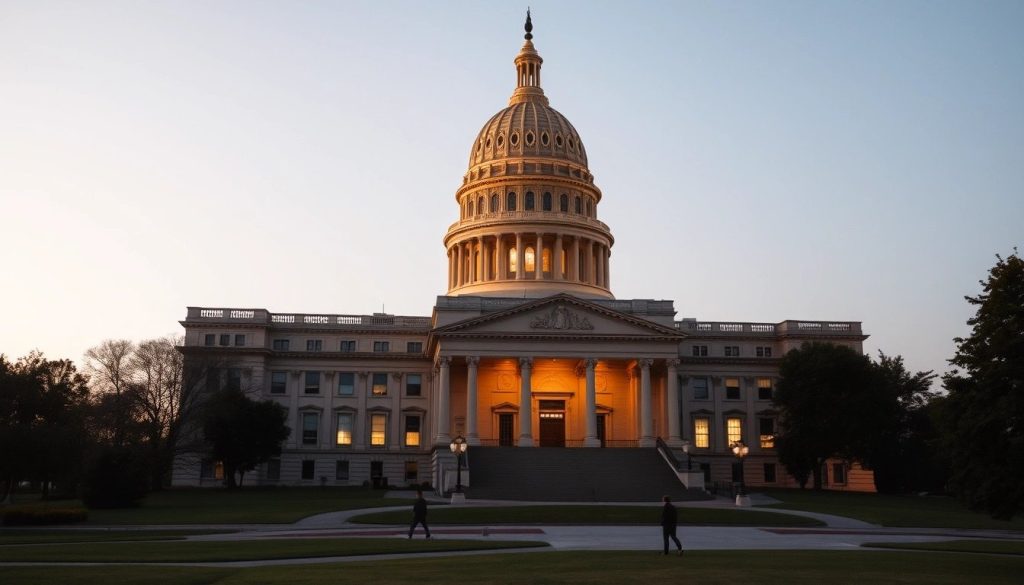 Image by Anton Pavlov
What makes the legislative trend matter beyond the affected states is the supplier-liability language. California did not only target the brand on the app icon; it reached the payment processors, content studios, and platform vendors that make the product run. That structure tends to be copied once one state proves it survives drafting, and it changes the calculus for the whole industry, because a vendor serving fifty states cannot easily ignore a rule that exposes it to penalties in any one of them. For a reader weighing how durable a given operator is, the question is less about today’s terms of service and more about which states the company can still serve a year from now without rewriting its supply chain.
What a skeptical reader should take away
Put the findings together and the model is neither the scam a hardened crypto skeptic might assume nor the free lunch its marketing implies. It is a real promotional structure built on real law, with real conditions attached. The free-play claim rests on a free-entry path almost no one uses. The legality claim is state-specific and under active legislative pressure. The non-convertible play token is the load-bearing wall, and the identity checks at redemption are the price of operating onshore.
For a crypto-fluent audience the cleanest framing is a trade of risks. A crypto casino offers pseudonymity and convertibility at the cost of operating outside US law. A sweepstakes casino offers onshore legality at the cost of full identity disclosure and a model some states are actively dismantling. Knowing which risk you are accepting is the point, and it is a more honest lens than asking which product has the better welcome bonus.
Frequently Asked Questions
Does a sweepstakes casino count as gambling under US law?
The operators argue no, because they remove the consideration element that gambling requires by offering a mandatory free way to enter and a play currency with no cash value. That argument holds in most states today, but it is being contested in legislatures, and some states have rejected it outright by banning the dual-currency model.
How is this different from depositing crypto into an online casino?
A crypto casino lets you wager an asset with real value and win an asset with real value, settling on-chain. A sweepstakes casino keeps money and prizes in separate ledgers, never lets you redeem the currency you purchased, and settles cash through the regulated banking system, which is why it can claim US legality while a crypto site cannot.
Will I have to prove my identity to cash out?
Yes. First redemption triggers a Know Your Customer process under anti-money-laundering rules, typically requiring government identification, a selfie check, and proof of address. The expectation of anonymity that some crypto bettors carry over does not apply here.
Are sweepstakes prizes taxable income?
Yes. Redeemed prizes are reportable income, and operators commonly issue tax forms once annual redemptions pass a set threshold. Your personal tax responsibility begins at the first dollar of winnings, independent of whether a form is issued.
Is the model legal in every state?
No. It is permitted in a large majority of states as of mid-2026, but the number is falling. California’s ban took effect in 2026 with a statute written specifically around the dual-currency design, and other states have added or proposed similar restrictions, so the legal status is best treated as current rather than fixed.
Meta Title: Sweepstakes vs Crypto Casinos: What the Evidence Shows
Meta Description: An investigation into how the sweepstakes casino model stays free and legal, how it differs from crypto casinos, and where new state laws are moving against it.
The post What the Evidence Actually Says About the Sweepstakes Casino Model appeared first on CaptainAltcoin.


You May Also Like
PayNearMe Boosts Self-Service Adoption and Payment Completion with New PayXM™ Capabilities

OpenVPP accused of falsely advertising cooperation with the US government; SEC commissioner clarifies no involvement

Robotics Automation Prototyping: Engineering Kinetic Agility into End-Effectors



