Bolt announced that it has completed over 400 million trips in South Africa since its launch in 2016,…Bolt announced that it has completed over 400 million trips in South Africa since its launch in 2016,…

Bolt celebrates over 400 million trips in South Africa since launching in 2016

2025/11/28 18:23
3 min read
For feedback or concerns regarding this content, please contact us at [email protected]

Bolt announced that it has completed over 400 million trips in South Africa since its launch in 2016, establishing one of the continent’s largest user bases. The company shared this milestone while highlighting a notable increase in activity on its platform nationwide.

Senior Operations Manager Simo Kalajdzic noted that Bolt serves approximately 1.4 million passengers each month, supported by over 40,000 active drivers. The platform operates across all nine provinces and in 23 cities, highlighting the significant expansion it has achieved since entering the market.

The figures were released as Bolt adjusted to new e-hailing regulations implemented by the National Department of Transport. These regulations include platform licensing fees, driver licensing requirements, and the addition of physical panic buttons in e-hailing vehicles.

Bolt suspended in Tunisia over alleged money laundering and tax evasion

Adjusting to new sector rules

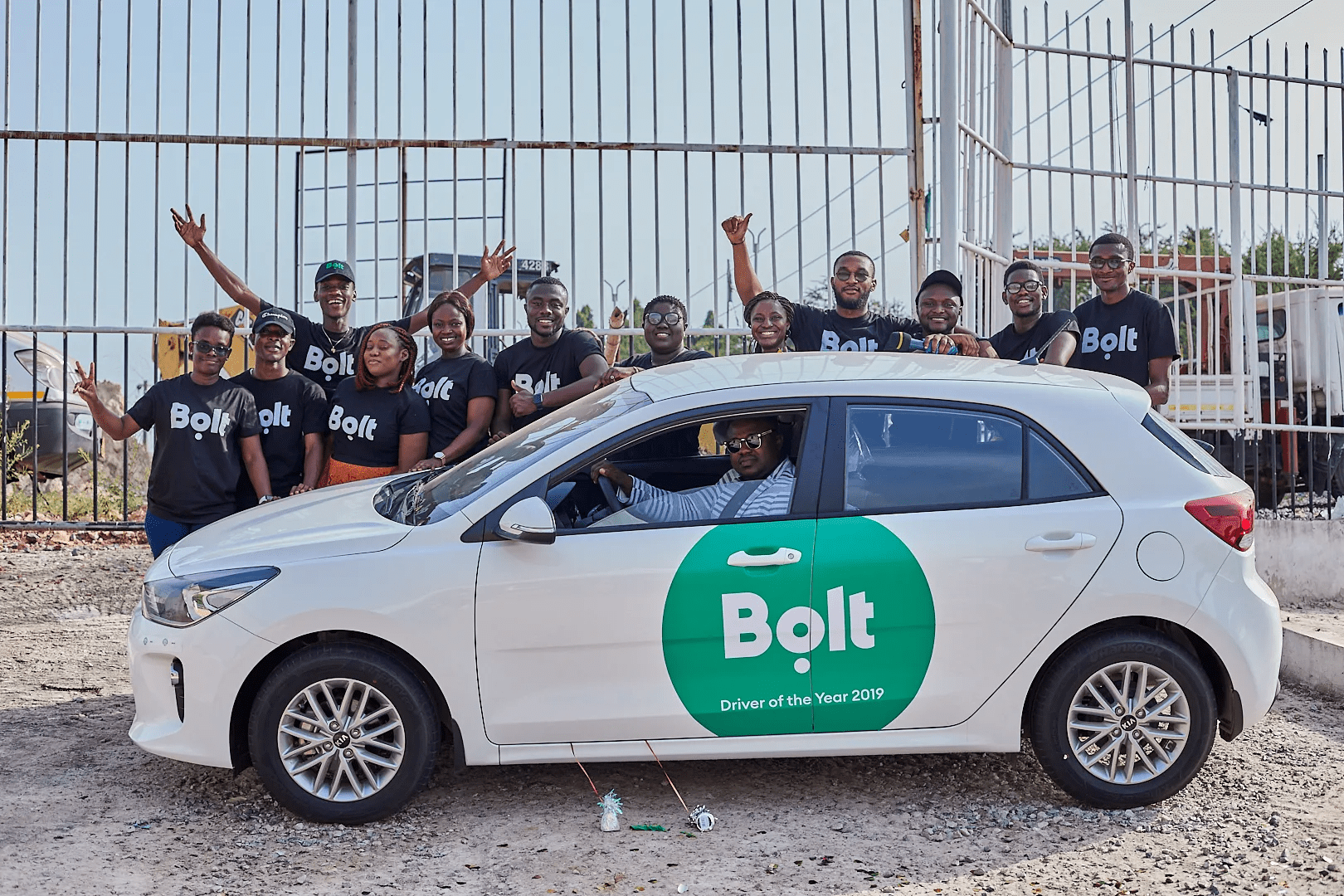
The company must pay a R5,000 licensing fee every seven years to operate its platform legally. Drivers also need to pay around R1,000 each for their own operating licenses. Bolt is seeking ways to reduce drivers’ costs and plans to assist them by offering free vehicle branding to those who choose to participate.

The new rules require e-hailing vehicles to be easily recognisable, but they don’t have to display the company’s name. Drivers can use their own branding, as long as the vehicles meet the new identification guidelines.
Bolt Nigeria to suspend drivers who solicit offline trips as it introduces offline trip cancellation for riders

Also read: 50% fare hike: Bolt Kenya says focus is on balancing driver earnings with affordability

Another part of the regulation requires all vehicles to have physical panic buttons installed. Bolt is working with a private armed response company to figure out how to add this feature to thousands of vehicles. The goal of the panic button is to improve safety for both riders and drivers as part of the broader regulatory changes.

Effect on drivers, compliance pressure, and the broader market

Bolt also announced that it is conducting workshops with the Department of Transport to help drivers navigate the new processes and receive support during the transition. The company emphasised that many drivers are still adapting to these changes, particularly regarding licensing costs and the new branding requirements.

The push for compliance in the e-hailing industry is driven by increasing pressure to enhance safety measures and improve driver identification. Bolt believes that implementing clearer vehicle markings and introducing panic buttons will significantly contribute to this shift as the rollout continues.

South African Bolt Driver

With over 400 million completed trips and millions of monthly users, Bolt’s next phase in South Africa will depend on how quickly drivers adapt to the new regulations and how quickly the company meets the compliance deadlines across all its operational cities.

Disclaimer: The articles reposted on this site are sourced from public platforms and are provided for informational purposes only. They do not necessarily reflect the views of MEXC. All rights remain with the original authors. If you believe any content infringes on third-party rights, please contact [email protected] for removal. MEXC makes no guarantees regarding the accuracy, completeness, or timeliness of the content and is not responsible for any actions taken based on the information provided. The content does not constitute financial, legal, or other professional advice, nor should it be considered a recommendation or endorsement by MEXC.

You May Also Like

The Channel Factories We’ve Been Waiting For

The Channel Factories We’ve Been Waiting For

The post The Channel Factories We’ve Been Waiting For appeared on BitcoinEthereumNews.com. Visions of future technology are often prescient about the broad strokes while flubbing the details. The tablets in “2001: A Space Odyssey” do indeed look like iPads, but you never see the astronauts paying for subscriptions or wasting hours on Candy Crush.  Channel factories are one vision that arose early in the history of the Lightning Network to address some challenges that Lightning has faced from the beginning. Despite having grown to become Bitcoin’s most successful layer-2 scaling solution, with instant and low-fee payments, Lightning’s scale is limited by its reliance on payment channels. Although Lightning shifts most transactions off-chain, each payment channel still requires an on-chain transaction to open and (usually) another to close. As adoption grows, pressure on the blockchain grows with it. The need for a more scalable approach to managing channels is clear. Channel factories were supposed to meet this need, but where are they? In 2025, subnetworks are emerging that revive the impetus of channel factories with some new details that vastly increase their potential. They are natively interoperable with Lightning and achieve greater scale by allowing a group of participants to open a shared multisig UTXO and create multiple bilateral channels, which reduces the number of on-chain transactions and improves capital efficiency. Achieving greater scale by reducing complexity, Ark and Spark perform the same function as traditional channel factories with new designs and additional capabilities based on shared UTXOs.  Channel Factories 101 Channel factories have been around since the inception of Lightning. A factory is a multiparty contract where multiple users (not just two, as in a Dryja-Poon channel) cooperatively lock funds in a single multisig UTXO. They can open, close and update channels off-chain without updating the blockchain for each operation. Only when participants leave or the factory dissolves is an on-chain transaction…
Share
BitcoinEthereumNews2025/09/18 00:09
US Prosecutors Seek $327K Crypto Forfeiture Over Romance Scam

US Prosecutors Seek $327K Crypto Forfeiture Over Romance Scam

The post US Prosecutors Seek $327K Crypto Forfeiture Over Romance Scam appeared on BitcoinEthereumNews.com. In brief The Massachusetts District of the U.S. Attorney
Share
BitcoinEthereumNews2026/03/03 06:20
Pump.fun: Can $1.8mln whale buying help PUMP target $0.0022?

Pump.fun: Can $1.8mln whale buying help PUMP target $0.0022?

The post Pump.fun: Can $1.8mln whale buying help PUMP target $0.0022? appeared on BitcoinEthereumNews.com. Since reaching $0.0016, Pump.fun has shown upward momentum
Share
BitcoinEthereumNews2026/03/03 06:01