

US Treasury Sanctions Escalate: Multiple Iran-Related Vessels Targeted in Maritime Crackdown
BitcoinWorld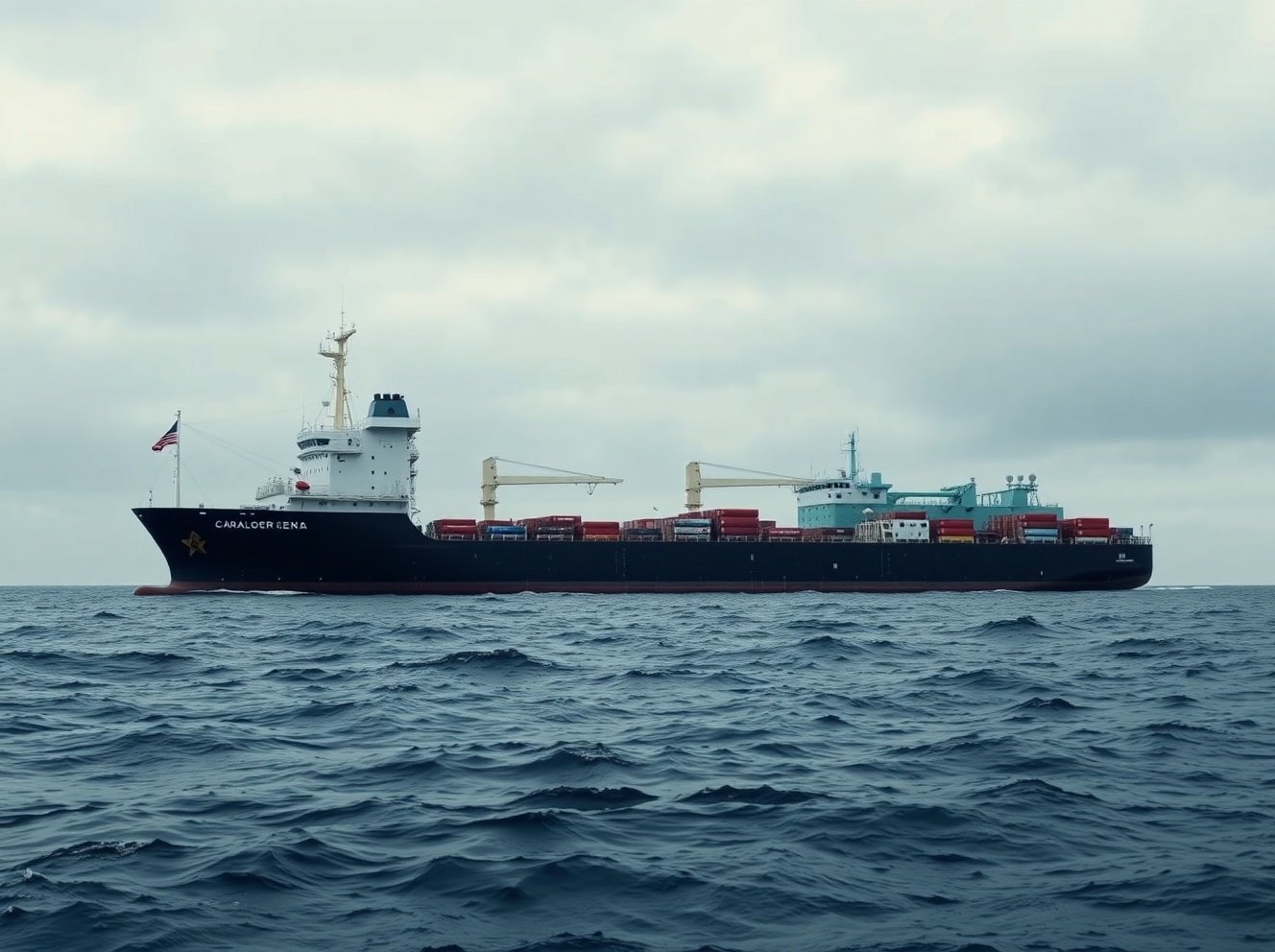
US Treasury Sanctions Escalate: Multiple Iran-Related Vessels Targeted in Maritime Crackdown
WASHINGTON, D.C. — March 15, 2025 — The United States Treasury Department has significantly escalated its maritime pressure campaign against Iran by adding multiple vessels to its sanctions list. This decisive action targets what officials describe as a sophisticated network attempting to circumvent international restrictions on Iranian oil exports. Consequently, these sanctions immediately freeze any U.S.-based assets belonging to the designated entities. Furthermore, they prohibit American citizens and companies from conducting business with them.
US Treasury Sanctions Target Iranian Maritime Network
The Office of Foreign Assets Control (OFAC), the Treasury’s enforcement arm, announced the designations this week. Specifically, the action identifies several vessels allegedly involved in transporting Iranian petroleum products. These tankers reportedly employed deceptive shipping practices to obscure their origins and destinations. Maritime analysts have tracked these vessels switching off their Automatic Identification Systems (AIS) transponders. This common tactic, known as “going dark,” helps ships avoid detection while moving sanctioned cargo.
This enforcement move builds upon years of escalating sanctions pressure. The Treasury Department first intensified its focus on Iran’s oil exports after the U.S. withdrawal from the Joint Comprehensive Plan of Action (JCPOA) in 2018. Since then, OFAC has periodically updated its Specially Designated Nationals (SDN) list with new maritime entities. The current action appears broader in scope, however, targeting an entire fleet rather than individual ships.
Analyzing the Sanctions Mechanism and Immediate Impact
Sanctions designations create immediate legal and financial consequences. Any property or interests belonging to the listed vessels within U.S. jurisdiction become blocked. American persons must generally reject transactions involving these entities. Moreover, foreign financial institutions conducting significant transactions with them risk facing secondary sanctions themselves. This creates a powerful deterrent within the global financial system.
The practical impact on the targeted vessels is severe. They will struggle to obtain essential maritime services:
- Insurance and Reinsurance: Major P&I Clubs typically withdraw coverage.
- Port Services: Many global ports will deny them entry and bunkering.
- Classification: Recognized organizations may suspend their certificates.
- Crewing and Supplies: Reputable providers will avoid contractual relationships.
This effectively places the vessels in a maritime quarantine. They become commercially and operationally isolated from legitimate international trade.
Expert Analysis on Sanctions Evasion Tactics
Maritime security experts note that Iran has developed increasingly sophisticated methods to bypass sanctions. These methods often involve complex ownership structures and frequent vessel reflagging. For instance, a tanker might change its name, its registered owner, and its flag state within a single voyage. Additionally, ship-to-ship (STS) transfers in open waters help disguise the origin of cargo.
“The cat-and-mouse game between sanctioning authorities and illicit networks continues to evolve,” explains Dr. Ian Ralby, CEO of I.R. Consilium and a leading maritime security analyst. “Authorities now rely heavily on satellite imagery, financial intelligence, and AIS data analysis to identify deceptive patterns. The recent designations likely resulted from months of coordinated intelligence gathering across multiple agencies.”
The table below outlines common evasion tactics and corresponding countermeasures:
| Evasion Tactic | Description | Detection Method |
|---|---|---|
| AIS Manipulation | Turning off transponders or broadcasting false data | Satellite-based RF detection & pattern analysis |
| STS Transfers | Transferring cargo between ships at sea | Optical & synthetic aperture radar (SAR) imagery |
| Shell Companies | Using layered, opaque corporate ownership | Financial forensic investigation & database cross-referencing |
| Flag Hopping | Frequently changing a vessel’s flag state registry | Monitoring registration databases for rapid changes |
Geopolitical Context and Regional Security Implications
These sanctions occur within a complex geopolitical landscape. Tensions in the Middle East have remained elevated, with ongoing concerns about Iran’s nuclear program and regional activities. The maritime domain has become a critical front in this broader confrontation. Previously, the U.S. has seized cargoes of Iranian oil and targeted networks financing proxy groups.
Regional allies, particularly Gulf Cooperation Council (GCC) states, generally support stricter enforcement. They share concerns about Iranian influence and illicit arms shipments. Conversely, China and Russia have criticized unilateral U.S. sanctions, advocating for diplomacy instead. These divergent approaches create challenges for unified global action.
From a security perspective, illicit maritime networks can also facilitate weapons proliferation. The U.S. Navy’s Fifth Fleet, based in Bahrain, regularly patrols key chokepoints like the Strait of Hormuz. Its mission includes intercepting weapons shipments destined for groups like the Houthis in Yemen. Therefore, disrupting the financial and logistical networks supporting these shipments remains a key objective.
The Economic Rationale Behind Oil Sanctions
Petroleum exports represent Iran’s primary source of foreign currency revenue. The U.S. strategy aims to significantly reduce this income. Officials argue this constrains funding for activities deemed destabilizing. According to estimates from energy analytics firms, Iran’s oil exports have fluctuated dramatically under sanctions pressure. At their peak before 2018, exports exceeded 2.5 million barrels per day (bpd). During the strictest enforcement periods, they fell below 500,000 bpd.
Recent months, however, have seen a reported increase in exports, prompting this latest enforcement wave. Analysts suggest Iran has managed to build more resilient smuggling networks, often involving older tankers in “shadow fleets.” These vessels operate outside the mainstream maritime industry, accepting higher risks for substantial profits. The Treasury’s action directly targets these alternative networks.
Legal Framework and Enforcement Challenges
The Treasury Department derives its sanctioning authority from several laws and executive orders. Key among them are the International Emergency Economic Powers Act (IEEPA) and the Iran Sanctions Act. Executive orders provide the specific legal basis for designating entities linked to Iran’s energy sector or Islamic Revolutionary Guard Corps (IRGC). OFAC must establish a reasonable basis for linking each vessel to prohibited activities.
Enforcement remains challenging across the vast maritime domain. While the U.S. can control its own financial system, it relies on cooperation from other nations for physical interdiction. This requires extensive diplomatic engagement and intelligence sharing. Success often depends on the willingness of flag states, port states, and coastal states to act on U.S. information.
Furthermore, the legal principle of “freedom of navigation” complicates actions on the high seas. Nations generally cannot board foreign-flagged vessels without the consent of the flag state or a UN Security Council mandate. Therefore, financial sanctions become a more readily available tool for exerting pressure without direct physical confrontation.
Conclusion
The US Treasury’s decision to sanction multiple Iran-related vessels marks a significant escalation in its financial pressure campaign. This action directly targets the maritime networks that facilitate Iran’s oil exports, aiming to constrict a vital revenue stream. The designations will have immediate operational consequences for the targeted ships, isolating them from global trade services. Moreover, this move fits within the broader geopolitical contest in the Middle East, where economic tools are increasingly deployed alongside diplomatic and military ones. The effectiveness of these US Treasury sanctions will depend on continued international cooperation and adaptive enforcement against evolving evasion tactics. Ultimately, this development underscores the growing importance of maritime domain awareness and financial intelligence in modern statecraft.
FAQs
Q1: What does it mean when the US Treasury sanctions a vessel?
The designation adds the vessel to the Specially Designated Nationals (SDN) list. This blocks any of its assets under U.S. jurisdiction and prohibits U.S. persons from transacting with it. Foreign entities risk secondary sanctions for dealing with it.
Q2: How does Iran typically try to bypass maritime sanctions?
Common tactics include disabling AIS transponders, conducting ship-to-ship transfers at sea, using complex shell company ownership structures, and frequently re-flagging vessels to different registries.
Q3: Can a sanctioned vessel still operate?
It can physically sail, but its operations become severely limited. It will struggle to obtain insurance, enter most major ports, secure classification, or purchase supplies through legitimate channels, making commercial trade extremely difficult.
Q4: What is the legal authority for these US Treasury sanctions?
Primary authority comes from the International Emergency Economic Powers Act (IEEPA), the Iran Sanctions Act, and various executive orders related to Iran’s energy sector and the Islamic Revolutionary Guard Corps (IRGC).
Q5: Do these sanctions violate international law?
The U.S. views them as a lawful exercise of domestic authority with extraterritorial effect. Critics, including some nations and legal scholars, argue that unilateral secondary sanctions exceed jurisdictional boundaries and conflict with principles of state sovereignty.
This post US Treasury Sanctions Escalate: Multiple Iran-Related Vessels Targeted in Maritime Crackdown first appeared on BitcoinWorld.


You May Also Like

Spot CVD Chart Reveals Critical Bitcoin Support Levels as Institutional Orders Surge on April 2

Xi Denies Arming Iran in Trump Letter




