

Silver Downside Risks Intensify After Failed Rally, OCBC Warns Investors
BitcoinWorld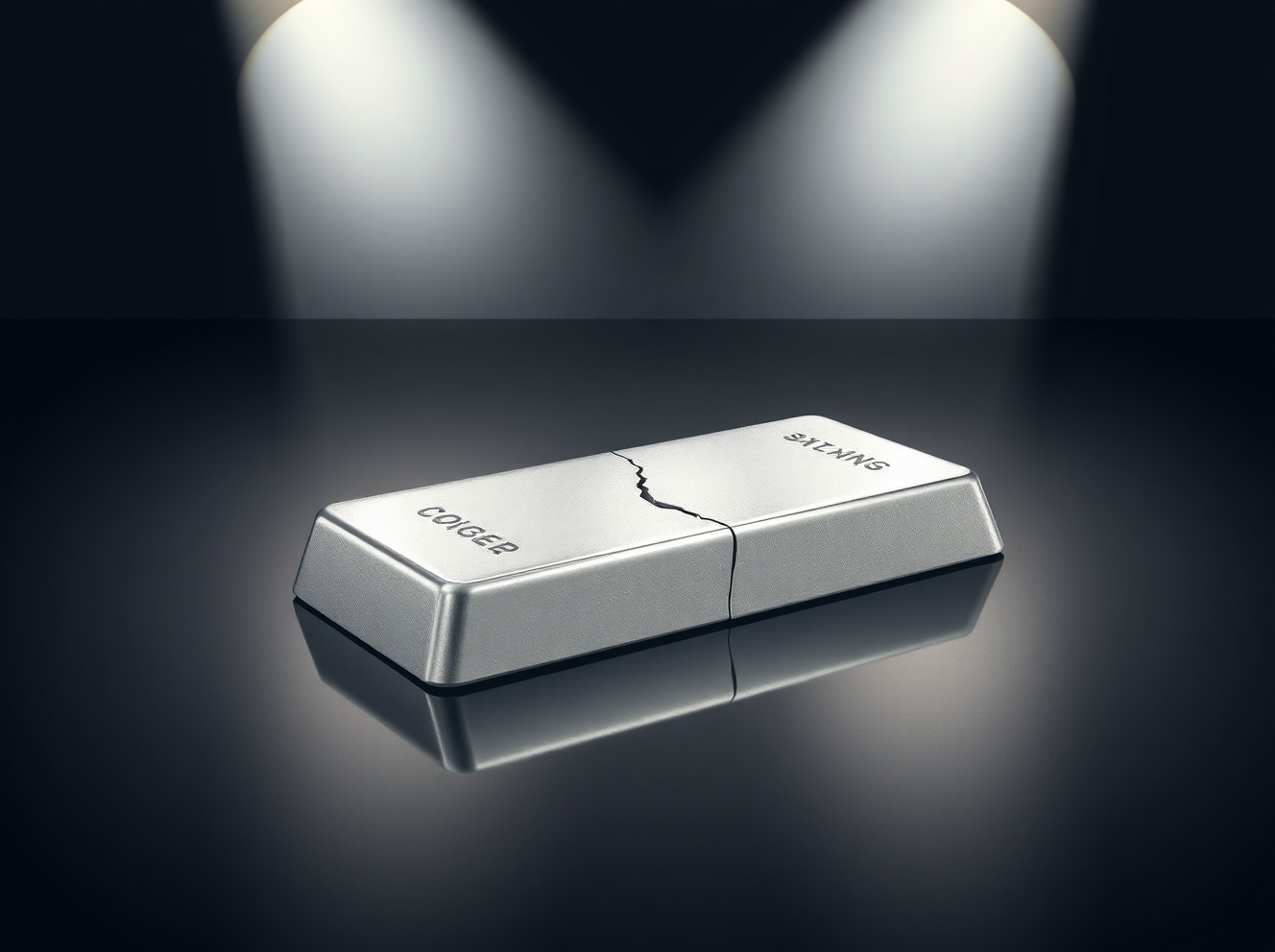
Silver Downside Risks Intensify After Failed Rally, OCBC Warns Investors
Silver downside risks have escalated significantly following a failed rally, according to a recent analysis from OCBC. The precious metal now faces mounting pressure as macroeconomic headwinds and technical resistance combine to challenge its near-term trajectory. Investors should carefully evaluate these emerging threats.
OCBC Analysis Highlights Silver Downside Risks
OCBC’s latest commodity report identifies critical factors driving silver downside risks. The failed rally, which saw silver prices briefly test resistance levels near $26 per ounce, has reversed sharply. This reversal signals weakening bullish momentum. The bank’s analysts point to a strengthening US dollar as a primary catalyst. A stronger dollar typically pressures dollar-denominated commodities like silver. Additionally, rising US Treasury yields reduce the appeal of non-yielding assets such as precious metals.
OCBC notes that silver’s industrial demand component adds another layer of vulnerability. Approximately 50% of global silver consumption comes from industrial applications. This includes electronics, solar panels, and automotive components. Slowing global manufacturing activity, particularly in China and Europe, directly impacts this demand. The bank’s report states that “the failed rally has exposed underlying structural weaknesses in the silver market.”
Technical Indicators Confirm Silver Downside Risks
Chart analysis from OCBC reveals several bearish signals. Silver prices have broken below key moving averages, including the 50-day and 100-day simple moving averages. This technical breakdown often precedes further declines. The Relative Strength Index (RSI) has dropped below 40, entering bearish territory. Trading volumes increased during the selloff, confirming strong selling pressure.
Support levels now sit at $23.50 and $22.00 per ounce. A breach below $23.50 could accelerate selling. The failed rally occurred after silver attempted to break above the $26.50 resistance level three times in the past two months. Each attempt failed, creating a triple-top pattern. This pattern often signals a major trend reversal. OCBC’s technical team emphasizes that “the failed rally pattern is one of the most reliable bearish signals in commodity markets.”
Macroeconomic Factors Amplify Silver Downside Risks
Several macroeconomic forces compound silver downside risks. The Federal Reserve maintains its hawkish stance on interest rates. Higher rates increase the opportunity cost of holding silver. Real yields have turned positive for the first time since 2020. This development historically correlates with lower precious metals prices. Inflation data continues to show stickiness above the Fed’s 2% target. This reduces expectations for rate cuts in the near term.
Global recession fears also weigh on silver. The IMF recently downgraded its global growth forecast to 2.8% for 2025. Industrial metals, including silver, typically underperform during economic slowdowns. The manufacturing PMIs in major economies remain in contraction territory. China’s Caixin Manufacturing PMI fell to 49.5 in March, below the 50 threshold. Europe’s manufacturing PMI stands at 46.1. These figures suggest continued weakness in industrial activity.
Silver Downside Risks vs. Gold: A Diverging Story
Silver downside risks contrast sharply with gold’s relative stability. Gold prices have held above $2,000 per ounce, supported by central bank purchases and geopolitical tensions. Silver, however, lacks the same safe-haven premium. The gold-to-silver ratio has expanded to 85:1, well above the historical average of 60:1. This ratio measures how many ounces of silver one ounce of gold can buy. A rising ratio indicates silver underperformance relative to gold.
OCBC analysts suggest that silver’s dual nature as both a monetary and industrial metal creates unique vulnerabilities. During periods of economic uncertainty, silver often falls faster than gold. This occurs because industrial demand weakens while investment demand fails to compensate fully. The bank’s report highlights that “silver downside risks are amplified by its industrial exposure, which gold does not share.”
Market Sentiment and Positioning Data
Recent positioning data from the Commodity Futures Trading Commission (CFTC) reveals bearish sentiment. Managed money net long positions in silver futures have declined by 35% over the past month. Commercial hedgers have increased their short positions. This divergence between speculative and commercial traders often precedes sustained price moves. The Commitment of Traders (COT) report shows that speculative longs are at their lowest level since November 2024.
Exchange-traded fund (ETF) flows confirm this trend. Global silver ETFs recorded net outflows of 200 tonnes in March. This marks the third consecutive month of outflows. The iShares Silver Trust (SLV), the largest silver ETF, saw its holdings decline by 2.5% during the same period. Retail investor sentiment has also turned cautious. Social media analysis shows declining mentions of silver in bullish contexts.
Supply-Side Factors and Silver Downside Risks
Supply-side dynamics offer some support but cannot offset demand weakness. Global silver mine production is expected to decline by 2% in 2025. Primary silver mines face declining ore grades and rising costs. However, silver is primarily produced as a byproduct of copper, lead, and zinc mining. These base metal operations continue at steady levels. Secondary supply from recycling remains stable at approximately 5,000 tonnes annually.
The Silver Institute’s 2025 World Silver Survey projects a modest supply deficit of 1,000 tonnes. This deficit is smaller than the 3,000-tonne deficit recorded in 2024. A narrowing deficit reduces upward price pressure. OCBC notes that “supply deficits alone cannot sustain prices when demand-side risks dominate.” The bank maintains that demand destruction from economic weakness outweighs supply constraints.
Impact on Investors and Industries
Silver downside risks carry significant implications for various stakeholders. Mining companies face margin compression as prices fall. Companies with high all-in sustaining costs (AISC) above $15 per ounce may struggle. Junior miners with limited financial buffers are particularly vulnerable. Industrial consumers benefit from lower input costs. Solar panel manufacturers, which use silver in photovoltaic cells, gain from reduced expenses.
Investors holding physical silver or silver ETFs face potential portfolio losses. A 10% decline from current levels would erase approximately $3 billion in market value from silver holdings. Futures traders with long positions risk margin calls. Options traders holding call options may see their premiums decay rapidly. The failed rally has trapped many latecomers who bought near the top.
Historical Context of Silver Downside Risks
Historical patterns provide context for current silver downside risks. Silver experienced similar failed rallies in 2011, 2016, and 2020. In each case, prices subsequently declined by 20-40% over the following six months. The 2011 rally saw silver peak at $49 per ounce before crashing to $26. The 2020 rally pushed prices to $30 before they retreated to $22. Current conditions resemble the 2016 pattern most closely.
In 2016, silver rallied on expectations of industrial recovery. These expectations failed to materialize. The subsequent decline lasted eight months. OCBC’s historical analysis suggests that “silver downside risks tend to materialize over extended periods, not in sharp crashes.” This gradual decline pattern allows for periodic bounces that trap additional buyers.
Expert Perspectives on Silver Downside Risks
Market experts offer varying views on silver downside risks. John Reade, chief market strategist at the World Gold Council, notes that “silver’s industrial demand makes it more sensitive to economic cycles than gold.” He expects further weakness if manufacturing data deteriorates. Philip Newman, director at Metals Focus, highlights that “silver’s failed rally reflects broader commodity market weakness.” He points to copper and platinum also declining.
Peter Hug, global trading director at Kitco Metals, cautions that “silver downside risks could accelerate if the dollar strengthens further.” He advises investors to watch the DXY index closely. A break above 105 would likely pressure silver below $23. Jeffrey Christian, managing partner at CPM Group, offers a contrarian view. He argues that “silver’s supply deficit will eventually support prices.” However, he acknowledges that timing remains uncertain.
Conclusion: Navigating Silver Downside Risks
Silver downside risks have grown substantially after the failed rally identified by OCBC. Technical breakdowns, macroeconomic headwinds, and weakening industrial demand all point to further declines. Investors should adopt defensive strategies. These include reducing exposure, using stop-loss orders, and diversifying into less correlated assets. The failed rally serves as a cautionary tale about chasing momentum in commodity markets. Silver’s dual nature as both a monetary and industrial metal creates unique risks that require careful management. OCBC’s warning deserves serious consideration from all market participants.
FAQs
Q1: What caused silver’s failed rally according to OCBC?
OCBC attributes the failed rally to a combination of a strengthening US dollar, rising Treasury yields, and weakening industrial demand. Technical resistance near $26.50 also prevented further gains.
Q2: How far could silver prices fall given current downside risks?
Technical analysis suggests key support at $23.50 and $22.00 per ounce. A breach below $23.50 could trigger further declines of 10-15% from current levels, based on historical patterns.
Q3: Are silver downside risks greater than gold’s?
Yes, silver faces greater downside risks than gold due to its industrial demand exposure. Gold benefits from stronger safe-haven demand and central bank purchases, which silver lacks.
Q4: What industries are most affected by falling silver prices?
Silver mining companies face margin compression and potential losses. Industrial consumers like solar panel and electronics manufacturers benefit from lower input costs.
Q5: Should investors sell their silver holdings now?
Investors should evaluate their risk tolerance and investment horizon. Defensive strategies like reducing exposure and using stop-loss orders may be appropriate given the heightened downside risks.
This post Silver Downside Risks Intensify After Failed Rally, OCBC Warns Investors first appeared on BitcoinWorld.


You May Also Like

U.S.-Iran tensions escalate: XRP could surge 200% as analysts asses the risk of Bitcoin’s “King Status”
Trump signals he's still mad about German chancellor's 'humiliated' remark
