

Crypto Fear & Greed Index Plunges to 20: Navigating the Chilling Waters of Extreme Market Fear
BitcoinWorld
Crypto Fear & Greed Index Plunges to 20: Navigating the Chilling Waters of Extreme Market Fear
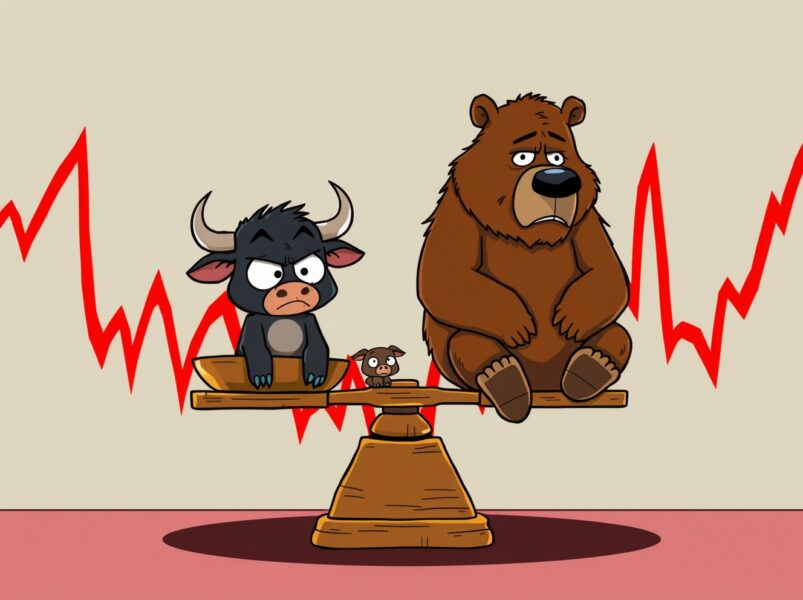
Global cryptocurrency markets entered a new phase of pronounced anxiety this week as the widely monitored Crypto Fear & Greed Index dropped to a score of 20, firmly entrenching investor sentiment in the “extreme fear” zone. This four-point decline, reported by data provider Alternative.me, signals deepening caution among traders and institutions amid ongoing market volatility. The index serves as a crucial psychological barometer, quantifying the emotional temperature of a market often driven by speculation and news cycles. Consequently, this latest reading provides essential context for understanding current price action and potential future trends.
Decoding the Crypto Fear & Greed Index and Its 20 Score
The Crypto Fear & Greed Index functions as a composite gauge, compiling data from six distinct market dimensions to produce a single sentiment score. A value of 0 represents maximum fear, while 100 indicates extreme greed. The current score of 20 sits deep within the red “extreme fear” band, typically defined as 0-25. This calculation relies on a weighted formula designed to capture both market behavior and public interest. Specifically, market volatility and trading volume each contribute 25% to the final score. Social media sentiment and survey data each account for 15%. Finally, Bitcoin’s market dominance and Google search trends for cryptocurrency terms each make up 10% of the index value.
This multifaceted approach aims to filter out noise and identify genuine sentiment shifts. For instance, high volatility paired with low volume often suggests panic selling, a classic fear indicator. Conversely, surging social media hype alongside rising prices can signal greed. The index’s drop to 20, therefore, reflects a confluence of negative signals across these metrics. Analysts frequently observe that sustained periods of extreme fear have historically preceded market bottoms, presenting potential accumulation opportunities for long-term investors. However, the index is a lagging indicator, reflecting past and present conditions rather than predicting future prices with certainty.
The Anatomy of Extreme Fear in Cryptocurrency Markets
Several interconnected factors typically drive the index into extreme fear territory. Increased price volatility, a key input metric, often stems from macroeconomic uncertainty, regulatory announcements, or large-scale liquidations. Furthermore, declining trading volume can indicate a loss of retail interest or institutional hesitation. The social media component captures the tone of discussion on platforms like Twitter and Reddit, where fear can spread rapidly through communities. Survey data from retail and institutional players adds a direct measure of psychological outlook.
Bitcoin’s market dominance, representing its share of the total cryptocurrency market capitalization, also plays a role. A rising dominance in a falling market can signal a “flight to safety,” where investors sell altcoins for Bitcoin, perceived as a more stable digital asset. Simultaneously, a drop in Google search volume for terms like “Bitcoin” or “buy crypto” suggests waning public curiosity, often correlating with bearish phases. The convergence of these negative signals creates a self-reinforcing cycle. Fear leads to selling, selling increases volatility and negative social sentiment, which in turn feeds back into greater fear, as measured by the index.
Historical Context and Comparative Analysis
Placing the current score of 20 in historical context provides crucial perspective. The index famously hit a nadir of 6 in March 2020 during the COVID-19 market crash and again reached single digits following the collapse of the Terra-Luna ecosystem in May 2022. Comparatively, a score of 20, while severe, indicates a less panicked state than those historic crises. The following table illustrates key historical readings and their market contexts:
| Index Score | Period | Market Context |
|---|---|---|
| 6 | March 2020 | Global pandemic-induced market crash |
| 8 | May 2022 | Terra-Luna and Celsius Network collapse |
| 20 | Current Reading | Macro uncertainty, regulatory pressure, volatility |
| 85+ | Q4 2021 | Market peak and extreme greed phase |
This historical lens shows that markets are cyclical, oscillating between fear and greed. Extended fear phases often wash out weak hands and overleveraged positions, creating healthier foundations for future growth. Market veterans often reference Warren Buffett’s adage, “Be fearful when others are greedy, and greedy when others are fearful,” when interpreting such sentiment indicators. However, they also caution that timing a market bottom based solely on sentiment is notoriously difficult.
Practical Implications for Investors and Traders
For market participants, an extreme fear reading carries significant practical implications. Firstly, it suggests high emotional stress, which can lead to irrational decision-making. Investors are advised to adhere to pre-defined risk management strategies and avoid panic selling. Secondly, such periods often see increased correlation between cryptocurrency assets and traditional risk-off assets, reducing the effectiveness of diversification within the crypto sector alone.
Key behaviors to monitor during extreme fear include:
- Exchange Flows: Tracking Bitcoin movements to and from exchanges can indicate whether holders are moving to custody (accumulation) or preparing to sell.
- Derivatives Data: Funding rates in perpetual swap markets often turn deeply negative in fear phases, and open interest can decline as leverage unwinds.
- On-Chain Metrics: Indicators like the MVRV Z-Score or Spent Output Profit Ratio (SOPR) can show whether the market is in a historically undervalued state, often coinciding with extreme fear.
For long-term, value-oriented investors, these phases can present strategic dollar-cost averaging opportunities, acquiring assets at prices disconnected from long-term fundamentals. Conversely, for short-term traders, extreme fear environments are characterized by high volatility and unpredictable squeezes, requiring heightened caution and smaller position sizes. The overarching principle is to use the Fear & Greed Index not as a standalone trading signal, but as one piece of a comprehensive analytical mosaic that includes on-chain data, macroeconomic trends, and technical analysis.
Conclusion
The Crypto Fear & Greed Index’s decline to a score of 20 offers a clear, quantifiable snapshot of prevailing market psychology, confirming a state of extreme fear among cryptocurrency participants. This sentiment stems from a measurable deterioration across volatility, volume, social discourse, and search interest metrics. While historically, such depths of fear have marked cyclical lows and eventual recovery points, they also represent periods of significant risk and emotional challenge for investors. Navigating this landscape requires discipline, a focus on fundamentals, and an understanding that market sentiment, while powerful, is ultimately a transient force. The index remains a vital tool for contextualizing price action, reminding market participants that behind every chart and trade lies a complex web of human emotion and collective behavior.
FAQs
Q1: What does a Crypto Fear & Greed Index score of 20 mean?
A score of 20 indicates the market is in a state of “extreme fear.” It is a composite measurement based on volatility, trading volume, social media, surveys, Bitcoin dominance, and search trends, suggesting widespread negative sentiment and caution among investors.
Q2: Who creates the Crypto Fear & Greed Index and how is it calculated?
The index is compiled by the data provider Alternative.me. It uses a weighted formula: volatility (25%), market volume (25%), social media (15%), surveys (15%), Bitcoin dominance (10%), and Google Trends data (10%) to generate a score from 0 (extreme fear) to 100 (extreme greed).
Q3: Is the Fear & Greed Index a good tool for predicting Bitcoin’s price?
The index is a lagging sentiment indicator, not a predictive price tool. It reflects current and recent market psychology. Historically, prolonged extreme fear has coincided with market bottoms, but using it alone for timing trades is unreliable and risky.
Q4: What is the difference between “fear” and “extreme fear” on the index?
The index is divided into zones: 0-25 represents “Extreme Fear,” 26-46 is “Fear,” 47-54 is “Neutral,” 55-75 is “Greed,” and 76-100 is “Extreme Greed.” A move from fear to extreme fear signifies a measurable intensification of negative signals across all its data inputs.
Q5: How often should investors check the Crypto Fear & Greed Index?
For most long-term investors, checking the index daily is unnecessary and can lead to emotional reactions. Reviewing it weekly or during periods of high market stress can provide useful context, but it should inform rather than dictate an investment strategy based on broader fundamentals.
This post Crypto Fear & Greed Index Plunges to 20: Navigating the Chilling Waters of Extreme Market Fear first appeared on BitcoinWorld.
You May Also Like
Crucial Fed Rate Cut: Powell’s Bold Risk Management Move Explained

Why Vitalik Buterin Just Pulled 16,384 ETH From His Holdings
