Imagine this: You’re a CX leader in a bustling Mumbai fintech firm. Your team stares at fragmented customer journeys—siloed data from sales, support, and ops clashingImagine this: You’re a CX leader in a bustling Mumbai fintech firm. Your team stares at fragmented customer journeys—siloed data from sales, support, and ops clashing

Budget 2026: How Customs Cuts and TDS Reforms Supercharge CX Strategies

2026/01/27 15:53

Imagine this: You’re a CX leader in a bustling Mumbai fintech firm. Your team stares at fragmented customer journeys—siloed data from sales, support, and ops clashing like Mumbai traffic. AI promises fixes, but gaps widen as Budget 2026 looms, forcing tech upgrades amid duty cuts and tax shifts.

CXQuest.com explores how India’s Budget 2026 reshapes CX strategies. Leaders face siloed teams, AI gaps, and journey fragmentation. This article targets intermediate CX/EX pros with frameworks and outcomes.

What Drives Budget 2026’s CX Impact?

Budget 2026 simplifies customs duties and TDS rates. It eases costs for tech imports key to AI tools. CX teams gain cheaper access to analytics platforms.

Finance Minister Nirmala Sitharaman presents it February 1, 2026. Expect tariff slabs drop from eight to five or six. This fixes inverted duties from FTAs with UK, New Zealand, Oman.

Gautam Khattar from Price Waterhouse & Co notes free trade pacts cheapen finished goods over raw materials. Rationalization boosts domestic manufacturing of CX hardware like servers.

How Do Siloed Teams Hurt CX Now?

Siloed teams block unified views of customer needs. Data stays trapped in departments, inflating resolution times by 30%. AI can’t bridge this without integration.

Budget-driven duty cuts lower hardware costs by 15-20%. Firms import AI servers cheaper, linking sales CRM to support tickets seamlessly.

Forrester predicts 2026 scandals from rushed AI research. Overstretched CX teams hand off to autonomous agents too soon. Build AI fluency first to avoid this.

Why Fill AI Gaps Before Budget Hits?

AI gaps leave CX reactive, not predictive. Teams miss 40% of journey pain points without genAI analytics. Budget 2026 funds critical minerals for AI chips, closing hardware barriers.

Annette Franz, CX Journey CEO, urges culture checks. Ask: Does AI solve employee problems? Train staff to collaborate with bots. Link AI to outcomes like lower churn.

Edgetier forecasts AI governance as top 2026 trend. Monitor chatbots real-time for risks. Proactive triage cuts escalations by 25%.

What Does Customs Overhaul Mean for CX Tech?

Customs slabs shrink to five-six rates. This mirrors GST cuts, targeting inverted structures. CX tools like cloud AI get affordable fast.

Industry pushes amnesty for Rs 1.52 lakh crore in disputes. Clears litigation, speeds tech procurement. Gems, jewellery sectors—big CX users—gain from MSME support.

Table: Customs Impact on CX Tools

SectorCurrent Duty IssueBudget Fix ExpectedCX Outcome
AI HardwareInverted raw material5-6 slabs rationalized20% cost drop
Cloud ServersFTA distortionsAmnesty schemeFaster deployment
Analytics SWHigh import tariffsDebt-to-GDP focusPredictive insights

How Will TDS Rationalization Ease CX Compliance?

TDS categories consolidate into fewer slabs. Businesses cut admin by 25%, freeing budget for EX training. New Tax Act 2025 transitions smoother with FAQs.

Individuals eye standard deduction hikes past Rs 12 lakh. Migration to new regime accelerates CX investments in AI upskilling.

Compliance drops let CX leaders fund journey mapping. Fragmented paths unify via integrated TDS data flows.

What Role Does Debt Reduction Play in CX?

Fiscal deficit targets 4.2% GDP for FY27. Debt-to-GDP falls to 55.1%. Frees funds for defence, Pay Commission, MSMEs.

CX benefits from stable macros. Higher allocations hit tariff-sensitive sectors like garments. Leather firms upgrade to AI personalization.

Economists see 50% debt goal by FY31. Predictable budgets let CX plan multi-year AI roadmaps.

Key Insights

  • AI Maturity Leads: 75% leaders trust genAI blindly. Governance prevents scandals.
  • EX-CX Link: Boost employee tools first. Freshworks notes EX lifts CX scores 2x.
  • Budget Boost: Duty cuts save 15% on CX tech stacks.
  • Journey Fix: Unified data predicts 30% more needs.

Common Pitfalls

  • Rushing AI without culture buy-in.
  • Ignoring EX in CX budgets.
  • Skipping governance amid hype.

How to Build a Budget-Proof CX Framework?

CXQuest AI-Silo Buster Framework (4 steps):

  1. Map Silos: Audit data flows weekly.
  2. AI Audit: Score tools on governance (1-10).
  3. Duty Leverage: Procure post-Budget for savings.
  4. Measure Outcomes: Track NPS pre/post AI.

Example: A Mumbai bank used similar cuts. Post-GST, they deployed AI chatbots. Churn dropped 18% in six months.

Forrester warns: Embed CX data in AI models. Ditch generic feedback; focus on B2B/B2C traffic dips.

Real-World CX Story: Fintech Turnaround

Consider PayQuest, a CXQuest partner. Siloed teams fragmented journeys. AI gaps left support blind.

Post-2025 Budget prep, they anticipated duty cuts. Imported analytics suite at 17% less. Unified EX-CX via agentic AI.

Outcome: CSAT rose 22 points. Employees handled 40% more queries with empathy handoffs.
Budget 2026: How Customs Cuts and TDS Reforms Supercharge CX Strategies

Checklist: AI Gap Closer

  • [ ] Train 80% team on genAI by Q1 2026.
  • [ ] Integrate TDS data to EX platforms.
  • [ ] Test chatbots for 95% accuracy.
  • [ ] Budget for critical minerals tech.
  • [ ] Run monthly silo audits.

FAQ

How does Budget 2026 customs overhaul directly cut CX tech costs?
Duty slabs drop to 5-6, fixing inversions. AI hardware imports save 15-20%, enabling predictive tools without budget strain.

What AI gaps do CX teams face in 2026, and how to bridge them?
Gaps include poor governance, rushed agents. Bridge via fluency training, real-time monitoring, EX alignment for 25% better outcomes.

Can TDS rationalization free CX budgets for journey fixes?
Yes, fewer slabs cut compliance 25%. Redirect savings to mapping tools, unifying fragmented paths seamlessly.

How does debt reduction stabilize CX strategies long-term?
4.2% deficit targets predictable funding. CX roadmaps extend to FY31, hitting 50% debt goal with MSME support.

What’s the EX-CX link in Budget-driven AI adoption?
Strong EX drives CX excellence. Prioritize employee AI training; see 2x satisfaction lifts per Freshworks data.

Will Budget amnesty clear CX litigation roadblocks?
Targets Rs 1.52 lakh crore disputes. Frees procurement for AI, closing historic cases fast.

Actionable Takeaways

  • Audit Silos Now: List top three data blocks; integrate via API in 30 days.
  • Prep AI Governance: Define rules for agents; test weekly pre-Budget.
  • Hunt Duty Savings: Track tariff slabs post-Feb 1; reorder hardware.
  • Align EX-CX: Survey employees on AI needs; train 50% by March.
  • Map Journeys: Use new Tax Act FAQs for unified views; cut fragmentation 20%.
  • Measure Debt Wins: Forecast FY27 savings; allocate to NPS drivers.
  • Build Framework: Adopt CXQuest’s 4-step model; pilot in one team.
  • Watch Scandals: Monitor genAI outputs daily; escalate empathy cases.

The post Budget 2026: How Customs Cuts and TDS Reforms Supercharge CX Strategies appeared first on CX Quest.

Disclaimer: The articles reposted on this site are sourced from public platforms and are provided for informational purposes only. They do not necessarily reflect the views of MEXC. All rights remain with the original authors. If you believe any content infringes on third-party rights, please contact [email protected] for removal. MEXC makes no guarantees regarding the accuracy, completeness, or timeliness of the content and is not responsible for any actions taken based on the information provided. The content does not constitute financial, legal, or other professional advice, nor should it be considered a recommendation or endorsement by MEXC.

You May Also Like

Crucial Fed Rate Cut: Powell’s Bold Risk Management Move Explained

Crucial Fed Rate Cut: Powell’s Bold Risk Management Move Explained

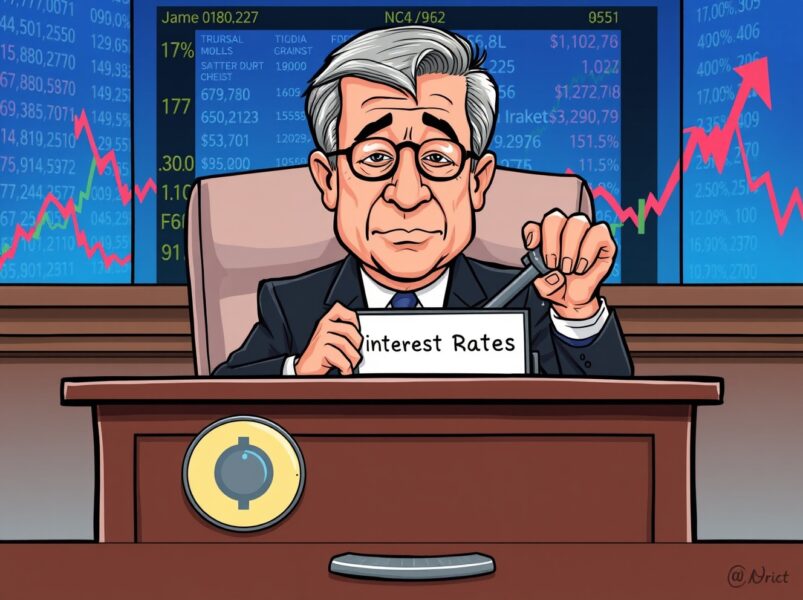
BitcoinWorld Crucial Fed Rate Cut: Powell’s Bold Risk Management Move Explained In a significant development for global financial markets, Federal Reserve Chair Jerome Powell recently described the latest Fed rate cut as a critical risk management measure. This statement immediately captured the attention of investors, economists, and especially those in the dynamic cryptocurrency space. Understanding Powell’s rationale and the potential implications of this move is essential for navigating today’s complex economic landscape. What Exactly is a Fed Rate Cut and Why Does it Matter? A Fed rate cut refers to the Federal Reserve lowering the target range for the federal funds rate. This is the interest rate at which commercial banks borrow and lend their excess reserves to each other overnight. When the Fed lowers this rate, it typically makes borrowing cheaper across the entire economy. This decision impacts everything from mortgage rates to business loans. The Fed uses interest rates as a primary tool to influence economic activity, aiming to achieve maximum employment and stable prices. A lower rate often stimulates spending and investment, but it can also signal concerns about economic slowdown. Key reasons for a rate cut often include: Slowing economic growth or recession fears. Low inflation or deflationary pressures. Global economic instability impacting domestic markets. A desire to provide more liquidity to the financial system. Powell’s emphasis on ‘risk management’ suggests a proactive approach. The Fed is not just reacting to current data but also anticipating potential future challenges. They are essentially trying to prevent a worse economic outcome by adjusting policy now. How Does a Fed Rate Cut Influence the Broader Economy? When the Federal Reserve implements a Fed rate cut, it sends ripples throughout the financial world. For traditional markets, lower interest rates generally mean: Boost for Stocks: Companies can borrow more cheaply, potentially increasing profits and stock valuations. Investors might also move money from lower-yielding bonds into equities. Cheaper Borrowing: Consumers and businesses enjoy lower rates on loans, from mortgages to credit cards, encouraging spending and investment. Weaker Dollar: Lower rates can make a country’s currency less attractive to foreign investors, potentially leading to a weaker dollar. Bond Market Shifts: Existing bonds with higher yields become more attractive, while newly issued bonds will have lower yields. This shift in monetary policy aims to inject confidence and liquidity into the system, countering potential economic headwinds. However, there’s always a delicate balance to strike, as too much stimulus can lead to inflationary pressures down the line. What Does This Fed Rate Cut Mean for Cryptocurrency Investors? The impact of a Fed rate cut on the cryptocurrency market is often a topic of intense discussion. While crypto assets operate independently of central banks, they are not immune to broader macroeconomic forces. Here’s how a rate cut can play out: Increased Risk Appetite: With traditional savings and bond yields potentially lower, investors might seek higher returns in riskier assets, including cryptocurrencies like Bitcoin and Ethereum. Inflation Hedge Narrative: Some view cryptocurrencies, particularly Bitcoin, as a hedge against inflation and traditional currency debasement. If a rate cut leads to concerns about inflation, this narrative could gain traction. Liquidity Influx: A more accommodative monetary policy can increase overall liquidity in the financial system, some of which may flow into digital assets. Dollar Weakness: A weaker dollar, a potential consequence of rate cuts, can sometimes make dollar-denominated assets like crypto more appealing to international investors. However, it’s crucial to remember that the crypto market also has its unique drivers, including technological developments, regulatory news, and market sentiment. While a Fed rate cut can provide a tailwind, it’s not the sole determinant of crypto performance. Navigating the New Landscape: Actionable Insights for Crypto Investors Given the Federal Reserve’s stance on risk management through a Fed rate cut, what steps can crypto investors consider? Stay Informed: Keep a close watch on further Fed announcements and economic data. Understanding the broader macroeconomic picture is vital. Diversify Your Portfolio: While a rate cut might favor risk assets, a balanced portfolio that includes a mix of traditional and digital assets can help mitigate volatility. Long-Term Perspective: Focus on the fundamental value and long-term potential of your chosen cryptocurrencies rather than short-term fluctuations driven by macro news. Assess Risk Tolerance: Re-evaluate your personal risk tolerance in light of potential market shifts. Lower rates can encourage speculation, but prudence remains key. Powell’s description of the Fed rate cut as a risk management measure highlights the central bank’s commitment to maintaining economic stability. For cryptocurrency enthusiasts, this move underscores the increasing interconnectedness of traditional finance and the digital asset world. While a rate cut can create opportunities, a thoughtful and informed approach is always the best strategy. Frequently Asked Questions (FAQs) What exactly is a Fed rate cut? A Fed rate cut is when the Federal Reserve lowers its target for the federal funds rate, which is the benchmark interest rate banks charge each other for overnight lending. This action makes borrowing cheaper across the economy, aiming to stimulate economic activity. Why did Powell emphasize “risk management” for this Fed rate cut? Jerome Powell emphasized “risk management” to indicate that the Fed was proactively addressing potential economic slowdowns or other future challenges. It suggests a preventative measure to safeguard against adverse economic conditions rather than merely reacting to existing problems. How does a Fed rate cut typically affect the crypto market? A Fed rate cut can make traditional investments less attractive due to lower yields, potentially driving investors towards higher-risk, higher-reward assets like cryptocurrencies. It can also increase overall market liquidity and strengthen the narrative of crypto as an inflation hedge. Should crypto investors change their strategy after a rate cut? While a rate cut can influence market dynamics, crypto investors should primarily focus on their long-term strategy, fundamental research, and risk tolerance. It’s wise to stay informed about macroeconomic trends but avoid making impulsive decisions based solely on a single policy change. What are the potential downsides of a Fed rate cut? Potential downsides include increased inflationary pressures if the economy overheats, a weaker national currency, and the possibility of creating asset bubbles as investors chase higher returns in riskier markets. It can also signal underlying concerns about economic health. Did you find this article insightful? Share your thoughts and help others understand the implications of the Fed’s latest move! Follow us on social media for more real-time updates and expert analysis. To learn more about the latest crypto market trends, explore our article on key developments shaping Bitcoin’s price action. This post Crucial Fed Rate Cut: Powell’s Bold Risk Management Move Explained first appeared on BitcoinWorld.
Share
Coinstats2025/09/18 16:40
Why Vitalik Buterin Just Pulled 16,384 ETH From His Holdings

Why Vitalik Buterin Just Pulled 16,384 ETH From His Holdings

The post Why Vitalik Buterin Just Pulled 16,384 ETH From His Holdings appeared first on Coinpedia Fintech News Ethereum co-founder Vitalik Buterin just withdrew
Share
CoinPedia2026/01/30 18:19
Record-breaking streak ends – Rabobank

Record-breaking streak ends – Rabobank

The post Record-breaking streak ends – Rabobank appeared on BitcoinEthereumNews.com. Rabobank’s report notes that Gold has seen a significant retracement, ending
Share
BitcoinEthereumNews2026/01/30 18:24