Volaris defiende el arrendamiento húmedo de siete aviones para no afectar pasajeros

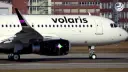
Volaris reported this Thursday that the temporary request it made for wet lease, of up to seven aircraft, for a limited period of up to 43 days, was to guarantee trips already scheduled by its customers during the high season at the end of the year.
This scheme "added to the arrival during the following days of three new Airbus aircraft, will allow protecting those passengers who fly to meet with their loved ones during the December festivities".
You may be interested in

States
Volaris inaugurates five new routes from Guadalajara
Markets
Volaris benefits from the end of the alliance between Aeroméxico and Delta Airlines
In a statement, the low-cost airline defended the measure that was validated by the Federal Civil Aviation Agency (AFAC) and that has caused discontent among the pilots' guild in Mexico because the crews were considered to be foreign.
"Volaris made this decision due to the increase in the number of reviews of Pratt C Whitney (PCW) NEO engines, scheduled for December 2025 and January 2026, higher than originally anticipated and which would reduce the availability of aircraft during this season," it was explained.
These reviews have caused the planes to be grounded for more than seven months.
Because Viva has experienced the same situation, it also resorted to a similar model of aircraft leasing also from Malta.
Regarding the labor aspect, the airline specified that it reaffirms its commitment to its ambassadors and to the Union of Workers of the Aeronautical Industry (STIA), with whom it has agreed that:
- There will be no impact on the workforce.
- Consequently: no employee will see their working hours, flight hours or income reduced.
- Additionally, it specified that all flights will have Volaris crew members.
"It is worth noting that this procedure, which has been recently used by other national operators, is supported by Articles 83 Bis of the Convention on International Civil Aviation; Article 45, last paragraph of the Civil Aviation Law; Article 4 of the Regulations of the Civil Aviation Law, and Mandatory Circular CO AV-08.3/20", Volaris detailed in a statement.
You may be interested in
Companies
AFAC advances in air safety processes
This week, the AFAC also ruled out that the authorization contravenes the Law.
"This measure does not constitute cabotage, as operations will be carried out by a Mexican airline with authorized aircraft, without the intervention of foreign operators," it pointed out.
También te puede interesar

Tiene 18 años y debe cuidar a su hermanita porque el ICE se llevó a su madre hondureña en Louisiana

Wall Street cierra mixto; Oracle se desploma casi 11%