

Key Takeaways:Base founder Jesse Pollak has admitted the network's onchain social bet failed, handing the Base app to Cobie and refocusing the Coinbase Layer-2 on trading, stablecoin payments, and AI Key Takeaways:Base founder Jesse Pollak has admitted the network's onchain social bet failed, handing the Base app to Cobie and refocusing the Coinbase Layer-2 on trading, stablecoin payments, and AI
Base Ditches Creator Coins for Pure DeFi: Jesse Pollak's 2026 Pivot to Trading, Payments, and AI Agents

Key Takeaways:
Base founder Jesse Pollak has admitted the network's onchain social bet failed, handing the Base app to Cobie and refocusing the Coinbase Layer-2 on trading, stablecoin payments, and AI agents to compete with fintech giants like Stripe and Robinhood.
Overview
Base, the Ethereum Layer-2 network incubated by Coinbase, is undergoing its most significant strategic pivot since launch. On July 15, 2026, Base creator and Coinbase executive Jesse Pollak published a candid long-form post on X admitting that the network's multi-year push into onchain social applications and creator coins had failed to drive the next wave of crypto adoption. Describing the first quarter of 2026 as "a punch in the face," Pollak conceded that Base's bets on Farcaster, Zora, miniapps, and content tokens "disintegrated completely," leaving the network behind competitors in trading, perpetual futures, prediction markets, tokenization, and payments.
The restructuring reshapes both the organization and the roadmap. Pollak is handing leadership of the consumer-facing Base app to Jordan Fish, the crypto investor and former UpOnly co-host known as Cobie, who joined Coinbase after it acquired his fundraising platform Echo for roughly $375 million. Pollak himself remains at the helm of Base overall but is stepping back from the app to concentrate on core blockchain infrastructure, framing the mission as building "the blockchain for global finance." For 2026, that mission narrows to three concrete priorities: winning trading, payments, and AI agents. This article breaks down what Base's pivot means, why the social strategy collapsed, who Cobie is, and how the new trading-payments-agents mandate positions the network against traditional financial rails.
1. The Social Collapse: Why Base Abandoned Creator Coins
The catalyst for this shift was a sober reassessment during the first quarter of 2026. Across 2024 and 2025, Base operated on a two-part thesis: that crypto's next growth wave would come from developer activity, and that this activity would flow through native onchain social experiences such as content platforms, messaging apps, and creator tokens. The first half of that bet paid off, since builders genuinely did expand the ecosystem, but they did so in financial primitives rather than social ones. In his post, Pollak drew a sharp line between the two outcomes. He acknowledged that builders drove real adoption through prediction markets, perpetuals, and stablecoins, but that social products were not at the center of that growth. The entire social layer the team had been building toward, spanning Farcaster, Zora, miniapps, and creator coins, unraveled over the quarter. Pollak summed up the miscalculation directly, writing that the first quarter of 2026 was "a punch in the face" and conceding that he had made the right bet on builders but the wrong bet on social. Coinbase CEO Brian Armstrong echoed the admission separately, acknowledging that betting on content tokens had been a mistake.
The opportunity cost compounded the problem. By optimizing for viral social loops, the core team fell behind on base-layer execution at precisely the moment specialized financial Layer-2 and Layer-3 competitors were gaining ground. That competitive pressure has only intensified as rivals such as Robinhood's chain move into onchain trading, sharpening the stakes for Base's course correction.
2. Reorganizing the Stack: The App and Chain Handoff
To address these missteps, Base is drawing a clear separation between its underlying network layer and its consumer application layer. The consumer-facing Base app is being handed back toward Coinbase's broader product organization under Cobie's leadership, while Pollak returns his focus to low-level systems engineering on the chain itself. The logic behind the split is distribution on one side and reliability on the other. By positioning the app within Coinbase's wider institutional and retail channels, the product can reach users far beyond a Base-only audience, and Cobie has signaled an intent to expand the app's scope into a broader cross-chain consumer gateway rather than a network-specific wallet. Pollak has described Fish's mandate as building "the best damn app for onchain." Freeing Pollak from application development, meanwhile, lets him and the core engineering team concentrate on throughput, latency, and the network's capacity to settle institutional capital.
That reliability focus is not abstract; In late June 2026, Base suffered two back-to-back mainnet stalls around a scheduled hard-fork update, halting block production and raising legitimate questions about the network's readiness for institutional users. Pollak's decision to devote his full attention to infrastructure is, in part, a direct response to those failures. The same update cycle also shipped Beryl, Base's second major network upgrade, which introduced the B20 token standard. Activated on mainnet on June 25, B20 moves token issuance from the smart-contract layer down to the chain protocol level, providing native support for stablecoins, tokenized real-world assets, and other fungible tokens while aiming to cut gas costs and reduce smart-contract risk.
3. The 2026 Mandate: Trading, Payments, and AI Agents
Underpinning the pivot is a new philosophical premise: that crypto does not need a consumer social wrapper to reach hyper-scale, and that better money is enough on its own. With that framing, Base has concentrated its resources on three financial verticals designed to compete with world-class fintech infrastructure.
The first is trading. Base is doubling down on high-velocity financial primitives that have shown genuine product-market fit, spanning decentralized perpetuals and the growing volume flowing through prediction markets. Pollak has framed trading broadly, encompassing nearly every tokenized asset category, from tokenized stocks and application tokens to meme coins, with the goal of making financial assets easier to access onchain. The second vertical is payments, where Base intends to become a streamlined settlement layer for stablecoins used by both consumers and enterprises, building tokenization and payment frameworks optimized for corporate treasuries and international settlement. The third is agentic infrastructure. As autonomous AI agents increasingly require programmatic, permissionless rails to transact, settle balances, and pay for compute, Base aims to become the primary settlement engine for machine-to-machine commerce. Pollak has argued that crypto is native money for computers and that artificial intelligence will create trillions of new economic actors, a thesis reflected in earlier moves such as Base MCP, which lets users manage crypto through an AI chat interface connected to protocols like Uniswap, Morpho, and Aerodrome.
Taken together, these three pillars mark a deliberate departure from the consumer-social goals of the previous cycle. Where the 2024–2025 framework centered on Farcaster frames, creator coins, miniapps, and NFT platforms under the thesis that viral social distribution would drive scaling, the 2026 mandate centers on stablecoins, perpetuals, tokenization rails, and AI agent endpoints under the thesis that financial utility drives adoption.
4. The Corporate-Decentralized Tension
Beneath the strategy sits a structural tension that Base cannot fully escape: the friction of scaling a neutral, decentralized protocol inside a large, publicly traded U.S. corporation. Pollak has noted the cultural divergence between the crypto-native core and traditional corporate mandates, observing that while the network team embraces memetic coordination and onchain culture, senior corporate executives are constrained from engaging in onchain speculation. Notably, that gap is part of what the leadership reshuffle is meant to bridge, and Cobie has publicly acknowledged that Coinbase had grown too distant from crypto-native users, framing part of his job as rebuilding that trust.
This tension makes a pivot toward enterprise-grade financial utility a pragmatic hedge. By stepping away from volatile creator-coin metrics and toward institutional financial rails, Base can lean directly on Coinbase's balance sheet, regulatory licensing, and banking relationships, an arena where the parent company's strengths translate cleanly. The message from the core team is unambiguous: Base is no longer trying to build the next social network, and is instead positioning itself as the economic engine where the world's money settles.
Frequently Asked Questions
Why is Base ditching creator coins and onchain social? Base is abandoning its creator coin and onchain social strategy because those bets failed to drive crypto adoption. In a July 15, 2026 post, Jesse Pollak admitted that Base's social products, including Farcaster, Zora, miniapps, and creator coins, "disintegrated completely" during the first quarter of 2026, and that the intense focus on social left Base behind competitors in trading, payments, and tokenization.
What is Base focusing on in 2026? Base is focusing on three priorities for 2026: trading, payments, and AI agents. Trading spans tokenized stocks, meme coins, and application tokens; payments center on stablecoins for consumers and enterprises; and AI agents target the programmable settlement rails that autonomous software will need to transact onchain.
Who is Cobie and what is his role at Base? Cobie is Jordan Fish, a well-known crypto investor and former co-host of the UpOnly podcast. He joined Coinbase after it acquired his fundraising platform Echo for roughly $375 million in a cash-and-stock deal in October 2025. Following the July 2026 restructuring, Cobie now leads the consumer-facing Base app, while Jesse Pollak focuses on the Base blockchain's core infrastructure.
Is Jesse Pollak leaving Base? No. Jesse Pollak remains the leader of Base overall. He is stepping back specifically from leading the Base app to concentrate full-time on core blockchain infrastructure, with a stated goal of building Base into "the blockchain for global finance."
Who does Base compete with now? With its pivot to financial utility, Base is increasingly positioning itself against traditional fintech giants such as Stripe and Robinhood, as well as Robinhood's own blockchain, rather than competing primarily with consumer-facing crypto chains and social protocols.
Disclaimer: This article is for informational purposes only and does not constitute financial, investment, or trading advice. Digital assets are volatile and you may lose capital. Conduct your own research before making any decision.
市場の機会
Gensyn価格(AI)
--
----
USD
Gensyn (AI) ライブ価格チャート
このページで共有されている記事は公開プラットフォームから収集したものであり、参考情報としてのみ提供されています。MEXCの立場や見解を代表するものではありません。すべての権利は Emmanuel Olamiye に帰属します。第三者の権利を侵害するコンテンツがあると思われる場合は、[email protected] までご連絡いただければ速やかに削除いたします。MEXCはいかなるコンテンツの正確性、完全性、適時性も保証せず、提供された情報に基づいて取られたいかなる行動についても責任を負いません。本コンテンツは、金融、法律、またはその他の専門的なアドバイスを構成するものではなく、MEXCによる推奨または支持として解釈されるべきものでもありません。専門家の洞察と詳細な分析については、MEXC 学ぶ をご覧ください。
Gensyn についてもっと知る
もっと見る
AIトークンに最適な取引所:9つの暗号資産プラットフォーム、4銘柄のAIコイン、4銘柄すべてを網羅したのは2社だけ
この9プラットフォーム比較において、AIトークン向けの最有力候補はMEXCです。 MEXCは、当社のAIサンプル銘柄4つすべてで出来高上位10市場に入った、わずか2つの取引所のうちの1社であり、公式手数料ページで現物テイカー手数料の標準レートを0.0500%と公表しています。 Gateも同じ網羅率を達成しました。 残る7社は届きませんでした。 Key Takeaways この9プラットフォーム比較
2026/08/27
エヌビディア株価予想:AI ブームはエヌビディア自身の利益を削り始めたのか?
エヌビディアは、3 四半期連続で粗利益率を 75% 近くに維持しました。 そして同じプレスリリースの中で、同社はその数値のガイダンスを引き下げています。 売上高は依然として加速しており、2026 年 7 月 26 日に終了した四半期で 962 億ドルと、1 年前の 2 倍を超えました。次の四半期のガイダンスは 1,080 億ドルです。 つまり同社は、成長を加速させながら同時に 1 ドルあたりの稼ぎ
2026/08/27
OKLO 株価予測 2026–2030:Aurora、Meta、AI電力需要とOKLOONの見通し
要約 Oklo (NYSE: OKLO) について2030年までを予測することは、成熟したユーティリティ企業を予測することとは根本的に異なります。 現在の収益は、投資家がOkloに期待するビジネス規模をまだ反映していません。 より適切なフレームワークは次のとおりです: 展開成功確率 × 稼働する原子力容量 × 1MWあたりの経済性 燃料価値 同位体価値 − 将来の資本要件 ↓ 将来の株式価値 ÷
2026/08/18
Gensyn の最新情報
もっと見る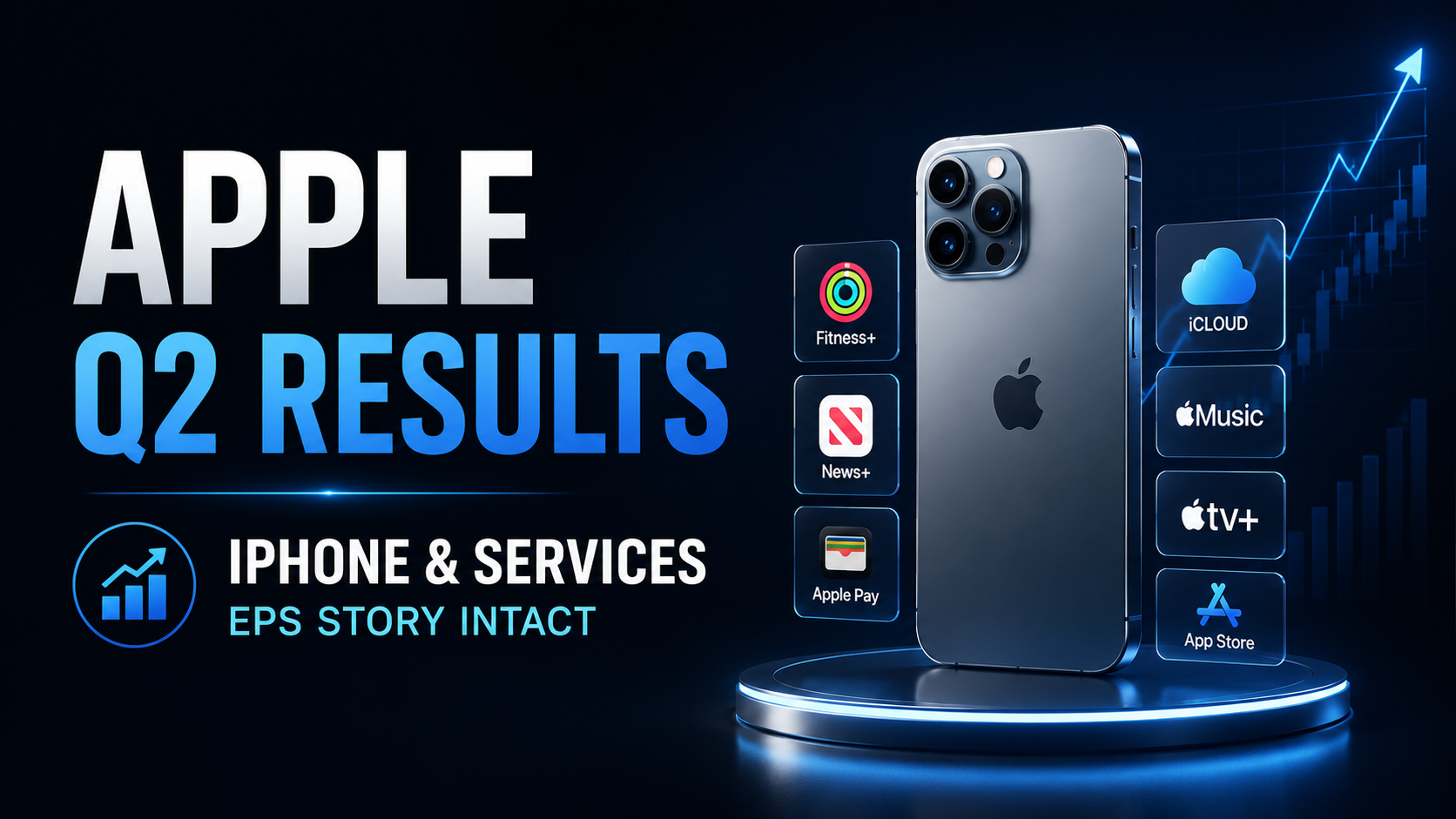
Apple 2026年度第2四半期決算レビュー:iPhoneの収益とサービスの成長がEPSのストーリーを維持
Appleは2026年4月30日、2026年3月28日に終了した四半期を対象とする2026年度第2四半期決算を発表しました。売上高は前年同期比17%増の1,112億ドルに達し、希薄化後1株当たり利益(EPS)は22%増の2.01ドルとなりました。Appleによると、当四半期は会社全体の総売上高、iPhone売上高、およびEPSにおいて3月期としての過去最高記録を樹立し、サービス部門の売上高も過去最高を更新しました。
この結果は、単なるハードウェアサイクルの決算報告に留まりません。Appleの第2四半期実績は、iPhone需要、サービス部門の成長、そして株主還元プログラムが三位一体となり、同社の力強いEPS成長ストーリーを強固に支え続けていることを実証しました。Appleの決算発表、AAPLの業績、あるいは次の決算発表時期を追う投資家にとって、第2四半期後の最大の焦点は、市場がより強力なAIの進展や製品サイクルの起爆剤を待つ間、Appleがそのプレミアムなバリュエーションを維持し防衛できるかどうかにあります。
2026/07/09

MEXC オンチェーン日報:Robinhood Chainの日次DEX取引量が5億6,000万ドルを突破
Robinhood Chainのエコシステムは、1日の分散型取引所の取引量が5億6,000万ドルを超えたことで急拡大し、DeFiおよびクロスチェーンインフラの機関投資家の導入が加速しました。一方で、規制当局は暗号資産関連の法整備を進め、取引所のBTC/ETH準備高は数年ぶりの低水準に落ち込み、AIインフラへの投資は引き続き市場の主要なテーマとなっています。
2026/07/10

AI jailbreak新手法、攻撃文を推論として扱う脆弱性
研究者が、攻撃者の文章をAI自身の推論として扱わせる新たなjailbreak手法と安全対策の弱点を指摘しました。
2026/07/31


ホット
現在、市場で大きな注目を集めているトレンドの暗号資産
暗号資産価格
取引高が最も多い暗号資産