

For years, the financial landscape treated cryptocurrency as the ultimate destination for rapid growth. Investors seeking massive returns routinely ignored traditional assets in favor of digital tokenFor years, the financial landscape treated cryptocurrency as the ultimate destination for rapid growth. Investors seeking massive returns routinely ignored traditional assets in favor of digital token
Bitcoin's Worst Week of 2026: How AI and Stocks Are Draining Capital from Crypto

For years, the financial landscape treated cryptocurrency as the ultimate destination for rapid growth. Investors seeking massive returns routinely ignored traditional assets in favor of digital tokens. However, the dynamics of global finance have experienced a sharp realignment.
Bitcoin has just suffered its worst week of 2026. In a matter of days, the world's largest cryptocurrency experienced a steep 16% price correction, dragging its value down near the $60,000 threshold. To find a comparable multi-day decline, analysts have to look back to the industry-wide panic caused by the collapse of the FTX exchange in late 2022.
The core driver behind this sudden downturn isn't a lack of interest in investing, but rather a massive migration of wealth. A historic "capital rotation" is underway. Large amounts of capital are flowing out of the crypto ecosystem as institutional and retail investors redirect funds toward the strong performance seen in Wall Street tech stocks and emerging Artificial Intelligence (AI) tokens.
1.The Big Drain: Where Did the Crypto Buyers Go?
To understand how capital moves, it helps to imagine the global market as a single, connected pool of water. Money naturally flows toward the area with the strongest economic gravity. Right now, Artificial Intelligence is acting as that gravity well, and cryptocurrency is being left out in the cold.
According to data tracking financial movements, cryptocurrency,spot Bitcoin Exchange-Traded Funds (ETFs)—suffered heavy cash withdrawals exceeding $1.6 billion in a single recent week. Recent ETF flow data and market reports suggest that institutional demand has cooled compared to the strong inflows seen during earlier stages of the cycle, reflecting a broader shift in investor positioning. For the year 2026 so far, net outflows from these digital funds have climbed past several billion. The shift is so pronounced that even major corporate treasuries, which previously hoarded digital assets as "digital gold," have begun trimming their positions to free up liquid cash.
This mass exit has completely flattened Bitcoin’s momentum. After achieving a triumphant all-time high above $125,000 in late 2025, Bitcoin has surrendered roughly half of its valuation, hitting its lowest price point of 2026. The issue facing crypto isn't necessarily panic selling; rather, investor attention and fresh capital appear to be shifting toward other high-growth sectors.
Not all analysts view the correction as a sign of structural weakness. Some argue that Bitcoin has experienced similar pullbacks during previous market cycles before eventually recovering and reaching new highs. From this perspective, the current decline may reflect a temporary shift in investor attention rather than a fundamental deterioration in demand for digital assets.
2.Wall Street's AI Stock Phenomenon
While the digital currency market experiences a severe drought, the traditional stock market is basking in a historic, AI-fueled super-cycle. Institutional investors, such as hedge funds and massive pension boards, are heavily favoring public equities because they represent companies producing physical infrastructure, high-margin software, and visible corporate earnings.
The scale of growth in the equity markets this year is difficult to overstate.According to several market analyses, AI-related companies have accounted for the majority of the S&P 500’s gains in 2026. In fact, financial data shows that if you remove AI-focused tech giants from the equation, the broader stock market has actually been flat to negative since February.
Investors are actively abandoning crypto positions to fund purchases in three key stock sectors:
2.1 The Semiconductor Giants
The physical microchips required to power advanced software models have become the world’s most valuable commodity. Companies specializing in semiconductor manufacturing and design have seen their stock prices climb strongly over the trailing twelve months. Market leaders have seen their valuations expand at a pace never before recorded in corporate history, with top-tier chip manufacturers crossing unprecedented multi-trillion-dollar market caps.
Companies such as NVIDIA, AMD, and Broadcom have emerged as some of the biggest beneficiaries of the AI boom, attracting billions of dollars in investor capital as demand for AI chips continues to accelerate. Over the past year, companies such as NVIDIA, AMD, and Broadcom have delivered impressive gains as demand for AI-related hardware accelerated worldwide. Their strong earnings growth and expanding role in the AI ecosystem have attracted substantial institutional investment. For many investors, these companies represent the most direct way to gain exposure to the growth of artificial intelligence.
2.2 Physical Infrastructure and Data Centers
Running complex software models requires immense computing power, which in turn requires vast amounts of physical space and electricity. Companies tied to data center infrastructure, specialized cooling equipment, and networking cables have delivered strong returns. Select infrastructure equities have surged significantly in 2026, driven by massive multi-billion-dollar supply orders from global tech conglomerates.
2.3 The Race for Massive Tech Offerings
To keep pace with the technology race, legacy tech giants are executing massive corporate moves. Google’s parent company, Alphabet, recently made waves by raising $80 billion in cash through stock channels to fund its massive $190 billion capital expenditure budget for infrastructure. Furthermore, highly anticipated public market debuts from premier AI research firms and private aerospace enterprises are forcing investors to liquidate their volatile crypto holdings. They need to ensure they have maximum cash available to secure shares in these historic stock launches.
3.The Secondary Shift: The Rise of AI Tokens
While the vast majority of fleeing capital is landing safely on Wall Street, a smaller, highly concentrated portion of wealth is shifting within the blockchain ecosystem itself. As foundational assets like Bitcoin and Ethereum lose their luster, a unique niche known as AI Tokens is defying the broader crypto bear market.
AI tokens are specialized digital currencies that operate on blockchain networks dedicated to decentralized computing power, machine learning marketplaces, and secure data sharing. Rather than pulling their money out of the digital asset space entirely, active crypto traders are aggressively rotating their funds into these protocols.
Projects such as Bittensor (TAO), Render (RNDR), Artificial Superintelligence Alliance (FET), and Akash Network (AKT) have become increasingly popular among traders seeking exposure to the AI narrative without leaving the crypto ecosystem.These AI-related crypto assets significantly outperformed Bitcoin during portions of 2026 and recorded periods of double-digit percentage gains while Bitcoin struggled to maintain momentum.
These networks focus on areas such as decentralized computing, AI infrastructure, machine learning services, and distributed GPU resources.
The Market Divergence: While Bitcoin faced heavy selling pressure during its recent correction, several prominent AI-focused cryptocurrencies proved more resilient, with some posting notable short-term gains as traders continued to favor the AI narrative.
For digital asset enthusiasts, these tokens represent a way to gain exposure to the broader technology boom without needing to interact with traditional stock brokerages. However, compared to the trillions driving the public stock markets, this remains a secondary playground for speculative retail capital.
4.A New Era for Global Wealth
The financial narrative of 2026 highlights a fundamental truth: the era of cryptocurrency trading in complete isolation from the rest of the world is over. With the introduction of institutional ETFs, Bitcoin has become deeply intertwined with traditional financial markets. When a superior, highly productive narrative like the hardware and software revolution emerges, digital assets are forced to compete directly for the same pool of institutional dollars.
Bitcoin's recent correction does not mean the technology is going away. Instead, it serves as a reality check. As long as semiconductor manufacturers, data center operators, and Wall Street tech giants continue to offer historic, triple-digit growth backed by real-world demand and corporate earnings, cryptocurrency will face an uphill battle to reclaim its title as the preferred destination for global capital.
Disclaimer:This content is for educational and reference purposes only and does not constitute any investment advice. Digital asset investments carry high risk. Please evaluate carefully and assume full responsibility for your own.
市場の機会
Gensyn価格(AI)
--
----
USD
Gensyn (AI) ライブ価格チャート
説明:暗号資産パルスは、AIと公開情報源を活用し、最新のトークントレンドを瞬時にお届けします。専門家の洞察と詳細な分析については、MEXC 学ぶ をご覧ください。
このページで共有されている記事は公開プラットフォームから収集したものであり、参考情報としてのみ提供されています。MEXCの立場や見解を代表するものではありません。すべての権利は Mubashir に帰属します。第三者の権利を侵害するコンテンツがあると思われる場合は、[email protected] までご連絡いただければ速やかに削除いたします。MEXCはいかなるコンテンツの正確性、完全性、適時性も保証せず、提供された情報に基づいて取られたいかなる行動についても責任を負いません。本コンテンツは、金融、法律、またはその他の専門的なアドバイスを構成するものではなく、MEXCによる推奨または支持として解釈されるべきものでもありません。専門家の洞察と詳細な分析については、MEXC 学ぶ をご覧ください。
Gensyn についてもっと知る
もっと見る
SpaceXはどのように収益を得ているのか?黒字なのか?3事業のうち実際に利益を上げているのは1事業だけです
SpaceXは3つの事業セグメントから収益を得ていますが、2025年に黒字となったのはそのうち1つだけです。 Starlinkは同年に44億ドルの営業利益を計上しましたが、ロケット事業は6億5,700万ドル、AI事業は64億ドルの営業損失を計上しました。 これらの数字は24年間にわたり非公開でした。 数字が公開されたのは、SpaceXが2026年5月20日に米国証券取引委員会へForm S-1を提
2026/07/21

AI銘柄、データセンター、仮想通貨:なぜAIトレードは設備投資サイクルへと移行しているのか
AIはもはや単なるソフトウェアのテーマや短期的なトークンのナラティブではありません。米国のメガキャップ(超大型)ハイテク株、半導体、データセンター、電力インフラ、そして暗号資産(仮想通貨)AIを結ぶ、資産横断的な「設備投資(CapEx)サイクル」へと進化しています。AIトレードの次のステージは、誰が最高のモデルを構築するかだけでなく、誰がコンピューティング、電力、メモリ、ネットワーク容量、そしてデ
2026/07/06

米国株式週間レポート|6/22–26:3度目の利上げで市場の強靭性が試され、AIハードウェアのスーパーサイクルにも疑問が投げかけられる一週間
今週、米国株式市場では「金利ショック+セクターローテーション」という典型的な市場構造が見られました。バンク・オブ・アメリカ(BofA)の利上げ予測レポートを受け、月曜日に半導体株が急落し、SOXXは1日で8%下落しました。一方、マイクロン・テクノロジー(MU)は過去でも特に好調な第3四半期決算の一つを発表し、売上高は$414.6億に達し、市場予想を約16%大きく上回りました。 MEXC 株式チーム
2026/07/01
Gensyn の最新情報
もっと見る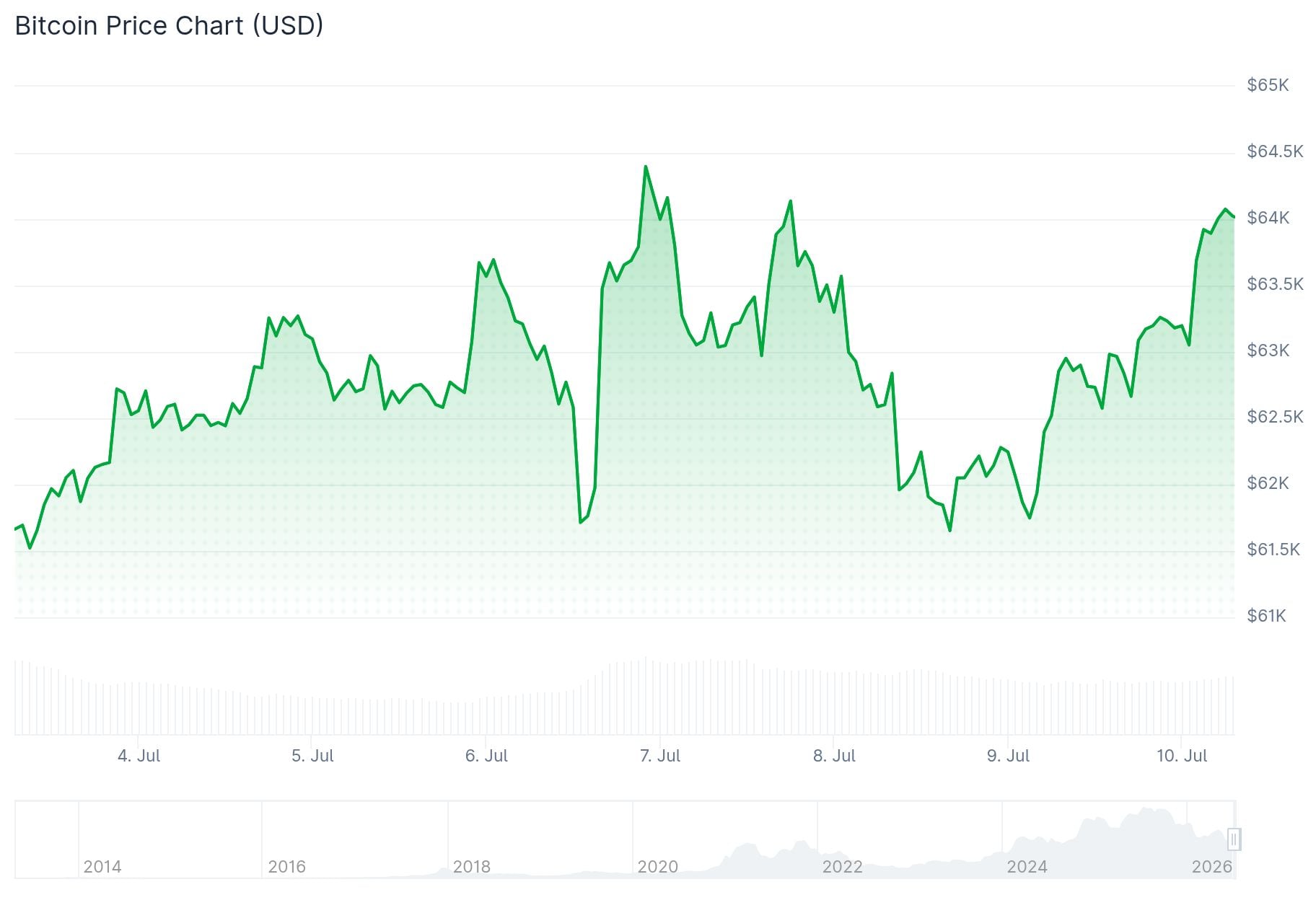
日次市場更新:AIチップ需要の拡大に伴いナスダックが1.3%上昇、Bitcoinが回復
TLDR Bitcoinは3.5%上昇し、ほぼ64,000ドルとなり、週間では4.2%の上昇で終了 Ether、XRP、Dogecoin、Solanaも金曜日にすべて上昇 ナスダックが米株高を主導
2026/07/10

KlariVis、マルコス・ソウザを最高データ&アナリティクス責任者に任命、ガイ・デコルテを最高AI責任者に昇格
2つの専任C-suite役職は、金融機関向けに構築されたデータインテリジェンスプラットフォームであるKlariVisにおける、当社のデータおよびAI戦略の次の段階を示しています
2026/07/10
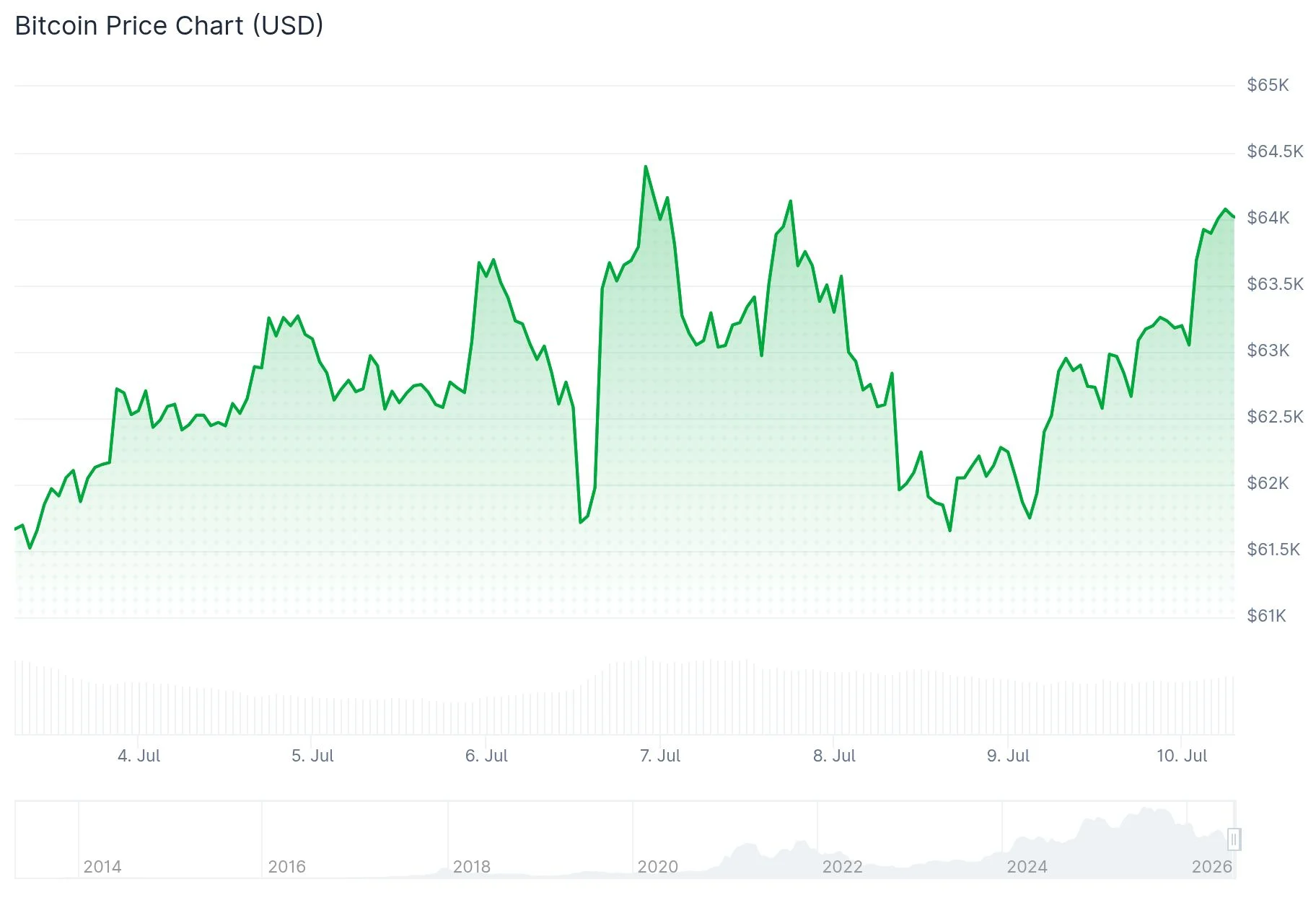
ビットコインが64,000ドルを突破、テック株と暗号資産市場が共に上昇
ビットコインが64,000ドルに上昇、ナスダックは1.3%高、半導体株が急騰。AI半導体の需要とドル安が市場の上昇を牽引する仕組みをご覧ください。投稿
2026/07/10


ホット
現在、市場で大きな注目を集めているトレンドの暗号資産
暗号資産価格
取引高が最も多い暗号資産