

If you search “JD stock” today, you’re usually not searching for a company profile—you’re searching for a way in. A way to express a view on China’s consumption cycle, logistics power, and the long tug-of-war between platform competition and operational excellence. JD.com (Nasdaq: JD) has been that gateway for years, a U.S.-listed ADR that lets global investors participate in the story through familiar brokerage rails.
But there is now another doorway: JDON, a tokenized instrument that trades like crypto—most commonly as JDON/USDT on exchanges such as MEXC. It looks like the same idea on the surface—price exposure to JD—but the experience changes once you ask the most important question in markets:
What exactly do I own, and what happens when the market stops being polite?
JD Stock on Nasdaq: The “Original Language” Version of JD Exposure
JD stock is the conventional instrument: JD.com, Inc. American Depositary Shares (JD) listed on the Nasdaq. Owning JD through a brokerage account places you inside the established architecture of public equities—regulated disclosures, standardized corporate actions, and settlement conventions you can treat as boring until you need them.
That last part matters more than people admit. “Boring” is another word for well-defined. When JD reports results, files annual reports, or declares dividends, the information pipeline is direct and the rights framework is conventional. If your goal is classic equity exposure—with shareholder-like mechanics administered through ADR plumbing—JD is the clean reference point.
JDON: Tokenized JD Exposure That Trades in a Crypto Wrapper
JDON is widely presented as JD.com Tokenized Stock (Ondo)—a token designed to provide holders economic exposure similar to holding JD, packaged in a blockchain-native form that can be traded on crypto venues. On MEXC, JDON is listed as a spot market (JDON/USDT) with the familiar exchange interface—chart, order book, and continuous trading feel.
The attraction is not mysterious: for a portfolio that already lives in stablecoins, JDON can feel like a bridge between two worlds. It turns a U.S.-listed equity narrative into a USDT-quoted instrument, keeping your workflow on one screen and your capital on one set of rails.
But the wrapper changes the nature of the claim. Ondo’s own documentation is explicit about the boundary: these tokens are designed to provide economic exposure to the underlying asset (including dividend value, less applicable withholdings), yet they are not themselves stocks or ETFs and do not grant rights to hold or receive the underlying assets.
That sentence is the hinge in the entire comparison.
JD vs JDON in One Table: Same Story, Different Ownership Reality
Feature | JD (JD stock) | JDON (tokenized JD exposure) |
What it is | Nasdaq-listed ADR of JD.com | Token providing economic exposure (Ondo Global Markets framing) |
Where it trades | Traditional equities via brokerage | Crypto exchange markets (e.g., MEXC JDON/USDT) |
What you “own” | ADR shares (equity instrument) | A tokenized exposure product; not the underlying stock |
Corporate actions | Native equity/ADR mechanics | Reflected via product design, not shareholder rights |
Dividends: Where the Wrapper Quietly Changes the Return Experience
Dividends are a perfect truth serum because they force the instrument to prove what it is.
JD has established an annual cash dividend pattern in recent years. For example, JD announced an annual cash dividend for the year ended December 31, 2024 of US$0.5 per ordinary share, or US$1.0 per ADS, with a specified record date and expected payment timing for ADS holders. JD’s SEC filings also describe an earlier annual dividend for 2023: US$0.38 per ordinary share, or US$0.76 per ADS, approved in March 2024.
For JD stock holders, that’s straightforward: the dividend is a corporate action administered through the ADR system and your broker.
For JDON, dividends become a policy feature rather than a shareholder entitlement. Ondo states that Global Markets tokens provide economic exposure including dividend value (subject to applicable tax withholdings), but emphasizes again that the tokens are not stocks and do not give holders rights to hold or receive the underlying. In practice, that means your “dividend experience” depends on the token framework’s mechanics—how it represents total return, adjustments, and fees—rather than a direct cash distribution from the issuer to you as a registered shareholder.
If dividends matter to your long-run return thesis, the wrapper is no longer a detail; it becomes part of the investment.
Price and Trading: The Difference Between Market Structure and Market Venue
There’s a subtle psychological comfort in seeing a price chart. It tempts you to believe that if two lines move similarly, the underlying reality is identical. It isn’t.
JD stock trades in the U.S. equity market structure, with liquidity and price discovery anchored to that environment. JDON trades on crypto venues, where liquidity is specific to the exchange and the order book you’re actually hitting. MEXC’s own educational materials frame tokenized stocks as blockchain-based tokens representing ownership or rights to real-world stocks, clarifying that investors typically do not hold stock certificates in the traditional sense.
In calm conditions, these differences feel academic. In fast markets, they stop being academic. Venue liquidity, spreads, and market microstructure can shape execution outcomes. A tokenized market can drift briefly from its reference when liquidity thins or when one venue experiences imbalance. A listed stock can gap too—but it gaps inside a mature equity ecosystem designed around institutional liquidity and equity-specific guardrails.
Risk: Not Just “Is JD a Good Company?” but “Which Rails Do You Trust?”
When people compare JD vs JDON, they often start with the wrong question: Which one will go up more? If both aim to track the same underlying story, the deeper question is: Where does your risk live?
With JD stock, your primary risks are the company’s fundamentals, geopolitical and regulatory sentiment around China ADRs, and the normal volatility of a large retail/logistics business. You accept ADR mechanics, but you accept them inside a long-established framework of public securities.
With JDON, you still have those underlying story risks—but you add wrapper risks: product structure, token mechanics, and exchange venue conditions. Ondo’s disclaimer is clear that tokens provide economic exposure yet are not the underlying securities, which is another way of saying your claim is mediated by the token system.
This doesn’t make JDON “bad.” It makes it different—and “different” is exactly what you must price.
Choosing Between JD and JDON: Think in Use-Cases, Not Labels
If you want the most direct, traditional form of exposure—equity-style holding, conventional corporate action handling, and the standard public-market disclosure universe—JD stock is the baseline instrument.
If you want crypto-native access—stablecoin settlement, exchange-style trading workflows, and a way to keep “stock-like exposure” in the same environment as digital assets—JDON can serve as a bridge, as long as you treat the bridge itself as part of the position. MEXC’s JDON market page exists precisely to enable that kind of access.
The most honest conclusion is simple: you’re not only buying JD’s business model—you’re choosing a container for it. And containers change outcomes at the margins, which is exactly where real-world investing tends to live.
FAQ: JD vs JDON
- Is JDON the same as owning JD stock on Nasdaq?
Not necessarily. JD is a Nasdaq-listed ADR. JDON is designed to provide economic exposure to JD’s value, but Ondo’s documentation notes the tokens are not themselves stocks or ETFs and do not give holders rights to hold or receive the underlying assets.
- Where can I trade JDON?
MEXC lists JDON/USDT as a spot market, with a dedicated exchange page and token information pages.
- Does JD stock pay dividends?
JD announced an annual cash dividend for 2024 of US$1.0 per ADS, with disclosed record and expected payment timing, and its SEC filings also describe an annual dividend for 2023 of US$0.76 per ADS.
- Will JDON holders receive JD dividends the same way JD shareholders do?
JDON is not a share. Ondo describes tokens as providing economic exposure including dividend value (subject to withholdings), but emphasizes token holders do not have rights to hold or receive the underlying assets—so dividend handling is governed by the product framework rather than direct shareholder distribution.
- Why might JDON trade slightly differently from JD stock at times?
Because JDON trades on crypto exchange order books with venue-specific liquidity and spreads, while JD trades in U.S. equity market structure. Different microstructure can create temporary divergence, especially during volatility.
市場の機会

null価格(null)
--
----
USD
null (null) ライブ価格チャート
説明:暗号資産パルスは、AIと公開情報源を活用し、最新のトークントレンドを瞬時にお届けします。専門家の洞察と詳細な分析については、MEXC 学ぶ をご覧ください。
このページに掲載されている記事は、公開プラットフォームから引用したものであり、情報提供のみを目的としています。MEXCの見解を必ずしも反映するものではありません。すべての権利は原著者に帰属します。コンテンツが第三者の権利を侵害していると思われる場合は、[email protected] までご連絡ください。速やかに削除いたします。
MEXCは、いかなるコンテンツの正確性、完全性、または適時性についても保証するものではなく、提供された情報に基づいて行われたいかなる行動についても責任を負いません。本コンテンツは、財務、法律、またはその他の専門的なアドバイスを構成するものではなく、MEXCによる推奨または支持と解釈されるべきではありません。
null の最新情報
もっと見る
Bitmine、6万ETH超を追加取得──蓄積ペースを加速
ビットコイン(BTC)およびイーサリアム(ETH)ネットワーク企業であるBitmine Immersion Technologies(ビットマイン・イマージョン ... The post Bitmine、6万ETH超を追加取得──蓄積ペースを加速 first appeared on NADA NEWS(ナダ・ニュース)
2026/03/10
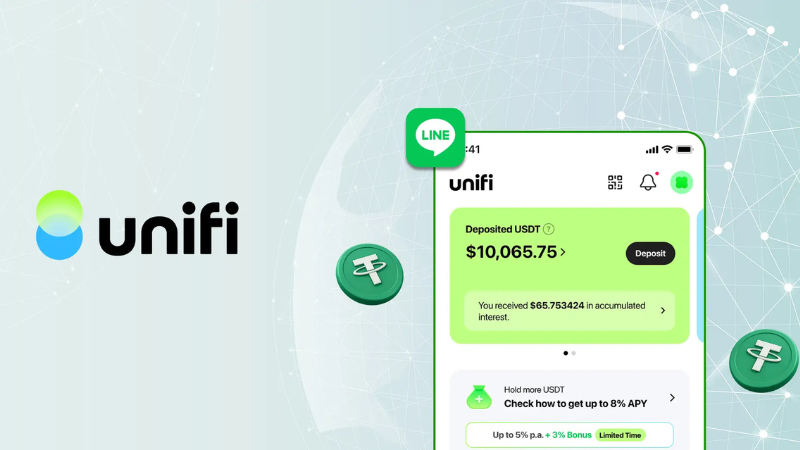
LINE NEXT「Unifi」正式ローンチ──LINEでUSDT利息最大年率8%
LINEヤフーグループでWeb3プラットフォーム事業を担うLINE NEXTは9日、ステーブルコインウォレットサービス「Unifi」をグローバルに正式ローンチした。Unifiは、LINEアプリ上でテザー(USDT)の預け […]
2026/03/10

米保険大手エーオン、ステーブルコイン保険料決済を実現|主要ブローカー初
この記事の要点 米保険大手エーオン、主要ブローカーとして世界初のステーブルコイン保険料決済を実現 複数ブロックチェーン・複数通貨をまたいだ柔軟な決済基盤を実証 米GENIUS法成立による規制整備が法人決済の実用化を後押し […]
2026/03/10
ホット
現在、市場で大きな注目を集めているトレンドの暗号資産
暗号資産価格
取引高が最も多い暗号資産