

Sh17.8 billion profit: KCB capitalised on trapped deposits while savers earn less
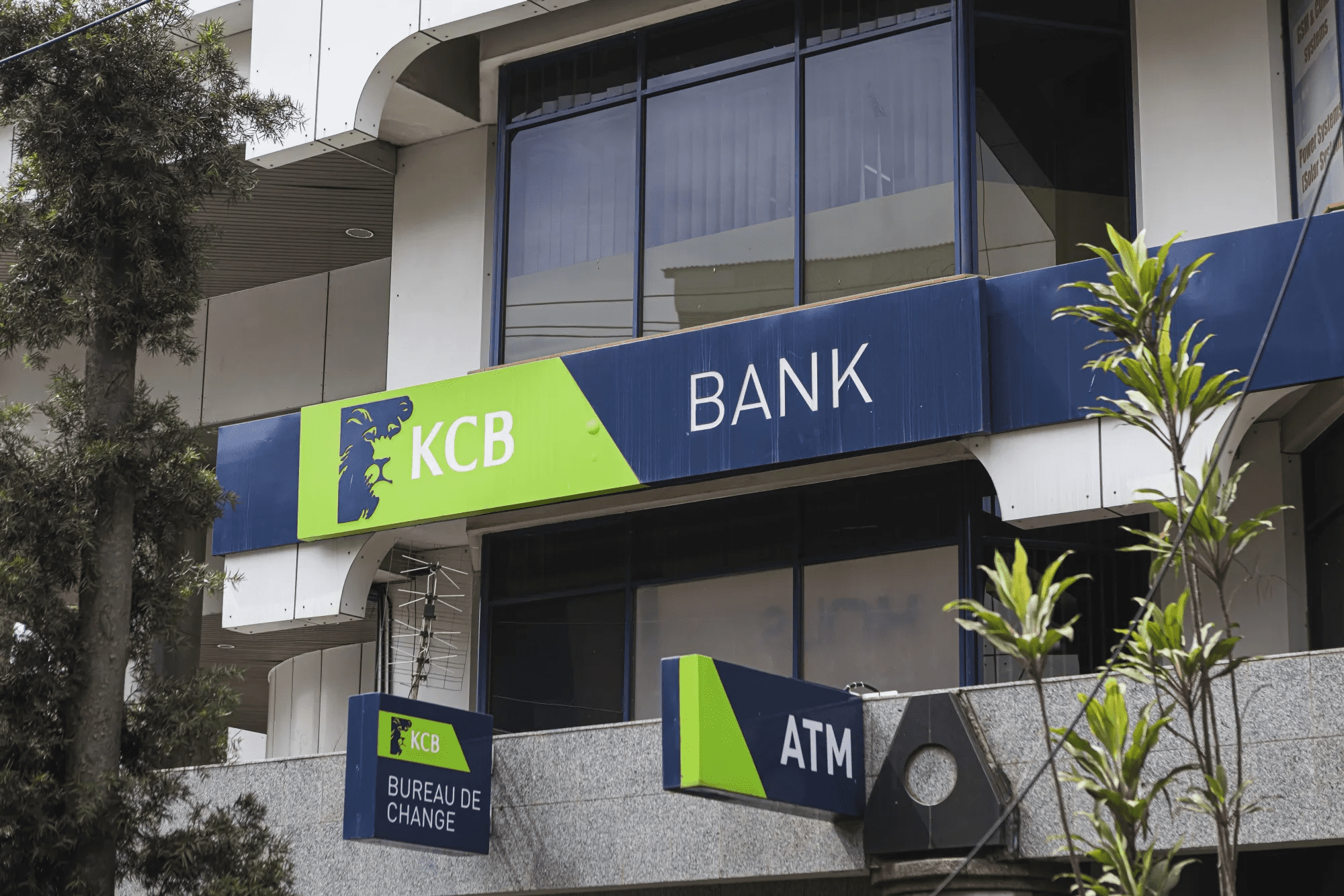
Janet has 150,000 shillings in a savings account. Last month, the bank credited her 500 shillings in interest. That’s Kshs 125 a week. She’s been saving with KCB for three years. The interest rate hasn’t moved. Meanwhile, the bank just reported making 12.94 billion shillings in profit in the first three months of 2026.
Janet’s question, voiced by millions of Kenyans, is simple: where does that money come from, and why isn’t she seeing any of it?
The answer sits in KCB’s Q1 2026 financial statements, buried under tables of numbers that tell a story about how Kenyan banks have structured a system where savers lose and banks always win.
 Paul Russo, EBS, Chief Executive Officer of KCB Group PLC (IMG: KCB Bank)
Read also: Fidelity Bank’s 2.4% decline in net loans is proof that fintech is winning
How KCB’s customers made the bank richer
In the first quarter of 2026, customers put 163.43 billion shillings into KCB. That’s new money, fresh deposits, people like Janet choosing it as the safest place to keep their savings. The bank’s total customer deposits grew to 1,170.49 billion shillings, a 16.2% jump from the same quarter a year earlier.
Here’s where it gets interesting.
During that same quarter, the bank lent out only 115.28 billion shillings in net new loans. Deposit growth was 16.2%. Loan growth was 15.3%. The bank collected more money from customers than it deployed as loans.
What happens to that difference? It doesn't sit idle. KCB invested it. Traded it. Moved it across its balance sheet. And in the process, the bank's profit jumped 16.8% to reach 12.94 billion shillings.
Net interest income, the money banks make from the gap between what they pay depositors and what they charge borrowers, grew even faster: 17.4%. The bank is making more profit per shilling deposited. And depositors? They’re still earning 3 to 4% annually on savings accounts.
This is how modern banking works in Kenya. You need somewhere to keep your money. KCB is the largest, safest bank in East Africa. So you save there. The bank pays you 3 or 4% interest. That sounds fine until you realise inflation is running at 5 to 6%. Your money is losing value.
But you have no choice. Where else would you put it?
The bank knows this. The bank knows you’re trapped. A saver in Nairobi earning 3% on deposits isn’t going to move their money to a smaller, riskier bank offering 3.5%. The difference is too small to matter. The risk is too high. So the customer stays. And keeps the spread.
Loan customers, by contrast, have slightly more options. They can shop around. A small business needing credit might compare KCB at 14% interest with Equity Bank at 13%, or a fintech lender at 12%. The competition is real. So loan rates move, sometimes downward, as banks compete.
Deposit rates? They’re stuck. Banks know savers can’t leave. So deposit rates stay frozen. Meanwhile, as the bank’s profitability improves, loan rates don’t fall. The spread gets wider. The bank gets richer. Savers get poorer in real terms.
In Q1 2026, KCB’s spread widened. Net interest income grew faster than deposit costs. The math is simple. More deposits, fewer loans relative to deposits, wider spread, record profits.
Why is KCB hoarding capital?
Here’s another detail that reveals the system. KCB made record profits in Q1 2026. The board declared no dividend to shareholders. Not a single shilling returned to the people who own the bank.
Why? Because KCB is holding excess capital. The bank’s core capital ratio sits at 16.5%. The regulatory minimum is roughly 10.5%. That means it is holding capital well above what regulators require. Excess. Unused. Sitting there.
A bank that declares no dividend while posting record profits and holding excess capital is a bank that doesn't feel pressure. It doesn't need to attract shareholder investment. It doesn't need to compete for capital. Why? Because it's extracting maximum value from its most captive customer base: savers.
If KCB feels pressure to grow loans, it would lower deposit rates to fund that growth, or it would pass profits to shareholders to attract investment capital. Instead, the bank is doing neither. It’s building a fortress of capital while savers fund that fortress at a 3% return, while inflation eats 5% of their purchasing power annually.
One thing worth noting: KCB’s credit quality is fine. The bank isn’t panicking about loan defaults. Gross non-performing loans stayed essentially flat at 192.78 billion shillings quarter over quarter. The bank’s net exposure to bad loans actually improved, falling from 6.54 billion shillings a year ago to 5.77 billion shillings in Q1 2026.
So KCB isn’t hoarding capital defensively. The bank isn’t worried about bad loans or a credit crisis. It’s hoarding capital because it can. The system allows it.
This is a banking success story, just not for savers.
As long as Kenya’s interest rates stay elevated, as long as inflation stays high, banks like KCB will keep posting record profits.
For Janet and millions like her, this means something concrete. Her 150,000 shillings will earn her roughly 500 shillings a month. Inflation will eat roughly 625 shillings a month in purchasing power. Every month, she’s falling behind by 125 shillings. KCB, meanwhile, is using her money to generate returns that reach 12% or higher across the bank’s portfolio.


추천 콘텐츠

Trader Linked to Whale now down $128 million after ETH wipeout

Fed Governor Calls For Strong Stablecoin Oversight As CLARITY Act’s Final Text Gets Delayed

BetOnline Take The Prize Easter Promotion Offers $30k in Cash Prizes!


인기 뉴스
더보기
