

Singapore Charges Former Hodlnaut CEO in Terra Collapse Probe
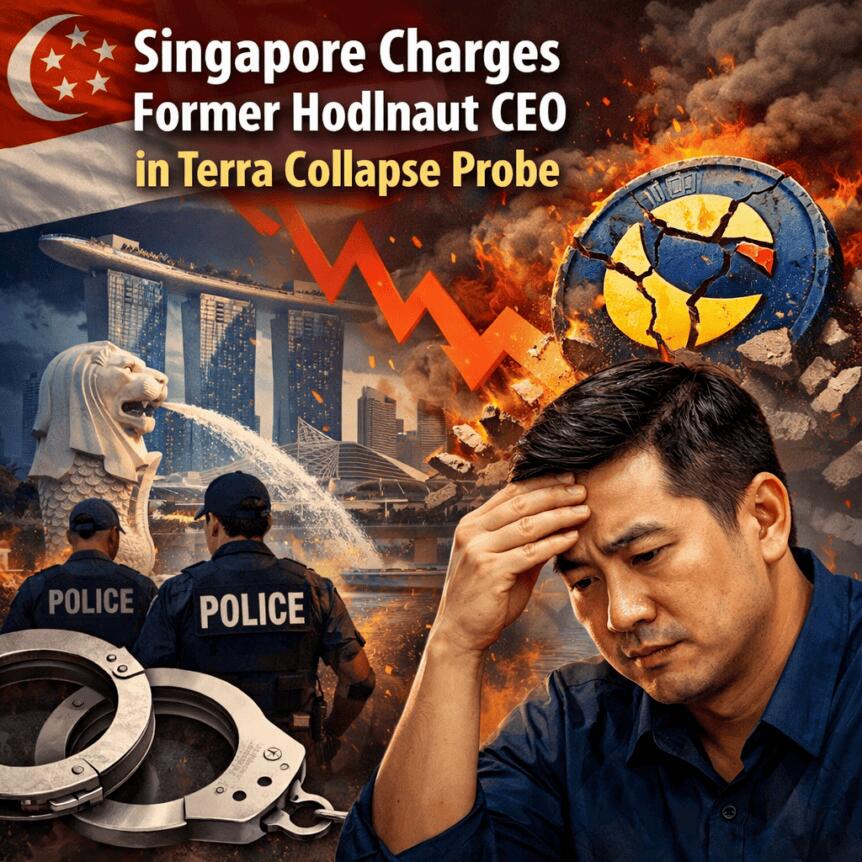
Singapore’s criminal justice system has taken aim at governance practices in one of the industry’s high-profile cases linked to the Terra ecosystem collapse. Former Hodlnaut chief executive Zhu Juntao was charged in Singapore with six counts of fraud by false representation, tied to statements made after the TerraUSD (UST) crash in 2022. The Commercial Affairs Department conducted the investigation, and Zhu, aged 36, faces three charges under Section 424A(1)(a) read with Section 424A(3) of the Penal Code 1871, as well as three additional charges under the same provision read with Section 109, according to the Singapore Police Force.
According to the Singapore Police Force, the charges allege that Zhu directed Hodlnaut staff to issue statements in the company’s official Telegram group and in emails to users between May and July 2022 that falsely asserted Hodlnaut did not have direct exposure to UST and had not suffered losses from the crash. The police also stated that Zhu published three similar posts on his personal Twitter account (now known as X) in June 2022. If convicted, he faces up to 20 years in prison, a fine, or both, on each charge.
The case adds a new layer to the scrutiny over the Terra collapse—a turning point in the 2022 digital asset market rout that erased approximately $50 billion in market value and contributed to broader turmoil within the crypto lending sector.
Related: Singapore revokes crypto payment license of Bsquared over regulatory breaches
The Terra event, which unfolded in May 2022 as the algorithmic stablecoin UST lost its peg, reverberated across the sector. Hodlnaut—an Singapore-based platform that allowed users to deposit tokens for yield—found itself at the center of the fallout. The company halted withdrawals in August 2022, and its website currently notes that its affairs, business, and property are being managed by court-appointed liquidators. The firm previously served more than 30,000 users worldwide before its collapse, marking one of the more consequential episodes of 2022’s crypto downturn.
The Terra crisis also led to distress at other lenders. Celsius Network reported assets exceeding $10 billion prior to its Chapter 11 filing, while Voyager Digital disclosed assets and liabilities ranging between $1 billion and $10 billion. The sequence of failures underscored how rapid liquidity strains and misaligned risk disclosures can destabilize platforms that promise yield on digital assets.
Cointelegraph sought comment from Hodlnaut’s court-appointed liquidators, but there was no immediate response. The proceedings in Singapore continue to shape regulatory expectations for crypto platforms, particularly around the accuracy of public statements and investor communications.
Opening context for enforcement and policy considerations
The charges against Zhu re-emphasize the primacy of truthful communications in crypto service offerings, especially when users’ funds and platform solvency are at stake. In jurisdictions around the world, including Singapore, authorities are increasingly focusing on corporate governance, disclosures, and the accuracy of information shared with customers and counterparties. The case thus sits at the intersection of criminal law, corporate conduct, and regulatory oversight in a sector characterized by rapid innovation and evolving risk profiles.
From a regulatory perspective, the incident reinforces several critical themes for institutions operating or interacting with digital asset markets:
- Governance and accountability: Public assurances by executives and staff about exposure, liquidity, and solvency must align with a firm’s actual risk profile and financial status. Misrepresentations can invite criminal liability and civil consequences, particularly in jurisdictions with robust consumer protection and market integrity regimes.
- Disclosure standards and investor protection: The Terra episode highlighted gaps in disclosure practices that can leave retail and professional investors exposed to mispricing and liquidity risk. Regulators are likely to scrutinize communications policies, disclosure controls, and the monitoring of information disseminated through official channels and social platforms.
- Licensing, supervision, and cross-border implications: The Singapore case dovetails with broader calls for enhanced oversight of crypto lenders, exchanges, and payment services. As jurisdictions pursue licensing regimes and ongoing supervision, firms face increased expectations around risk management, governance structures, AML/KYC compliance, and capital adequacy.
- Regulatory alignment and enforcement posture: The Terra fallout underscored the need for coherent policy responses in fast-moving markets. While MiCA governs the European Union’s digital asset framework, comparable standards are evolving in Asia and elsewhere, influencing licensing criteria, enforcement priorities, and the delineation of permissible activities for custodians and lenders.
For institutional readers and compliance professionals, the case offers a lens into how regulatory authorities may pursue accountability for misrepresentations, and how such actions can ripple through governance practices, customer communications, and risk governance frameworks across crypto businesses. It also highlights the importance of clear internal controls surrounding public messaging and the separation between executive communications and the firm’s official risk disclosures.
Looking ahead, authorities may continue to pursue parallel inquiries into other entities involved in Terra’s aftermath, while courts assess whether the statements in question meet the threshold for fraud by false representation. The outcome could influence future guidance on how crypto platforms should manage public communications during periods of stress, as well as how regulators calibrate licensing and enforcement tools to deter deceptive practices without stifling innovation.
What to watch next: the legal process will determine whether the charges lead to a conviction and, if so, the standards by which communications must be vetted in exchange for customer assurances and platform disclosures. In the broader policy landscape, the episode could inform ongoing discussions about cross-border cooperation, standardization of reporting, and the resilience requirements placed on platforms that offer yield-generation services to a growing, global user base.
This article was originally published as Singapore Charges Former Hodlnaut CEO in Terra Collapse Probe on Crypto Breaking News – your trusted source for crypto news, Bitcoin news, and blockchain updates.


추천 콘텐츠

Key admin official's job is on the ropes as Trump gripes she helped undercut him: report

OpenAI Faces Scrutiny as Civic Groups Question Sam Altman’s Investment Links
Ghana Ex-President-Linked CWU Token Faces Rug Pull Claims After Insider Sales



