

Ethiopia’s Retail Revolution: Beyond the Carrefour Expansion
- Ethiopia’s retail revolution is underway sparked by liberalization.
- Carrefour’s entry into Ethiopia is cementing investor confidence in Africa’s second most populous country.
- Ethiopia consumer spending expected to reach $160.5 billion in 2026.
Ethiopia’s retail revolution is expected to boom in 2026 and beyond sawn together by the fibres of a well tailored sector development strategy. Carrefour, the French globally acclaimed franchise is the most recent to enter the Ethiopia retail market, further attesting to the sector’ stellar growth.
In January, Carrefour, a food retail giant, announced a franchise and supply partnership with Queens Supermarket PLC, a subsidiary of Midroc Investment Group, for the roll-out of Carrefour banners, expertise and products in Ethiopia.
Announced a report by Research and Market in an update titled ‘Ethiopia Retail Market Overview, Sales, Market Share and Outlook to 2030’ the report says ambitious expansion plan will see the first stores rebranded by the first half of 2026.
“We are delighted to initiate this collaboration with a leading retail player in Ethiopia…by 2028, we project the opening of 17 additional stores. Growing Ethiopia e-commerce distribution channels are encouraging the foray of new entrants into the market,” reads the report in part.
Rebounding economy drives Ethiopia’s retail revolution
The research analysis shows that Ethiopia’s rebounding economy coupled with increasing local purchasing power thanks to increased disposable income of the middle class is sewing together Ethiopia’s retail industry into an engine of economic growth.
“On the other hand, growing consumer awareness, increasing competition, costs involved in deployment of advanced technologies such as Artificial Intelligence and emerging non-traditional resellers will challenge the market growth,” the report cautions.
To meet these challenges, the report says, retail companies are working to improve their economies of scale, boost operational efficiency and diversify their revenue channels through e-commerce.
Entry into the Ethiopia retail market by Carrefour indicates the country’s transition from controlled domestic trade into an more open, competitive consumer market.
The move by Carrefour, setting up its first ever supermarket in Ethiopia is clear evidence of growing investor confidence in Africa beyond the traditional investments in natural resources. The move is expected to among other things, support the formalisation of supply chains, and private investment across one of Africa’s fastest growing consumer economies.
Globally, the retail market size is estimated to be around $4.8 billion with North America dominating the retail sales, followed by Europe and Asia Pacific. Likewise, Middle East, Latin America and Africa are also expanding rapidly and with it comes increased liberalization of Africa’s retail markets.
Also Read: Shadows of conflict loom large over EACOP as construction nears end
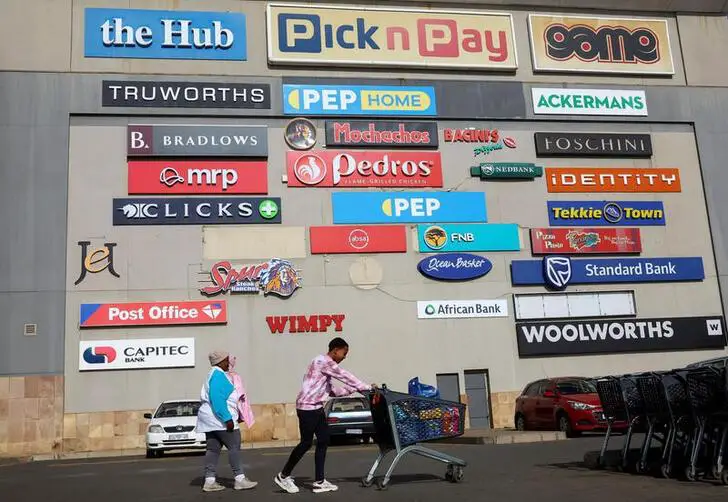 Ethiopia Retail Revolution: As of 2024, Ethiopia opened up its retail and wholesale industries to foreign investors. Last year, it issued defined capital and compliance terms that seem to seat well with investors. Photo/File
Ethiopia’s retail revolution, an indicator of Africa’s liberalization?
“Historically, foreign retailers faced restrictions due to government policies, which limited market entry,” notes Euromonitor International in it’s review of Carrefour’s entry into Ethiopia. As of 2024, Ethiopia opened up its retail and wholesale industries to foreign investors. Last year, it issued defined capital and compliance terms that seem to seat well with investors.
According to Christele Chokossa, a researcher with Euromonitor, the sheer scale of Ethiopia, the second most populous nation in Africa, make it an attractive retail investment option. “As the second most populous country in Africa, with over 135 million people, it offers strong growth potential in overall grocery retail,” she reasoned. The researcher also attributes investor attraction to Ethiopia’s retail revolution to disinflation.
Notably, Ethiopia’s inflation eased sharply in the last two years free falling from the highs of 20 percent to a single digit 9.7 percent in December 2025. In economic terms, reduced inflation equates to increased real purchasing power for consumers.
According to Euromonitor, Ethiopia’s consumer spending clocked an impressive $134.3 billion in 2025 and is expected to reach $160.5 billion in 2026. “Urbanisation, income growth, and changing consumption patterns are all key drivers of modern retail expansion potential,” the researcher explains.
In her opinion; “Carrefour’s arrival stands as one of the clearest signals yet that Ethiopia is prepared to open its consumer economy to global competition and test whether reform can translate into modern retail scale.”
Seconding the sentiments, Philip Kotler, a marketing guru renowned as the ‘father of modern marketing’ explains that “…modern retail power lies not in advertising alone, but in controlling distribution, pricing, and customer experience.” “Carrefour’s entry into Ethiopia brings all three into a market where inefficiency and inconsistency have long driven up prices and limited choice,” the professor comments.
His views are echoed in best seller ‘The Fortune at the Bottom of the Pyramid’ that asserts “…emerging markets are not poor markets, they are underdeveloped ones, full of untapped demand waiting for efficient business models. Carrefour’s franchise partnership with MIDROC reflects a recognition that Ethiopia is ready for this next stage,” the report notes.
When Ethiopia begun it’s liberalization move in April 2024 setting a $2.5 million capital threshold for retail entry, it effectively opened up its market to global investors. The move is a good example for other African nations. United Nations Global Compact CEO and Executive Director Sando Ojambo attributes Ethiopia’s retail revolution to “the enabling environment created in the country.”
In a recent interview, the CEO said local private sector engagement has been catalysed by the recent liberalization in banking, telecommunications and other sectors. “We have seen the liberalization of a couple of things. We have seen it in banking and telecommunications. So it looks like there is very strong engagement and good environment for private sector,” the CEO told press.
Beyond attracting foreign investment, Ojambo said Ethiopia’s liberalization has also promoted development of small and medium enterprises (SMEs) in the country sparking general economic growth. “The creation of a favorable environment has been playing a critical role for the growth of private sector,” she went on to elaborate and said the economic boom is very visible across Addis Ababa.
“I’ve been in Addis a couple of times. I have to say there is lots of growth in the city, obviously booming, from real estate to restaurants to other things. I mean the economy seems to be booming,” she concluded.
Using Ethiopia as an example, the CEO emphasized the importance of engaging with Africa’s private sector. Herself an economist, she said Africa must create enabling investment opportunities, and mobilize its domestic capital. “Policies should enable Africans to invest more within their own continent,” she insisted.
In conclusion, the CEO strongly discouraged what she described as “the prevalent risk perception surrounding Africa.” While the misperception often labels Africa as un-investable, she argued that reality on the ground tells a very different story, Ethiopia been an evident example.
The post Ethiopia’s Retail Revolution: Beyond the Carrefour Expansion appeared first on The Exchange Africa.


추천 콘텐츠
NuScale Power (SMR) Stock Jumps on Amazon Deal — One Bigger Catalyst Still Ahead

UK crypto holders brace for FCA’s expanded regulatory reach

Rubio Drops Iran Breakthrough Bombshell as Nuclear Deal Talks Heat Up


인기 뉴스
더보기
