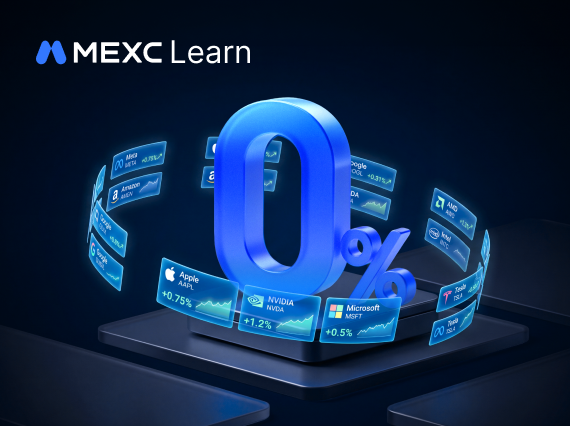
The Mag 7 stocks are seven mega-cap technology companies: Nvidia, Apple, Microsoft, Amazon, Meta, Tesla, and Alphabet, the parent of Google. Together they make up roughly a third of the S&P 500, so their moves can steer the whole US market. Each also sits at the center of a major trend like artificial intelligence, cloud computing, or digital advertising.
The Mag 7, short for the Magnificent 7, are a group of the largest and most influential companies listed in the United States. The nickname borrows from a classic 1960 western film and became popular in 2023, when these seven names produced most of the S&P 500's gains during the artificial intelligence rally. They replaced an earlier grouping known as FAANG, reflecting how AI and cloud computing have taken over from social media and streaming as the market's defining themes.
Here is the group at a glance, along with what each company mainly does.
Company | Ticker | Core business |
Nvidia | NVDA | AI chips, GPUs, and data-center hardware |
Apple | AAPL | iPhone, devices, and a services ecosystem |
Microsoft | MSFT | Cloud, enterprise software, and AI |
Amazon | AMZN | E-commerce, cloud computing, and advertising |
Meta Platforms | META | Social media and digital advertising |
Tesla | TSLA | Electric vehicles, energy, and autonomy |
Alphabet | GOOGL / GOOG | Google Search, YouTube, cloud, and AI |
For a newcomer, the Mag 7 are less a shopping list than a map. Learning what these seven companies do, and how they differ, is one of the clearest ways to understand how the modern stock market is shaped by a small number of technology giants.
The simplest reason the Mag 7 matters is their sheer size. As of mid-2026, the seven together accounted for roughly 34% to 35% of the S&P 500 and a combined market value above $23 trillion, a level of concentration rarely seen in the modern history of the index,
as Forbes reported. Nvidia alone had grown into the single largest weight, at around 7.5% of the entire index, a striking position for a company that was a far smaller chipmaker only a few years earlier.
That size creates a powerful feedback loop through index funds. The S&P 500 is weighted by market value, so larger companies carry more influence over how the index performs. Because so many people invest through passive funds that track the index, money automatically flows into these seven names whenever someone buys a broad market fund. When the Mag 7 rally together, they can lift the whole index even if most other stocks are flat; when they fall together, the market can feel heavy even when smaller companies are steady. This is why the Mag 7 matter not only to technology investors but to anyone who owns an index fund.
Although they are grouped under one label, the Mag 7 are very different businesses, and treating them as interchangeable is a common mistake. Understanding what each one actually does is the core of using this group well.
Nvidia is the AI infrastructure leader. It designs the graphics processing units, or GPUs, that train and run most large AI models, which makes it a supplier to nearly every company building AI. Its role is explained in full in this
Nvidia stock guide.
Apple is the consumer ecosystem giant. It is best known for the iPhone, but a growing share of its value comes from services like the App Store, subscriptions, and payments, tied together by one of the strongest brands in the world.
Microsoft is the enterprise software and cloud platform. Its business spans Windows, Office, and the Azure cloud, and it has woven AI deeply into its workplace tools, positioning it as both a cloud provider and an enterprise AI platform.
Amazon is a hybrid. It is known for online retail, but its profits lean heavily on Amazon Web Services, one of the largest cloud platforms in the world, alongside a fast-growing advertising business.
Meta is the digital advertising and social media company, running Facebook, Instagram, and WhatsApp. Advertising generates nearly all its revenue, and it uses AI to sharpen ad targeting.
Tesla is the most debated member, valued as much on autonomy and robotics as on the electric vehicles it sells today, a tension explored in this
Tesla stock guide.
Alphabet is the parent of Google, spanning Search, YouTube, Android, and Google Cloud. It has two share classes, GOOG and GOOGL, whose main difference is voting rights.
Company | Main theme | Business type |
Nvidia | AI infrastructure | Semiconductors |
Apple | Consumer ecosystem | Hardware and services |
Microsoft | Enterprise software and cloud | Software and cloud |
Amazon | Cloud, commerce, and ads | Platform and infrastructure |
Meta | Social media and ads | Digital advertising |
Tesla | EVs and autonomy | Automotive and technology |
Alphabet | Search, video, and cloud | Digital advertising and cloud |
Because their businesses differ, the same market conditions do not affect each company equally. Rising AI demand helps Nvidia and Microsoft most directly, advertising cycles matter more for Meta and Alphabet, and consumer spending trends weigh on Apple, Amazon, and Tesla. The group often moves together in broad rallies, but their underlying fortunes can diverge sharply.
The Mag 7 are closely linked to the wider AI stocks theme because each has some exposure to artificial intelligence, though not in equal measure. Nvidia's exposure is the most direct, since it sells the chips. Microsoft, Amazon, and Alphabet build AI into their cloud platforms, Meta uses it to power advertising, and Apple and Tesla apply it to devices and self-driving respectively, where the payoff depends more on future product cycles.
The deeper connection is financial. Several of the Mag 7 are the biggest spenders on AI infrastructure, and that spending, known as capital expenditure or capex, flows down a long chain of suppliers. When Microsoft, Amazon, Alphabet, and Meta commit money to AI data centers, it becomes revenue for chipmakers and equipment makers. That money ultimately drives demand across the semiconductor industry. In this sense, the Mag 7 sits at the top of the AI trade, funding a cycle that reaches down to memory and manufacturing.
Following the Mag 7 means watching two levels at once: the health of each company, and the behavior of the group inside the market.
At the company level, the key measures are similar across all seven. Revenue growth shows whether the business is still expanding, operating margin shows how efficiently it turns sales into profit, and free cash flow shows how much cash is left after spending. Capital expenditure has become one of the most watched numbers, because rising capex signals heavier investment in AI and cloud. Guidance, meaning management's outlook for coming quarters, often moves the stock more than the results just reported. Each company also has its own signature metric: data-center revenue for Nvidia, services growth for Apple, Azure growth for Microsoft, AWS margins for Amazon, ad revenue for Meta and Alphabet, and vehicle deliveries for Tesla.
At the market level, the most useful signal is concentration. Because the Mag 7 are so large, investors compare the standard S&P 500 with an equal-weight version of the same index. When the market-cap-weighted index outperforms the equal-weight one, it means a handful of mega-caps are driving the gains, a pattern often called a narrow rally. When the equal-weight index keeps pace, the rally is broader and generally considered healthier. Learning to read this kind of market leadership is covered in this guide to
sector rotation.
The first risk is one many investors do not realize they carry: concentration. Because these seven names make up such a large share of the S&P 500, anyone holding a broad index fund already owns a great deal of them, so buying the Mag 7 directly can double down on a bet they have already made. This concentration has drawn caution from analysts, since
research shows the largest companies now represent a materially larger share of the index than they did a decade ago.
Valuation is a second risk. The Mag 7 often trade at high prices relative to their earnings because investors expect strong future growth. That leaves little room for disappointment, so even good results can trigger a sharp fall if expectations were higher. Regulation is a third, since Apple, Amazon, Meta, Microsoft, and Alphabet all face scrutiny over competition, privacy, and market power. A slowdown in AI spending is a fourth, because much of the recent optimism rests on continued heavy investment, and any pullback would ripple through the group and the chipmakers below it. Finally, these are global companies exposed to geopolitical tension, trade restrictions, and export controls that can affect their markets and supply chains.
The through-line is that strong companies are not automatically strong stocks at any price. Most of the Mag 7 are excellent businesses, but the more important question for an investor is whether the current share price already reflects that quality, or leaves room for more.
The Mag 7 offer a way to gain exposure to the companies shaping artificial intelligence, cloud computing, and the broader technology market described throughout this guide. MEXC offers two routes to that exposure:
The Magnificent 7 are Nvidia, Apple, Microsoft, Amazon, Alphabet, Meta, and Tesla. They are the largest and most influential technology companies listed in the US and together make up about a third of the S&P 500.
The name became popular in 2023, when these seven companies drove most of the S&P 500's gains during the AI rally. It borrows from a classic 1960 western film, implying a small group carrying the whole market.
Nvidia has the most direct exposure, because it designs the GPUs used to train and run advanced AI models. Microsoft, Amazon, Alphabet, and Meta are also among the largest investors in AI infrastructure.
No. Some of the group pay a dividend while others do not, choosing instead to reinvest in growth or return cash through share buybacks. Dividend policy varies from company to company.
Most of the Mag 7 are high-quality businesses, but that does not make them good buys at any price. Their premium valuations mean expectations are high, so growth, margins, and the price paid matter as much as the business itself.