
Dogecoin ETF: What We Know So Far and Whether It Could Happen
Key Takeaways:
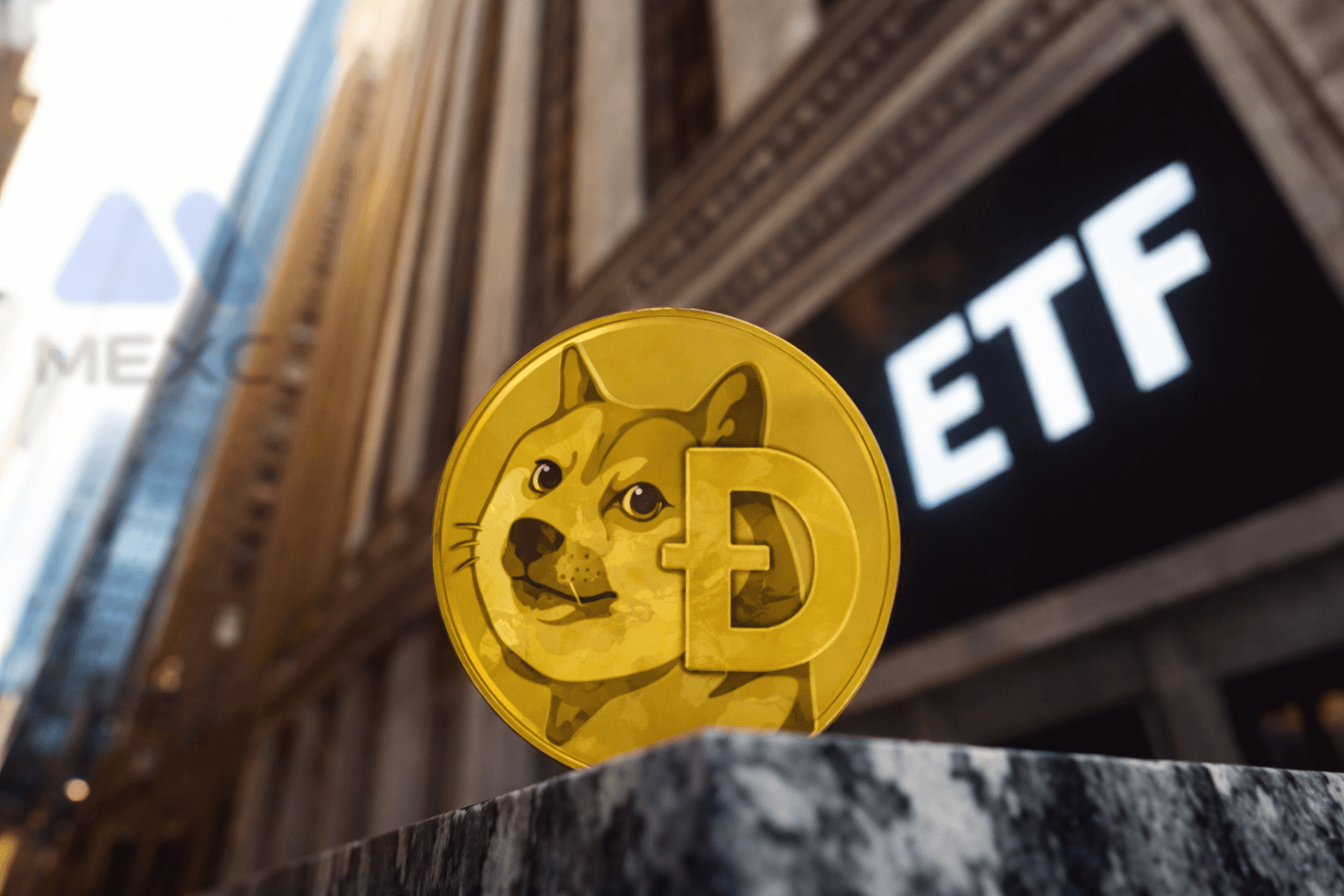
- REX-Osprey Dogecoin ETF (DOJE) launched in September 2025 as the first U.S. product offering DOGE exposure via a mix of holdings and derivatives.
- Grayscale Dogecoin Trust ETF (GDOG) debuted on November 24, 2025, as a true spot ETF holding actual DOGE, marking a key milestone for meme coin ETFs.
- Additional products from Bitwise and 21Shares (leveraged variants) became effective in late 2025.
- Initial launch volumes were solid but below expectations compared to Bitcoin and Ethereum ETFs, with moderate price impact on DOGE amid year-end market caution.
- As of December 18, 2025, multiple DOGE ETFs now trade on U.S. exchanges, offering regulated exposure to Dogecoin, further bridging meme culture with traditional investing.
1.0 Dogecoin ETF Introduction:
1.1What is an ETF?
- Spot ETFs: These funds directly hold the underlying cryptocurrency and track its price movements. Investors in a spot Dogecoin ETF would indirectly own DOGE through the ETF.
- Futures ETFs: These ETFs do not hold the underlying cryptocurrency but instead hold futures contracts, speculating on the future price of the asset. Bitcoin futures ETFs are the most common, but Dogecoin could potentially follow the same model.
2.The Status of Dogecoin ETFs
2.1Key Dogecoin ETF Launches in 2025:
ETF Name | Launch Date | Platform | ETF Structure | Notable Features | Issuer |
REX-Osprey Dogecoin ETF (DOJE) | September 18, 2025 | Cboe BZX | ‘40 Act vehicle; exposure via offshore subsidiary and derivatives (not spot) | First U.S. memecoin ETF, bypassed longer review processes | REX-Osprey |
Grayscale Dogecoin Trust ETF (GDOG) | November 24, 2025 | NYSE Arca | Spot ETF; directly holds DOGE (custodied by Coinbase) | True spot ETF; low introductory fee (0% initially, then 0.35%) | Grayscale |
Bitwise Dogecoin ETF (BWOW) | Late November 2025 | N/A | Spot ETF; direct exposure to DOGE | One of the first direct Dogecoin ETFs following Grayscale’s lead | Bitwise |
21Shares Leveraged Dogecoin ETFs | Late November 2025 | N/A | Leveraged ETF (e.g., 2x DOGE) | Provides double exposure to DOGE price movements | 21Shares |

2.2Regulatory Developments:
3.Market Reception and Performance
3.1Performance of DOJE and GDOG:
- DOJE (REX-Osprey Dogecoin ETF):
- The ETF saw moderate growth, with assets under management (AUM) ranging between $24 million to $50 million in the initial weeks after launch.
- Price impact: Dogecoin’s price showed spikes of 5–15% around the announcement of DOJE, but quickly corrected as broader market caution took hold, with investors holding back on meme-based investments.
- GDOG (Grayscale Dogecoin Trust ETF):
- Initial trading volumes were lower than expected, likely due to the speculative nature of Dogecoin and its high volatility.
- Gradual inflows followed as the product was positioned as a low-fee, direct investment vehicle for those looking to gain spot exposure to Dogecoin.
4.Advantages and Challenges of Dogecoin ETFs
4.1Advantages of Dogecoin ETFs
- Traditional Investment Access: One of the main advantages of a Dogecoin ETF is that it allows traditional investors to gain exposure to DOGE without the need for cryptocurrency exchange accounts or self-custody wallets. Investors can purchase shares in a Dogecoin ETF using their regular brokerage accounts or within retirement accounts.
- Legitimization of Dogecoin: The approval of these ETFs is seen as a sign of growing legitimacy for Dogecoin in the world of regulated finance. This could contribute to long-term adoption by institutional investors and bring Dogecoin to the forefront of mainstream investment strategies.
4.2Challenges of Dogecoin ETFs
- Volatility: The high volatility of Dogecoin remains a significant issue. While Bitcoin and Ethereum are more established assets, Dogecoin’s speculative nature, driven by social media movements and celebrity endorsements, continues to make it a risky investment. This volatility can deter more cautious, institutional investors from participating in Dogecoin ETFs.
- Meme Coin Classification: Dogecoin’s identity as a meme coin creates hesitation for many institutional investors who prefer assets with more predictable value models. Its inflationary nature (compared to Bitcoin’s capped supply) also raises concerns about its long-term viability as a store of value.
- Higher Fees: Some of the Dogecoin ETF structures, such as the REX-Osprey DOJE, are more complex and carry higher fees, which could deter investors who are accustomed to low-fee Bitcoin or Ethereum ETFs.
4.3Competition from Established Bitcoin and Ethereum ETFs
5.The Future Outlook for Dogecoin ETFs
- Institutional Adoption: The continued slow growth in institutional interest presents both an opportunity and a challenge. As the regulatory landscape evolves and Dogecoin’s market maturity increases, more institutional investors may become comfortable with Dogecoin exposure through ETFs.
- Innovative Product Expansions: The rise of leveraged ETFs and staking variants for cryptocurrencies presents an opportunity for Dogecoin ETFs to grow further. Investors may be attracted to products that offer double or triple exposure to Dogecoin, especially in times of bullish market sentiment.
- Regulatory Clarity: As the SEC and other regulators continue to provide more clarity and adjust regulations, there is potential for further growth in the altcoin ETF market. Should these products gain further traction, we may see additional listings and more Dogecoin ETF variants in the near future.
5.1 Increased Retail Demand
Conclusion
Reading Guide:
Popular Articles
Dogecoin Mining 2025: How DOGE Is Mined, Merge Mining, and Miner Economics
Key Takeaways:Dogecoin Mining Process: Dogecoin uses Proof-of-Work (PoW) with the Scrypt algorithm, providing a fixed 10,000 DOGE reward per block every ~1 minute, ensuring consistent supply for miner
Elon Musk and Dogecoin: How Much Influence Does He Still Have?
Key Takeaways:Musk’s Pivotal Role: Elon Musk’s influence on Dogecoin’s rise is profound, shaping the cryptocurrency’s trajectory through public endorsements and tweets.Price Influence: Musk’s tweets h

What Will Ethereum Be Worth in 2030? Expert Predictions and Price Analysis
Ethereum's price trajectory toward 2030 has captured significant attention from investors worldwide. This analysis examines expert forecasts, fundamental growth drivers, and realistic valuation scenar
How Many Dogecoins Are There? DOGE Supply, Inflation, and Token Economics
Key TakeawaysDogecoin (DOGE) is a decentralized peer-to-peer cryptocurrency with no maximum supply cap.Dogecoin’s supply grows at a fixed rate of about 5 billion new DOGE each year through mining rewa
Hot Crypto Updates

Bitcoin's Quantum-Resistant Future: A Strategic Migration Timeline
1. Why Post-Quantum Security Matters NowBitcoin's foundational security hinges on cryptographic protocols like ECDSA and Schnorr signatures, which face existential risks from advancing quantum computi
Understanding Meme Coins and Islamic Finance Principles
Opening OverviewMeme coins represent a unique category of digital assets that emerged from internet culture, social media memes, and viral trends, distinguishing themselves from traditional cryptocurr

MEXC vs Bybit 2026: Which Crypto Exchange Reigns Supreme for Traders?
Meta Description Comprehensive comparison of MEXC and Bybit exchanges covering fees, trading pairs, liquidity, and security. Discover why MEXC's 3000+ pairs, zero fees, and lowest withdrawal costs mak

2026's Lowest Withdrawal Fee Exchange: MEXC Sets New Industry Standards
Meta Description: Comprehensive analysis of 2026 cryptocurrency exchange withdrawal fees comparison. Discover how MEXC leads with industry-lowest withdrawal fees, zero-fee spot trading, massive tradin
Trending News

Gold Hits $3,700 as Sprott’s Wong Says Dollar’s Store-of-Value Crown May Slip
The post Gold Hits $3,700 as Sprott’s Wong Says Dollar’s Store-of-Value Crown May Slip appeared on BitcoinEthereumNews.com. Gold is strutting its way into record territory, smashing through $3,700 an

Why Voice Booking Is Becoming Essential for UK SMEs
For many small and medium-sized businesses, the moment a customer decides to book is fragile. A missed phone call, a booking form that takes too long to complete
Zanaadu’s John Calhoun on why world needs new social network
The post Zanaadu’s John Calhoun on why world needs new social network appeared on BitcoinEthereumNews.com. Homepage > News > Business > Zanaadu’s John Calhoun on

OpenVPP accused of falsely advertising cooperation with the US government; SEC commissioner clarifies no involvement
PANews reported on September 17th that on-chain sleuth ZachXBT tweeted that OpenVPP ( $OVPP ) announced this week that it was collaborating with the US government to advance energy tokenization. SEC C
Related Articles

Is Dogecoin Dead? A Data-Driven Look at DOGE’s Survival Through Market Cycles
Key Takeaways Dogecoin (DOGE) is not dead; it remains a liquid, actively traded asset with a market capitalization exceeding $20 billion as of late 2025. Though trading below its all-time high of $0.7

What is the x402 Protocol? Understanding the 5 Core Advantages of HTTP-Native Payment Standards
TL;DR1) The x402 protocol activates the HTTP 402 status code, dormant for 30 years, enabling native Web payment capabilities.2) Zero protocol fees and 2-second settlement revolutionize the cost and sp
What is MAITRIX (REDACTED)? A Stablecoin Protocol for Decentralized AI
TL;DR1) MAITRIX: An intelligent stablecoin protocol for decentralized AI, aiming to serve as the foundational DeFAI financial infrastructure layer.2) Dual-Layer Architecture: Composed of a Stablecoin

What is Ventuals? The First On-Chain Derivatives Protocol for Private, Pre-IPO Company Valuations
TL;DR1) Ventuals is the first on-chain perpetual futures protocol built on the HIP-3 standard, enabling long and short trading on the valuation of private, pre-IPO companies.2) vHYPE serves as the cor
