If you've heard about digital money and wondered "is Bitcoin cryptocurrency," you're asking the right question. Bitcoin and cryptocurrency are terms often used together, but understanding theirIf you've heard about digital money and wondered "is Bitcoin cryptocurrency," you're asking the right question. Bitcoin and cryptocurrency are terms often used together, but understanding their
Learn/Cryptocurrency Knowledge/Hot Concepts/Is Bitcoin ...eed to Know

Is Bitcoin Cryptocurrency? Everything Beginners Need to Know

Intermediate
Feb 6, 2026MEXC
0m
ANyONe Protocol
ANYONE$0.1398+2.41%
LightLink
LL$0.003404-4.43%
Everscale
EVER$0.00461-23.16%
Wink
LIKE$0.001715-9.92%
Ambire Wallet
WALLET$0.00843-10.12%
If you've heard about digital money and wondered "is Bitcoin cryptocurrency," you're asking the right question.
Bitcoin and cryptocurrency are terms often used together, but understanding their relationship matters for anyone exploring digital assets.
This guide explains what cryptocurrency means, how Bitcoin fits into the picture, and what makes Bitcoin unique among thousands of digital currencies available today.
By the end, you'll understand exactly why Bitcoin is cryptocurrency—and why it's considered the most important one.

Key Takeaways
  • Bitcoin is the first cryptocurrency ever created, launched in January 2009 by Satoshi Nakamoto.
  • Cryptocurrency operates as digital money using blockchain technology without banks or government control.
  • Bitcoin's supply is permanently capped at 21 million coins, making it scarce like gold.
  • You need a digital wallet with private keys to send, receive, and store Bitcoin securely.
  • Bitcoin investments carry significant risks including price volatility, security threats, and regulatory uncertainty.
  • Major exchanges like MEXC allow beginners to buy Bitcoin, but only invest what you can afford to lose.

What Is Cryptocurrency and Bitcoin

Cryptocurrency is digital money that exists only online and operates without banks or governments controlling it.
Unlike traditional currencies such as the US dollar or euro, cryptocurrencies use cryptography to secure transactions and control the creation of new units.
These digital currencies run on blockchain technology, which acts as a public ledger recording every transaction across a network of computers.
The blockchain ensures transparency while maintaining security, making it nearly impossible to counterfeit or double-spend cryptocurrency.
People can send cryptocurrency directly to each other anywhere in the world without needing a bank as a middleman.
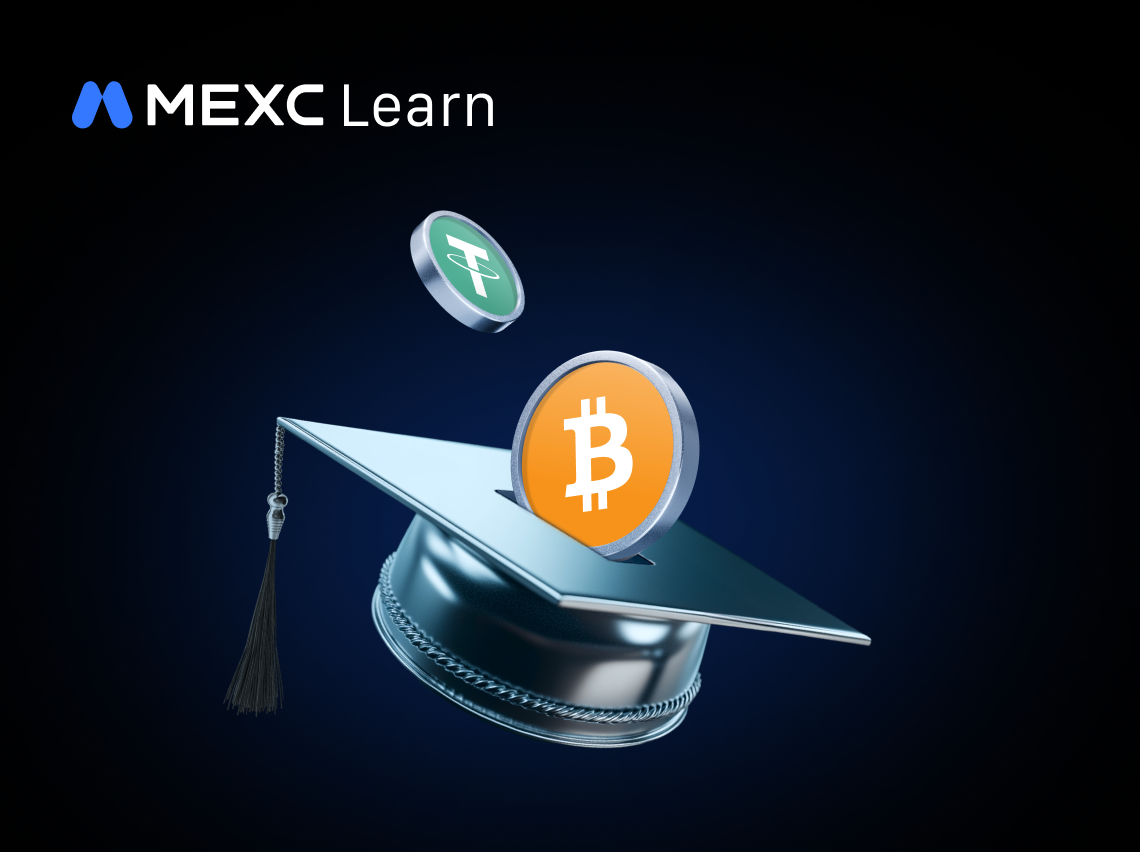
Bitcoin, Ethereum, and Tether represent the most recognized cryptocurrencies, but thousands of alternatives exist today.
What makes cryptocurrency revolutionary is its decentralized nature—no single authority controls the network, and anyone with internet access can participate.


Is Bitcoin a Cryptocurrency?

Yes, Bitcoin is cryptocurrency—specifically, it's the first cryptocurrency ever created.
An unknown person or group using the pseudonym Satoshi Nakamoto introduced Bitcoin in 2008 through a white paper titled "Bitcoin: A Peer-to-Peer Electronic Cash System."
Bitcoin pioneered the concept of decentralized digital currency and remains the largest cryptocurrency by market capitalization and trading volume.
While thousands of cryptocurrencies have emerged since Bitcoin's creation, Bitcoin maintains its position as the most recognized and widely adopted digital currency.
The relationship is simple: cryptocurrency is the category, and Bitcoin is the original and most prominent example within that category.
Think of it like asking "is a Toyota a car?"—yes, and it's one of the most well-known car brands.
Bitcoin's innovation solved a fundamental problem: how to transfer value between people online without requiring a trusted intermediary like a bank.


How Bitcoin Cryptocurrency Works?

1. The Blockchain Technology Behind Bitcoin

Bitcoin transactions are recorded on a blockchain, which is a distributed public ledger maintained by thousands of computers worldwide.
Each transaction gets grouped with others into a "block," and these blocks connect chronologically to form a chain.
Every computer on the Bitcoin network maintains an identical copy of this blockchain, ensuring transparency and preventing fraud.
The blockchain updates approximately every 10 minutes when a new block gets added to the chain.

2. Bitcoin Mining and Transaction Verification

Mining is the process where specialized computers compete to solve complex mathematical puzzles that verify Bitcoin transactions.
The first miner to solve the puzzle adds the next block to the blockchain and receives newly created Bitcoins as a reward.
Currently, miners receive 3.125 Bitcoins per block after the most recent halving event, and this reward decreases approximately every four years.
Bitcoin's supply is capped at 21 million coins, with mining expected to continue for over a century.

3. Bitcoin Wallets and Keys

To use Bitcoin, you need a digital wallet that stores your private and public keys.
Your public key functions like an email address—you share it with others so they can send you Bitcoin.
Your private key acts as a password, allowing only you to access and spend your Bitcoin.
Losing your private key means permanently losing access to your Bitcoin, as no recovery process exists.


Bitcoin vs Cryptocurrency: Key Differences

1. Bitcoin's First-Mover Advantage

Bitcoin's status as the first cryptocurrency gives it unmatched recognition and adoption compared to alternatives like Ethereum, Litecoin, or XRP.
Bitcoin remains the most widely held cryptocurrency, with major companies and institutions adding it to their balance sheets.
The Bitcoin network has operated continuously since 2009, demonstrating remarkable reliability.
Bitcoin's market dominance and liquidity make it easier to buy, sell, and trade compared to smaller cryptocurrencies.

2. Digital Gold vs Smart Contract Platforms

Bitcoin functions primarily as a store of value and medium of exchange, often called "digital gold" due to its scarcity.
Other cryptocurrencies like Ethereum offer additional features such as smart contracts, which are self-executing agreements written in code.
Bitcoin's simpler design focuses on security and decentralization rather than adding complex functionality.
This specialization makes Bitcoin more predictable but less flexible than platforms designed for broader applications.
For beginners, Bitcoin's straightforward purpose as digital money makes it easier to understand than multipurpose blockchain platforms.

3. Market Position and Adoption

Bitcoin's price reached over $100,000 in late December, cementing its position as the dominant cryptocurrency.
Major payment processors and retailers accept Bitcoin, and you can buy it through platforms like MEXC and other exchanges worldwide.
Some governments have explored or adopted Bitcoin, though its legal status varies significantly across different countries.
Bitcoin's widespread recognition means more businesses and individuals understand and trust it compared to lesser-known cryptocurrencies.


Is Bitcoin Cryptocurrency Safe?

Bitcoin and cryptocurrency investments carry substantial risks that every beginner should understand before buying.
Price volatility represents the most obvious risk—Bitcoin's value can swing by thousands of dollars within a single day or week.
Security risks include exchange hacks, phishing scams, and the permanent loss of funds if you lose your private keys.
Unlike bank accounts protected by government insurance, cryptocurrency holdings lack such protections, meaning lost or stolen Bitcoin cannot be recovered.
Regulatory uncertainty adds another layer of risk, as governments worldwide continue developing rules that could impact Bitcoin's legal status and usability.
Scammers specifically target cryptocurrency investors with fake exchanges, fraudulent investment schemes, and social media scams promising guaranteed returns.
The document "Before You Invest in Crypto, Know the Risks" notes that minority investors are often targeted by crypto scammers through social media.
Despite these risks, Bitcoin's blockchain technology provides strong security against counterfeiting and unauthorized transactions when users follow proper security practices.
The key is investing only what you can afford to lose and using reputable platforms like MEXC for buying and storing Bitcoin.


Frequently Asked Questions About Bitcoin Cryptocurrency

Is Bitcoin cryptocurrency the same thing?
Yes, Bitcoin is a cryptocurrency—the first and most recognized one.


Is Bitcoin the first cryptocurrency?
Bitcoin was the first decentralized cryptocurrency, launched in January 2009.


Is Bitcoin and cryptocurrency the same?
No, cryptocurrency is the broader category, while Bitcoin is one specific cryptocurrency within that category.


Is Bitcoin a type of cryptocurrency?
Yes, Bitcoin is a type of cryptocurrency, specifically designed as a decentralized digital currency.


What is Bitcoin cryptocurrency definition?
Bitcoin is a decentralized digital currency that operates on blockchain technology without central authority control.


Is Bitcoin the safest cryptocurrency?
Bitcoin is generally considered more established and secure than most alternatives, but all cryptocurrencies carry investment risks.


Conclusion

Now you understand that Bitcoin is cryptocurrency—the pioneering digital currency that started the entire revolution.
Bitcoin remains the most recognized and widely adopted cryptocurrency, but it carries significant risks including volatility and security challenges.
If you're interested in exploring Bitcoin, start by educating yourself thoroughly before making any investment decisions.
Use reputable cryptocurrency exchanges like MEXC to buy small amounts while you learn how digital wallets and blockchain transactions work.
Remember the golden rule: only invest money you can afford to lose completely, as cryptocurrency markets remain highly unpredictable.
Market Opportunity
ANyONe Protocol Logo
ANyONe Protocol Price(ANYONE)
$0.1398
$0.1398$0.1398
+7.95%
USD
ANyONe Protocol (ANYONE) Live Price Chart
This article is provided by MEXC for informational purposes only and does not constitute financial or investment advice. Cryptocurrency markets involve significant risk. Please conduct independent research or consult a qualified professional before making any investment decisions. The views expressed do not necessarily represent those of MEXC or its affiliates.
Sign Up on MEXC
Sign Up & Receive Up to 10,000 USDT Bonus