What Is Londian Wason New Energy Tech Inc.? How to Buy and Short It on MEXC
What Londian Wason New Energy Tech Actually Does
Copper foil is the least glamorous component in a lithium-ion cell and one of the few that cannot be engineered away. Every cell needs a current collector on the anode side, and that collector is a sheet of electrolytic copper rolled to a few thousandths of a millimetre. Londian Wason makes that sheet. That is the business.
The company grew out of a copper foil plant founded in 2001 in Lingbao, Henan, and now runs six production sites across China with roughly 180,000 tonnes a year of designed capacity, plus one under construction in Malaysia. Headquarters is in Shenzhen. According to Frost & Sullivan, cited in the company's F-1 registration statement, it was the world's largest supplier of lithium-ion battery copper foil by sales volume in 2025, with 7.6% of the global market.
Thinner foil is worth more. Every micron stripped out is a micron handed back to active material, so cell makers push suppliers down the gauge curve — from 8μm to 6μm, now toward 4μm. Londian Wason was the first Chinese producer to reach volume manufacturing of 6μm high-strength battery foil, and reports 634 patents held in China as of the end of 2025. A second line produces circuit-grade foil in RTF and HVLP specifications for high-speed printed circuit boards, which is where AI server demand turns up in a foil order book. A third makes flexible copper-clad laminate.
The customer list is the industry: LG Energy Solution, Samsung SDI, SK On, Panasonic, ATL, CATL and BYD. SK Group of South Korea holds about 29.5%.
What is easy to miss is that copper foil producers do not really sell copper. They buy cathode copper at market price, pass that cost straight through to the customer, and earn a processing fee per tonne for converting it into foil. The income statement tracks the processing fee, not the copper price — and fees fell hard when the industry added capacity faster than battery demand absorbed it. The 2025 accounts show the result: revenue of about RMB 10.9 billion, a gross margin of 6.6%, and net income of roughly RMB 20 million. A net margin near 0.2% on eleven billion yuan of turnover. The year before, it lost money outright. More sits on the company's official website.
Why Traders Are Watching FOIL
The interesting property of a company earning 0.2% net margin is what happens when the fee moves. In the first quarter of 2026, revenue more than doubled year on year to about RMB 4.1 billion, and the bottom line swung from a loss of roughly RMB 68 million to a profit of about RMB 135 million. Nothing structural changed in three months. Processing fees recovered, mix improved, and a business sitting flat on breakeven was suddenly earning. The arithmetic runs in reverse just as fast.
That profile — enormous revenue, wafer-thin margin, violent operating leverage — is rare in listed battery exposure. Most of what trades publicly is cell manufacturers or lithium miners. Copper foil sits between them, in a layer that behaves like a toll on volume rather than a bet on a commodity price. Anyone wanting EV and grid-storage build-out exposure without lithium price risk has few liquid instruments.
Then there is access. China's battery supply chain has overwhelmingly listed in Shenzhen, Shanghai or Hong Kong. A New York listing is the exception — Beijing has spent recent years steering domestic champions toward listing closer to home, and the China Securities Regulatory Commission cleared very few US offerings in the year before Londian Wason received its overseas listing filing notice in December 2025. For anyone outside China, the scarcity is the point. The alternative route into this layer is A-shares, which most non-resident investors cannot buy directly.
Two more features cut both ways. Backing from SK Group alongside a customer list of the largest cell makers on earth is evidence that the foil qualifies at the top of the market; it is also concentration, because a few buyers account for most of the revenue. And the offering is small against the total share count, leaving a modest tradable float under a market capitalisation in the billions. Small floats move.
Trading FOIL on MEXC
FOILUSDT is a perpetual futures contract on MEXC that tracks a reference price for Londian Wason's US-listed stock, settled in USDT. Traders never hold, borrow, or deliver the underlying shares.
The contract trades around the clock, which is the practical reason to use it rather than the cash market: New York equity sessions cover a fraction of the day, and direct brokerage access to a US-listed Chinese issuer is not available in every jurisdiction.
For current contract specifications — leverage, margin mode, trading rules, and how the reference price and its unit are defined — see the FOILUSDT contract page.
How to Buy FOIL (Going Long)
Traders who expect Londian Wason's reference price to rise can open long exposure through the FOILUSDT perpetual futures contract. Six steps:
- 1. Fund your futures account. Transfer USDT from your spot wallet to your USDT-M futures account.
- 2. Open the FOILUSDT contract page. Search the ticker, or browse the futures market list.
- 3. Set your margin mode and leverage. The available options are shown on the contract page.
- 4. Choose your order type. A limit order sets your entry price and waits; a market order fills immediately at whatever the book offers.
- 5. Enter your position size. Read the sizing note below before settling on a number.
- 6. Click Open Long. Then set a take-profit and stop-loss on the open position.
Step 5 deserves more thought than the entry price. Leverage cuts both ways: the higher the multiple, the smaller the adverse move needed to wipe out the margin backing your position.
For fuller instructions on opening and managing a position, read MEXC's stock futures trading guide.
How to Short FOIL
Traders who expect the reference price to fall can take short exposure through the same contract. This does not involve borrowing or selling the underlying shares. The trader opens a short position in a derivative linked to Londian Wason's reference price.
- 1. Fund your futures account. Transfer USDT from your spot wallet to your USDT-M futures account.
- 2. Open the FOILUSDT contract page. Search the ticker, or browse the futures market list.
- 3. Set your margin mode and leverage. The available options are shown on the contract page.
- 4. Choose your order type. Limit to name your entry price, market to fill immediately.
- 5. Enter your position size. The same sizing logic applies in reverse.
- 6. Click Open Short. Then set a take-profit and stop-loss.
Two things behave differently on the short side. Funding payments flow between longs and shorts depending on whether the contract trades above or below its reference price, so an open short can earn or pay funding over time. And losses on a short have no natural ceiling, because there is no upper bound on how far a price can rise.
The specific hazard here is the float. A small offering against a large share count leaves few shares circulating, and thin floats squeeze hard when demand arrives — a reference price can travel a long way before a natural seller appears.
What Changes After Listing
Before a stock has a public market, its reference price is an indicative mark: an estimate of what the equity is worth, not a print off an order book. Once the ADSs trade on the New York Stock Exchange, two things change. The reference becomes a live quoted price with real depth behind it. And the contract inherits the NYSE session calendar, so the underlying stops moving overnight, at weekends and on US holidays while the perpetual keeps trading — which is where gaps come from. Newly listed US stocks carry no daily price limit.
Risks to Understand First
- Liquidity. Volume in a new contract can be thin: slippage, wide spreads, bad stop-loss fills.
- Price uncertainty. A reference price is an estimate, and venues can carry different marks.
- Gap risk. While the underlying market is closed, information accumulates with nowhere to go.
- Contract terms. Exchanges may adjust leverage tiers, margin requirements or position limits.
- Regional availability. Stock futures are restricted in some jurisdictions.
- A thin financial cushion. A 6.6% gross margin and near-zero net margin in 2025 leave little room to absorb a downturn. Operating cash flow was negative in 2024 and 2025, and the F-1 discloses a period of working capital deficiency that raised going-concern doubt until a major shareholder stepped in.
Frequently Asked Questions
How do I buy FOIL on MEXC?
Fund a USDT-M futures account, open the FOILUSDT contract page, set your parameters, then click Open Long.
How do I short FOIL on MEXC?
Same contract, same setup, but click Open Short. No borrowing of shares is involved.
Does trading FOILUSDT give me actual Londian Wason shares?
No. It is a USDT-settled derivative with no shareholder rights or dividends.
Can I trade FOILUSDT when the US market is closed?
Yes. Expect wider spreads and gap risk while it is shut.
Where do I check the contract specifications?
On the FOILUSDT contract page, which carries leverage options, margin modes and trading rules.
What does Londian Wason New Energy Tech do?
It manufactures electrolytic copper foil: battery foil used as the anode current collector in lithium-ion cells, plus circuit-grade foil and flexible copper-clad laminate. Frost & Sullivan ranked it first worldwide by volume in 2025.
Which exchange and ticker does Londian Wason trade under?
The New York Stock Exchange, under FOIL, as American depositary shares. Its F-1 sets each ADS at five ordinary shares, with prices quoted per ADS. It is not an A-share and has no Shanghai or Shenzhen listing code.
Can I buy Londian Wason shares directly?
Once the ADSs are listed, through any broker with NYSE access, subject to local rules. FOILUSDT is a separate instrument, not a route to ownership.
Is Londian Wason profitable?
Barely, and not consistently. A small net profit on about RMB 10.9 billion of 2025 revenue followed a loss in 2024, then a stronger profit in the first quarter of 2026.
Risk Warning
Stock futures products carry substantial risk, including leverage, forced liquidation, funding costs, limited liquidity, wide spreads, and price gaps when the underlying market is closed. Availability varies by jurisdiction. This article is for informational purposes only and does not constitute investment advice.
Popular Articles
View More
Oura Competitors: Samsung, Apple and the Smart Ring Market
Oura's competitors fall into three groups, according to its IPO prospectus: smartwatch makers such as Apple, Google and Samsung; fitness wearables such as Garmin, Coros and Whoop; and software-only
Is Oura Profitable? Revenue, Business Model and Valuation
Yes, Oura is profitable on a net income basis. Its IPO prospectus shows net income of $60.8 million on revenue of $1.21 billion in the nine months to June 30, 2026. The $924.3 million loss in some
Bitget Review 2026: 3.8 Out of 5, the Deepest Copy-Trading Shelf, and a Japan Exit With Three Dates You Need
Bitget scores 3.8 out of 5 on our six-dimension scorecard as of 25 September 2026, leading on derivatives, holding a provisional 3.5 on security after the hot-wallet incident of about $351.6 million
Trending News
View More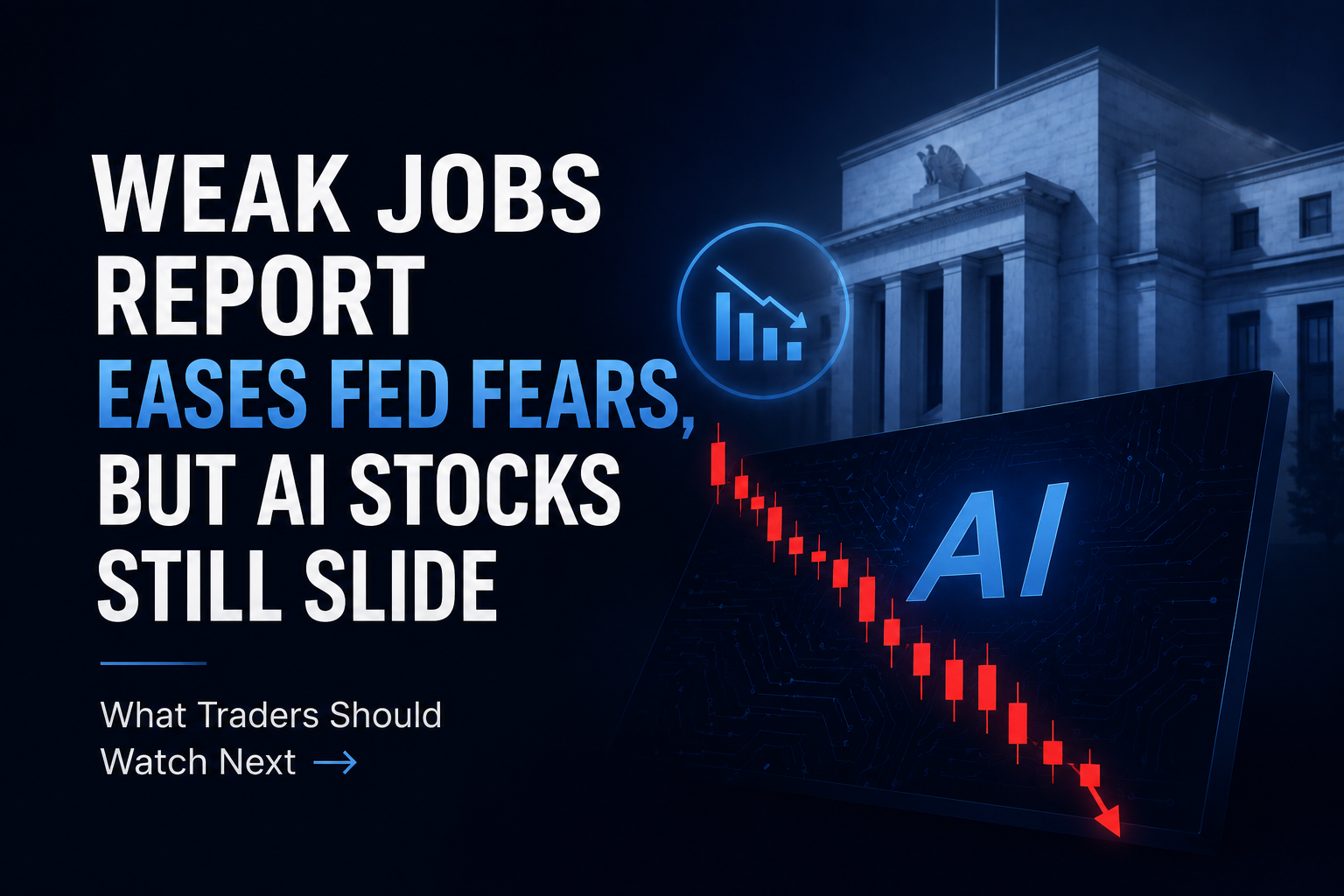
Weak Jobs Report Eases Fed Fears, But AI Stocks Still Slide: What Traders Should Watch Next
The U.S. June jobs report signaled a clear economic slowdown, missing expectations and lowering Federal Reserve rate hike fears. Despite lower Treasury yields, AI and tech stocks slid, proving that ma

Stablecoin Adoption: Why Bank-Level Protection Matters
Stablecoin adoption may depend less on blockchain technology than on whether consumers receive protections they already associate with banks and card networks. Visa’s Money Travels 2026 research found
Related Articles
View More
What Is OURA Pre-IPO Futures? Trading Oura Ahead of Its Nasdaq Listing
OverviewOura is a wearable-health technology company best known for the Oura Ring, a smart ring designed to track sleep, recovery, activity, stress, cardiovascular signals, and other physiological met
What Is POLYMARKET Pre-IPO Futures? A Beginner’s Guide to Trading Polymarket Before a Potential IPO
OverviewPolymarket is a blockchain-based prediction market that allows users to trade on the outcomes of real-world events. Its markets cover areas such as politics, macroeconomics, technology, busine
What Is MAGNE.AI (MHA) crypto ? How Mobile Devices Become Part of an AI-Powered Web3 Network
OverviewMAGNE.AI is a Web3 infrastructure project designed around the convergence of artificial intelligence, decentralized physical infrastructure networks (DePIN), blockchain, and edge computing. Ra