

Tezos Rolls Out Seoul Upgrade With Protocol-Native Multisigs and Faster Finality
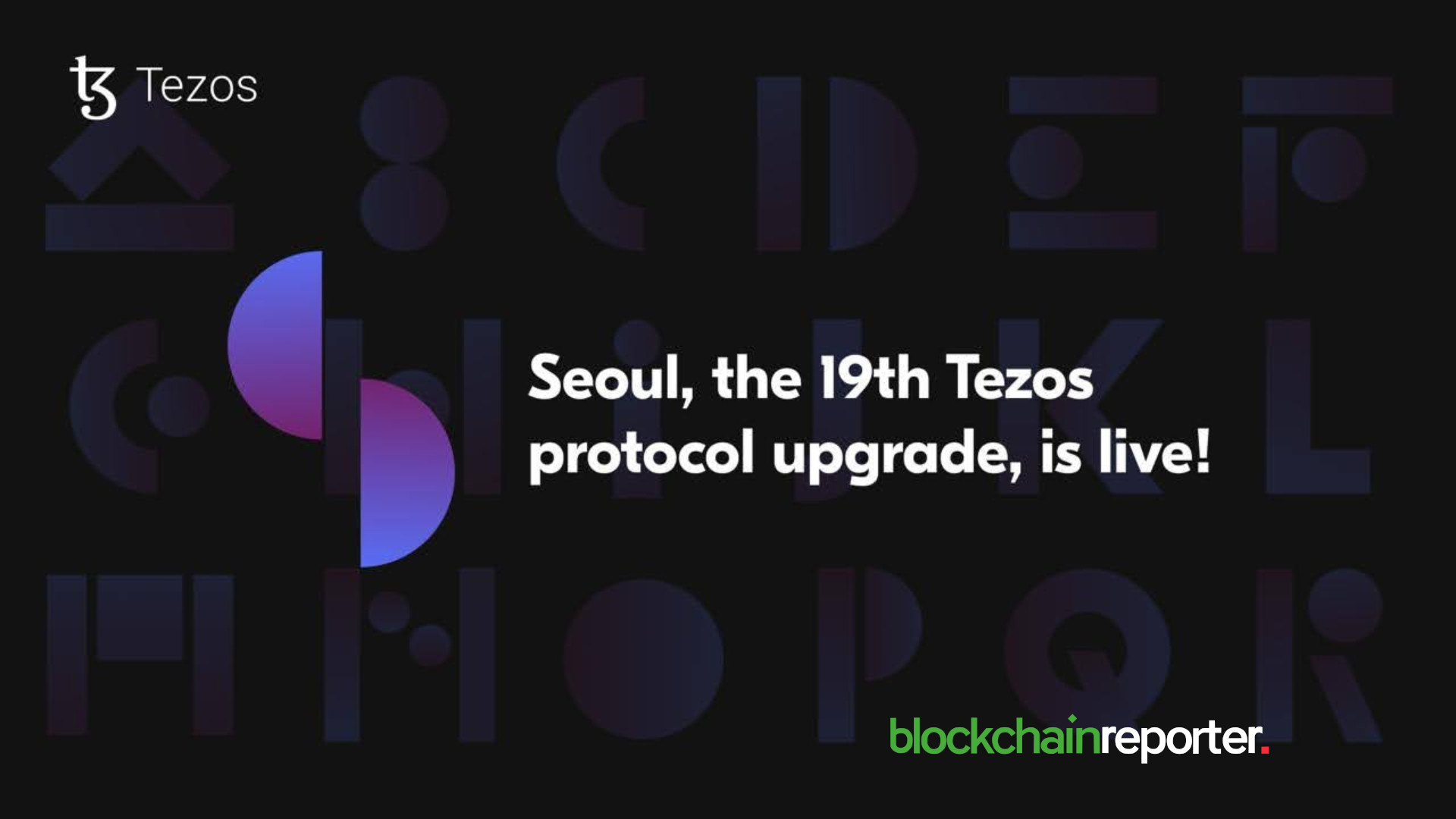
Tezos’ long-running experiment in on-chain, community-led upgrades took another step forward on Friday as the network activated Seoul, the protocol’s 19th upgrade. Proposed and passed through the project’s on-chain governance process with broad participation from bakers and community members, Seoul introduces protocol-native multisignature accounts, dramatic efficiency improvements for consensus operations, and a simpler staking flow that lays the groundwork for one-click unstaking.
A major focus of Seoul is institutional readiness. The upgrade adds protocol-level multisig support, meaning accounts can now be managed collectively without the external workarounds custodians and institutions have relied on until now. That removes an extra layer of complexity and risk for organizations that need shared control over funds.
“With protocol-native multisigs, one can co-manage accounts without depending on external solutions — a real leap forward in usability, security, and affordability,” said Yann Régis-Gianas, Head of Engineering at Nomadic Labs, who added: “Offering multisigs at the protocol level also allows more users to benefit from institutional-grade security that might be too costly for them otherwise.”
Under the hood, Seoul also delivers a striking performance win through a feature called aggregated attestations. By using advanced cryptographic aggregation, engineering teams were able to collapse many separate signatures into a single, verifiable attestation, slashing bandwidth and storage requirements for a key validation task by up to 63x (from roughly 900 MB per day down to about 14 MB per day in the examples shared by developers). That efficiency gain not only reduces operating costs for node operators and bakers but also opens the door to lower latency and faster finality on the Tezos network.
More User-friendly, Faster, and More Secure
Both the multisig functionality and the aggregated attestations leverage BLS signatures, a cryptographic scheme that permits multiple signatures to be combined into one without sacrificing security or verifiability. This pairing of BLS with protocol changes reflects Tezos’ ongoing push to use modern cryptography to keep the chain compact, fast, and secure.
“Using powerful cryptographic tools, we are able to make Tezos more user-friendly, faster, and more secure at the same time. It’s another big step towards realizing the ambitious goals in the Tezos X roadmap,” said Yann Régis-Gianas.
Seoul also improves the staking user experience. While the security-minded four-day unfreeze period for staked funds remains in place, the upgrade automates the finalization step: once users begin an unstake operation, funds will now become available automatically after the waiting period instead of requiring a manual finalization action. That change effectively enables one-click unstaking from the user perspective while preserving the protocol’s safety guarantees.
The upgrade was developed collaboratively by Nomadic Labs, Trilitech, and Functori, and is being framed as part of Tezos’ unique self-amending trajectory, a chain of upgrades that the project says has kept pace with evolving user and institutional needs since mainnet launched. As Tezos passes its seventh year of mainnet operation, Seoul is positioned as a practical boost to operational efficiency and an important on-ramp for institutions that want native, auditable multisig controls on a PoS chain.
Tezos remains an open-source, energy-efficient blockchain designed for smart contracts and scalable dApp deployment. With Seoul, the project reinforces its reputation for measured, community-led evolution, combining cryptographic innovation with governance to deliver concrete improvements for developers, bakers, institutions, and everyday users alike.
You May Also Like

China Blocks Nvidia’s RTX Pro 6000D as Local Chips Rise
Market Records Largest Long-Term Bitcoin Supply Release In History, Here’s What It Means For BTC
