The post Roblox’s ‘Italian Brainrot’ Trend, Explained appeared on BitcoinEthereumNews.com. Italian Brainrot characters Tralalero Tralala (created by @eZburger401) and Tung Tung Tung Sahur (created by Noxa) Noxa/@eZburger401 Roblox’s Steal a Brainrot, based on “Italian Brainrot” memes, has become a breakout hit—the Roblox and Fortnite game recently hit almost 24 million players in a single day. To put this in perspective, the most popular game on Steam, Counter-Strike 2, averages a daily peak of a million and a half—recent viral hit Silksong, the much-anticipated sequel to Hollow Knight, peaks at just under half a million. Roblox is the gaming hub of choice for younger players, meaning that Gen Alpha memes are a major source of creative inspiration for the platform’s biggest games. Steal a Brainrot has adapted the absurd Italian Brainrot meme into a Pokemon-like game, as players are tasked with collecting Brainrots, with the stressful possibility of their most valuable creatures being stolen by other players. Like many Roblox games, Steal a Brainrot is riddled with in-app purchases and copyright controversies, but is wildly popular with children. The Italian Brainrot trend is all over Roblox, YouTube and TikTok—videos of the creatures often rack up many millions of views. So, what is the bizarre Brainrot trend, and why is it so popular? The Italian Brainrot Meme, Explained Italian Brainrot is a semi-ironic trend popularized by Gen Alpha, using AI image generators to spew out an absurd, nonsensical cast of characters. The internet has always enjoyed photoshopping weird animal hybrids, like Strawberry Elephant and Cat Smurf, but those creatures were created with Photoshop—generative AI tools allow anyone to effortlessly create their own. Brainrot characters emerged in 2025, some generated anonymously, and some tied to specific content creators. Popular characters include Tralalero Tralala, a three-legged shark wearing sneakers, Bombardiro Crocodilo, a crocodile spliced with a bomber jet, and Tung Tung Tung Sahur, a… The post Roblox’s ‘Italian Brainrot’ Trend, Explained appeared on BitcoinEthereumNews.com. Italian Brainrot characters Tralalero Tralala (created by @eZburger401) and Tung Tung Tung Sahur (created by Noxa) Noxa/@eZburger401 Roblox’s Steal a Brainrot, based on “Italian Brainrot” memes, has become a breakout hit—the Roblox and Fortnite game recently hit almost 24 million players in a single day. To put this in perspective, the most popular game on Steam, Counter-Strike 2, averages a daily peak of a million and a half—recent viral hit Silksong, the much-anticipated sequel to Hollow Knight, peaks at just under half a million. Roblox is the gaming hub of choice for younger players, meaning that Gen Alpha memes are a major source of creative inspiration for the platform’s biggest games. Steal a Brainrot has adapted the absurd Italian Brainrot meme into a Pokemon-like game, as players are tasked with collecting Brainrots, with the stressful possibility of their most valuable creatures being stolen by other players. Like many Roblox games, Steal a Brainrot is riddled with in-app purchases and copyright controversies, but is wildly popular with children. The Italian Brainrot trend is all over Roblox, YouTube and TikTok—videos of the creatures often rack up many millions of views. So, what is the bizarre Brainrot trend, and why is it so popular? The Italian Brainrot Meme, Explained Italian Brainrot is a semi-ironic trend popularized by Gen Alpha, using AI image generators to spew out an absurd, nonsensical cast of characters. The internet has always enjoyed photoshopping weird animal hybrids, like Strawberry Elephant and Cat Smurf, but those creatures were created with Photoshop—generative AI tools allow anyone to effortlessly create their own. Brainrot characters emerged in 2025, some generated anonymously, and some tied to specific content creators. Popular characters include Tralalero Tralala, a three-legged shark wearing sneakers, Bombardiro Crocodilo, a crocodile spliced with a bomber jet, and Tung Tung Tung Sahur, a…

Roblox’s ‘Italian Brainrot’ Trend, Explained

2025/09/20 07:43

Italian Brainrot characters Tralalero Tralala (created by @eZburger401) and Tung Tung Tung Sahur (created by Noxa)

Noxa/@eZburger401

Roblox’s Steal a Brainrot, based on “Italian Brainrot” memes, has become a breakout hit—the Roblox and Fortnite game recently hit almost 24 million players in a single day.

To put this in perspective, the most popular game on Steam, Counter-Strike 2, averages a daily peak of a million and a half—recent viral hit Silksong, the much-anticipated sequel to Hollow Knight, peaks at just under half a million.

Roblox is the gaming hub of choice for younger players, meaning that Gen Alpha memes are a major source of creative inspiration for the platform’s biggest games.

Steal a Brainrot has adapted the absurd Italian Brainrot meme into a Pokemon-like game, as players are tasked with collecting Brainrots, with the stressful possibility of their most valuable creatures being stolen by other players.

Like many Roblox games, Steal a Brainrot is riddled with in-app purchases and copyright controversies, but is wildly popular with children.

The Italian Brainrot trend is all over Roblox, YouTube and TikTok—videos of the creatures often rack up many millions of views.

So, what is the bizarre Brainrot trend, and why is it so popular?

The Italian Brainrot Meme, Explained

Italian Brainrot is a semi-ironic trend popularized by Gen Alpha, using AI image generators to spew out an absurd, nonsensical cast of characters.

The internet has always enjoyed photoshopping weird animal hybrids, like Strawberry Elephant and Cat Smurf, but those creatures were created with Photoshop—generative AI tools allow anyone to effortlessly create their own.

Brainrot characters emerged in 2025, some generated anonymously, and some tied to specific content creators.

Popular characters include Tralalero Tralala, a three-legged shark wearing sneakers, Bombardiro Crocodilo, a crocodile spliced with a bomber jet, and Tung Tung Tung Sahur, a wooden drum who wields a baseball bat.

Brainrots have been given backstories, expansive lore and family members (again, crowdsourced by anonymous internet-users).

The “cast” of characters has grown almost beyond measure—anyone can contribute a new Brainrot, and the internet decides if it likes them.

Despite generative AI’s inability to maintain consistency, the concept behind these characters is distinctive enough to remain recognizable across a wide-range of AI-generated content.

Why Is It Called Brainrot?

AI-generated imagery and video, often described as “slop,” incentivizes low-effort output that can be generated quickly, flooding the internet with increasingly bizarre content in the hope of grabbing decaying attention spans, if only for a moment.

Internet inhabitants refer to the endless conveyor belt of deranged, disposable content on social media as “brainrot,” and the Italian Brainrot trend embraces the absurdity of it all.

Despite the “Italian” part of the name, Brainrot can come from anywhere—it’s long been a global phenomenon. For example, Tung Tung Sahur originated in Indonesia.

Tung Tung’s creator, Noxa, is currently involved in a copyright dispute with Steal A Brainrot, which resulted in the character disappearing from the game.

What Happened With Tung Tung Tung Sahur In ‘Steal A Brainrot’?

Despite being one of the most popular, recognizable Brainrots, Tung Tung was removed from Roblox’s Steal A Brainrot after ownership of the character was called into question.

Steal A Brainrot’s creators were contacted by Noxa’s agency, Mememtum Lab, leading to the character being pulled from the game.

The decision sparked backlash from players, and some created video tributes to the character, as though Tung Tung had passed away.

The agency maintains that it did not request the character’s removal, and that Noxa is seeking a deal for the character’s usage.

However, the question of copyright regarding AI-generated works is still murky, and in the US, early attempts to claim copyright over AI-generated content have failed.

AI-generated content is derivative by nature, the output created by the AI model rather than the user, and dependent on the billions of works that the model has been “trained” on.

Roblox and Do Big Studios (which owns Steal a Brainrot) are both based in the U.S., and the U.S. copyright office has dictated that “the outputs of generative AI can be protected by copyright only where a human author has determined sufficient expressive elements.”

The question of legal ownership over AI-generated content hasn’t quite been answered yet, but AI-generated output is already being monetized.

Like Skibidi Toilet, Italian Brainrot has inspired a tsunami of merchandise, like trading cards and plushies, but unlike Skibidi, which was created by a YouTube animator, Italian Brainrot has no single artist to be clearly credited.

Like the trend’s signature beasts, Italian Brainrot is a strange hybrid, an example of collective storytelling, meme-culture, ruthless monetization, internet-induced irony-poisoning and earnest enjoyment.

It’s a popular IP created by the youth, immediately absorbed into the market, but designed to be somewhat incomprehensible to outsiders—parent’s bafflement is much of the point.

MORE FROM FORBES

ForbesStarting ‘Silksong’? Here’s The ‘Hollow Knight’ Lore To KnowForbesSam Altman Is Starting To See The Dead Internet TheoryForbesIt’s The End Of An Era For YouTube’s ‘Lofi Girl’ForbesIt’s Official—Michael Bay Will Direct The ‘Skibidi Toilet’ Movie

Source: https://www.forbes.com/sites/danidiplacido/2025/09/19/robloxs-italian-brainrot-trend-explained/

Disclaimer: The articles reposted on this site are sourced from public platforms and are provided for informational purposes only. They do not necessarily reflect the views of MEXC. All rights remain with the original authors. If you believe any content infringes on third-party rights, please contact [email protected] for removal. MEXC makes no guarantees regarding the accuracy, completeness, or timeliness of the content and is not responsible for any actions taken based on the information provided. The content does not constitute financial, legal, or other professional advice, nor should it be considered a recommendation or endorsement by MEXC.

You May Also Like

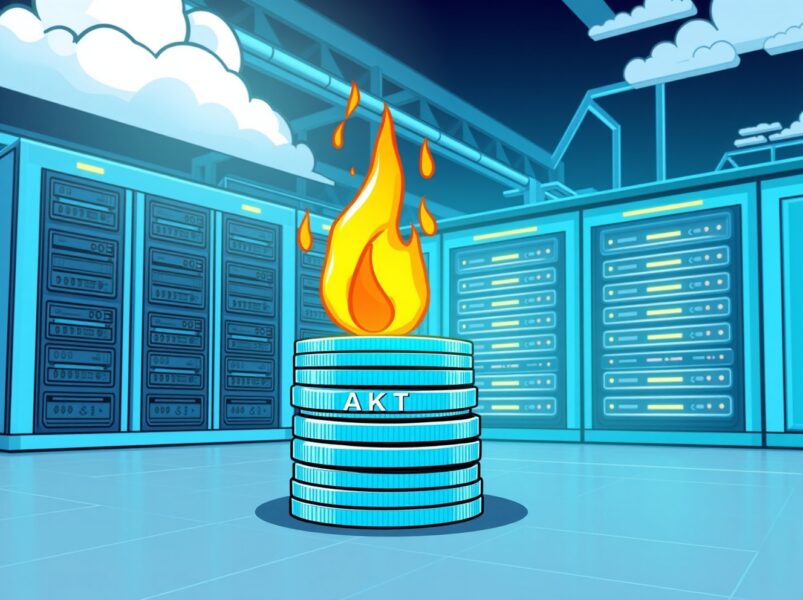
Akash Network’s Strategic Move: A Crucial Burn for AKT’s Future

Akash Network’s Strategic Move: A Crucial Burn for AKT’s Future

BitcoinWorld Akash Network’s Strategic Move: A Crucial Burn for AKT’s Future In the dynamic world of decentralized computing, exciting developments are constantly shaping the future. Today, all eyes are on Akash Network, the innovative supercloud project, as it proposes a significant change to its tokenomics. This move aims to strengthen the value of its native token, AKT, and further solidify its position in the competitive blockchain space. The community is buzzing about a newly submitted governance proposal that could introduce a game-changing Burn Mint Equilibrium (BME) model. What is the Burn Mint Equilibrium (BME) for Akash Network? The core of this proposal revolves around a concept called Burn Mint Equilibrium, or BME. Essentially, this model is designed to create a balance in the token’s circulating supply by systematically removing a portion of tokens from existence. For Akash Network, this means burning an amount of AKT that is equivalent to the U.S. dollar value of fees paid by network users. Fee Conversion: When users pay for cloud services on the Akash Network, these fees are typically collected in various cryptocurrencies or stablecoins. AKT Equivalence: The proposal suggests converting the U.S. dollar value of these collected fees into an equivalent amount of AKT. Token Burn: This calculated amount of AKT would then be permanently removed from circulation, or ‘burned’. This mechanism creates a direct link between network utility and token supply reduction. As more users utilize the decentralized supercloud, more AKT will be burned, potentially impacting the token’s scarcity and value. Why is This Proposal Crucial for AKT Holders? For anyone holding AKT, or considering investing in the Akash Network ecosystem, this proposal carries significant weight. Token burning mechanisms are often viewed as a positive development because they can lead to increased scarcity. When supply decreases while demand remains constant or grows, the price per unit tends to increase. Here are some key benefits: Increased Scarcity: Burning tokens reduces the total circulating supply of AKT. This makes each remaining token potentially more valuable over time. Demand-Supply Dynamics: The BME model directly ties the burning of AKT to network usage. Higher adoption of the Akash Network supercloud translates into more fees, and thus more AKT burned. Long-Term Value Proposition: By creating a deflationary pressure, the proposal aims to enhance AKT’s long-term value, making it a more attractive asset for investors and long-term holders. This strategic move demonstrates a commitment from the Akash Network community to optimize its tokenomics for sustainable growth and value appreciation. How Does BME Impact the Decentralized Supercloud Mission? Beyond token value, the BME proposal aligns perfectly with the broader mission of the Akash Network. As a decentralized supercloud, Akash provides a marketplace for cloud computing resources, allowing users to deploy applications faster, more efficiently, and at a lower cost than traditional providers. The BME model reinforces this utility. Consider these impacts: Network Health: A stronger AKT token can incentivize more validators and providers to secure and contribute resources to the network, improving its overall health and resilience. Ecosystem Growth: Enhanced token value can attract more developers and projects to build on the Akash Network, fostering a vibrant and diverse ecosystem. User Incentive: While users pay fees, the potential appreciation of AKT could indirectly benefit those who hold the token, creating a circular economy within the supercloud. This proposal is not just about burning tokens; it’s about building a more robust, self-sustaining, and economically sound decentralized cloud infrastructure for the future. What Are the Next Steps for the Akash Network Community? As a governance proposal, the BME model will now undergo a period of community discussion and voting. This is a crucial phase where AKT holders and network participants can voice their opinions, debate the merits, and ultimately decide on the future direction of the project. Transparency and community engagement are hallmarks of decentralized projects like Akash Network. Challenges and Considerations: Implementation Complexity: Ensuring the burning mechanism is technically sound and transparent will be vital. Community Consensus: Achieving broad agreement within the diverse Akash Network community is key for successful adoption. The outcome of this vote will significantly shape the tokenomics and economic model of the Akash Network, influencing its trajectory in the rapidly evolving decentralized cloud landscape. The proposal to introduce a Burn Mint Equilibrium model represents a bold and strategic step for Akash Network. By directly linking network usage to token scarcity, the project aims to create a more resilient and valuable AKT token, ultimately strengthening its position as a leading decentralized supercloud provider. This move underscores the project’s commitment to innovative tokenomics and sustainable growth, promising an exciting future for both users and investors in the Akash Network ecosystem. It’s a clear signal that Akash is actively working to enhance its value proposition and maintain its competitive edge in the decentralized future. Frequently Asked Questions (FAQs) 1. What is the main goal of the Burn Mint Equilibrium (BME) proposal for Akash Network? The primary goal is to adjust the circulating supply of AKT tokens by burning a portion of network fees, thereby creating deflationary pressure and potentially enhancing the token’s long-term value and scarcity. 2. How will the amount of AKT to be burned be determined? The proposal suggests burning an amount of AKT equivalent to the U.S. dollar value of fees paid by users on the Akash Network for cloud services. 3. What are the potential benefits for AKT token holders? Token holders could benefit from increased scarcity of AKT, which may lead to higher demand and appreciation in value over time, especially as network usage grows. 4. How does this proposal relate to the overall mission of Akash Network? The BME model reinforces the Akash Network‘s mission by creating a stronger, more economically robust ecosystem. A healthier token incentivizes network participants, fostering growth and stability for the decentralized supercloud. 5. What is the next step for this governance proposal? The proposal will undergo a period of community discussion and voting by AKT token holders. The community’s decision will determine if the BME model is implemented on the Akash Network. If you found this article insightful, consider sharing it with your network! Your support helps us bring more valuable insights into the world of decentralized technology. Stay informed and help spread the word about the exciting developments happening within Akash Network. To learn more about the latest crypto market trends, explore our article on key developments shaping decentralized cloud solutions price action. This post Akash Network’s Strategic Move: A Crucial Burn for AKT’s Future first appeared on BitcoinWorld.
Share
Coinstats2025/09/22 21:35