The post Inside the $100B deal between Altman’s OpenAI and Huang’s Nvidia appeared on BitcoinEthereumNews.com. Samuel Altman had a flight to catch. But before boarding to Texas, he had to lock in one of the biggest deals in AI history. Just hours before takeoff, Sam and Jensen Huang finalized a $100 billion agreement between OpenAI and Nvidia, a deal that would tie the two most important names in artificial intelligence tighter than ever. Sam was headed to Abilene, a small city 180 miles west of Dallas, to announce OpenAI’s next phase in AI infrastructure. Jensen wanted Nvidia to be at the center of it. The two CEOs had already spent time together during President Donald Trump’s recent visit to the U.K., where the president was quietly briefed about the deal in advance. What followed was a blur of virtual calls, private meetings in London, D.C., and San Francisco, and last-minute changes to documents. No banks. Just two power players doing it themselves. Sam and Jensen skip the banks and go all in Jensen called the deal “monumental in size” during an interview with CNBC on Monday. That same day, Nvidia’s market value surged by $170 billion, pushing the company near $4.5 trillion in worth. Sam’s OpenAI, now valued at $500 billion, becomes even more dependent on Nvidia’s chips. The plan is to work together to build massive AI data centers. Sam, speaking at Nvidia’s Silicon Valley HQ, said: “You should expect a lot from us in the coming months. There are three things that OpenAI has to do well: we have to do great AI research, we have to make these products people want to use, and we have to figure out how to do this unprecedented infrastructure challenge.” The structure is simple but huge. Nvidia will put in $10 billion at a time, supplying chips as new compute capacity goes live. Sam and Jensen… The post Inside the $100B deal between Altman’s OpenAI and Huang’s Nvidia appeared on BitcoinEthereumNews.com. Samuel Altman had a flight to catch. But before boarding to Texas, he had to lock in one of the biggest deals in AI history. Just hours before takeoff, Sam and Jensen Huang finalized a $100 billion agreement between OpenAI and Nvidia, a deal that would tie the two most important names in artificial intelligence tighter than ever. Sam was headed to Abilene, a small city 180 miles west of Dallas, to announce OpenAI’s next phase in AI infrastructure. Jensen wanted Nvidia to be at the center of it. The two CEOs had already spent time together during President Donald Trump’s recent visit to the U.K., where the president was quietly briefed about the deal in advance. What followed was a blur of virtual calls, private meetings in London, D.C., and San Francisco, and last-minute changes to documents. No banks. Just two power players doing it themselves. Sam and Jensen skip the banks and go all in Jensen called the deal “monumental in size” during an interview with CNBC on Monday. That same day, Nvidia’s market value surged by $170 billion, pushing the company near $4.5 trillion in worth. Sam’s OpenAI, now valued at $500 billion, becomes even more dependent on Nvidia’s chips. The plan is to work together to build massive AI data centers. Sam, speaking at Nvidia’s Silicon Valley HQ, said: “You should expect a lot from us in the coming months. There are three things that OpenAI has to do well: we have to do great AI research, we have to make these products people want to use, and we have to figure out how to do this unprecedented infrastructure challenge.” The structure is simple but huge. Nvidia will put in $10 billion at a time, supplying chips as new compute capacity goes live. Sam and Jensen…

Inside the $100B deal between Altman’s OpenAI and Huang’s Nvidia

Samuel Altman had a flight to catch. But before boarding to Texas, he had to lock in one of the biggest deals in AI history.

Just hours before takeoff, Sam and Jensen Huang finalized a $100 billion agreement between OpenAI and Nvidia, a deal that would tie the two most important names in artificial intelligence tighter than ever.

Sam was headed to Abilene, a small city 180 miles west of Dallas, to announce OpenAI’s next phase in AI infrastructure. Jensen wanted Nvidia to be at the center of it.

The two CEOs had already spent time together during President Donald Trump’s recent visit to the U.K., where the president was quietly briefed about the deal in advance. What followed was a blur of virtual calls, private meetings in London, D.C., and San Francisco, and last-minute changes to documents. No banks. Just two power players doing it themselves.

Sam and Jensen skip the banks and go all in

Jensen called the deal “monumental in size” during an interview with CNBC on Monday. That same day, Nvidia’s market value surged by $170 billion, pushing the company near $4.5 trillion in worth. Sam’s OpenAI, now valued at $500 billion, becomes even more dependent on Nvidia’s chips. The plan is to work together to build massive AI data centers.

Sam, speaking at Nvidia’s Silicon Valley HQ, said: “You should expect a lot from us in the coming months. There are three things that OpenAI has to do well: we have to do great AI research, we have to make these products people want to use, and we have to figure out how to do this unprecedented infrastructure challenge.”

The structure is simple but huge. Nvidia will put in $10 billion at a time, supplying chips as new compute capacity goes live. Sam and Jensen plan to do this ten times, $100 billion total. First chunk is locked at OpenAI’s current $500 billion valuation. The rest will track the company’s future value.

This isn’t their first link-up. Back in 2016, Jensen personally dropped off Nvidia’s DGX supercomputer at OpenAI’s office in San Francisco. The place is now home to Elon Musk’s xAI. In October 2024, Nvidia formally joined OpenAI’s $6.6 billion round that valued it at $157 billion. A month later, OpenAI execs met SoftBank’s Masayoshi Son in Tokyo. They picked the codename “Stargate” to brand the new AI buildout plan. Stargate now includes every major compute deal OpenAI touches.

Microsoft finds out late, Oracle gets a massive slice

This new bond with Nvidia doesn’t mean OpenAI is ditching other partners, but some didn’t get much warning. Microsoft, OpenAI’s biggest investor and cloud provider, was only told one day before the announcement. Earlier this year, Microsoft also lost its position as OpenAI’s exclusive compute partner.

Then there’s Oracle. Less than two weeks ago, Oracle revealed that OpenAI had agreed to spend $300 billion on compute power from them starting in 2027. That’s separate from this Nvidia deal. Oracle, SoftBank, and President Trump also back Stargate, which is now the main label for all of OpenAI’s infrastructure plans.

So far, OpenAI has looked at 700 to 800 possible locations for new 10-gigawatt data centers. Sites across North America have sent in proposals, offering land, power, and buildings. The first site is expected to go live late next year. Nothing exclusive here, OpenAI says Nvidia is a “preferred” partner, not the only one. They’re still working with other cloud providers and chip companies.

Nvidia keeps spending while OpenAI eyes new markets

This isn’t the only move for Nvidia. Just last week, they dropped $5 billion into Intel to co-develop chips. They also spent $700 million on U.K. startup Nscale, following a similar playbook to what they did with CoreWeave, which went public in March. So while the OpenAI investment is big, it’s just part of Nvidia’s growing stack.

For OpenAI, leasing Nvidia’s chips is only part of the financial plan. Executives say they’ll avoid giving up more equity. They see debt as the smarter option to fund these giant facilities.

With all this infrastructure being built, OpenAI may not rely on others for cloud services much longer. Their workloads mostly run on Microsoft’s Azure, but that might change. Some execs told CNBC that OpenAI could launch its own commercial cloud offering within two years. Once they’ve got enough compute for themselves, they may flip the switch and start selling it to others too.

While Sam was putting the deal together with Jensen, OpenAI’s infrastructure team was in Tokyo again. They were meeting with SoftBank to discuss more financing and help with manufacturing.

All of OpenAI’s future infrastructure efforts now live under Stargate. And with Nvidia locked in for at least $100 billion, this might be just the beginning of something even bigger.

Want your project in front of crypto’s top minds? Feature it in our next industry report, where data meets impact.

Source: https://www.cryptopolitan.com/inside-the-100-billion-openai-and-nvidia/

Market Opportunity
NEAR Logo
NEAR Price(NEAR)
$1.0819
$1.0819$1.0819
+1.77%
USD
NEAR (NEAR) Live Price Chart
Disclaimer: The articles reposted on this site are sourced from public platforms and are provided for informational purposes only. They do not necessarily reflect the views of MEXC. All rights remain with the original authors. If you believe any content infringes on third-party rights, please contact [email protected] for removal. MEXC makes no guarantees regarding the accuracy, completeness, or timeliness of the content and is not responsible for any actions taken based on the information provided. The content does not constitute financial, legal, or other professional advice, nor should it be considered a recommendation or endorsement by MEXC.
Tags:

You May Also Like

CME Group to Launch Solana and XRP Futures Options

CME Group to Launch Solana and XRP Futures Options

The post CME Group to Launch Solana and XRP Futures Options appeared on BitcoinEthereumNews.com. An announcement was made by CME Group, the largest derivatives exchanger worldwide, revealed that it would introduce options for Solana and XRP futures. It is the latest addition to CME crypto derivatives as institutions and retail investors increase their demand for Solana and XRP. CME Expands Crypto Offerings With Solana and XRP Options Launch According to a press release, the launch is scheduled for October 13, 2025, pending regulatory approval. The new products will allow traders to access options on Solana, Micro Solana, XRP, and Micro XRP futures. Expiries will be offered on business days on a monthly, and quarterly basis to provide more flexibility to market players. CME Group said the contracts are designed to meet demand from institutions, hedge funds, and active retail traders. According to Giovanni Vicioso, the launch reflects high liquidity in Solana and XRP futures. Vicioso is the Global Head of Cryptocurrency Products for the CME Group. He noted that the new contracts will provide additional tools for risk management and exposure strategies. Recently, CME XRP futures registered record open interest amid ETF approval optimism, reinforcing confidence in contract demand. Cumberland, one of the leading liquidity providers, welcomed the development and said it highlights the shift beyond Bitcoin and Ethereum. FalconX, another trading firm, added that rising digital asset treasuries are increasing the need for hedging tools on alternative tokens like Solana and XRP. High Record Trading Volumes Demand Solana and XRP Futures Solana futures and XRP continue to gain popularity since their launch earlier this year. According to CME official records, many have bought and sold more than 540,000 Solana futures contracts since March. A value that amounts to over $22 billion dollars. Solana contracts hit a record 9,000 contracts in August, worth $437 million. Open interest also set a record at 12,500 contracts.…
Share
BitcoinEthereumNews2025/09/18 01:39
China Blocks Nvidia’s RTX Pro 6000D as Local Chips Rise

China Blocks Nvidia’s RTX Pro 6000D as Local Chips Rise

The post China Blocks Nvidia’s RTX Pro 6000D as Local Chips Rise appeared on BitcoinEthereumNews.com. China Blocks Nvidia’s RTX Pro 6000D as Local Chips Rise China’s internet regulator has ordered the country’s biggest technology firms, including Alibaba and ByteDance, to stop purchasing Nvidia’s RTX Pro 6000D GPUs. According to the Financial Times, the move shuts down the last major channel for mass supplies of American chips to the Chinese market. Why Beijing Halted Nvidia Purchases Chinese companies had planned to buy tens of thousands of RTX Pro 6000D accelerators and had already begun testing them in servers. But regulators intervened, halting the purchases and signaling stricter controls than earlier measures placed on Nvidia’s H20 chip. Image: Nvidia An audit compared Huawei and Cambricon processors, along with chips developed by Alibaba and Baidu, against Nvidia’s export-approved products. Regulators concluded that Chinese chips had reached performance levels comparable to the restricted U.S. models. This assessment pushed authorities to advise firms to rely more heavily on domestic processors, further tightening Nvidia’s already limited position in China. China’s Drive Toward Tech Independence The decision highlights Beijing’s focus on import substitution — developing self-sufficient chip production to reduce reliance on U.S. supplies. “The signal is now clear: all attention is focused on building a domestic ecosystem,” said a representative of a leading Chinese tech company. Nvidia had unveiled the RTX Pro 6000D in July 2025 during CEO Jensen Huang’s visit to Beijing, in an attempt to keep a foothold in China after Washington restricted exports of its most advanced chips. But momentum is shifting. Industry sources told the Financial Times that Chinese manufacturers plan to triple AI chip production next year to meet growing demand. They believe “domestic supply will now be sufficient without Nvidia.” What It Means for the Future With Huawei, Cambricon, Alibaba, and Baidu stepping up, China is positioning itself for long-term technological independence. Nvidia, meanwhile, faces…
Share
BitcoinEthereumNews2025/09/18 01:37
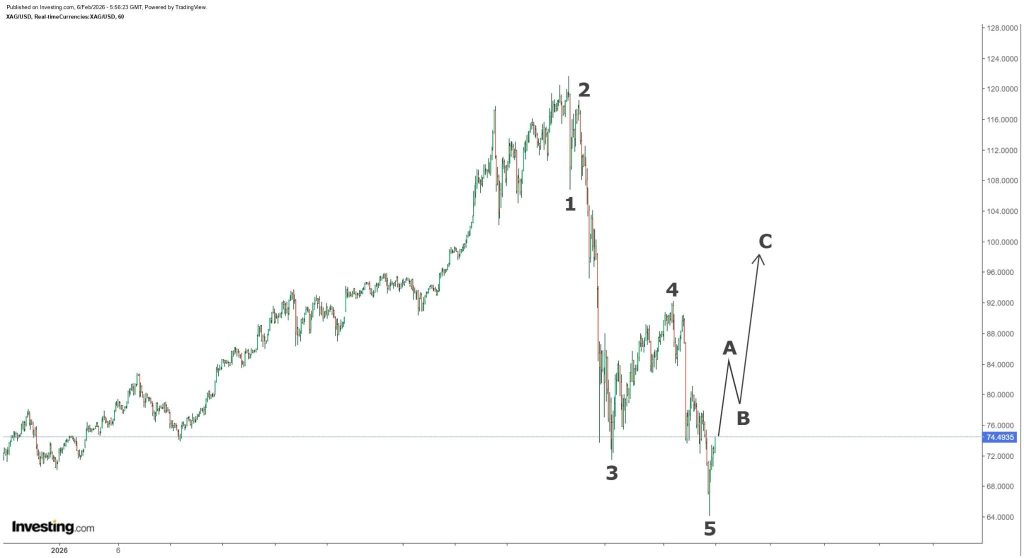
Silver Price Crash Is Over “For Real This Time,” Analyst Predicts a Surge Back Above $90

Silver Price Crash Is Over “For Real This Time,” Analyst Predicts a Surge Back Above $90

Silver has been taking a beating lately, and the Silver price hasn’t exactly been acting like a safe haven. After running up into the highs, the whole move reversed
Share
Captainaltcoin2026/02/07 03:15