Crypto Regulation Trust Plummets: 62% of US Voters Distrust Trump Administration
BitcoinWorld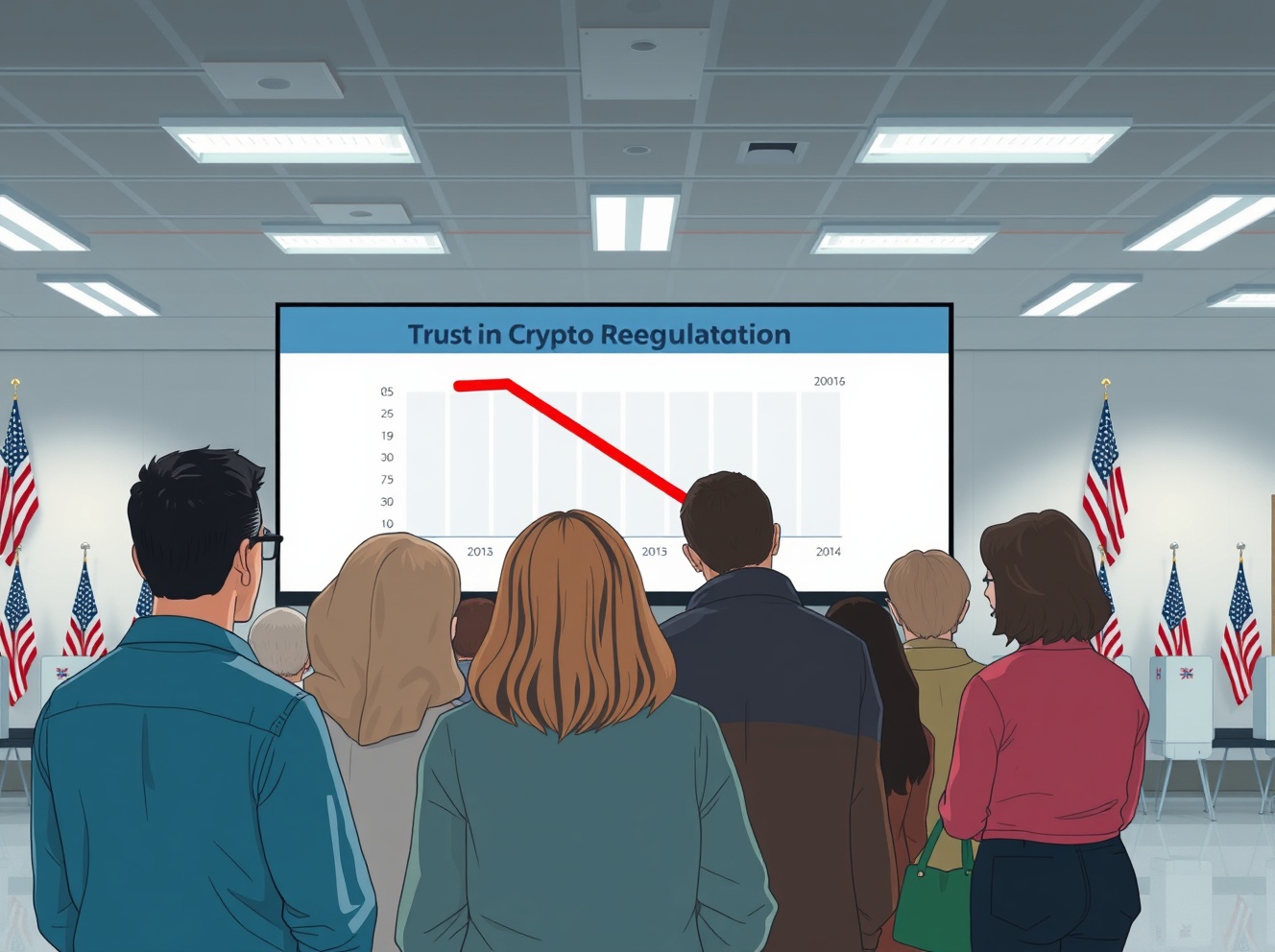
Crypto Regulation Trust Plummets: 62% of US Voters Distrust Trump Administration
A new survey reveals that a majority of US voters do not trust the Trump administration to handle crypto regulation. The findings, reported by CoinDesk, highlight a significant gap between public sentiment and the administration’s approach to digital assets. This article examines the poll’s results, the underlying concerns, and the potential implications for the future of cryptocurrency policy in the United States.
Survey Reveals Deep Distrust in Trump Administration on Crypto Regulation
A recent survey of 1,000 registered US voters has uncovered a widespread lack of confidence in the current administration’s ability to regulate cryptocurrency. According to the poll, 62% of respondents do not believe the Trump administration can properly oversee the crypto industry. This figure represents a clear majority, indicating that public trust in the government’s digital asset policy is severely lacking.
Furthermore, the survey found that 73% of those polled oppose the participation of high-ranking public officials in crypto-related businesses. This opposition stems from concerns about potential conflicts of interest and the need for regulatory independence. The results suggest that voters want a clear separation between government officials and the industries they oversee.
Key Findings: The Numbers Behind the Distrust
The survey, conducted by an independent research firm, provides a detailed snapshot of voter sentiment. Here are the core findings:
- 62% distrust the administration on crypto regulation.
- 73% oppose official involvement in crypto businesses.
- Only 24% express confidence in the administration’s regulatory ability.
- 4% remain undecided or had no opinion.
These numbers underscore a significant trust deficit. The opposition to official involvement is particularly striking, as it reflects a desire for ethical boundaries in the rapidly evolving crypto space.
Why Voters Are Concerned About Conflicts of Interest
The strong opposition to high-ranking officials participating in crypto businesses points to a deeper anxiety. Many voters worry that such involvement could lead to policies that favor private interests over public good. For example, an official with a personal stake in a crypto firm might be less inclined to enforce strict regulations. This perception erodes trust in the entire regulatory framework.
Moreover, the lack of clear, consistent rules for digital assets has created an environment of uncertainty. The Trump administration has taken a mixed approach, sometimes praising crypto innovation while also expressing skepticism. This inconsistency has left many voters confused about the government’s true stance.
Comparing Voter Trust: Then and Now
To understand the current level of distrust, it helps to compare it with previous years. The following table shows how voter confidence in government crypto regulation has shifted:
| Year | Trust Level | Key Event |
|---|---|---|
| 2021 | 48% | Initial crypto boom, limited regulation |
| 2023 | 35% | Major exchange collapses, increased scrutiny |
| 2025 | 24% | Current survey, distrust peaks |
The downward trend is clear. Each year, trust has eroded further, driven by high-profile scandals and a perceived lack of effective oversight.
Implications for the Crypto Industry and US Policy
This widespread distrust has real-world consequences. For the crypto industry, it creates regulatory uncertainty. Companies may hesitate to invest or expand in the US if they believe the rules could change abruptly. This could drive innovation and capital to other countries with clearer frameworks.
For policymakers, the survey is a warning. Ignoring public sentiment could lead to further erosion of trust. The administration faces a choice: either take decisive action to restore confidence or risk alienating a large segment of the electorate. The latter could have political repercussions in future elections.
Expert Perspectives on the Trust Deficit
Industry experts have weighed in on the findings. Dr. Emily Carter, a professor of financial regulation at Georgetown University, notes that “the survey results are not surprising. The administration has sent mixed signals on crypto, and the lack of a coherent policy framework is undermining trust.”
Similarly, John Davis, a former SEC official, argues that “the opposition to official involvement is a healthy sign. It shows that voters understand the importance of regulatory independence. The government must listen to this message.”
These expert views reinforce the survey’s implications. The path forward requires transparency, consistency, and a clear separation between public service and private gain.
What This Means for the Future of Digital Asset Policy
The survey’s findings will likely influence the debate over future crypto regulation. Lawmakers may now face increased pressure to introduce bipartisan legislation that addresses voter concerns. Key areas of focus could include:
- Establishing clear rules for crypto exchanges and digital assets.
- Prohibiting officials from holding financial interests in regulated industries.
- Creating an independent watchdog to oversee the crypto market.
These measures could help rebuild trust. However, they require political will and cooperation across party lines.
Conclusion
The survey showing that 62% of US voters distrust the Trump administration on crypto regulation is a powerful indicator of public sentiment. It reflects deep concerns about conflicts of interest, regulatory independence, and the lack of a clear policy framework. For the crypto industry and policymakers alike, this is a call to action. Restoring trust will require transparency, consistent rules, and a commitment to ethical governance. Without these steps, the trust deficit is likely to persist, hindering the growth and stability of the digital asset market in the United States.
FAQs
Q1: What did the survey on crypto regulation find?
The survey found that 62% of registered US voters do not trust the Trump administration to properly regulate the cryptocurrency industry. Additionally, 73% oppose high-ranking officials participating in crypto businesses.
Q2: Why do voters distrust the administration on crypto regulation?
Voters are concerned about potential conflicts of interest, a lack of regulatory independence, and inconsistent policy signals from the administration. The survey shows a desire for clear, ethical boundaries.
Q3: How does this compare to previous years?
Trust has declined steadily. In 2021, 48% of voters expressed confidence. By 2025, that figure dropped to 24%, reflecting growing disillusionment with the government’s handling of digital assets.
Q4: What are the implications for the crypto industry?
Regulatory uncertainty may drive crypto companies to operate in countries with clearer rules. This could slow innovation and investment in the US digital asset market.
Q5: What can be done to restore voter trust?
Experts suggest establishing clear, consistent regulations, prohibiting officials from holding crypto interests, and creating an independent oversight body. These steps could address the core concerns highlighted by the survey.
This post Crypto Regulation Trust Plummets: 62% of US Voters Distrust Trump Administration first appeared on BitcoinWorld.


You May Also Like
Trump's ICE enters the 'torture of children business' — and leaves legal expert aghast

Australian Dollar Strengthens on RBA Rate Hike Expectations, Hormuz Tensions Simmer