The post The Birth Of A Cult Classic appeared on BitcoinEthereumNews.com. FREAKS AND GEEKS — Season 1 Gallery — Pictured: (l-r) James Franco as Daniel Desario, Jason Segel as Nick Andopolis, Linda Cardellini as Lindsay Weir, Seth Rogen as Ken Miller, John Francis Daley as Sam Weir, Martin Starr as Bill Haverchuck, and Samm Levine as Neal Schweiber — (Photo by: Chris Haston/NBCU Photo Bank/NBCUniversal via Getty Images via Getty Images) NBCU Photo Bank/NBCUniversal via Getty Images On this day in 1999, NBC introduced viewers to Freaks and Geeks, an unprecedented coming-of-age comedy that, despite airing only one season, left a lasting mark in pop culture. Set in a suburban high school in the town of Chippewa, Michigan, a fictional suburb in Detroit, in the early 1980s, the show captured the awkward, funny, and sometimes painful journey of teens trying to find their place in the world. Steering away from the manufactured glamour of typical teen dramas at the time (specifically Beverly Hills, 90210, and Party of Five on Fox), the show’s honest depiction of adolescence has resonated with viewers for decades, earning it cult-classic status. At the Time… Scripted programs on Saturday nights were becoming obsolete on the broadcast networks. Freaks and Geeks faced ABC’s then red-hot Who Wants to Be a Millionaire, Kyle Chandler’s pre-Friday Night Lights drama Early Edition on CBS, and Fox’s long-running Cops. Even Regis Philbin’s ratings game show powerhouse, which aired on multiple evenings, was modest on Saturdays. So, it was an uphill battle from the beginning. NBC’s own hesitations didn’t help, as executives occasionally clashed with creator Paul Feig and executive producer Judd Apatow over the show’s tone and direction. Then there was the haphazard scheduling, which included many preemptions and an ill-fated move to Monday in midseason. Yet, the influence of Freaks and Geeks cannot be measured by Nielsen ratings alone (where it… The post The Birth Of A Cult Classic appeared on BitcoinEthereumNews.com. FREAKS AND GEEKS — Season 1 Gallery — Pictured: (l-r) James Franco as Daniel Desario, Jason Segel as Nick Andopolis, Linda Cardellini as Lindsay Weir, Seth Rogen as Ken Miller, John Francis Daley as Sam Weir, Martin Starr as Bill Haverchuck, and Samm Levine as Neal Schweiber — (Photo by: Chris Haston/NBCU Photo Bank/NBCUniversal via Getty Images via Getty Images) NBCU Photo Bank/NBCUniversal via Getty Images On this day in 1999, NBC introduced viewers to Freaks and Geeks, an unprecedented coming-of-age comedy that, despite airing only one season, left a lasting mark in pop culture. Set in a suburban high school in the town of Chippewa, Michigan, a fictional suburb in Detroit, in the early 1980s, the show captured the awkward, funny, and sometimes painful journey of teens trying to find their place in the world. Steering away from the manufactured glamour of typical teen dramas at the time (specifically Beverly Hills, 90210, and Party of Five on Fox), the show’s honest depiction of adolescence has resonated with viewers for decades, earning it cult-classic status. At the Time… Scripted programs on Saturday nights were becoming obsolete on the broadcast networks. Freaks and Geeks faced ABC’s then red-hot Who Wants to Be a Millionaire, Kyle Chandler’s pre-Friday Night Lights drama Early Edition on CBS, and Fox’s long-running Cops. Even Regis Philbin’s ratings game show powerhouse, which aired on multiple evenings, was modest on Saturdays. So, it was an uphill battle from the beginning. NBC’s own hesitations didn’t help, as executives occasionally clashed with creator Paul Feig and executive producer Judd Apatow over the show’s tone and direction. Then there was the haphazard scheduling, which included many preemptions and an ill-fated move to Monday in midseason. Yet, the influence of Freaks and Geeks cannot be measured by Nielsen ratings alone (where it…

The Birth Of A Cult Classic

FREAKS AND GEEKS — Season 1 Gallery — Pictured: (l-r) James Franco as Daniel Desario, Jason Segel as Nick Andopolis, Linda Cardellini as Lindsay Weir, Seth Rogen as Ken Miller, John Francis Daley as Sam Weir, Martin Starr as Bill Haverchuck, and Samm Levine as Neal Schweiber — (Photo by: Chris Haston/NBCU Photo Bank/NBCUniversal via Getty Images via Getty Images)

NBCU Photo Bank/NBCUniversal via Getty Images

On this day in 1999, NBC introduced viewers to Freaks and Geeks, an unprecedented coming-of-age comedy that, despite airing only one season, left a lasting mark in pop culture. Set in a suburban high school in the town of Chippewa, Michigan, a fictional suburb in Detroit, in the early 1980s, the show captured the awkward, funny, and sometimes painful journey of teens trying to find their place in the world.

Steering away from the manufactured glamour of typical teen dramas at the time (specifically Beverly Hills, 90210, and Party of Five on Fox), the show’s honest depiction of adolescence has resonated with viewers for decades, earning it cult-classic status.

At the Time…

Scripted programs on Saturday nights were becoming obsolete on the broadcast networks. Freaks and Geeks faced ABC’s then red-hot Who Wants to Be a Millionaire, Kyle Chandler’s pre-Friday Night Lights drama Early Edition on CBS, and Fox’s long-running Cops. Even Regis Philbin’s ratings game show powerhouse, which aired on multiple evenings, was modest on Saturdays. So, it was an uphill battle from the beginning.

NBC’s own hesitations didn’t help, as executives occasionally clashed with creator Paul Feig and executive producer Judd Apatow over the show’s tone and direction.

Then there was the haphazard scheduling, which included many preemptions and an ill-fated move to Monday in midseason.

Yet, the influence of Freaks and Geeks cannot be measured by Nielsen ratings alone (where it hovered at the bottom of the charts). Behind the camera, Feig and Apatow shaped a series that balanced humor with empathy with stories we could relate to. On-screen, a young ensemble cast — including Seth Rogen, Jason Segel, James Franco, Linda Cardellini, and Busy Philipps — brought the characters to life with honesty and charm that still resonates today.

Though its run was brief, Freaks and Geeks became a launchpad, shaping the careers of the young cast. The series remains a testament to the idea that even short-lived shows can leave a lasting legacy.

FREAKS AND GEEKS — “I’m With the Band” — Episode 6 — Pictured: (l-r) Linda Cardellini as Lindsay Weir and Jason Segel as Nick Andopolis — (Photo by: Chris Haston/NBCU Photo Bank/NBCUniversal via Getty Images via Getty Images)

NBCU Photo Bank/NBCUniversal via Getty Images

Belated Accolades

In 2015, Freaks and Geeks received the 15th Anniversary Award at the TV Land Awards, a testament to its enduring impact on television and pop culture. The cast reunited at the ceremony, celebrating the show’s legacy and the lasting bond among its cast and crew.

BEVERLY HILLS, CA – APRIL 11: (L-R back) Actors Steve Bannos, Dave Allen, Martin Starr, Jason Segel, Seth Rogen, Busy Philipps, creator Paul Feig, (L-R front) Samm Levine, Linda Cardellini and writer producer Judd Apatow celebrate the 15th Anniversary of “Freaks and Geeks” onstage with Carl Reiner during the 2015 TV Land Awards at Saban Theatre on April 11, 2015 in Beverly Hills, California. (Photo by Joe Scarnici/Getty Images)

Getty Images

Today, 26 years after its debut, we remember Freaks and Geeks as a groundbreaking show. Just 18 episodes, but enough laughs, heart, and uncomfortable teen moments to last a lifetime.

Source: https://www.forbes.com/sites/marcberman1/2025/09/25/freaks-and-geeks–the-birth-of-a-cult-classic/

Market Opportunity
Milady Cult Logo
Milady Cult Price(CULT)
$0,0001885
$0,0001885$0,0001885
+%5,36
USD
Milady Cult (CULT) Live Price Chart
Disclaimer: The articles reposted on this site are sourced from public platforms and are provided for informational purposes only. They do not necessarily reflect the views of MEXC. All rights remain with the original authors. If you believe any content infringes on third-party rights, please contact [email protected] for removal. MEXC makes no guarantees regarding the accuracy, completeness, or timeliness of the content and is not responsible for any actions taken based on the information provided. The content does not constitute financial, legal, or other professional advice, nor should it be considered a recommendation or endorsement by MEXC.

You May Also Like

Cashing In On University Patents Means Giving Up On Our Innovation Future

Cashing In On University Patents Means Giving Up On Our Innovation Future

The post Cashing In On University Patents Means Giving Up On Our Innovation Future appeared on BitcoinEthereumNews.com. “It’s a raid on American innovation that would deliver pennies to the Treasury while kneecapping the very engine of our economic and medical progress,” writes Pipes. Getty Images Washington is addicted to taxing success. Now, Commerce Secretary Howard Lutnick is floating a plan to skim half the patent earnings from inventions developed at universities with federal funding. It’s being sold as a way to shore up programs like Social Security. In reality, it’s a raid on American innovation that would deliver pennies to the Treasury while kneecapping the very engine of our economic and medical progress. Yes, taxpayer dollars support early-stage research. But the real payoff comes later—in the jobs created, cures discovered, and industries launched when universities and private industry turn those discoveries into real products. By comparison, the sums at stake in patent licensing are trivial. Universities collectively earn only about $3.6 billion annually in patent income—less than the federal government spends on Social Security in a single day. Even confiscating half would barely register against a $6 trillion federal budget. And yet the damage from such a policy would be anything but trivial. The true return on taxpayer investment isn’t in licensing checks sent to Washington, but in the downstream economic activity that federally supported research unleashes. Thanks to the bipartisan Bayh-Dole Act of 1980, universities and private industry have powerful incentives to translate early-stage discoveries into real-world products. Before Bayh-Dole, the government hoarded patents from federally funded research, and fewer than 5% were ever licensed. Once universities could own and license their own inventions, innovation exploded. The result has been one of the best returns on investment in government history. Since 1996, university research has added nearly $2 trillion to U.S. industrial output, supported 6.5 million jobs, and launched more than 19,000 startups. Those companies pay…
Share
BitcoinEthereumNews2025/09/18 03:26
China Blocks Nvidia’s RTX Pro 6000D as Local Chips Rise

China Blocks Nvidia’s RTX Pro 6000D as Local Chips Rise

The post China Blocks Nvidia’s RTX Pro 6000D as Local Chips Rise appeared on BitcoinEthereumNews.com. China Blocks Nvidia’s RTX Pro 6000D as Local Chips Rise China’s internet regulator has ordered the country’s biggest technology firms, including Alibaba and ByteDance, to stop purchasing Nvidia’s RTX Pro 6000D GPUs. According to the Financial Times, the move shuts down the last major channel for mass supplies of American chips to the Chinese market. Why Beijing Halted Nvidia Purchases Chinese companies had planned to buy tens of thousands of RTX Pro 6000D accelerators and had already begun testing them in servers. But regulators intervened, halting the purchases and signaling stricter controls than earlier measures placed on Nvidia’s H20 chip. Image: Nvidia An audit compared Huawei and Cambricon processors, along with chips developed by Alibaba and Baidu, against Nvidia’s export-approved products. Regulators concluded that Chinese chips had reached performance levels comparable to the restricted U.S. models. This assessment pushed authorities to advise firms to rely more heavily on domestic processors, further tightening Nvidia’s already limited position in China. China’s Drive Toward Tech Independence The decision highlights Beijing’s focus on import substitution — developing self-sufficient chip production to reduce reliance on U.S. supplies. “The signal is now clear: all attention is focused on building a domestic ecosystem,” said a representative of a leading Chinese tech company. Nvidia had unveiled the RTX Pro 6000D in July 2025 during CEO Jensen Huang’s visit to Beijing, in an attempt to keep a foothold in China after Washington restricted exports of its most advanced chips. But momentum is shifting. Industry sources told the Financial Times that Chinese manufacturers plan to triple AI chip production next year to meet growing demand. They believe “domestic supply will now be sufficient without Nvidia.” What It Means for the Future With Huawei, Cambricon, Alibaba, and Baidu stepping up, China is positioning itself for long-term technological independence. Nvidia, meanwhile, faces…
Share
BitcoinEthereumNews2025/09/18 01:37
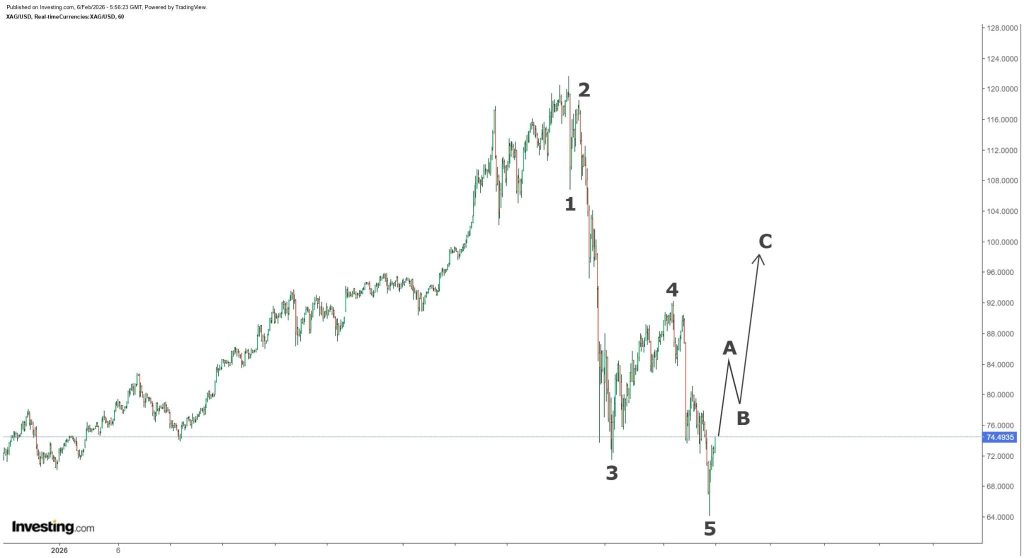
Silver Price Crash Is Over “For Real This Time,” Analyst Predicts a Surge Back Above $90

Silver Price Crash Is Over “For Real This Time,” Analyst Predicts a Surge Back Above $90

Silver has been taking a beating lately, and the Silver price hasn’t exactly been acting like a safe haven. After running up into the highs, the whole move reversed
Share
Captainaltcoin2026/02/07 03:15