

XRP Struggles Against Bitcoin as XRPL Rolls Out New Upgrade
XRP continues to lose momentum against Bitcoin even as the XRP Ledger pushes forward with another major infrastructure upgrade. Analysts say the XRP/BTC trading pair still shows structural weakness despite several sharp rebounds in recent months. At the same time, the XRP Ledger is preparing to activate its new fixCleanup3_1_3 amendment. It is designed to improve NFT cleanup, lending accuracy, and network efficiency.
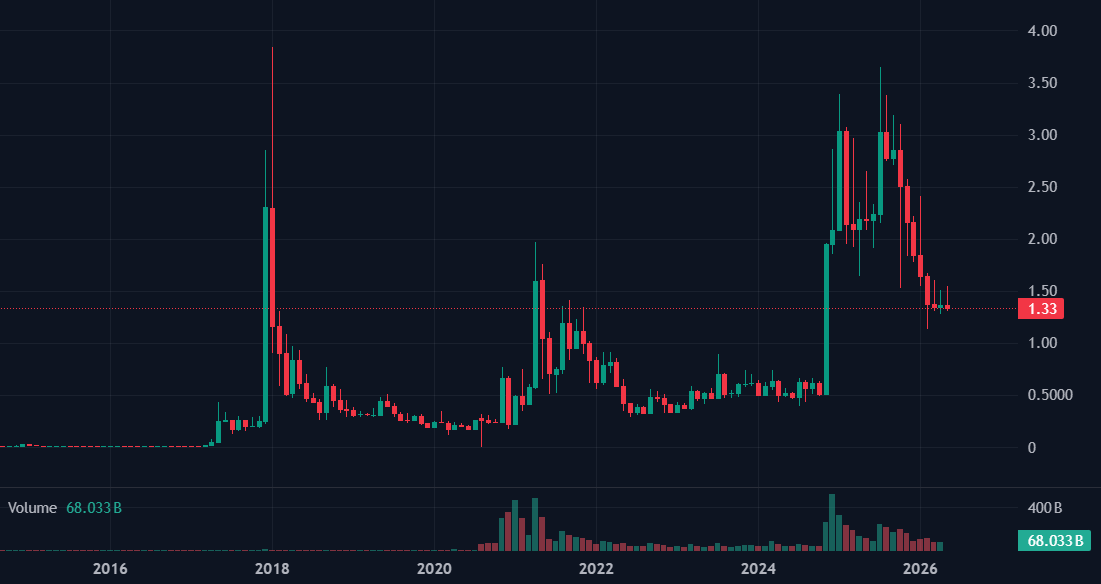
XRP to BTC Chart (USD) Source: TradingView (via CoinMarketCap data)
According to analyst Chart Nerd, Bitcoin has rallied nearly 38% from yearly lows. While XRP failed to reclaim strength against BTC on higher timeframes. The analyst also noted that it remains below its 20-month exponential moving average on the XRP/BTC pair. This signals continued weakness in relative performance. At the time of writing, XRP traded near $1.33, down roughly 1.2% over the past 24 hours.
XRP Continues Lagging Behind Bitcoin
Recent market data shows XRP closely tracking Bitcoin’s broader market pullback. However, it has underperformed on relative strength metrics. Bitcoin’s dominance remains elevated as institutional capital continues flowing toward BTC instead of altcoins. Meanwhile, XRP faces additional pressure from weak liquidity conditions and reduced altcoin rotation.
Several indicators now highlight the fragile market structure around XRP:
- Binance’s XRP liquidity index recently hit its lowest level since January 2020.
- The Altcoin Season Index declined further this week.
- XRP remains trapped below key resistance near $1.36-$1.38.
- Support currently sits around the critical $1.30 zone.
Analysts warn that a daily close below $1.30 could trigger a deeper correction toward the $1.17 region. However, holding current levels may allow XRP to consolidate before another breakout attempt.
XRPL Activates New fixCleanup3_1_3 Upgrade
While price action remains weak, Ripple XRP news continues focusing on infrastructure improvements across the XRP Ledger ecosystem. The XRPL network is now rolling out the fixCleanup3_1_3 amendment through rippled version 3.1.3. The update received unanimous validator support and officially activates on May 27, 2026.
The maintenance-focused upgrade introduces several backend improvements, including:
- Automatic deletion of expired NFT offers.
- Bug fixes for permissioned domain settings.
- Improved vault withdrawal trust-line handling.
- Better loan accounting accuracy.
The amendment also reduces unnecessary ledger clutter while strengthening operational stability for developers and institutions building on XRPL. Importantly, regular holders do not need to take any action. However, node operators and infrastructure providers must upgrade their systems to remain connected to the network.
Non-Upgraded Nodes Risk Disconnection
Under XRPL governance rules, nodes that fail to adopt approved amendments eventually become “amendment blocked.” This means they can no longer validate transactions, sync with the network, or participate in consensus.
The operational risk mainly affects:
- Exchanges
- NFT platforms
- XRPL infrastructure providers
- Validators and node operators
For average wallet users, balances and funds remain safe throughout the transition. The XRP Ledger amendment system continues playing a major role in network governance. Supporters argue the process allows XRPL to evolve safely without risking chaotic chain splits seen on other blockchains.
Ripple Strengthens Corporate Reputation
Despite short-term market weakness, Ripple itself continues expanding its corporate presence. Recently, Fortune and Great Place to Work named Ripple one of the Best Workplaces in the Bay Area for 2026. According to internal survey data, 95% of Ripple employees described the company as a great workplace. The recognition marks another consecutive appearance for Ripple on Fortune’s annual rankings. It also reflects the company’s growing maturity as a long-term blockchain infrastructure provider.
Outlook for Ripple and XRP
Current XRP Price action remains heavily tied to Bitcoin’s direction and overall crypto sentiment. Thin liquidity conditions continue amplifying volatility across the market. Still, ongoing XRP Ledger upgrades, institutional infrastructure improvements and Ripple’s expanding ecosystem may strengthen long-term fundamentals for the network. For now, traders are closely watching whether it can defend the critical $1.30 support zone. While the XRPL ecosystem is completing its latest technical upgrade cycle.
The post XRP Struggles Against Bitcoin as XRPL Rolls Out New Upgrade appeared first on Coinfomania.


You May Also Like

OpenAI Faces Scrutiny as Civic Groups Question Sam Altman’s Investment Links
Ghana Ex-President-Linked CWU Token Faces Rug Pull Claims After Insider Sales

Vodacom Tanzania Modernises M-Pesa With $28m Infrastructure Upgrade


Trending News
More24/7 Live News
MoreQuick Reads
More
