

HTX Denies UK Sanctions Claims as Data Ties to Russia-Linked Flows
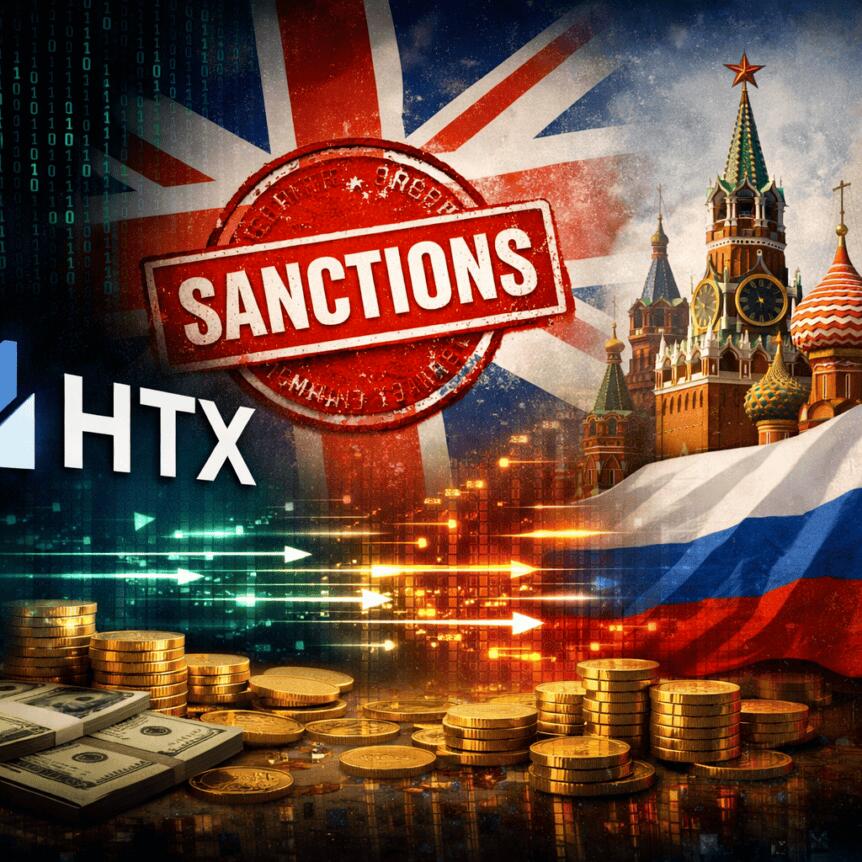
The United Kingdom has expanded its Russia-related sanctions, designating Huobi Global S.A. as a sanctioned entity and signaling intensified scrutiny of crypto networks that authorities say support Moscow’s war economy. The measures, part of a broader package announced on May 26, target crypto and illicit-finance channels linked to Russia, including the A7 “shadow” system alleged to channel funds into the Kremlin’s war effort. In parallel, HTX—the operator of the sanctioned platform—pushed back, arguing the designation applies only to Huobi Global as a separate legal entity and that its own exchange operations and user funds remain unaffected.
Regulatory filings and blockchain-analysis work cited by authorities point to ongoing concerns that Russian-linked actors continue to move funds through major centralized exchanges despite sweeping restrictions since Moscow’s invasion of Ukraine. The sanctions package designates 18 entities and pieces of infrastructure tied to the A7 network, including a Kyrgyz bank, and references a major global crypto exchange suspected of funneling more than $1.5 billion to Russia. The response underscores Western regulators’ focus on on-chain channels, cross-border compliance gaps, and the potential for asset freezes and service prohibitions to disrupt illicit financial flows.
The UK’s action comes as authorities increasingly rely on blockchain analytics to map flows across networks and counterparties. HTX, which has faced separate enforcement actions in the UK, says the designation targets Huobi Global and emphasizes that its own operations remain normal and its customers’ funds are secure. Nonetheless, a new report prepared for Cointelegraph by Global Ledger contends that HTX-linked activity and a broader set of Russian-linked flows continue to channel liquidity through centralized platforms, a claim that regulatory and compliance teams will want to scrutinize as part of ongoing monitoring and licensing considerations.
Key takeaways
- UK designates Huobi Global S.A. as a sanctioned entity, subjecting it to asset freezes and restrictions on providing financial services, as part of a broader package targeting Russia-related crypto and illicit-finance networks.
- The sanctions describe A7-linked infrastructure, including a Kyrgyz bank and what the government characterizes as a “major global cryptocurrency exchange” implicated in moving more than $1.5 billion back into Russia’s war economy.
- HTX contends the designation affects only Huobi Global as a separate legal entity, asserting its own exchange operations and user funds are unaffected and that it remains committed to compliance with law enforcement.
- Independent blockchain-analytics work presents a broader view of flows, citing billions of dollars in high-risk activity connected to Russia and other sanctioned networks, including entities linked to darknet markets and other high-risk counterparties.
- The UK Financial Conduct Authority has pursued its own enforcement against Huobi Global and individuals connected to its promotion of crypto trading in the UK, reinforcing the cross-agency, cross-border regulatory posture toward crypto platforms.
Regulatory action and the scope of the package
The UK government’s sanctions package designates Huobi Global S.A., a Panamanian-registered entity, and targets a network described as central to evading Moscow-era restrictions. The Foreign, Commonwealth & Development Office said the measures focus on “crypto and illicit finance networks” used to sustain Russia’s war economy. In particular, the A7 designation framework points to a cluster of related infrastructure, including a Kyrgyz financial-institution and a large exchange suspected of transmitting substantial sums to Russia.
Asset freezes and bans on providing financial services apply to entities linked to these pathways, with authorities stressing that the sanctions aim to disrupt the flow of funds to sanctioned actors and networks. The action reflects a broader intent to close loopholes that sanctions-dodging actors purportedly exploit through crypto rails and high-risk exchange activity.
HTX response and the legal nuance of designation
HTX addressed the designation in a Tuesday post, stating that the sanctions designate Huobi Global as a separate legal entity and that its own exchange operations and user funds remain unaffected. The response frames the move as a targeted action against a distinct corporate entity, rather than HTX as a whole. The company reiterated its commitment to compliance and cooperation with law-enforcement authorities, and it asserted that day-to-day operations continue normally for its global user base.
Meanwhile, a blockchain-analysis briefing circulated to Cointelegraph argues that the sanctioned platform processed substantial volumes of funds tied to Russian counterparties and darknet markets. The report asserts that the HTX-flagged platform has seen billions of dollars transit through high-risk channels over a multi-year horizon. The interpretation of these findings will be central to ongoing regulatory scrutiny and any potential licensing or oversight implications for HTX and similar exchanges.
On-chain flows and the broader enforcement context
Independent analysis cited by authorities depicts a substantial footprint of high-risk activity, with reported totals suggesting several billions of dollars linked to Russian entities and darknet markets traversing centralized exchanges. The report identifies notable names—some previously associated with illicit activity—and flags the potential exposure of HTX-linked flows to sanctioned networks. The UK government, citing on-chain tracing, indicated that around $1.5 billion of flows were moved back into Russia’s coffers, a figure presented as a portion of a much larger pool believed to involve Russian-linked actors in the wider $7.6 billion range across multiple entities and marketplaces.
In addition to the Russia-focused action, the UK government’s designation carries broader implications for exchange risk management, AML/KYC programs, and cross-border compliance obligations. Observers note that the emphasis on A7 and related infrastructure underscores the importance of robust screening, suspicious-activity reporting, and co-operation with international regulators to prevent sanctioned funds from re-entering legitimate financial systems through crypto rails.
The FCA’s involvement adds another layer of enforcement pressure. In October 2025, the regulator commenced High Court proceedings against Huobi Global and individuals described as controlling the entity, alleging violations of the UK’s strict financial-promotion rules. The case highlights the growing convergence of consumer-protection mandates and crypto-market regulation in the UK landscape, with potential implications for licensing, advertising standards, and the risk controls expected of activity directed at UK residents.
Regulatory implications for exchanges, banks, and policy
The combination of UK sanctions and FCA enforcement actions reinforces a tightening regime for crypto platforms operating in or with access to the UK market. For exchanges, the measures reinforce the expectation of rigorous AML/KYC controls, comprehensive monitoring of counterparties, and clear attribution of which legal entity is serving as the operating arm for a given jurisdiction. The designation against Huobi Global S.A. also raises questions about corporate layering, ownership structures, and the ability of sanctions regimes to pinpoint liability across multi-entity platforms with regional affiliates.
Regulators emphasize licensing and oversight as ongoing priorities. While MiCA governs the EU’s crypto-market framework, the UK continues to pursue its own post-Brexit regulatory approach, with sanctions-implementation and enforcement reflecting broader international cooperation in AML/CFT standards. For banks and financial institutions, the sanctions extend a clear expectation that correspondent relationships, payment rails, and custody arrangements consider the heightened risk associated with sanctioned platforms and their on-ramps and off-ramps. In this light, cross-border enforcement and information-sharing between jurisdictions will be critical to maintaining effective oversight.
Broader policy context and risk considerations
The sanctions action sits at the intersection of national security policy and financial-market regulation. The A7 network’s alleged role as a backchannel for funds tied to Russia’s war economy illustrates ongoing concerns about sanctions evasion through crypto channels. The reported exposure of HTX-linked flows—and the discussion around a “major global exchange” being used to move funds—highlights the practical implications for compliance teams: robust detection of sanctioned-counterparty ties, forensics-led tracing of on-chain movements, and timely risk-scoring of high-risk counterparties are now central to day-to-day operations and strategic licensing decisions.
Observers note that the outcomes of these cases will feed into a broader policy debate about how best to harmonize cross-border oversight, ensure transparent corporate governance for multi-jurisdiction platforms, and prevent the leakage of sanctioned liquidity into legitimate markets. The relationship between on-chain analytics, traditional financial-crime controls, and enforcement action will continue to shape how exchanges structure compliance programs, onboarding procedures, and liquidity partnerships in markets globally.
Closing perspective
As regulators intensify scrutiny of crypto platforms in relation to sanctioned networks, institutions should monitor ongoing designations, enforcement developments, and cross-border collaborations. The HTX-Huobi case illustrates how legal distinctions between affiliated entities can influence compliance obligations, while the broader analytics-driven narrative underscores the enduring importance of robust AML/KYC practices and transparent governance in safeguarding market integrity.
This article was originally published as HTX Denies UK Sanctions Claims as Data Ties to Russia-Linked Flows on Crypto Breaking News – your trusted source for crypto news, Bitcoin news, and blockchain updates.


You May Also Like

Hut 8 AI landlord data center strategy turns Bitcoin collateral into bridge capital
Is Pepecoin (PEPE) Era Ending? 19K Investors Watch This New Cheap Altcoin

Hyperliquid Enters Top 10 Crypto With New ATH, But How High Will It Be If It Overtakes Ethereum?



