Midnight Network Launches Programmable Disclosure Framework for Blockchain Privacy
TLDR:
- Midnight Network went live on March 30, 2026, with nine institutional-grade nodes producing blocks in a federated phase.
- Six dApp proposals merged between May 8–19, spanning DeFi, medical consent, and supply-chain traceability use cases.
- Compact DSL compiles TypeScript-like contract code directly into ZK circuits, enabling three programmable disclosure modes per dApp.
- Two stablecoin proposals are under review, which are critical for enabling functional trading pairs on already-approved DEX platforms.
Midnight Network is redefining blockchain privacy through a programmable disclosure model that moves beyond the traditional binary approach.
Rather than forcing projects to choose between full transparency or complete shielding, the Cardano partner chain allows contracts to specify exactly which data fields are visible and to whom.
Since mainnet launched on March 30, 2026, in a federated phase, the network has already merged six third-party dApp deployment requests across key sectors including DeFi, healthcare, and supply-chain management.
Midnight’s Technical Architecture Enables Selective Data Visibility
The network runs on three core components that work together to enable this disclosure model. Compact, a TypeScript-like domain-specific language, compiles contract source directly into zero-knowledge circuits.
The Kachina protocol processes private state transitions off-chain and submits only the ZK proof to the ledger. A dual-state ledger then maintains public and shielded state in separate stores.
This structure supports three disclosure modes within a single contract. Data can be committed openly to the chain as public, decrypted by specified parties through auditor mode, or kept entirely private with only a ZK proof visible.
All three modes are already active on midnight.city, the official AI-agent simulation running since February 26, 2026.
The network also separates its token functions deliberately. NIGHT handles value and governance, while DUST is a shielded, non-transferable resource covering transaction fees.
This keeps operational costs out of counterparty visibility and removes MEV as a structural concern for institutional flows.
Nine institutional-grade nodes currently produce blocks: Google Cloud, MoneyGram, Vodafone’s Pairpoint division, eToro, Worldpay, Bullish, AlphaTON Capital, Blockdaemon, and Shielded Technologies.
Decentralization will follow in subsequent phases as Cardano stake pool operators begin producing blocks for both networks.
dApp Deployment Pipeline Reflects Diverse Real-World Use Cases
Between May 8 and 19, 2026, six dApp proposals merged into the Midnight Improvement Proposal repository. These covered a spot order-book DEX, a hybrid AMM DEX, a perpetuals contract, a medical consent registry, an ambassador directory, and a fishery traceability log.
Four more proposals remain under review, including two stablecoins, one NFT project, and one payment application.
Each proposal undergoes a risk assessment across three axes: Privacy-at-risk, Value-at-risk, and State-space-at-risk.
The gyotak fishery traceability contract scored 1/1/1 across all three, committing hashes of GPS, photo, and species data per catch.
NexiFuse, the medical consent registry, scored 2 on the privacy axis since consent graph leakage remains regulated PII.
The two stablecoin proposals currently under review are particularly relevant. The merged DEXs require a stable unit of account before meaningful trading pairs can function. This points toward composability as the next development layer taking shape on the network.
Analytical tooling for ZK circuit correctness, metadata boundaries, and off-chain trust models is developing alongside these first dApps, positioning Midnight for regulated finance and healthcare workloads at scale.
The post Midnight Network Launches Programmable Disclosure Framework for Blockchain Privacy appeared first on Blockonomi.


You May Also Like
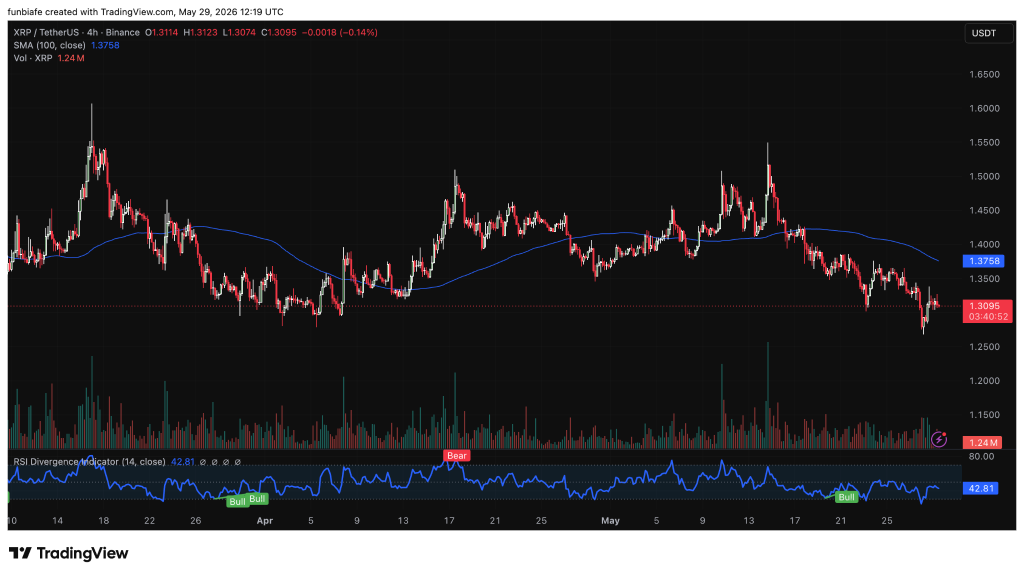
90 Million XRP Just Vanished from Exchanges – A Massive Supply Shock

Top 4 Cryptos Wealthy Investors Are Buying Now for a Mid-Year Rally
DC insiders expose 'mind-boggling' reason Trump’s war is dumber than it seems