

Upbit and Bithumb to Form Risk Committees After Landmark $44.9B Bitcoin Error
BitcoinWorld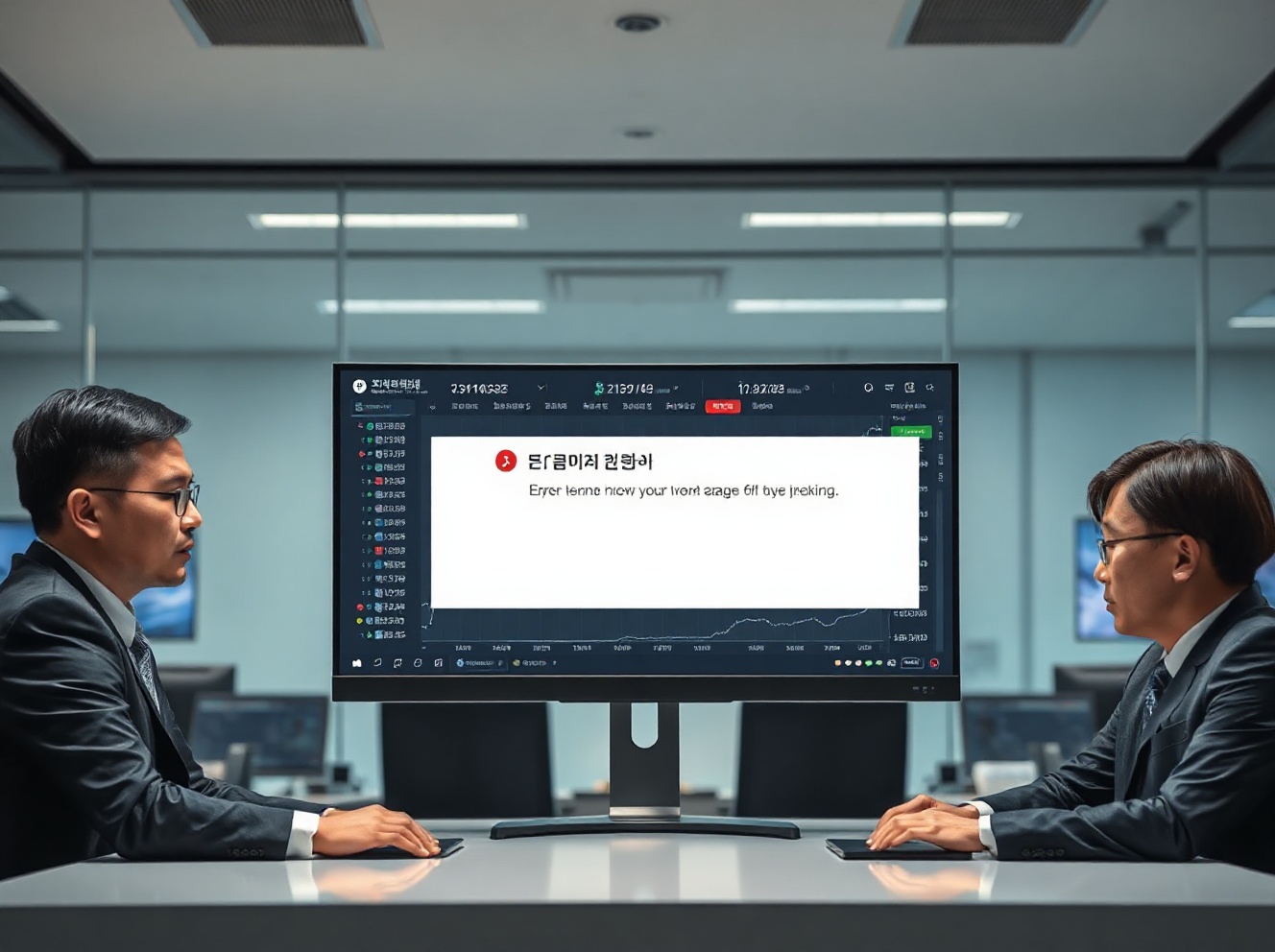
Upbit and Bithumb to Form Risk Committees After Landmark $44.9B Bitcoin Error
Major South Korean cryptocurrency exchanges Upbit and Bithumb are overhauling their internal control systems after a catastrophic human error led to an erroneous Bitcoin transaction valued at 62 trillion won (approximately $44.9 billion). The incident, reported by SBS Biz, has prompted the exchanges to establish dedicated risk management committees and implement stricter operational safeguards.
What Happened: The $44.9 Billion Mistake
The error, widely described as a classic ‘fat finger’ mistake, occurred when an employee entered an incorrect figure during a Bitcoin payment process. While the transaction was ultimately reversed, the sheer scale of the error — equivalent to nearly half of South Korea’s annual national budget — sent shockwaves through the financial and crypto communities. The incident highlighted critical vulnerabilities in manual transaction processing systems at some of the world’s largest digital asset trading platforms.
New Measures: Separation of Duties and Multi-Stage Approvals
In response, Upbit and Bithumb are moving to establish formal risk management committees tasked with overseeing transaction integrity. According to the SBS Biz report, the exchanges will now be required to separate the roles of transaction inputter and approver for noteworthy trades. This separation of duties is a standard internal control in traditional finance but has been inconsistently applied in the rapidly growing crypto sector.
Additional controls include multi-stage approval processes and independent third-party verification procedures. Systems will also be programmed to halt any transaction that exceeds preset limits, effectively creating a digital circuit breaker for human errors. These changes are expected to be implemented across both platforms in the coming weeks.
Why This Matters for the Crypto Industry
The incident underscores a broader challenge for cryptocurrency exchanges as they transition from a largely unregulated frontier to a more mature financial services industry. Fat-finger errors, while rare, can have outsized consequences in markets where liquidity is concentrated and transaction speeds are near-instantaneous. The South Korean response — borrowing heavily from traditional banking risk management — signals a growing convergence between crypto operations and established financial best practices.
For retail and institutional investors, these changes are a positive development. Stronger internal controls reduce the risk of catastrophic losses, market manipulation, and operational failures. The move also aligns with global regulatory trends, as jurisdictions from the European Union to Singapore increasingly require exchanges to implement robust governance frameworks.
Conclusion
The creation of risk committees and the introduction of multi-stage approval processes at Upbit and Bithumb represent a significant step toward professionalizing cryptocurrency exchange operations. While the 62 trillion won error was ultimately corrected, it served as a powerful reminder that the infrastructure supporting digital asset trading must evolve to match the scale and speed of the markets it serves. For South Korea, a global hub for crypto trading, these reforms could set a new standard for exchange accountability.
FAQs
Q1: What exactly is a ‘fat finger’ error in cryptocurrency trading?
A fat finger error is a human mistake where a trader or employee enters an incorrect number — such as an extra zero or wrong decimal point — during a transaction. In this case, an employee at a South Korean exchange mistakenly entered a Bitcoin payment amount of 62 trillion won instead of a much smaller figure.
Q2: How will the new risk committees prevent similar incidents?
The risk committees will oversee transaction integrity and enforce new controls, including separating the roles of transaction inputter and approver, requiring multi-stage approvals for large trades, and implementing automated halts for transactions exceeding preset limits. Independent third-party verification will also be required.
Q3: Could this error have caused permanent financial damage?
While the transaction was reversed before causing lasting harm, a fat finger error of this magnitude could theoretically drain liquidity, trigger cascading liquidations, or destabilize markets if not caught quickly. The new measures are designed to catch such errors before they can be executed.
This post Upbit and Bithumb to Form Risk Committees After Landmark $44.9B Bitcoin Error first appeared on BitcoinWorld.


You May Also Like

Mantle and xStocks Bring Tokenized SpaceX (SPCXx) to Fluxion & Merchant Moe as History’s Largest IPO Goes Live

Market Strategist: Final Warning for XRP Holders. I Won’t Say This Again

QAnon conspiracy theorist leading Trump obsession is 'not normal': insiders



