

Kalshi Adds Software Partner to Strengthen Prediction Market Oversight
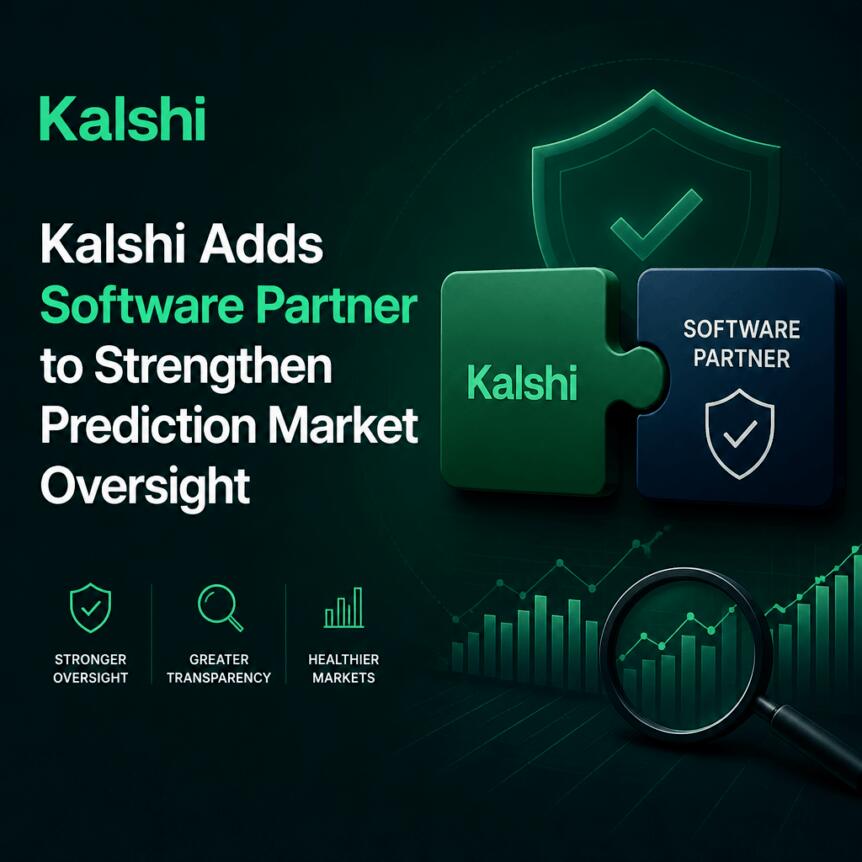
Prediction market platform Kalshi is partnering with compliance software provider StarCompliance to roll out a monitoring system aimed at helping financial firms oversee employee activity tied to prediction market trading. The announcement, made this week, comes as regulators and lawmakers in the United States intensify scrutiny over whether insiders can exploit non-public information through event contracts.
Kalshi and StarCompliance say the new platform is built to detect patterns that may indicate misuse, using signals such as transaction volume, trading behavior, market categories, and even whether activity occurs during work hours. It also positions firms to centralize investigations and maintain audit records covering prediction market exposure across both onchain and offchain environments.
Key takeaways
- Kalshi is adding prediction market monitoring to StarCompliance’s employee compliance tooling used by financial institutions.
- The system targets potential risks related to material non-public information, including how employee trading patterns could be tied to workplace activity.
- Regulatory pressure is rising across the U.S., with multiple states challenging or restricting prediction market operations and federal agencies pursuing jurisdiction fights.
- Recent high-profile insider-trading allegations involving prediction markets have increased the focus on auditability and internal controls.
Why Kalshi is expanding compliance monitoring
StarCompliance said its new capability is designed to reduce risks involving material non-public information—an issue that can arise when employees at financial companies may have access to sensitive business or market developments. In that context, prediction markets can create a mechanism for trading event contracts that may reflect information not yet public.
According to the partnership announcement, the monitoring framework is intended to flag employee activity that stands out against expected patterns. This includes volume and trading behavior analytics, category-based review of which event markets employees participate in, and work-hour activity signals that may help firms distinguish ordinary behavior from potentially suspicious timing.
For financial institutions, the added value is less about tracking “whether” trading happened and more about creating a defensible audit trail—something that can matter in both internal investigations and regulatory discussions. The partners also emphasized centralized investigation management and record-keeping tied to prediction market exposure.
The announcement extends StarCompliance’s existing employee compliance platform, which already tracks traditional securities and digital asset activity, by incorporating prediction market trading through Kalshi.
Insider-trading allegations raise the stakes
The monitoring launch lands shortly after a federal judge set a December trial date for US Army Master Sgt. Gannon Ken Van Dyke. Prosecutors allege Van Dyke used non-public information concerning a military operation targeting Venezuelan President Nicolás Maduro to profit—earning more than $400,000—through Polymarket.
Van Dyke has pleaded not guilty to the charges. Still, the case has become a prominent reference point for policymakers and regulators attempting to determine how existing insider trading expectations apply to prediction market structures.
From an investor and compliance perspective, the practical takeaway is that regulators are not treating prediction markets as a separate universe from other financial trading risks. Instead, they appear to be pushing the industry toward greater transparency, stronger surveillance, and more consistent internal controls.
Regulatory friction in the U.S. keeps intensifying
Kalshi’s compliance-focused move also reflects a broader environment where prediction markets continue to face legal challenges at both state and federal levels. The article notes that at least 11 states have taken legal or regulatory action against platforms such as Kalshi and Polymarket.
At the heart of many disputes is whether event contracts should be governed as gambling under state law or treated as federally regulated derivatives under the oversight of the Commodity Futures Trading Commission (CFTC). This tension has produced a patchwork of lawsuits, cease-and-desist orders, and proposed state legislation.
Nevada, for example, became the first state to temporarily block Kalshi’s operations earlier this year. Arizona has also accused Kalshi of operating an illegal gambling business by offering event contracts to residents. Meanwhile, Kalshi and the CFTC have argued against state-level restrictions.
In late May, Kalshi sued Minnesota after Minnesota enacted what CFTC Chair Michael Selig characterized as the first outright ban on prediction markets in the country. Around the same time, the CFTC joined Kalshi in a separate legal challenge involving Rhode Island officials over event contract regulation.
More recently, the CFTC sued New Mexico officials over allegations that Kalshi offered unlicensed sports betting. The case was described as the eighth state targeted by the agency as it attempts to curb state-level restrictions.
Industry debate: courts, federal primacy, and the Supreme Court possibility
Disputes over jurisdiction are increasingly framed as a multi-year legal process. Speaking on a panel at Bitso’s Stablecoin Conference in Mexico City on June 16, Digital Chamber CEO Cody Carbone said the conflict between federal regulators and state authorities is likely to play out in court and could ultimately reach the US Supreme Court.
Carbone also suggested that the Trump administration has broadly backed efforts to position the CFTC as the primary regulator for prediction markets, while still expecting ongoing clashes with state gambling regulators. He added that lawmakers are also discussing what kinds of event contracts should be permitted, including markets related to politics and war.
Importantly for market participants, insider trading concerns are expected to remain a focus of future oversight. The combination of compliance tooling and high-profile legal cases suggests regulators may keep pressing for clearer guardrails around information access, trading surveillance, and enforcement pathways.
Within that broader context, Representative James Comer recently asked CEOs of Kalshi and Polymarket for information about their responses to insider trading after “suspiciously timed trades” related to US military actions against Iran were highlighted in the political debate. While the details of that inquiry are tied to the specifics of the allegations, the episode underscores that prediction markets are now firmly embedded in mainstream regulatory and political scrutiny—not just niche enforcement.
For readers watching what comes next, the key issue is whether courts will ultimately resolve the federal-versus-state jurisdiction question fast enough to reduce uncertainty for compliant operators—or whether new compliance expectations will continue to evolve case-by-case as insider trading allegations and investigations accumulate. The Kalshi–StarCompliance monitoring partnership signals that, regardless of the legal outcome, firms are preparing for tighter scrutiny of trading behavior tied to potential access to non-public information.
This article was originally published as Kalshi Adds Software Partner to Strengthen Prediction Market Oversight on Crypto Breaking News – your trusted source for crypto news, Bitcoin news, and blockchain updates.


You May Also Like
Shock confession: Trump influencer admits she 'fell for Russian propaganda'

Trump's unraveling ballroom story reveals he has been 'lying the whole time': Analyst

GOP Crypto-Backed Candidate Wins Alabama Senate Runoff Ahead of June Primaries



