

Bitcoin Funding Rate Reaches 2-Week High, $70K Scrutiny Returns
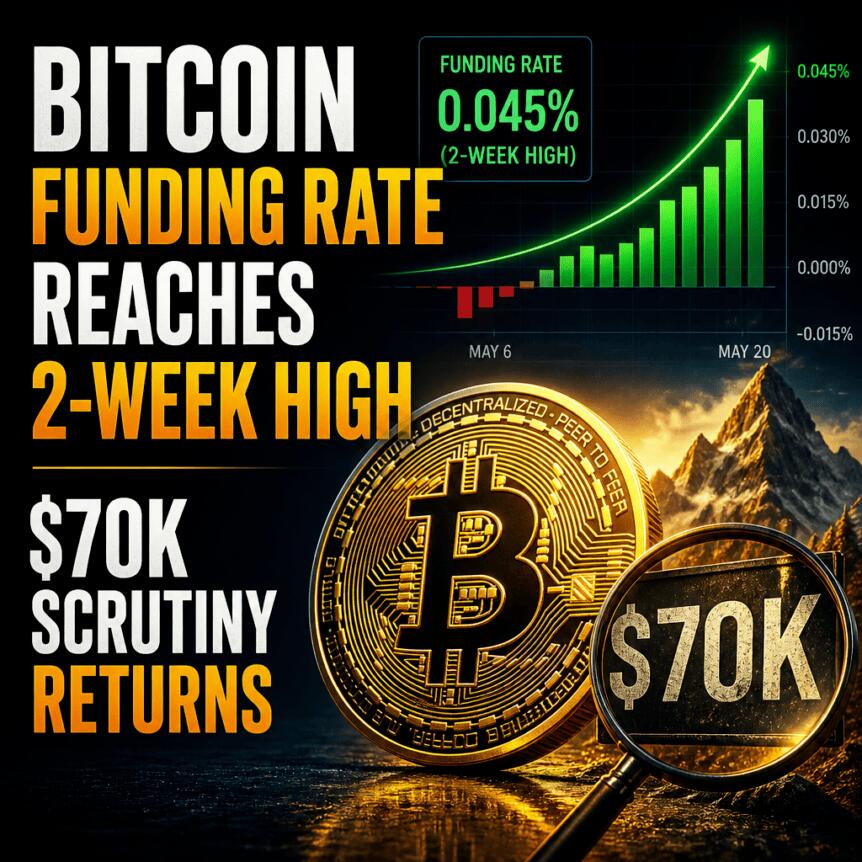
Bitcoin edged toward the $65,500 area on Monday as traders leaned more bullish on derivatives—an uptick reflected in rising perpetual futures funding rates. Yet the broader risk backdrop remained cautious, with US-listed spot Bitcoin ETF outflows continuing to drain demand and keeping a near-term push toward $70,000 on hold.
Optimism showed up in leverage as well. The annualized funding rate on Bitcoin perpetuals jumped to 7%, its highest level in nearly three weeks and a move that typically aligns with stronger long-side confidence. Still, the market’s full picture was mixed, with options positioning turning more defensive and traditional assets failing to provide the kind of risk-on tailwind that often supports breakout bids.
Key takeaways
- Bitcoin perpetual futures funding rose to 7% (highest in nearly three weeks), indicating growing bullish confidence among leverage traders.
- Put demand outpaced calls on Deribit, with the put-to-call premium ratio more than double, suggesting traders increasingly sought downside protection.
- Order-book liquidity improved: aggregated bids on major exchanges exceeded offers by about $12 million, helping limit bearish read-through from weaker spot levels.
- Macro signals stayed cautious as stocks, bonds, and gold weakened together, and higher US Treasury yields pointed to elevated return requirements for capital.
- Spot Bitcoin ETFs recorded continued outflows, with CoinGlass data citing $228 million in net outflows the prior week—likely a headwind for any rapid $70,000 attempt.
Derivatives confidence rises, but options show hedging
The most direct read on trader sentiment came from Bitcoin perpetuals. According to Laevitas data, the annualized funding rate climbed to 7% on Monday, a sign that long positions were paying more to remain open. While that figure remains within the often-cited neutral 6%–12% band, the jump to the highest point in nearly three weeks suggests bulls gained ground over the weekend into Monday.
Crude oil also contributed to the day’s tone. Brent fell to $77.50, its lowest level since March, which can ease inflation- and risk-premium concerns in broader markets. For Bitcoin, that kind of macro relief sometimes helps lift short-term demand—especially when derivatives liquidity supports it.
However, options data signaled that traders were not fully committing to upside. Laevitas-referenced Deribit metrics showed put (sell) options demand running more than twice ahead of call activity on Monday. This skew has leaned bearish since Friday, representing a reversal from the prior week’s direction. In practice, that combination—higher perpetual funding alongside heavier put buying—often points to a market that is still trying to grind upward, but with active hedging in case price fails to follow through.
Order books improve even as traditional markets stay risk-averse
Bitcoin’s immediate price action around $65,000 did not appear to be driven by a lack of depth. CoinGlass data referenced in the report showed that bids on aggregated major exchange order books exceeded offers by about $12 million on Monday, reversing the weekend trend.
That matters because a failure to hold a key level can sometimes reflect fading liquidity and widening spreads. With the order-book imbalance turning more supportive, Monday’s inability to firmly reclaim higher territory looks more like timing and positioning than a structural sell-side pressure shift.
At the same time, the macro backdrop stayed uneven. Nasdaq 100 futures slipped about 1% as artificial intelligence-related stocks weakened. In company-specific news, SpaceX shares dropped sharply after the company announced plans to raise debt despite holding more than $100 billion in cash. Investors appear to have focused on the possibility that the sector may need higher funding and longer timelines before profitability.
Beyond equities, gold fell roughly 0.9% on Monday while US government bonds were also pressured as yields rose. The report attributed the move in yields to investors demanding higher returns—potentially reflecting inflation concerns or the market anticipating dilution effects tied to rising US government debt levels.
With stocks, bonds, and gold moving lower together, the day looked less like a broad risk-on session and more like investors preferring cash. That is the kind of environment where Bitcoin can still trade firm on crypto-native signals, but breakouts tend to struggle unless ETF flows and broader momentum align.
Corporate and liquidity cues: Strategy’s reserve update helps, but ETFs still weigh
A portion of market attention also focused on Strategy (formerly MicroStrategy), whose Bitcoin holdings make it a bellwether for institutional-style accumulation. Shares of Strategy traded about 13% below the roughly $64.1 billion cost to acquire 847,363 BTC, as investors weighed whether the company might need to sell assets to meet obligations. The report noted Strategy had debt of about $6.75 billion and that earlier worries centered on reserve liquidation risk.
Those concerns eased somewhat after Strategy announced an additional cash position—described as a $300 million reserve acquisition—referenced via earlier Cointelegraph coverage. The development matters because it reduces the immediate need for forced selling in a volatile tape, which can support sentiment around large, long-duration Bitcoin holders.
Even with those internal crypto-industry positives, the external demand channel remained a drag. The report pointed to continued weakness in US-listed Bitcoin ETFs. According to CoinGlass data cited, Bitcoin spot ETFs logged $228 million in net outflows in the prior week. The narrative significance is straightforward: when ETF balances decline week after week, it can reduce the marginal buyer that often complements derivative-led optimism.
In that context, the odds of a quick, clean rally to $70,000 look limited. Higher funding and improving order-book bids can push prices upward, but persistent ETF outflows can cap how far those pushes travel—especially when options positioning indicates traders are actively preparing for downside volatility.
As traders watch the tape, the tension to monitor is clear: derivatives are showing confidence (funding at 7% and stronger order-book bids), while options and traditional markets reflect caution (put skew, weaker macro complex) and ETF flows continue to drain fresh spot demand.
Going forward, investors will likely focus on whether ETF outflows slow or reverse and whether the options hedging trend on Deribit keeps deepening. If funding stays elevated while put demand cools and spot ETF flows stabilize, Bitcoin could gain the momentum needed to test higher levels more convincingly. If not, Monday’s signals may translate into choppy consolidation rather than a sustained breakout.
This article was originally published as Bitcoin Funding Rate Reaches 2-Week High, $70K Scrutiny Returns on Crypto Breaking News – your trusted source for crypto news, Bitcoin news, and blockchain updates.


You May Also Like

Crypto Market Roundup June 23: Arcium ARX Gains 154%, DeFi Rise 3.5%

Nigeria invests $9m in research to drive digital economy ambitions

ETHWomen Returns to Toronto, Bringing Together Women Building the Future of Web3 and AI



