

EU Committee Moves Forward on Digital Euro Bill After Key Vote

Europe’s path toward a possible central bank digital currency advanced again this week after the European Parliament’s Economic and Monetary Affairs Committee (ECON) backed the parliament’s position on the digital euro legislative package.
ECON approved the draft with a 43–14 vote, according to an official European Parliament announcement published on Tuesday. The proposal is intended to define how an EU-issued digital euro could work—covering privacy protections, offline functionality, payment roles for intermediaries, and constraints designed to limit risks to financial stability.
Key takeaways
- ECON’s 43–14 vote clears a major procedural step in shaping the digital euro framework, but it does not complete the full lawmaking process.
- The draft centers on privacy-by-design features and offline payments that are intended to function more like cash than like a typical online wallet.
- The digital euro would not pay interest, and individual holdings would be capped to help protect financial stability.
- Distribution and service provision would involve banks and payment providers, with additional routes such as post offices and e-money providers mentioned.
- The ECB has previously pointed to a potential launch timeline around 2029, though delays have pushed expectations back before.
Committee approval sets the direction for the digital euro rules
ECON’s decision focuses on how Parliament wants the digital euro to be governed if the EU ultimately proceeds with a central bank digital currency issued by the European Central Bank (ECB). In remarks included with the announcement, MEP Fernando Navarrete Rojas said the package “protects citizens’ freedom to choose how they pay,” and emphasized that a digital euro would “complement cash, never replace it.”
For investors and market participants, the significance is less about immediate adoption and more about regulatory certainty. The committee’s vote helps determine the shape of the framework regulators will likely have to build around—especially where privacy, offline use, and limits on balances are concerned.
The vote also lands against the ECB’s ongoing planning work. The ECB has targeted a 2029 launch for a digital euro, a timeline previously reported in connection with technical and implementation planning.
Privacy-by-design and offline payments are built into the draft
One of the clearest policy choices in the approved draft is the combination of privacy protections with support for offline transactions. According to the European Parliament announcement, the digital euro would be issued by the ECB and could be used both online and offline.
For online payments, the proposal points to an account-based approach. For offline use, the draft describes a model that relies on local device storage, aiming to give users a cash-like experience in terms of control—rather than requiring a continuous connection for every transaction.
The announcement states that offline functionality would be “equivalent to using physical cash,” explaining that losing the device would mean losing the offline funds, with “no refund possible.”
On privacy, the draft includes privacy-by-design mechanisms, explicitly referencing technologies such as zero-knowledge proofs (ZKPs) to enable verification without exposing personal data. The announcement further says the ECB would not have access to personal identification data.
That combination matters because it addresses two common concerns about public-sector digital currencies: how to preserve user privacy while still meeting oversight and verification needs. Readers should watch closely for how these design intentions translate into concrete technical requirements during the next stages of drafting and testing.
No interest, holding limits, and rules for merchants
The committee’s approved position also spells out guardrails intended to reduce potential stress on the broader financial system. Under the draft, individuals’ digital euro holdings would be subject to caps. The European Commission would set those limits based on ECB recommendations and would review them regularly.
The draft also specifies that the digital euro would not pay interest—an explicit attempt to avoid creating incentives that could accelerate shifts of funds away from deposits or other money-market products.
For businesses, the draft describes temporary holding permissions: companies would be allowed to hold digital euros only to accumulate incoming payments, for up to 24 hours. It also indicates that businesses would generally be required to accept the digital euro, while creating exceptions for very small firms and self-employed operators that do not already accept digital payments.
Service pricing is addressed as well. The announcement says basic services like account access and payments would be free, while additional services could involve capped fees for providers. It also notes that offline transactions would remain free under the proposal.
From pilots to rollout: who would distribute it and when
The legislation’s structure also outlines how the digital euro might be distributed and serviced across the eurozone. The approved approach envisages a broader ecosystem that includes banks, payment providers, and regulated crypto firms. It also mentions that post offices and e-money providers could distribute the digital euro.
Before launch, the ECB would still need to finalize technical rules, run pilot tests, and coordinate with payment providers. The rollout period mentioned in the announcement is at least two years following approval of the final law.
This matters because the committee vote is best read as an important step in setting the “what” rather than the “when.” Even with a clearer legislative direction, real-world deployment depends on technical completion and operational readiness across intermediaries.
The digital euro project has already encountered repeated delays tied to unfinalized legislation. Reuters previously reported that ECB Executive Board member Piero Cipollone projected that the digital euro would likely not launch until 2029, reflecting how schedule risks have persisted even as groundwork has been laid since 2020.
Regulated stablecoin momentum continues alongside the CBDC push
The digital euro debate is unfolding at the same time as European efforts to build regulated alternatives to USD-dominated stablecoins. The source material notes that US dollar stablecoins currently represent the vast majority of the market, according to CoinGecko’s category data.
Against that backdrop, Qivalis—a European banking consortium working on a regulated euro stablecoin—expanded last month. The consortium added 25 new member institutions across 15 countries, bringing its total to 37. The statement shared with Cointelegraph indicated a target for a second-half 2026 launch.
Reported new members include ABN AMRO, Rabobank, Nordea, and Intesa Sanpaolo. The consortium’s supervisory board chair, Howard Davies, said the group is embedding “European principles around data protection, financial stability and regulatory rigour” into the next generation of digital money.
MEP Fernando Navarrete Rojas also commented in an email response to Cointelegraph’s query, arguing that Europe does not have to choose between a digital euro and successful private payment solutions. He said the “dual approach” should allow existing standards and infrastructure to be reused where possible, while new standards—when needed—should remain open and accessible to banks, payment providers, and innovative solutions.
With ECON’s vote now on record, the next question for the market is how quickly the final lawmaking steps can converge on the committee’s privacy, offline, and financial-stability provisions—and how the ECB will translate that into technical rules, pilots, and the timeline for any eventual rollout.
This article was originally published as EU Committee Moves Forward on Digital Euro Bill After Key Vote on Crypto Breaking News – your trusted source for crypto news, Bitcoin news, and blockchain updates.


You May Also Like
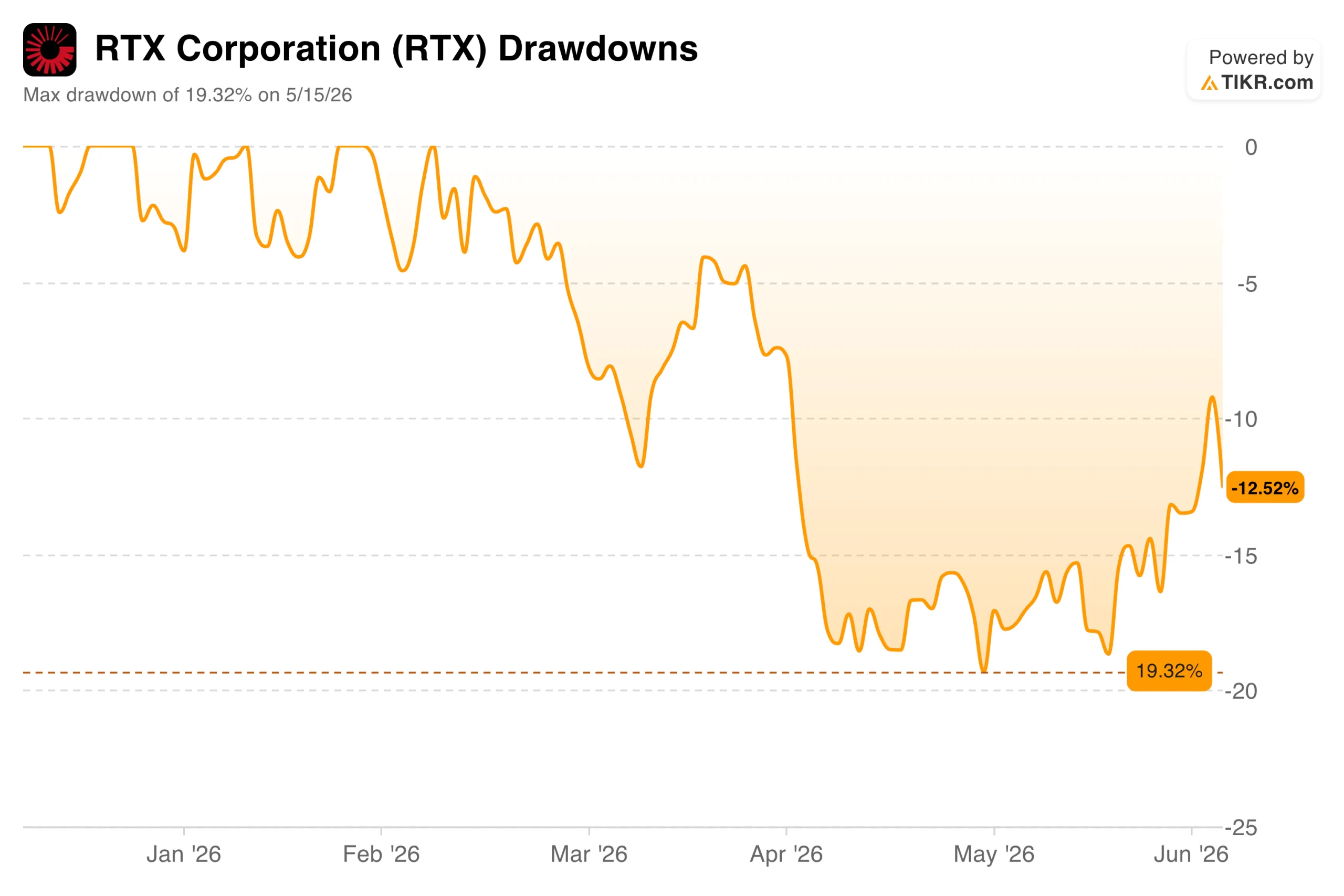
RTX Stock Has a $271 Billion Backlog and a 19% Drawdown. Does the Defense Supercycle Justify Buying at $186?

European Union’s ESMA Orders Unlicensed Crypto Firms to Exit EU Market as MiCA Deadline Arrives

Hamster Kombat Daily Cipher 24 June 2026: Play And Win



