

If you dig into the performance figures, the diversification story clearly holds up. QTUM is up 54.06% for the year through June 22, 2026, while IonQ has gained 29.98% over that same stretch. Over a one-year horizon, QTUM has returned 94.08%, and over a five-year horizon, it has returned 265.06%. The fund currently has $6.02 billion in assets under management, so there is ample liquidity for retail-sized trades.
Anyone who bought IonQ (NYSE:IONQ) bought a specific thesis: that trapped-ion architecture will win the race to commercial quantum computing. The stock rewardsAnyone who bought IonQ (NYSE:IONQ) bought a specific thesis: that trapped-ion architecture will win the race to commercial quantum computing. The stock rewards
Forget Betting on One Quantum Stock. This Fund Owns the Entire Field for Just 0.40%
For feedback or concerns regarding this content, please contact us at [email protected]
The post Forget Betting on One Quantum Stock. This Fund Owns the Entire Field for Just 0.40% appeared first on 24/7 Wall St..
Anyone who bought IonQ (NYSE:IONQ) bought a specific thesis: that trapped-ion architecture will win the race to commercial quantum computing. The stock rewards conviction when headlines break the right way and punishes it just as fast when they don’t. IonQ shares moved from $29.15 to $57.45 inside a six-month window in 2025, the kind of range that makes a single-name quantum position closer to a venture-style position than a diversified portfolio holding. For investors who want exposure to the theme without that concentration, the Defiance Quantum ETF (NASDAQ:QTUM) owns the entire field, including IonQ, at a 0.40% expense ratio.
Why holders bought IonQ in the first place
The fundamental case is real. IonQ posted Q1 2026 revenue of $64.67 million, up 755% year over year, and raised full-year guidance to $260 million to $270 million. CEO Niccolo de Masi called it “the biggest quarter in our company’s history”, anchored by the first sale of a 256-qubit system to the University of Cambridge and a $39 million Space Development Agency contract. Market cap sits near $21.59 billion.
The gap a single-stock bet leaves open
The same filings show why the position is fragile. IonQ guided to a $310 million to $330 million adjusted EBITDA loss for 2026, burned $151.02 million in operating cash in Q1 alone, and booked $128.52 million in stock-based compensation in that single quarter. GAAP results swing with warrant fair value movements rather than with operations. Competing quantum approaches (superconducting, photonic, neutral atom) remain in the race, and IBM (NYSE:IBM), Microsoft (NASDAQ:MSFT), and Alphabet (NASDAQ:GOOGL) have their own quantum programs that an IonQ shareholder gets no credit for owning.
What QTUM actually holds
QTUM is a basket of 85 holdings across the quantum and AI-hardware supply chain: chipmakers, networking and sensing names, the pure-play quantum stocks including IonQ, and the large-cap technology firms running parallel quantum research. It is a thematic basket spanning the broader quantum and AI-hardware supply chain, and that breadth is part of the point. The supply chain and large-cap technology exposure are what kept the fund participating while individual quantum names swung sharply.
How the 0.40% fee plays out
At a $25,000 position, the 0.40% expense ratio amounts to about $100 per year. For that, the investor gets exposure to roughly 85 names, automatic rebalancing, and a structure that survives any one company missing a qubit milestone. IonQ’s own commercial revenue base is still small enough that a single contract slipping a quarter shows up in the stock; inside QTUM, the same event is one weighted line item.
The tradeoffs to flag
A holder who switches in a taxable account should first look at the embedded gain in IonQ. IonQ is up 476.85% over the past five years, so a full sale could trigger meaningful capital gains. Trimming part of the IonQ position and rotating proceeds into QTUM keeps the trapped-ion exposure while broadening it across the rest of the field. Inside a tax-advantaged account, the swap is mechanically simpler.
What this means right now
Act now: the analyst who called NVIDIA in 2010 just named his top 10 AI stocks — and IonQ didn’t make the cut. Grab the names FREE today.
The post Forget Betting on One Quantum Stock. This Fund Owns the Entire Field for Just 0.40% appeared first on 24/7 Wall St..
Market Opportunity
ANyONe Protocol Price(ANYONE)
$0.0691
$0.0691$0.0691
USD
ANyONe Protocol (ANYONE) Live Price Chart


Disclaimer: The articles reposted on this site are sourced from public platforms and are provided for informational purposes only. They do not necessarily reflect the views of MEXC. All rights remain with the original authors. If you believe any content infringes on third-party rights, please contact [email protected] for removal. MEXC makes no guarantees regarding the accuracy, completeness, or timeliness of the content and is not responsible for any actions taken based on the information provided. The content does not constitute financial, legal, or other professional advice, nor should it be considered a recommendation or endorsement by MEXC.
You May Also Like

Trump Cancels Housing Bill Signing Over CBDC Ban Provision, Demands Voting Legislation First
BitcoinWorld Trump Cancels Housing Bill Signing Over CBDC Ban Provision, Demands Voting Legislation First President Donald Trump abruptly canceled a planned signing
Share
bitcoinworld2026/06/25 00:25
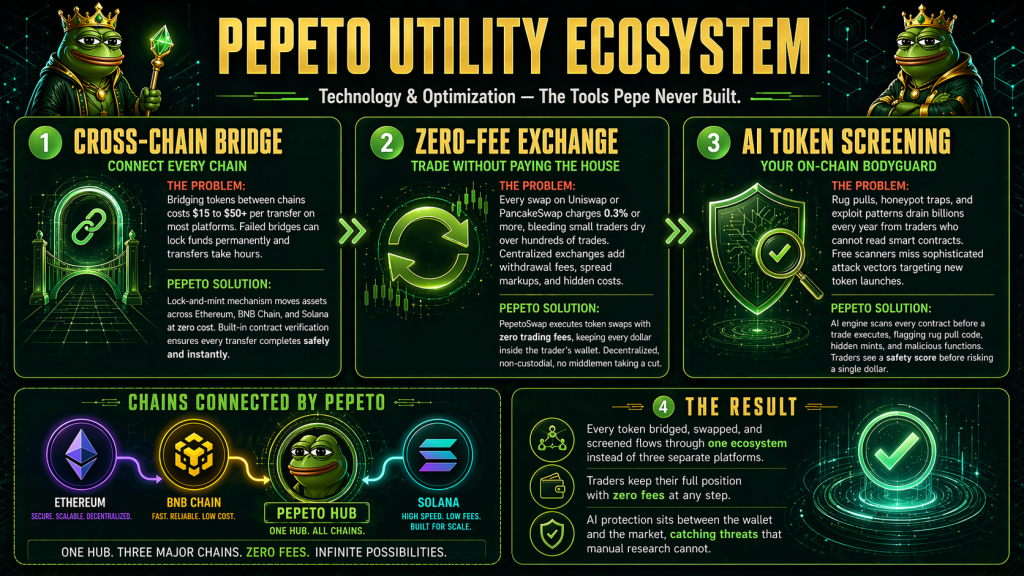
Next Crypto to Explode as Morgan Stanley’s SOL ETF Stuns at 0.14%, While Pepeto Targets 100x Before the Binance Listing Opens
The next crypto to explode rarely shows up inside an ETF wrapper. Morgan Stanley just filed a spot Solana ETF at the lowest fee in America per CoinMarketCap, which
Share
Captainaltcoin2026/06/25 01:30

Demand & Convert Deploys Proprietary Web Architecture to Help Local Trades Escape Shared Lead Model
Demand & Convert launches proprietary web architecture to help tradespeople escape shared lead models, build owned pipelines, and boost profitability with mobile
Share
Citybuzz2026/06/25 00:35



