Goliath Ventures CEO Faces 70 Years in Prison for $400M Crypto Ponzi After Guilty Plea
Key highlights:
- Goliath Ventures’ Christopher Delgado has entered into a plea agreement after scamming investors of $400 million.
- Delgado is staring at over 70 years in federal prison for a crypto Ponzi scheme.
- Crypto scams and hacks have surged in 2026, driven by AI and emerging complex schemes.
Goliath Ventures CEO Christopher Delgado has pleaded guilty to a crypto Ponzi scheme that fleeced investors of $400 million. Delgado’s case continues a long streak of crypto crime in 2026 as law enforcement agencies race to prevent further losses to unsuspecting investors.
Christopher Delgado pleads guilty to crypto fraud
The US Attorney’s Office, Middle District of Florida, has confirmed that ex-Goliath Ventures CEO Christopher Delgado has entered a guilty plea to fraud charges leveled against him. According to a press release, Delgado pleaded guilty to wire fraud, money laundering, and conspiracy to commit wire fraud.
Authorities disclosed that Delgado and his associates ran Goliath Ventures as a Ponzi scheme, promising victims sizable monthly returns on investments in cryptocurrency liquidity pools. Per the disclosure, the 34-year-old Delgado leaned on luxury events and charitable sponsorships to lure new victims to the scheme.
Over three years, a civil forfeiture case revealed that victims invested up to $400 million into Goliath. Rather than invest in liquidity pools as advertised, Delgado diverted the funds to pay previous investors.
Meanwhile, authorities uncovered a streak of luxury purchases with investors’ funds. Delgado purchased six residential properties, high-end vehicles, luxury watches, and custom jewellery.
As part of the plea agreement, Delgado will forfeit the luxury properties and assets in several bank and cryptocurrency accounts. However, Delgado faces up to 70 years in federal prison for his role in the crypto scheme, with sentencing scheduled for October 8, 2026.
“We will also continue to work with investigators to locate and seize assets traceable to Delgado’s scheme,” said US Attorney Gregory Kehoe.
AI turbocharges crypto scams in 2026
Crypto fraud schemes in 2026 have reached a frenetic level, driven by rising artificial intelligence (AI) use by bad actors. A Chainalysis report disclosed that deepfake video calls and AI-generated profile photos have put 2026 on course to be the worst year for crypto scams.
A recent report by Unfolded noted that Q2 2026 set the record for the most crypto hacks, driven by bad actors adopting AI for nefarious use cases. Leaning on AI, Chainalysis noted that scammers are increasingly cloning major exchanges and showing victims fake portfolio gains to gain their trust.
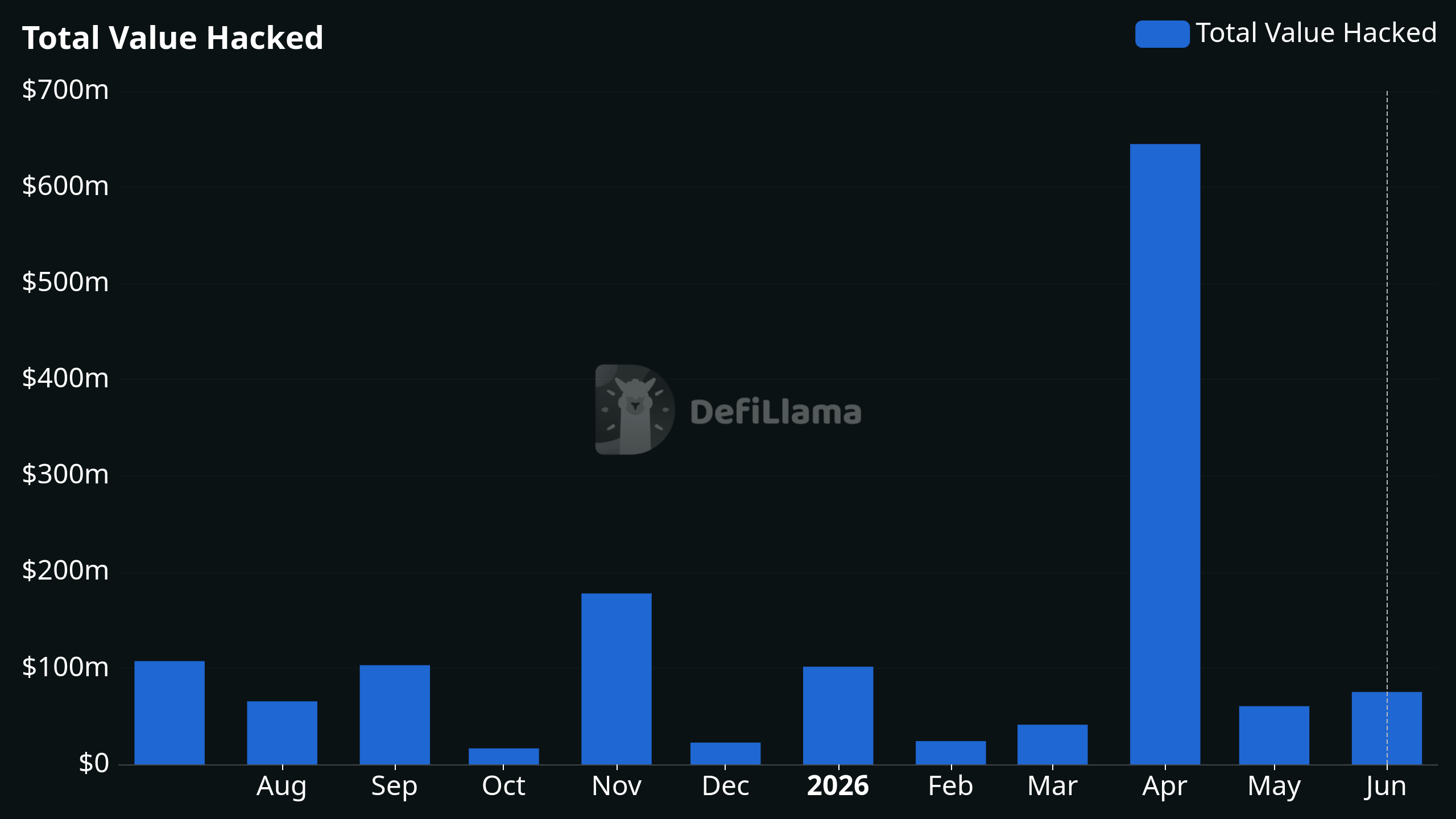
Source: DeFiLlama
Last year, crypto scams topped $17 billion, with impersonation scams growing 1,400% year-over-year. Meanwhile, rug pull incidents are on the rise, buoyed by the explosion of fast-launch memecoins on Solana and Base.
Furthermore, wallet drainers have seen an uptick in activity in recent months, while scammers are targeting older victims in crypto ATM and recovery scams.


You May Also Like

Ethereum backers launch nonprofit to lead institutional adoption efforts

Securitize prepares for its NYSE debut! What does Wall Street’s tokenization test mean for investors?