

Hyperliquid (HYPE) Price: Is HYPE a Long-Term Hold or a High-Risk Bet?
TLDR
- Hyperliquid is a custom Layer 1 blockchain built for high-speed onchain trading, processing up to 200,000 orders per second.
- 99% of trading fees from perps and spot markets go into buybacks of HYPE via the Assistance Fund.
- The platform generated around $960 million in revenue in 2025 and has expanded into S&P 500 and SpaceX-linked perpetual futures.
- There was no VC, no centralized exchange, and no market-maker allocation at launch — but contributor unlocks run through 2027, with the next unlock on July 6, 2026.
- Key risks include a small validator set, heavy reliance on perpetuals volume, and regulatory pressure on offshore leverage platforms.
Hyperliquid has built one of the most talked-about products in crypto. The platform runs on a custom Layer 1 chain, and it processes every order, trade, and liquidation entirely onchain with one-block finality.
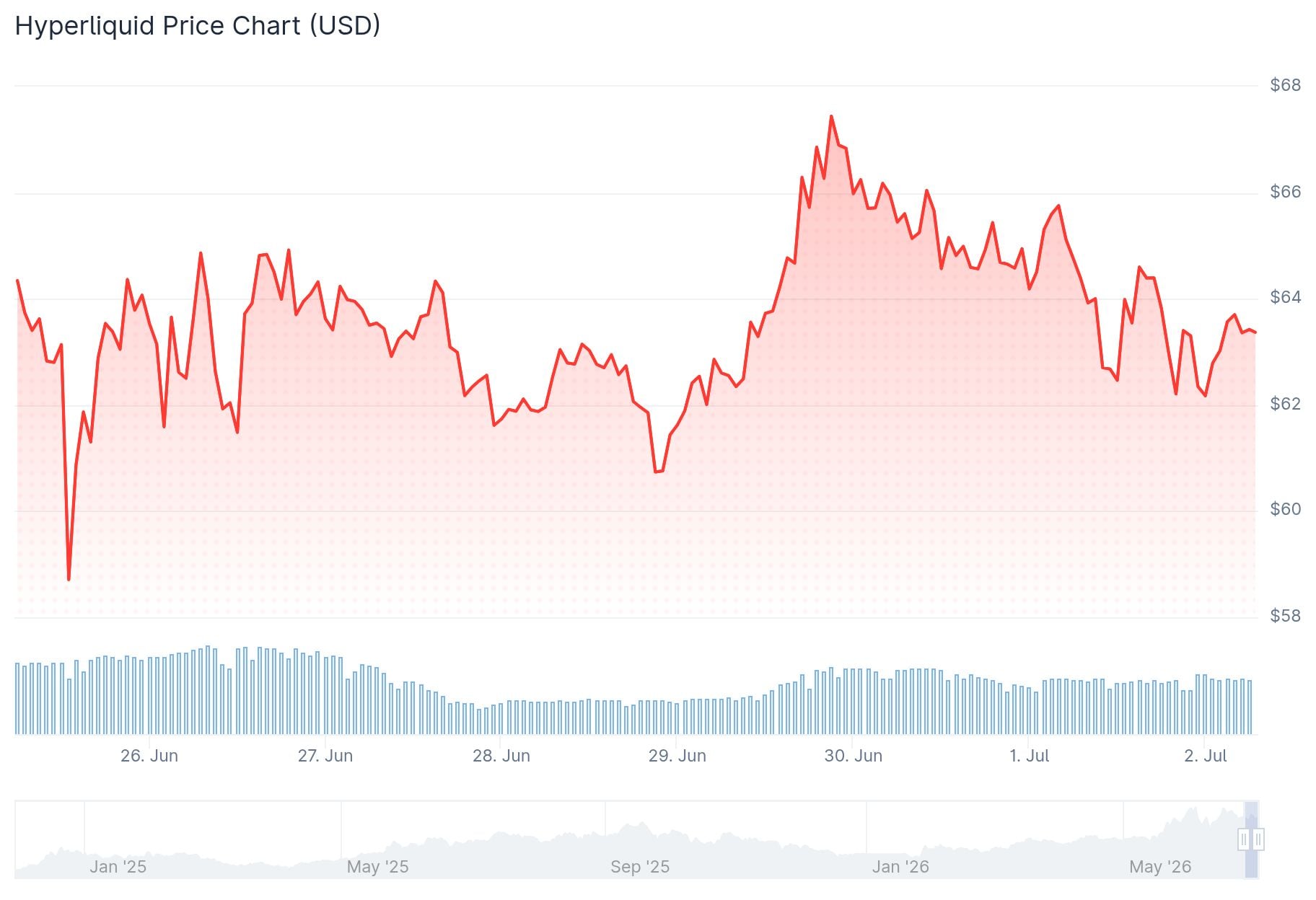 Hyperliquid (HYPE) Price
The system is designed to handle around 200,000 orders per second. That puts it closer to a centralized exchange in feel, while keeping everything on a public chain.
The chain splits execution between two systems. HyperCore handles the perpetual futures and spot order books. HyperEVM adds Ethereum-style smart contract functionality on top.
How Fees Flow Back to HYPE
The token’s value case is more direct than most. According to DeFiLlama, 99% of fees from Hyperliquid’s perp and spot markets go to the Assistance Fund, which uses them to buy HYPE.
That creates a clear link between trading activity and token demand. Most crypto tokens lack that kind of direct connection.
DeFiLlama ranks Hyperliquid among the biggest protocols in crypto by fees and revenue. The Financial Times reported the platform generated roughly $960 million in revenue in 2025.
Reuters and the Wall Street Journal have reported that Hyperliquid expanded into pre-IPO perpetual futures and licensed the S&P 500 index from S&P Dow Jones for a perpetuals contract. SpaceX-linked perpetuals also became one of the most traded assets on the platform.
That is real product traction, not just speculation.
Tokenomics and the July 2026 Unlock
HYPE launched with no private investor allocation, no centralized exchange allocation, and no market-maker allocation. Total supply is capped at 1 billion tokens.
At genesis, 31% went to a public airdrop, 38.8% was reserved for future emissions and community rewards, and 23.8% was set aside for core contributors.
That contributor slice matters. Unlock schedules extend through 2027. The next core contributor unlock is set for July 6, 2026.
Validators can also stake HYPE, earn rewards, and charge commissions. But the validator set remains small — in the low dozens — which raises centralization concerns.
Key Risks
Regulatory risk is real. Reuters noted that offshore platforms like Hyperliquid typically try to restrict U.S. users. Increased regulatory pressure on offshore leverage products could affect the business model.
Revenue is heavily concentrated in perpetuals trading. If that volume drops, fees and buybacks fall with it.
The contributor unlock on July 6, 2026 is the most immediate near-term event to watch.
The post Hyperliquid (HYPE) Price: Is HYPE a Long-Term Hold or a High-Risk Bet? appeared first on CoinCentral.


You May Also Like

Belgium eyes tech transfer over rare earths from Malaysia, not just raw exports

Strategic Sanctions: Tether Freezes USDT in TRON Wallets


