

Samsung AI Hardware Rumors Drive 8% Surge After 9% Plunge
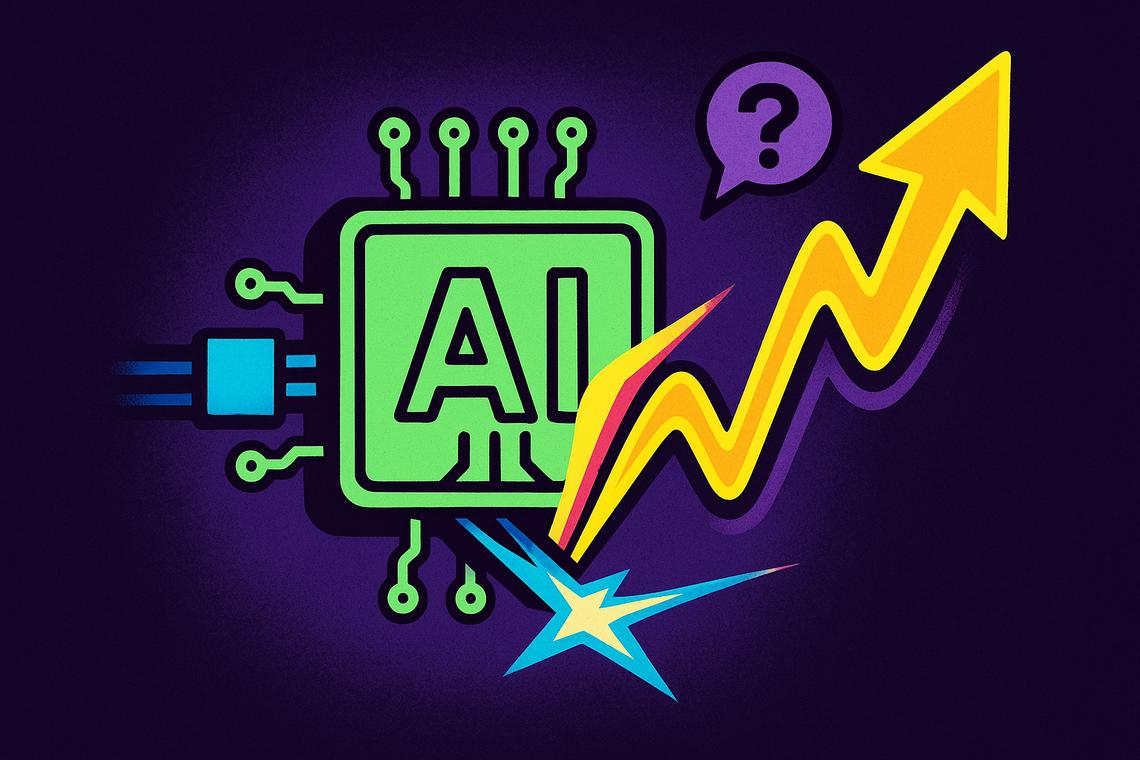
South Korea’s chipmakers staged one of their most dramatic single-session reversals of the year on Friday, July 4, 2026, as Samsung Electronics shares surged 8.22% after losing 9.1% the day before — and the catalyst wasn’t just bargain hunting. Reports that AI startup Anthropic is in active discussions with Samsung about developing a custom AI hardware chip lit a fire under investor sentiment at exactly the right moment, turning a technical bounce into something that looked a lot more like a fundamental re-rating.
Key takeaways
- Samsung Electronics gained 8.22% on July 4, 2026, reversing a 9.1% drop from the prior session.
- SK Hynix surged 10.88%, recovering from a devastating 14.6% plunge on July 3.
- South Korea’s KOSPI rebounded 5.76% to close at 8,088.34 after hitting an intraday low of 7,300.
- Reports of Anthropic exploring a custom AI chip collaboration with Samsung added a fundamental driver on top of technical short-covering.
- The KOSPI is up approximately 92% year-to-date in 2026, far outpacing the S&P 500’s 9.3% gain over the same period.
Samsung Electronics and SK Hynix Stocks Surge on AI Hardware Rumors
The numbers tell the story plainly. SK Hynix surged 10.88% on Friday, clawing back from its own 14.6% freefall the session before. Together, Samsung and SK Hynix are the two dominant weights inside the KOSPI — when they move, the index moves with them. Their combined rebound was the engine behind the broader market’s recovery.
Sharp Rebound After Major Declines
Thursday, July 3 had been ugly. The KOSPI fell 7.89%, one of the sharpest single-day drops of 2026, with circuit breaker halts triggered at multiple points during the session. Friday opened under continued pressure — the benchmark touched an intraday low of 7,300 — before executing a textbook V-shaped reversal and closing at 8,088.34, up 5.76%.
Part of Thursday’s damage was mechanical. South Korea’s financial oversight authorities publicly acknowledged that heavily leveraged single-stock exchange-traded funds were generating forced liquidation pressure, amplifying what might have been a more contained selloff into something more severe. Friday’s recovery reflected the mirror image of that dynamic: once selling exhausted itself, technical short-covering, value-oriented buying, and momentum capital all converged simultaneously.
Impact of Rumored Partnership with Anthropic
What separated Friday’s rebound from a simple dead-cat bounce was the Anthropic angle. The Information first reported that Anthropic is in discussions with Samsung about collaborating on a custom AI chip — a development that, if it materializes, would represent a significant expansion of Samsung’s role in the AI hardware supply chain.
Anthropic, when approached for comment, told TechCrunch that its compute strategy would continue to rely on a diversified hardware stack including chips from Google, Amazon, and Nvidia. On the specific Samsung partnership question, the company said it had nothing further to add. That non-denial was enough to keep investor interest alive.
The context matters here. Back in April, Anthropic had already been exploring the idea of producing its own AI chips as a hedge against chip shortages and Nvidia dependency. OpenAI, its most direct competitor, had just unveiled a custom inference processor called “Jalapeño” built with Broadcom. The strategic logic for Anthropic to secure its own hardware supply — and for Samsung to deepen its AI partnerships beyond Nvidia — is straightforward. Samsung already co-manufactures chips Nvidia needs for AI training and inference, and the two companies are jointly building an AI chip factory in South Korea. An Anthropic tie-up would diversify Samsung’s AI hardware relationships further, adding a major AI lab directly to its customer base.
KOSPI Market Recovery Amid Volatility and ETF Liquidation Pressure
The KOSPI’s wild two-day swing — down nearly 8% Thursday, up nearly 6% Friday — captures a market caught between two powerful forces: a structural AI-driven bull thesis and fragile market microstructure. The leveraged single-stock ETF problem is not new to South Korea, but Thursday’s session put it back in the spotlight.
Market-wide Selloff and V-shaped Rebound
When highly leveraged ETFs tracking individual stocks like Samsung or SK Hynix face margin calls or redemptions, they create cascading sell orders that are largely price-insensitive — they have to sell regardless of valuation. That kind of mechanical pressure can overshoot fundamentals severely, which is precisely what creates the conditions for sharp reversals like Friday’s.
Friday’s recovery wasn’t driven by a single type of buyer. It was a convergence: short sellers covering positions opened during Thursday’s panic, longer-term investors treating the dip as a value entry, and momentum traders re-entering as the index reversed off its intraday lows. All three groups reinforced each other, compressing the reversal into a single session.
Financial Oversight Concerns on ETF Liquidations
South Korea’s financial authorities publicly flagging the ETF liquidation problem is significant. It signals regulatory awareness of a structural vulnerability in the market, and potentially foreshadows tighter controls on leverage in single-stock ETF products. How that plays out over the coming weeks could influence volatility patterns for Korea’s chipmakers well beyond any single trading session.
AI Memory Semiconductor Theme Driving Market Performance in 2026
Step back from the two-day volatility, and the bigger picture is striking. The KOSPI is up approximately 92% year-to-date in 2026 — a performance that eclipses every other major global equity benchmark. The S&P 500, by comparison, has gained just 9.3% over the same period. That gap doesn’t happen without a specific, powerful narrative driving capital flows, and in 2026, that narrative is AI memory semiconductors.
KOSPI’s Leading Performance Globally
The logic is direct: AI model training and inference are extraordinarily memory-intensive. As AI workloads scale, demand for high-bandwidth memory — dominated globally by Samsung and SK Hynix — scales with them. The KOSPI, heavily weighted toward these two names, has effectively become a leveraged proxy for AI infrastructure buildout. That’s an unusual structural position for a national equity index to occupy.
Samsung shares, despite Friday’s jump, still trade meaningfully below their 52-week peak of 374,500 won. That gap between current price and recent highs represents either residual risk or potential upside depending on how the AI memory narrative develops — and, now, whether the Samsung AI hardware rumors around an Anthropic collaboration produce something concrete.
Memory Semiconductor Rally’s International Context
The AI memory trade isn’t contained within Seoul. U.S. memory chipmaker Micron ended Thursday’s holiday-shortened session down 5.5% at $975.56, swept up in a broader Nasdaq pullback of 0.8%. But Micron still carries a 166.4% year-to-date gain in 2026 — a figure that underscores just how powerful the AI memory supercycle has been for chipmakers globally. South Korea’s robust Friday recovery was widely read as an encouraging signal for what Micron might do when American markets reopen Monday after the Independence Day holiday.
What the Anthropic-Samsung reports introduce — even at the discussion stage — is a new layer to the AI hardware investment story. Custom chips built for specific AI labs represent a shift from commodity memory supply toward more strategic, application-specific relationships. If those conversations convert into actual contracts, Samsung’s positioning in the AI supply chain deepens considerably. That possibility, more than any short-covering, is what gave Friday’s bounce its staying power in investor minds.
FAQ
What caused Samsung Electronics and SK Hynix stocks to surge recently?
Reports that Anthropic is in discussions with Samsung about developing a custom AI chip sparked renewed investor optimism, adding a fundamental driver on top of technical short-covering and value buying following sharp losses the prior session.
How did South Korea’s KOSPI market perform amid recent volatility?
The KOSPI fell 7.89% on July 3, 2026, triggering circuit breaker halts, before sharply reversing on July 4 to close 5.76% higher at 8,088.34 — driven largely by the recovery in Samsung Electronics and SK Hynix shares.
What role does the AI memory semiconductor theme play in the KOSPI’s 2026 performance?
The AI memory semiconductor theme has been the primary driver behind the KOSPI’s approximately 92% year-to-date gain in 2026, making it the best-performing major global equity benchmark over that period, far ahead of the S&P 500’s 9.3% advance.
What are some factors behind the recent market turbulence in South Korea?
Forced liquidation pressure from heavily leveraged single-stock ETFs amplified Thursday’s selloff, intensifying price swings beyond what fundamentals alone would suggest. South Korea’s financial oversight authorities acknowledged the issue publicly, raising the prospect of future regulatory action on leveraged ETF products.
&
Article produced with the assistance of artificial intelligence and reviewed by the editorial team.


You May Also Like
Here’s why LAB price plunged over 60% in a week

SEC Names Kathleen Hutchinson To Lead International Affairs Office


