

Foreign investments rebound but recovery uneven, says UN
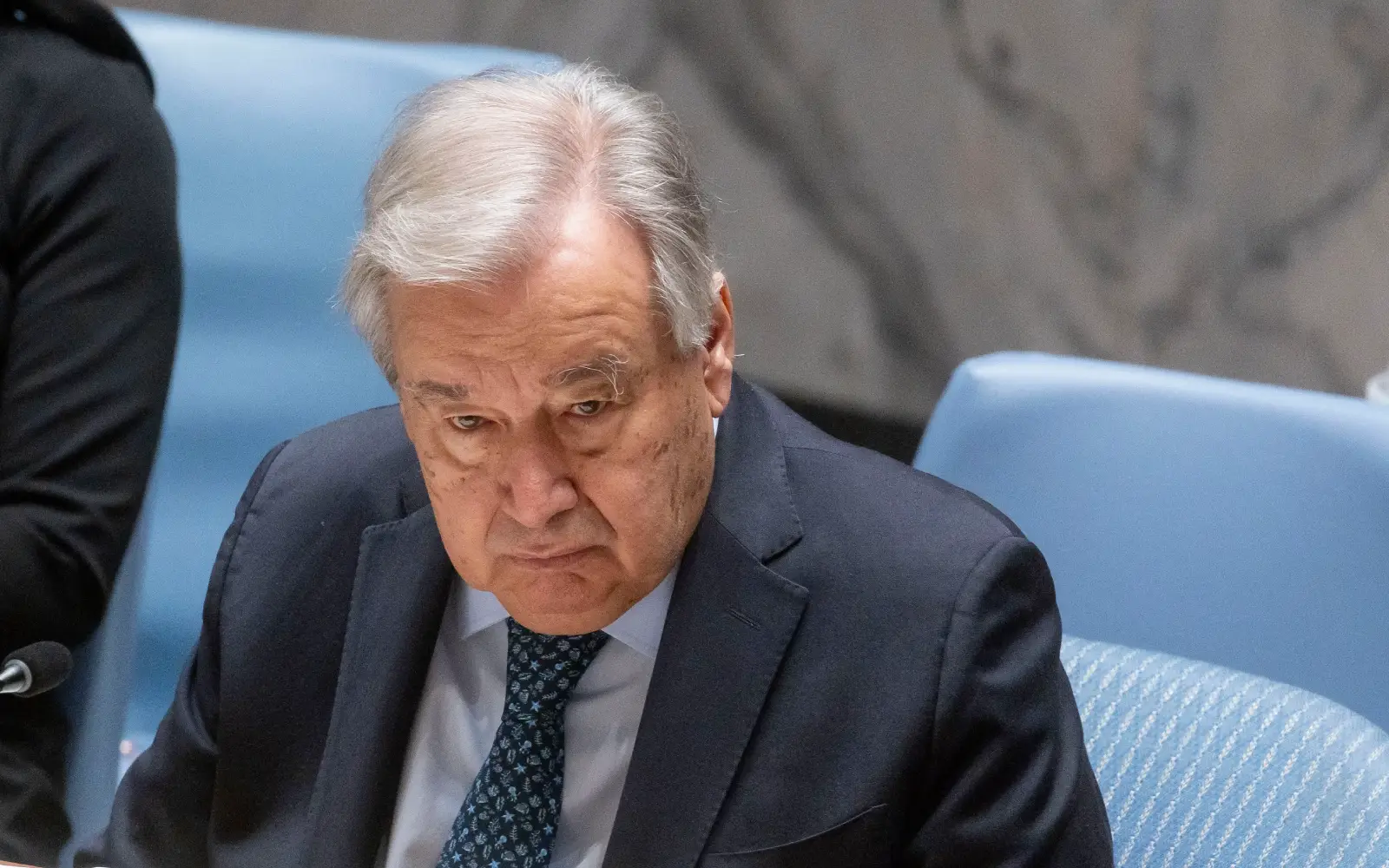 UN chief Antonio Guterres said the investment expansion was driven largely by a small number of megaprojects, particularly AI-related infrastructure. (EPA Images pic)
GENEVA: Worldwide foreign direct investment rose in 2025 after two years of decline, the UN said Tuesday, warning though that the recovery was “narrow, fragile and uneven”.
Foreign direct investment (FDI) swelled by 6% last year to US$1.6 trillion, according to the UN Trade and Development agency UNCTAD.
But its World Investment Report 2026 stressed that the hike was lopsided, with 20 countries attracting more than 80% of global FDI last year.
And investment growth was concentrated in a few sectors, while in most sectors, new project activity was “subdued”, with heightened investor uncertainty, geopolitical tensions and trade policy volatility, as well as the rising cost of capital and growing technological competition.
The FDI growth seen in 2025 “masks underlying fragility and disparities across countries, regions and sectors”, UN chief Antonio Guterres warned in the preface to the report.
Describing “seismic shifts in the global investment landscape”, he pointed out that the investment expansion was “driven largely by a small number of megaprojects, particularly infrastructure related to artificial intelligence”.
UNCTAD’s report found that growth in project values was driven mainly by data centres, followed by oil and gas and semiconductors.
“Most other sectors registered declines, including renewable energy, infrastructure and manufacturing, showing how narrow the recovery remains,” the agency said.
Uneven distribution
The report also determined that wealthy countries accounted for most of the FDI increase seen last year.
While developed countries saw their inflows rise 11% in 2025, developing economies only registered a 2% hike, pocketing $901 billion of the total, it found.
And although developing nations still accounted for more than half of global FDI, UNCTAD highlighted the uneven distribution across regions.
Developing Asian countries remained the largest recipient region, attracting US$644 billion, the report showed.
Latin America and the Caribbean rose 14% to US$188 billion while Africa received around US$70 billion.
The world’s poorest and least developed countries, meanwhile, saw inflows rise 21% to US$43 billion last year, the report said.
Despite the significant increase, it highlighted that the amount only accounted for 2.7% of global FDI, and that nearly all of it was concentrated in a small number of mostly resource-rich economies.
Monitoring by UNCTAD also revealed that governments were becoming increasingly active in trying to shape investment flows, with a record 229 investment policy measures implemented last year.
“While most remained favourable to investors, many were designed to attract investment into strategic industries, strengthen domestic economic priorities or respond to economic security concerns,” the agency said.
Tuesday’s report said that the new investment landscape could bring opportunities for developing countries but also significant risks.
“Many countries risk being left behind as investment becomes more capital-intensive, technology-intensive and shaped by policy support that many developing economies cannot easily match,” UNCTAD said.


You May Also Like

DataZapp: Smarter Marketing Data Strategies for Insurance Agencies Looking to Reduce Acquisition Costs

Saudi Arabia considers expansion of Red Sea oil pipeline

Pico and ITRS Partner to Bring Network-Derived Observability to Indian Financial Markets



