Every blockchain claims to scale. Most don’t. They add speed by sacrificing decentralization, or they maintain decentralization by accepting congestion. Ethereum’s gas spikes and Solana’s downtime made one truth clear: scalability is the hardest problem in blockchain engineering.The Zero Knowledge Proof (ZKP) project offers a different path. Instead of adding more layers or validators, it uses advanced cryptography to reduce computation itself. It verifies mathematical proofs of correctness rather than executing every transaction on-chain.  That shift—verifying proofs instead of replaying work—is what makes this project the Best Blockchain Presale to watch in 2025. Scaling by Subtraction, Not Addition ZKPs turn computation into compression. In a traditional blockchain, every node runs every transaction, re-executing all logic to maintain consensus. That’s secure but massively inefficient. In a ZKP-based system, the heavy computation happens off-chain. The result is packaged into a cryptographic proof—a tiny mathematical statement that can be verified quickly by all participants. One proof can confirm thousands of transactions. This architecture reduces network load by 90 %+ while keeping full security. Instead of compromising decentralization to scale, it scales without compromise. The Engineering Behind the Breakthrough The whitepaper explains how zk-SNARKs and zk-STARKs achieve this: zk-SNARKs (Succinct Non-Interactive Arguments of Knowledge) generate small, fast proofs ideal for consumer-grade devices. zk-STARKs (Scalable Transparent Arguments of Knowledge) remove the need for a trusted setup, using hash-based cryptography for transparency and post-quantum safety. Together they create an engineering stack that: Compresses complex smart-contract execution into verifiable proofs. Cuts block verification time from minutes to seconds. Maintains decentralization by allowing light nodes to verify full network activity. For developers, it means faster block confirmation. For investors, it means a blockchain capable of real-world throughput—tens of thousands of transactions per second, not hundreds. Why Reducing Computation Is the Real Fix Most scaling solutions—sharding, sidechains, new consensus models—add complexity. Each layer introduces new failure points and centralization risks. ZKPs take the opposite route: simplify the load by making validation lighter. By proving correctness once and letting everyone verify instantly, ZKP networks stay lean, secure, and globally scalable. It’s engineering elegance: less redundancy, more performance. That’s why major ecosystems are racing to adopt it. Ethereum rollups like zkSync and StarkNet use ZKP compression. Polygon built zkEVMs to integrate proofs directly into its sidechains. But none of these offer retail investors early-stage entry. That’s where this presale stands out. The Infrastructure Play Investors Can’t Ignore When you invest in scalability infrastructure, you’re not betting on a single use case—you’re backing the foundation every other project needs. Bitcoin’s early backers profited from solving money. Ethereum’s from programmability. The next wave will reward those who solve scalability. This presale gives investors access to a ZKP-powered blockchain before public launch. That early position is what defines the Best Blockchain Presales: low entry, high-value infrastructure, and alignment with long-term trends. It’s not a meme coin. It’s the code layer that could support the next generation of DeFi, gaming, and enterprise-grade dApps. Why Whitelist Timing Matters With the whitelist opening soon, early participants gain: Guaranteed allocation at presale pricing. Exposure to a foundational technology trend before exchanges list it. Strategic timing as demand for scalable, low-fee infrastructure surges. Presales like this often reward early conviction. Ethereum’s ICO investors saw 1,000× returns when scalability became the narrative. This project is entering that same narrative space—with stronger fundamentals and proven mathematics on its side. The Decentralization Test True scalability must preserve the ethos of crypto: no central control, no single point of failure. ZKP achieves that by letting even lightweight validators—phones, laptops—verify full-network activity. That means anyone can run a node without needing supercomputers or massive energy costs. In practical terms, that’s real decentralization, not just a slogan. It keeps the network open, reduces attack vectors, and ensures long-term resilience. This focus on performance without compromise is why engineers, not just traders, are excited about ZKP. It’s not reinventing blockchain—it’s making it efficient enough to finally compete with traditional systems. The 2025 Scalability Cycle Markets move in themes. 2021 was DeFi. 2022 was NFTs. 2023–24 belonged to Layer 2s. The next phase—2025—is about scalable cryptographic infrastructure. Every serious project will need ZKP-based proofs for faster transactions, lower fees, and privacy layers. Investors who position early in infrastructure tokens will capture exponential network value as adoption spreads. That’s why analysts and insiders are flagging this launch among the Best Blockchain Presales of 2025. It’s not hype—it’s physics. The math works, the problem is real, and the market is ready. Scaling the Right Way Scalability doesn’t have to mean centralization. With ZKP technology, blockchains can stay secure, decentralized, and fast—no trade-offs required. The upcoming whitelist for Zero Knowledge Proof marks the next evolution of blockchain engineering: reducing computation instead of decentralization. For investors looking beyond short-term trends, this presale is the entry point into infrastructure that will underpin the next decade of Web3.Efficiency is the new frontier. Proof is the new trust. And ZKP is leading the way—making this one of the Best Blockchain Presales to watch as the scalability era begins. This article is not intended as financial advice. Educational purposes only. Every blockchain claims to scale. Most don’t. They add speed by sacrificing decentralization, or they maintain decentralization by accepting congestion. Ethereum’s gas spikes and Solana’s downtime made one truth clear: scalability is the hardest problem in blockchain engineering.The Zero Knowledge Proof (ZKP) project offers a different path. Instead of adding more layers or validators, it uses advanced cryptography to reduce computation itself. It verifies mathematical proofs of correctness rather than executing every transaction on-chain.  That shift—verifying proofs instead of replaying work—is what makes this project the Best Blockchain Presale to watch in 2025. Scaling by Subtraction, Not Addition ZKPs turn computation into compression. In a traditional blockchain, every node runs every transaction, re-executing all logic to maintain consensus. That’s secure but massively inefficient. In a ZKP-based system, the heavy computation happens off-chain. The result is packaged into a cryptographic proof—a tiny mathematical statement that can be verified quickly by all participants. One proof can confirm thousands of transactions. This architecture reduces network load by 90 %+ while keeping full security. Instead of compromising decentralization to scale, it scales without compromise. The Engineering Behind the Breakthrough The whitepaper explains how zk-SNARKs and zk-STARKs achieve this: zk-SNARKs (Succinct Non-Interactive Arguments of Knowledge) generate small, fast proofs ideal for consumer-grade devices. zk-STARKs (Scalable Transparent Arguments of Knowledge) remove the need for a trusted setup, using hash-based cryptography for transparency and post-quantum safety. Together they create an engineering stack that: Compresses complex smart-contract execution into verifiable proofs. Cuts block verification time from minutes to seconds. Maintains decentralization by allowing light nodes to verify full network activity. For developers, it means faster block confirmation. For investors, it means a blockchain capable of real-world throughput—tens of thousands of transactions per second, not hundreds. Why Reducing Computation Is the Real Fix Most scaling solutions—sharding, sidechains, new consensus models—add complexity. Each layer introduces new failure points and centralization risks. ZKPs take the opposite route: simplify the load by making validation lighter. By proving correctness once and letting everyone verify instantly, ZKP networks stay lean, secure, and globally scalable. It’s engineering elegance: less redundancy, more performance. That’s why major ecosystems are racing to adopt it. Ethereum rollups like zkSync and StarkNet use ZKP compression. Polygon built zkEVMs to integrate proofs directly into its sidechains. But none of these offer retail investors early-stage entry. That’s where this presale stands out. The Infrastructure Play Investors Can’t Ignore When you invest in scalability infrastructure, you’re not betting on a single use case—you’re backing the foundation every other project needs. Bitcoin’s early backers profited from solving money. Ethereum’s from programmability. The next wave will reward those who solve scalability. This presale gives investors access to a ZKP-powered blockchain before public launch. That early position is what defines the Best Blockchain Presales: low entry, high-value infrastructure, and alignment with long-term trends. It’s not a meme coin. It’s the code layer that could support the next generation of DeFi, gaming, and enterprise-grade dApps. Why Whitelist Timing Matters With the whitelist opening soon, early participants gain: Guaranteed allocation at presale pricing. Exposure to a foundational technology trend before exchanges list it. Strategic timing as demand for scalable, low-fee infrastructure surges. Presales like this often reward early conviction. Ethereum’s ICO investors saw 1,000× returns when scalability became the narrative. This project is entering that same narrative space—with stronger fundamentals and proven mathematics on its side. The Decentralization Test True scalability must preserve the ethos of crypto: no central control, no single point of failure. ZKP achieves that by letting even lightweight validators—phones, laptops—verify full-network activity. That means anyone can run a node without needing supercomputers or massive energy costs. In practical terms, that’s real decentralization, not just a slogan. It keeps the network open, reduces attack vectors, and ensures long-term resilience. This focus on performance without compromise is why engineers, not just traders, are excited about ZKP. It’s not reinventing blockchain—it’s making it efficient enough to finally compete with traditional systems. The 2025 Scalability Cycle Markets move in themes. 2021 was DeFi. 2022 was NFTs. 2023–24 belonged to Layer 2s. The next phase—2025—is about scalable cryptographic infrastructure. Every serious project will need ZKP-based proofs for faster transactions, lower fees, and privacy layers. Investors who position early in infrastructure tokens will capture exponential network value as adoption spreads. That’s why analysts and insiders are flagging this launch among the Best Blockchain Presales of 2025. It’s not hype—it’s physics. The math works, the problem is real, and the market is ready. Scaling the Right Way Scalability doesn’t have to mean centralization. With ZKP technology, blockchains can stay secure, decentralized, and fast—no trade-offs required. The upcoming whitelist for Zero Knowledge Proof marks the next evolution of blockchain engineering: reducing computation instead of decentralization. For investors looking beyond short-term trends, this presale is the entry point into infrastructure that will underpin the next decade of Web3.Efficiency is the new frontier. Proof is the new trust. And ZKP is leading the way—making this one of the Best Blockchain Presales to watch as the scalability era begins. This article is not intended as financial advice. Educational purposes only.

Zero Knowledge Proof Whitelist Coming Soon: Scaling Without Compromise

5 min read
ZKP

Every blockchain claims to scale. Most don’t. They add speed by sacrificing decentralization, or they maintain decentralization by accepting congestion. Ethereum’s gas spikes and Solana’s downtime made one truth clear: scalability is the hardest problem in blockchain engineering.The Zero Knowledge Proof (ZKP) project offers a different path. Instead of adding more layers or validators, it uses advanced cryptography to reduce computation itself. It verifies mathematical proofs of correctness rather than executing every transaction on-chain.

 That shift—verifying proofs instead of replaying work—is what makes this project the Best Blockchain Presale to watch in 2025.

Scaling by Subtraction, Not Addition

ZKPs turn computation into compression. In a traditional blockchain, every node runs every transaction, re-executing all logic to maintain consensus. That’s secure but massively inefficient.

In a ZKP-based system, the heavy computation happens off-chain. The result is packaged into a cryptographic proof—a tiny mathematical statement that can be verified quickly by all participants. One proof can confirm thousands of transactions.

This architecture reduces network load by 90 %+ while keeping full security. Instead of compromising decentralization to scale, it scales without compromise.

The Engineering Behind the Breakthrough

The whitepaper explains how zk-SNARKs and zk-STARKs achieve this:

  • zk-SNARKs (Succinct Non-Interactive Arguments of Knowledge) generate small, fast proofs ideal for consumer-grade devices.
  • zk-STARKs (Scalable Transparent Arguments of Knowledge) remove the need for a trusted setup, using hash-based cryptography for transparency and post-quantum safety.

Together they create an engineering stack that:

  • Compresses complex smart-contract execution into verifiable proofs.
  • Cuts block verification time from minutes to seconds.
  • Maintains decentralization by allowing light nodes to verify full network activity.

For developers, it means faster block confirmation. For investors, it means a blockchain capable of real-world throughput—tens of thousands of transactions per second, not hundreds.

Why Reducing Computation Is the Real Fix

Most scaling solutions—sharding, sidechains, new consensus models—add complexity. Each layer introduces new failure points and centralization risks. ZKPs take the opposite route: simplify the load by making validation lighter.

By proving correctness once and letting everyone verify instantly, ZKP networks stay lean, secure, and globally scalable. It’s engineering elegance: less redundancy, more performance.

BTC31531

That’s why major ecosystems are racing to adopt it. Ethereum rollups like zkSync and StarkNet use ZKP compression. Polygon built zkEVMs to integrate proofs directly into its sidechains. But none of these offer retail investors early-stage entry. That’s where this presale stands out.

The Infrastructure Play Investors Can’t Ignore

When you invest in scalability infrastructure, you’re not betting on a single use case—you’re backing the foundation every other project needs. Bitcoin’s early backers profited from solving money. Ethereum’s from programmability. The next wave will reward those who solve scalability.

This presale gives investors access to a ZKP-powered blockchain before public launch. That early position is what defines the Best Blockchain Presales: low entry, high-value infrastructure, and alignment with long-term trends.

It’s not a meme coin. It’s the code layer that could support the next generation of DeFi, gaming, and enterprise-grade dApps.

Why Whitelist Timing Matters

With the whitelist opening soon, early participants gain:

  • Guaranteed allocation at presale pricing.
  • Exposure to a foundational technology trend before exchanges list it.
  • Strategic timing as demand for scalable, low-fee infrastructure surges.

Presales like this often reward early conviction. Ethereum’s ICO investors saw 1,000× returns when scalability became the narrative. This project is entering that same narrative space—with stronger fundamentals and proven mathematics on its side.

The Decentralization Test

True scalability must preserve the ethos of crypto: no central control, no single point of failure. ZKP achieves that by letting even lightweight validators—phones, laptops—verify full-network activity. That means anyone can run a node without needing supercomputers or massive energy costs.

In practical terms, that’s real decentralization, not just a slogan. It keeps the network open, reduces attack vectors, and ensures long-term resilience.

This focus on performance without compromise is why engineers, not just traders, are excited about ZKP. It’s not reinventing blockchain—it’s making it efficient enough to finally compete with traditional systems.

The 2025 Scalability Cycle

Markets move in themes. 2021 was DeFi. 2022 was NFTs. 2023–24 belonged to Layer 2s. The next phase—2025—is about scalable cryptographic infrastructure.

Every serious project will need ZKP-based proofs for faster transactions, lower fees, and privacy layers. Investors who position early in infrastructure tokens will capture exponential network value as adoption spreads.

ZKP

That’s why analysts and insiders are flagging this launch among the Best Blockchain Presales of 2025. It’s not hype—it’s physics. The math works, the problem is real, and the market is ready.

Scaling the Right Way

Scalability doesn’t have to mean centralization. With ZKP technology, blockchains can stay secure, decentralized, and fast—no trade-offs required.

The upcoming whitelist for Zero Knowledge Proof marks the next evolution of blockchain engineering: reducing computation instead of decentralization. For investors looking beyond short-term trends, this presale is the entry point into infrastructure that will underpin the next decade of Web3.Efficiency is the new frontier. Proof is the new trust. And ZKP is leading the way—making this one of the Best Blockchain Presales to watch as the scalability era begins.

This article is not intended as financial advice. Educational purposes only.

Market Opportunity
SOON Logo
SOON Price(SOON)
$0.1557
$0.1557$0.1557
-5.40%
USD
SOON (SOON) Live Price Chart
Disclaimer: The articles reposted on this site are sourced from public platforms and are provided for informational purposes only. They do not necessarily reflect the views of MEXC. All rights remain with the original authors. If you believe any content infringes on third-party rights, please contact [email protected] for removal. MEXC makes no guarantees regarding the accuracy, completeness, or timeliness of the content and is not responsible for any actions taken based on the information provided. The content does not constitute financial, legal, or other professional advice, nor should it be considered a recommendation or endorsement by MEXC.

You May Also Like

Once Upon a Farm Announces Pricing of Initial Public Offering
Once Upon a Farm Announces Pricing of Initial Public Offering

BERKELEY, Calif.–(BUSINESS WIRE)–Once Upon a Farm today announced the pricing of its initial public offering of 10,997,209 shares of its common stock, 7,631,537
Share
AI Journal2026/02/06 08:15
Forward Industries Bets Big on Solana With $4B Capital Plan
Forward Industries Bets Big on Solana With $4B Capital Plan

The firm has filed with the U.S. Securities and Exchange Commission to launch a $4 billion at-the-market (ATM) equity program, […] The post Forward Industries Bets Big on Solana With $4B Capital Plan appeared first on Coindoo.
Share
Coindoo2025/09/18 04:15
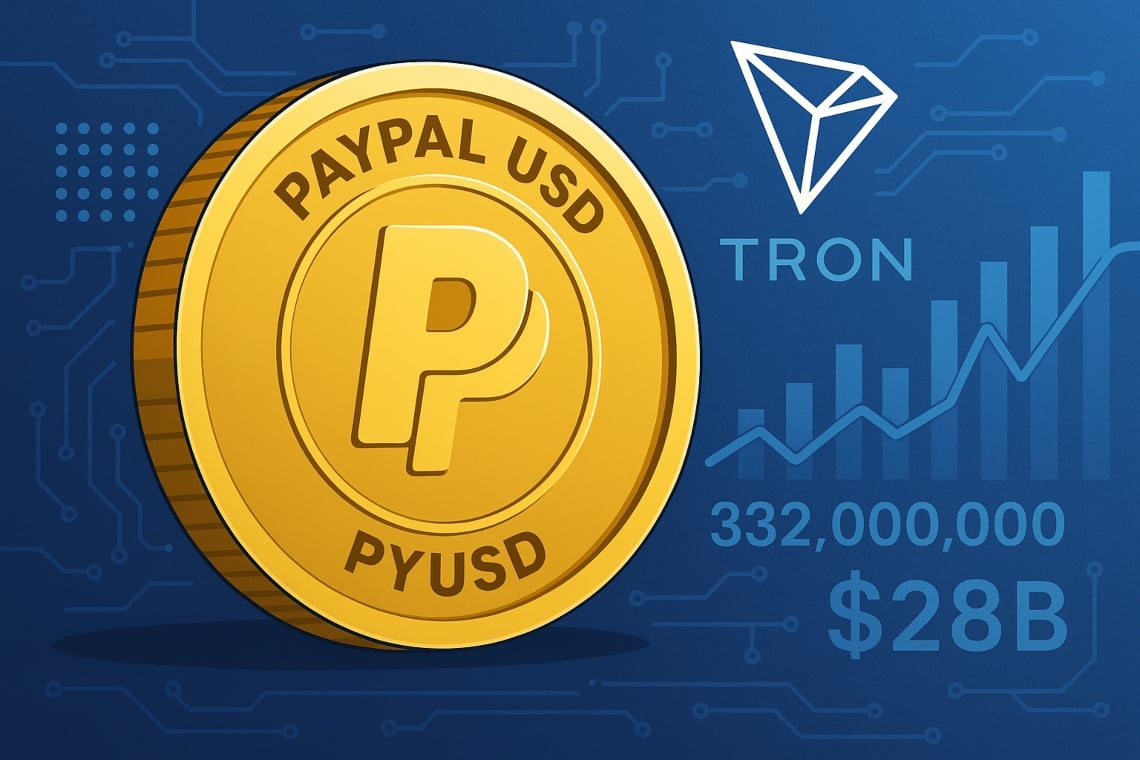
332M accounts and $28B TVL,

332M accounts and $28B TVL,

The post 332M accounts and $28B TVL, appeared on BitcoinEthereumNews.com. PayPal USD debuts on TRON as a permissionless token PYUSD0, enabled by LayerZero’s OFT standard and the Stargate Hydra extension. The announcement on September 18, 2025 (Geneva) introduces native interoperability between chains and transfers without manual steps for users; the news echoes elements already communicated by PayPal at the launch of PYUSD PayPal Newsroom. The move concerns an ecosystem that includes 332 million accounts and over $28 billion in TVL. In this context, the fungibility of a stablecoin regulated across multiple networks and the use of TRON as a settlement layer for payments and remittances is at stake. According to the data collected by TRONSCAN updated as of September 18, 2025, the network metrics confirm the cited volumes and highlighted traffic patterns. Our editorial team has verified the transaction logs and monitored the public chain metrics to corroborate the reported figures; the observations on daily flows and TVL are consistent with the network dashboards. Industry analysts observe that the entry of a regulated issuer like PayPal tends to increase institutional interest, provided there is transparency on reserves and compliance checks. What is PYUSD0 on TRON and why is it relevant PYUSD0 is the representation of PayPal USD on TRON. It is pegged one-to-one to PYUSD through the OFT standard: the two tokens remain a single stablecoin, fungible and reconciled across chains. The integration is made possible by Stargate Hydra, now operational through LayerZero. According to the founder of TRON, Justin Sun, the extension on TRON expands access and trust for users and institutions. For Bryan Pellegrino (CEO of LayerZero Labs), stablecoins represent a pillar of global payments and remittances, as the native compatibility between chains enables their operational scalability. It must be said that the alignment between issuer, cross-chain infrastructure, and settlement network is a key element. Key Numbers: TRON…
Share
BitcoinEthereumNews2025/09/19 08:18