Cybersecurity researchers at Carnegie Mellon University have identified a new Android vulnerability that could allow hackers to steal sensitive on-screen data, including crypto wallet seed phrases and two-factor authentication (2FA) codes, without special permissions. The attack, named Pixnapping, targets devices from Google and Samsung and uses a previously known GPU side-channel technique called GPU.zip. The attack begins when a user installs a malicious app, which then silently invokes another application, such as a crypto wallet or authentication app, from which it intends to extract data.Source: Pixnapping research paper It manipulates graphical operations on specific pixels where sensitive information is typically displayed, reconstructing those pixels one by one through side-channel timing analysis. Researchers compared this process to taking unauthorized screenshots of data visible on the screen. Pixnapping uses Android’s window blur API and VSync callbacks to force sensitive pixels into the rendering pipeline, layering semi-transparent activities to measure how long certain frames take to render. These timing patterns reveal the color value of each pixel, which can then be reconstructed to expose sensitive data. Pixnapping Exploit Targets Screen Pixels to Bypass Android App Isolation The attack has been successfully demonstrated on the Google Pixel 6 through Pixel 9 devices, as well as the Samsung Galaxy S25, running Android versions 13 through 16. Tests showed that the researchers were able to recover 2FA codes from Google Authenticator with success rates between 29% and 73%, depending on the device model. On average, the attack retrieved a full six-digit code in under 30 seconds, fast enough to exploit the brief validity period of most 2FA codes. The team noted that while recovering long recovery phrases would take more time, crypto seed phrases remain highly vulnerable if left visible while being written down. Since these phrases stay on the screen longer than time-sensitive codes, attackers could potentially reconstruct them pixel by pixel if users are not cautious. The vulnerability, tracked as CVE-2025-48561, was reported to Google in February 2025. A partial patch was issued with September’s Android security update, but the researchers said they found a workaround that allows the attack to continue functioning. Google has since acknowledged the issue as high severity and confirmed that a second fix is being developed, expected in December. In their tests, the researchers were able to extract sensitive data not only from crypto wallets and Google Authenticator but also from applications like Gmail, Signal, Venmo, and Google Maps. Because the exploit targets visible screen content rather than stored files or permissions, even strict app isolation measures fail to block it. According to the researchers, Google initially attempted to mitigate the flaw by limiting how many activities an app can blur simultaneously, but this proved insufficient. They have also alerted Samsung that the patch does not protect its devices. Security experts advise crypto users to avoid displaying recovery phrases or 2FA codes on internet-connected devices. Instead, they recommend using hardware wallets, which store private keys and recovery phrases offline, preventing exposure through screen-based attacks like Pixnapping. Crypto Investors Face Rising Android Malware Threats A surge in Android-based crypto malware has intensified global cybersecurity concerns, with several major incidents surfacing over recent months. In April, researchers uncovered “Crocodilus,” a remote-access trojan targeting crypto wallet users in Turkey and Spain. Exposed by ThreatFabric, the malware disguises itself as legitimate crypto apps, tricking victims into revealing their seed phrases through fake security alerts. Once installed, it abuses Android’s Accessibility Services to steal passwords, intercept two-factor codes, and capture wallet credentials, all while masking activity behind a black-screen overlay. Security experts say Crocodilus spreads through multiple channels, including phishing emails, compromised websites, and malicious ads, making it difficult to trace the original dropper. The discovery follows reports of broader malware campaigns tied to fake AI, gaming, and Web3 startups. According to cybersecurity firm Darktrace, attackers have built convincing online presences, complete with fake company websites, social profiles, and GitHub repositories, to lure users into downloading infected software. The campaigns use malware families such as Realst and Atomic Stealer, capable of exfiltrating wallet data on both Windows and macOS. Analysts warn that these scams represent a growing sophistication in crypto-focused attacks, combining social engineering with advanced obfuscation and persistent execution methods. Cybersecurity experts advise users to verify project legitimacy, avoid downloading software from unverified sources, and remain cautious of unsolicited offers or airdrops, especially those linked to new “startups” or crypto platforms promising exclusive access or rewardsCybersecurity researchers at Carnegie Mellon University have identified a new Android vulnerability that could allow hackers to steal sensitive on-screen data, including crypto wallet seed phrases and two-factor authentication (2FA) codes, without special permissions. The attack, named Pixnapping, targets devices from Google and Samsung and uses a previously known GPU side-channel technique called GPU.zip. The attack begins when a user installs a malicious app, which then silently invokes another application, such as a crypto wallet or authentication app, from which it intends to extract data.Source: Pixnapping research paper It manipulates graphical operations on specific pixels where sensitive information is typically displayed, reconstructing those pixels one by one through side-channel timing analysis. Researchers compared this process to taking unauthorized screenshots of data visible on the screen. Pixnapping uses Android’s window blur API and VSync callbacks to force sensitive pixels into the rendering pipeline, layering semi-transparent activities to measure how long certain frames take to render. These timing patterns reveal the color value of each pixel, which can then be reconstructed to expose sensitive data. Pixnapping Exploit Targets Screen Pixels to Bypass Android App Isolation The attack has been successfully demonstrated on the Google Pixel 6 through Pixel 9 devices, as well as the Samsung Galaxy S25, running Android versions 13 through 16. Tests showed that the researchers were able to recover 2FA codes from Google Authenticator with success rates between 29% and 73%, depending on the device model. On average, the attack retrieved a full six-digit code in under 30 seconds, fast enough to exploit the brief validity period of most 2FA codes. The team noted that while recovering long recovery phrases would take more time, crypto seed phrases remain highly vulnerable if left visible while being written down. Since these phrases stay on the screen longer than time-sensitive codes, attackers could potentially reconstruct them pixel by pixel if users are not cautious. The vulnerability, tracked as CVE-2025-48561, was reported to Google in February 2025. A partial patch was issued with September’s Android security update, but the researchers said they found a workaround that allows the attack to continue functioning. Google has since acknowledged the issue as high severity and confirmed that a second fix is being developed, expected in December. In their tests, the researchers were able to extract sensitive data not only from crypto wallets and Google Authenticator but also from applications like Gmail, Signal, Venmo, and Google Maps. Because the exploit targets visible screen content rather than stored files or permissions, even strict app isolation measures fail to block it. According to the researchers, Google initially attempted to mitigate the flaw by limiting how many activities an app can blur simultaneously, but this proved insufficient. They have also alerted Samsung that the patch does not protect its devices. Security experts advise crypto users to avoid displaying recovery phrases or 2FA codes on internet-connected devices. Instead, they recommend using hardware wallets, which store private keys and recovery phrases offline, preventing exposure through screen-based attacks like Pixnapping. Crypto Investors Face Rising Android Malware Threats A surge in Android-based crypto malware has intensified global cybersecurity concerns, with several major incidents surfacing over recent months. In April, researchers uncovered “Crocodilus,” a remote-access trojan targeting crypto wallet users in Turkey and Spain. Exposed by ThreatFabric, the malware disguises itself as legitimate crypto apps, tricking victims into revealing their seed phrases through fake security alerts. Once installed, it abuses Android’s Accessibility Services to steal passwords, intercept two-factor codes, and capture wallet credentials, all while masking activity behind a black-screen overlay. Security experts say Crocodilus spreads through multiple channels, including phishing emails, compromised websites, and malicious ads, making it difficult to trace the original dropper. The discovery follows reports of broader malware campaigns tied to fake AI, gaming, and Web3 startups. According to cybersecurity firm Darktrace, attackers have built convincing online presences, complete with fake company websites, social profiles, and GitHub repositories, to lure users into downloading infected software. The campaigns use malware families such as Realst and Atomic Stealer, capable of exfiltrating wallet data on both Windows and macOS. Analysts warn that these scams represent a growing sophistication in crypto-focused attacks, combining social engineering with advanced obfuscation and persistent execution methods. Cybersecurity experts advise users to verify project legitimacy, avoid downloading software from unverified sources, and remain cautious of unsolicited offers or airdrops, especially those linked to new “startups” or crypto platforms promising exclusive access or rewards

Warning to Android Crypto Users: New ‘Pixnapping’ Attack Can Steal Seed Phrases Directly From Your Screen

2025/10/15 06:19
4 min read

Cybersecurity researchers at Carnegie Mellon University have identified a new Android vulnerability that could allow hackers to steal sensitive on-screen data, including crypto wallet seed phrases and two-factor authentication (2FA) codes, without special permissions.

The attack, named Pixnapping, targets devices from Google and Samsung and uses a previously known GPU side-channel technique called GPU.zip.

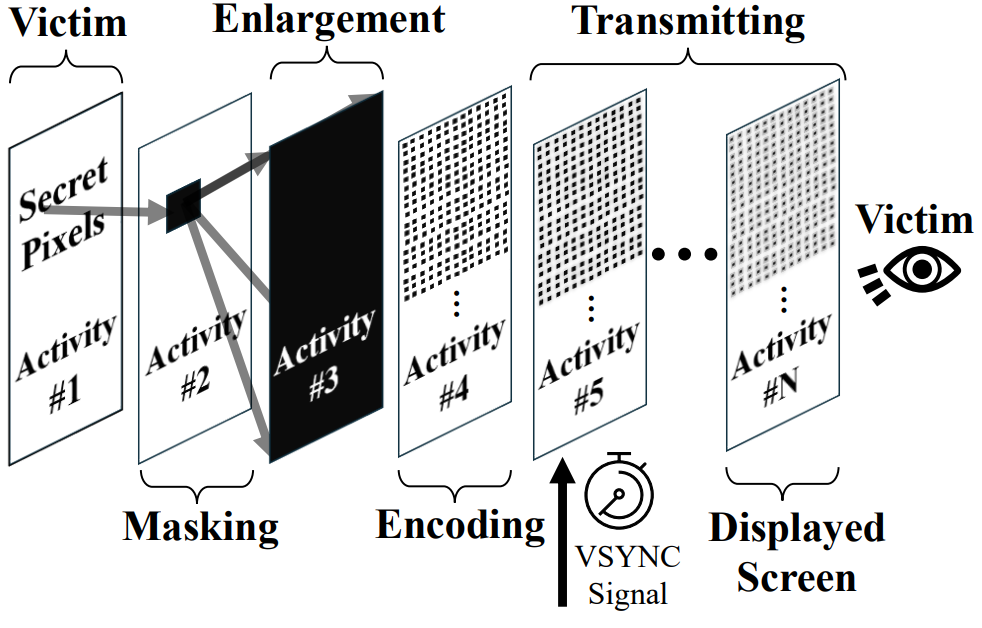
The attack begins when a user installs a malicious app, which then silently invokes another application, such as a crypto wallet or authentication app, from which it intends to extract data.
Source: Pixnapping research paper

It manipulates graphical operations on specific pixels where sensitive information is typically displayed, reconstructing those pixels one by one through side-channel timing analysis.

Researchers compared this process to taking unauthorized screenshots of data visible on the screen.

Pixnapping uses Android’s window blur API and VSync callbacks to force sensitive pixels into the rendering pipeline, layering semi-transparent activities to measure how long certain frames take to render.

These timing patterns reveal the color value of each pixel, which can then be reconstructed to expose sensitive data.

Pixnapping Exploit Targets Screen Pixels to Bypass Android App Isolation

The attack has been successfully demonstrated on the Google Pixel 6 through Pixel 9 devices, as well as the Samsung Galaxy S25, running Android versions 13 through 16.

Tests showed that the researchers were able to recover 2FA codes from Google Authenticator with success rates between 29% and 73%, depending on the device model.

On average, the attack retrieved a full six-digit code in under 30 seconds, fast enough to exploit the brief validity period of most 2FA codes.

The team noted that while recovering long recovery phrases would take more time, crypto seed phrases remain highly vulnerable if left visible while being written down.

Since these phrases stay on the screen longer than time-sensitive codes, attackers could potentially reconstruct them pixel by pixel if users are not cautious.

The vulnerability, tracked as CVE-2025-48561, was reported to Google in February 2025. A partial patch was issued with September’s Android security update, but the researchers said they found a workaround that allows the attack to continue functioning.

Google has since acknowledged the issue as high severity and confirmed that a second fix is being developed, expected in December.

In their tests, the researchers were able to extract sensitive data not only from crypto wallets and Google Authenticator but also from applications like Gmail, Signal, Venmo, and Google Maps.

Because the exploit targets visible screen content rather than stored files or permissions, even strict app isolation measures fail to block it.

According to the researchers, Google initially attempted to mitigate the flaw by limiting how many activities an app can blur simultaneously, but this proved insufficient. They have also alerted Samsung that the patch does not protect its devices.

Security experts advise crypto users to avoid displaying recovery phrases or 2FA codes on internet-connected devices.

Instead, they recommend using hardware wallets, which store private keys and recovery phrases offline, preventing exposure through screen-based attacks like Pixnapping.

Crypto Investors Face Rising Android Malware Threats

A surge in Android-based crypto malware has intensified global cybersecurity concerns, with several major incidents surfacing over recent months.

In April, researchers uncovered “Crocodilus,” a remote-access trojan targeting crypto wallet users in Turkey and Spain. Exposed by ThreatFabric, the malware disguises itself as legitimate crypto apps, tricking victims into revealing their seed phrases through fake security alerts.

Once installed, it abuses Android’s Accessibility Services to steal passwords, intercept two-factor codes, and capture wallet credentials, all while masking activity behind a black-screen overlay.

Security experts say Crocodilus spreads through multiple channels, including phishing emails, compromised websites, and malicious ads, making it difficult to trace the original dropper.

The discovery follows reports of broader malware campaigns tied to fake AI, gaming, and Web3 startups.

According to cybersecurity firm Darktrace, attackers have built convincing online presences, complete with fake company websites, social profiles, and GitHub repositories, to lure users into downloading infected software.

The campaigns use malware families such as Realst and Atomic Stealer, capable of exfiltrating wallet data on both Windows and macOS.

Analysts warn that these scams represent a growing sophistication in crypto-focused attacks, combining social engineering with advanced obfuscation and persistent execution methods.

Cybersecurity experts advise users to verify project legitimacy, avoid downloading software from unverified sources, and remain cautious of unsolicited offers or airdrops, especially those linked to new “startups” or crypto platforms promising exclusive access or rewards.

Market Opportunity
SEED Logo
SEED Price(SEED)
$0.0004774
$0.0004774$0.0004774
+0.42%
USD
SEED (SEED) Live Price Chart
Disclaimer: The articles reposted on this site are sourced from public platforms and are provided for informational purposes only. They do not necessarily reflect the views of MEXC. All rights remain with the original authors. If you believe any content infringes on third-party rights, please contact [email protected] for removal. MEXC makes no guarantees regarding the accuracy, completeness, or timeliness of the content and is not responsible for any actions taken based on the information provided. The content does not constitute financial, legal, or other professional advice, nor should it be considered a recommendation or endorsement by MEXC.

You May Also Like

Shiba Inu Price Forecast for Feb 9: Here’s Key Overhead Resistance for Any Move Upwards

Shiba Inu Price Forecast for Feb 9: Here’s Key Overhead Resistance for Any Move Upwards

Shiba Inu remains under pressure as resistance cap rebounds, while falling open interest and weak momentum continue to limit upside potential. The Shiba Inu (SHIB
Share
Coinstats2026/02/09 18:10
Why Ethereum’s (ETH) 2016-Level Supply Could Spark a Rally

Why Ethereum’s (ETH) 2016-Level Supply Could Spark a Rally

The post Why Ethereum’s (ETH) 2016-Level Supply Could Spark a Rally appeared on BitcoinEthereumNews.com. Key Insights: Ethereum exchange balances have dropped to
Share
BitcoinEthereumNews2026/02/09 18:00
Cardano Latest News, Pi Network Price Prediction and The Best Meme Coin To Buy In 2025

Cardano Latest News, Pi Network Price Prediction and The Best Meme Coin To Buy In 2025

The post Cardano Latest News, Pi Network Price Prediction and The Best Meme Coin To Buy In 2025 appeared on BitcoinEthereumNews.com. Pi Network is rearing its head, and Cardano is trying to recover from a downtrend. But the go to option this fall is Layer Brett, a meme coin with utility baked into it. $LBRETT’s presale is not only attractive, but is magnetic due to high rewards and the chance to make over 100x gains. Layer Brett Is Loading: Join or You’re Wrecked The crypto crowd loves to talk big numbers, but here’s one that’s impossible to ignore: Layer 2 markets are projected to process more than $10 trillion per year by 2027. That tidal wave is building right now — and Layer Brett is already carving out space to ride it. The presale price? A tiny $0.0058. That’s launchpad level, the kind of entry point that fuels 100x gains if momentum kicks in. Latecomers will scroll through charts in regret while early entrants pocket the spoils. Layer Brett is more than another Layer 2 solution. It’s crypto tech wrapped in meme energy, and that mix is lethal in the best way. Blazing-fast transactions, negligible fees, and staking rewards that could make traditional finance blush. Stakers lock in a staggering 700% APY. But every new wallet that joins cuts into that yield, so hesitation is expensive. And let’s not forget the kicker — a massive $1 million giveaway fueling even more hype around the presale. Combine that with a decentralized design, and you’ve got something that stands out in a space overcrowded with promises. This isn’t some slow-burning project hoping to survive. Layer Brett is engineered to explode. It’s raw, it’s loud, it’s built for the degens who understand that timing is everything. At $0.0058, you’re either in early — or you’re out forever. Is PI the People’s Currency? Pi Network’s open mainnet unlocks massive potential, with millions of users completing…
Share
BitcoinEthereumNews2025/09/18 06:14
