Warren Buffett’s Berkshire Hathaway is sitting on a mountain of cash, and that pile has never been higher. By the end of September, the Omaha-based conglomerate held $381.7 billion in cash and equivalents, accounting for more than 30% of its total assets, the largest proportion in at least three decades. The figure shows Buffett’s growing wariness toward a market he views as overheated and short on value.The “Oracle of Omaha” has always preferred patience to speculation, but his latest cash build-up is remarkable even by his conservative standards. With Buffett set to step down as CEO at the end of the year, his decision to keep Berkshire’s wallet firmly shut is being closely read as a signal about both market valuations and his confidence in his successor, Greg Abel.A reluctance to buy in an overvalued marketBuffett has long cautioned against chasing returns in frothy markets, and recent trends appear to justify his caution. The Buffett Indicator, which compares total US stock market capitalization to gross domestic product, has surged above 220%, far beyond the “playing with fire” threshold of 200% that Buffett once warned about.Despite the artificial intelligence boom lifting major tech stocks to record highs, Buffett has largely avoided joining the rally. Berkshire’s once-massive Apple stake has been significantly reduced, and the company has been a net seller of equities for 12 consecutive quarters. In the third quarter alone, Berkshire sold roughly $6 billion worth of stock while refraining from share buybacks for a fifth straight quarter.Buffett’s aversion to the current market extends beyond technology. With valuations stretched across sectors and Treasury yields hovering around 4%, he appears to favor the safety and flexibility of cash over stretching for returns. As one of history’s most disciplined value investors, Buffett’s message seems clear: opportunities are scarce, and patience is a virtue.Echoes of 2005: caution before a stormThis isn’t the first time Buffett has built up a war chest. In 2005, Berkshire’s cash holdings climbed to about 25% of assets, just two years before the global financial crisis. Critics then accused him of being too cautious and missing out on gains in the next 2 years, but his conservatism allowed him to deploy capital aggressively when markets crashed, scooping up quality assets at bargain prices.While today’s market backdrop is different, Buffett’s strategy remains consistent: hold fire when prices are high, and strike when value reappears. Analysts note that Berkshire’s cash reserves don’t necessarily signal that Buffett expects a market crash, but rather that he’s struggling to find attractively priced investments amid inflated valuations and narrow market leadership dominated by a handful of mega-cap tech names.Patience, not panic: the power of optionalityThe buildup of Berkshire’s record cash pile reflects a broader reality: there are few bargains left in the market. With the S&P 500’s Shiller CAPE ratio at 40x, its second-highest level in 150 years, Buffett’s decision to wait for better entry points appears prudent.The Shiller CAPE ratio measures stock valuations by comparing current prices to inflation-adjusted average earnings over the past ten years, helping smooth out short-term market fluctuations.By holding cash and ultra-safe Treasuries, Berkshire maintains the flexibility to act decisively when opportunities arise. Buffett’s cautious positioning may frustrate investors hoping for higher returns in the short term, but history suggests his patience often pays off.For the average investor, the takeaway is not to mimic Buffett’s moves exactly but to embrace his mindset: stay diversified, avoid excessive leverage, and keep some dry powder ready. In markets driven by euphoria, restraint can be the most profitable move of all.The post What does Berkshire Hathaway’s record $381.7B cash hoard signal to the market? appeared first on InvezzWarren Buffett’s Berkshire Hathaway is sitting on a mountain of cash, and that pile has never been higher. By the end of September, the Omaha-based conglomerate held $381.7 billion in cash and equivalents, accounting for more than 30% of its total assets, the largest proportion in at least three decades. The figure shows Buffett’s growing wariness toward a market he views as overheated and short on value.The “Oracle of Omaha” has always preferred patience to speculation, but his latest cash build-up is remarkable even by his conservative standards. With Buffett set to step down as CEO at the end of the year, his decision to keep Berkshire’s wallet firmly shut is being closely read as a signal about both market valuations and his confidence in his successor, Greg Abel.A reluctance to buy in an overvalued marketBuffett has long cautioned against chasing returns in frothy markets, and recent trends appear to justify his caution. The Buffett Indicator, which compares total US stock market capitalization to gross domestic product, has surged above 220%, far beyond the “playing with fire” threshold of 200% that Buffett once warned about.Despite the artificial intelligence boom lifting major tech stocks to record highs, Buffett has largely avoided joining the rally. Berkshire’s once-massive Apple stake has been significantly reduced, and the company has been a net seller of equities for 12 consecutive quarters. In the third quarter alone, Berkshire sold roughly $6 billion worth of stock while refraining from share buybacks for a fifth straight quarter.Buffett’s aversion to the current market extends beyond technology. With valuations stretched across sectors and Treasury yields hovering around 4%, he appears to favor the safety and flexibility of cash over stretching for returns. As one of history’s most disciplined value investors, Buffett’s message seems clear: opportunities are scarce, and patience is a virtue.Echoes of 2005: caution before a stormThis isn’t the first time Buffett has built up a war chest. In 2005, Berkshire’s cash holdings climbed to about 25% of assets, just two years before the global financial crisis. Critics then accused him of being too cautious and missing out on gains in the next 2 years, but his conservatism allowed him to deploy capital aggressively when markets crashed, scooping up quality assets at bargain prices.While today’s market backdrop is different, Buffett’s strategy remains consistent: hold fire when prices are high, and strike when value reappears. Analysts note that Berkshire’s cash reserves don’t necessarily signal that Buffett expects a market crash, but rather that he’s struggling to find attractively priced investments amid inflated valuations and narrow market leadership dominated by a handful of mega-cap tech names.Patience, not panic: the power of optionalityThe buildup of Berkshire’s record cash pile reflects a broader reality: there are few bargains left in the market. With the S&P 500’s Shiller CAPE ratio at 40x, its second-highest level in 150 years, Buffett’s decision to wait for better entry points appears prudent.The Shiller CAPE ratio measures stock valuations by comparing current prices to inflation-adjusted average earnings over the past ten years, helping smooth out short-term market fluctuations.By holding cash and ultra-safe Treasuries, Berkshire maintains the flexibility to act decisively when opportunities arise. Buffett’s cautious positioning may frustrate investors hoping for higher returns in the short term, but history suggests his patience often pays off.For the average investor, the takeaway is not to mimic Buffett’s moves exactly but to embrace his mindset: stay diversified, avoid excessive leverage, and keep some dry powder ready. In markets driven by euphoria, restraint can be the most profitable move of all.The post What does Berkshire Hathaway’s record $381.7B cash hoard signal to the market? appeared first on Invezz

What does Berkshire Hathaway’s record $381.7B cash hoard signal to the market?

2025/11/07 21:07
4 min read

Warren Buffett’s Berkshire Hathaway is sitting on a mountain of cash, and that pile has never been higher.

By the end of September, the Omaha-based conglomerate held $381.7 billion in cash and equivalents, accounting for more than 30% of its total assets, the largest proportion in at least three decades.

The figure shows Buffett’s growing wariness toward a market he views as overheated and short on value.

The “Oracle of Omaha” has always preferred patience to speculation, but his latest cash build-up is remarkable even by his conservative standards.

With Buffett set to step down as CEO at the end of the year, his decision to keep Berkshire’s wallet firmly shut is being closely read as a signal about both market valuations and his confidence in his successor, Greg Abel.

A reluctance to buy in an overvalued market

Buffett has long cautioned against chasing returns in frothy markets, and recent trends appear to justify his caution.

The Buffett Indicator, which compares total US stock market capitalization to gross domestic product, has surged above 220%, far beyond the “playing with fire” threshold of 200% that Buffett once warned about.

Despite the artificial intelligence boom lifting major tech stocks to record highs, Buffett has largely avoided joining the rally.

Berkshire’s once-massive Apple stake has been significantly reduced, and the company has been a net seller of equities for 12 consecutive quarters.

In the third quarter alone, Berkshire sold roughly $6 billion worth of stock while refraining from share buybacks for a fifth straight quarter.

Buffett’s aversion to the current market extends beyond technology.

With valuations stretched across sectors and Treasury yields hovering around 4%, he appears to favor the safety and flexibility of cash over stretching for returns.

As one of history’s most disciplined value investors, Buffett’s message seems clear: opportunities are scarce, and patience is a virtue.

Echoes of 2005: caution before a storm

This isn’t the first time Buffett has built up a war chest.

In 2005, Berkshire’s cash holdings climbed to about 25% of assets, just two years before the global financial crisis.

Critics then accused him of being too cautious and missing out on gains in the next 2 years, but his conservatism allowed him to deploy capital aggressively when markets crashed, scooping up quality assets at bargain prices.

While today’s market backdrop is different, Buffett’s strategy remains consistent: hold fire when prices are high, and strike when value reappears.

Analysts note that Berkshire’s cash reserves don’t necessarily signal that Buffett expects a market crash, but rather that he’s struggling to find attractively priced investments amid inflated valuations and narrow market leadership dominated by a handful of mega-cap tech names.

Patience, not panic: the power of optionality

The buildup of Berkshire’s record cash pile reflects a broader reality: there are few bargains left in the market.

With the S&P 500’s Shiller CAPE ratio at 40x, its second-highest level in 150 years, Buffett’s decision to wait for better entry points appears prudent.

The Shiller CAPE ratio measures stock valuations by comparing current prices to inflation-adjusted average earnings over the past ten years, helping smooth out short-term market fluctuations.

By holding cash and ultra-safe Treasuries, Berkshire maintains the flexibility to act decisively when opportunities arise.

Buffett’s cautious positioning may frustrate investors hoping for higher returns in the short term, but history suggests his patience often pays off.

For the average investor, the takeaway is not to mimic Buffett’s moves exactly but to embrace his mindset: stay diversified, avoid excessive leverage, and keep some dry powder ready.

In markets driven by euphoria, restraint can be the most profitable move of all.

The post What does Berkshire Hathaway’s record $381.7B cash hoard signal to the market? appeared first on Invezz

Market Opportunity
Moonveil Logo
Moonveil Price(MORE)
$0,0006494
$0,0006494$0,0006494
-%1,30
USD
Moonveil (MORE) Live Price Chart
Disclaimer: The articles reposted on this site are sourced from public platforms and are provided for informational purposes only. They do not necessarily reflect the views of MEXC. All rights remain with the original authors. If you believe any content infringes on third-party rights, please contact [email protected] for removal. MEXC makes no guarantees regarding the accuracy, completeness, or timeliness of the content and is not responsible for any actions taken based on the information provided. The content does not constitute financial, legal, or other professional advice, nor should it be considered a recommendation or endorsement by MEXC.
Tags:

You May Also Like

CME Group to Launch Solana and XRP Futures Options

CME Group to Launch Solana and XRP Futures Options

The post CME Group to Launch Solana and XRP Futures Options appeared on BitcoinEthereumNews.com. An announcement was made by CME Group, the largest derivatives exchanger worldwide, revealed that it would introduce options for Solana and XRP futures. It is the latest addition to CME crypto derivatives as institutions and retail investors increase their demand for Solana and XRP. CME Expands Crypto Offerings With Solana and XRP Options Launch According to a press release, the launch is scheduled for October 13, 2025, pending regulatory approval. The new products will allow traders to access options on Solana, Micro Solana, XRP, and Micro XRP futures. Expiries will be offered on business days on a monthly, and quarterly basis to provide more flexibility to market players. CME Group said the contracts are designed to meet demand from institutions, hedge funds, and active retail traders. According to Giovanni Vicioso, the launch reflects high liquidity in Solana and XRP futures. Vicioso is the Global Head of Cryptocurrency Products for the CME Group. He noted that the new contracts will provide additional tools for risk management and exposure strategies. Recently, CME XRP futures registered record open interest amid ETF approval optimism, reinforcing confidence in contract demand. Cumberland, one of the leading liquidity providers, welcomed the development and said it highlights the shift beyond Bitcoin and Ethereum. FalconX, another trading firm, added that rising digital asset treasuries are increasing the need for hedging tools on alternative tokens like Solana and XRP. High Record Trading Volumes Demand Solana and XRP Futures Solana futures and XRP continue to gain popularity since their launch earlier this year. According to CME official records, many have bought and sold more than 540,000 Solana futures contracts since March. A value that amounts to over $22 billion dollars. Solana contracts hit a record 9,000 contracts in August, worth $437 million. Open interest also set a record at 12,500 contracts.…
Share
BitcoinEthereumNews2025/09/18 01:39
China Blocks Nvidia’s RTX Pro 6000D as Local Chips Rise
China Blocks Nvidia’s RTX Pro 6000D as Local Chips Rise

The post China Blocks Nvidia’s RTX Pro 6000D as Local Chips Rise appeared on BitcoinEthereumNews.com. China Blocks Nvidia’s RTX Pro 6000D as Local Chips Rise China’s internet regulator has ordered the country’s biggest technology firms, including Alibaba and ByteDance, to stop purchasing Nvidia’s RTX Pro 6000D GPUs. According to the Financial Times, the move shuts down the last major channel for mass supplies of American chips to the Chinese market. Why Beijing Halted Nvidia Purchases Chinese companies had planned to buy tens of thousands of RTX Pro 6000D accelerators and had already begun testing them in servers. But regulators intervened, halting the purchases and signaling stricter controls than earlier measures placed on Nvidia’s H20 chip. Image: Nvidia An audit compared Huawei and Cambricon processors, along with chips developed by Alibaba and Baidu, against Nvidia’s export-approved products. Regulators concluded that Chinese chips had reached performance levels comparable to the restricted U.S. models. This assessment pushed authorities to advise firms to rely more heavily on domestic processors, further tightening Nvidia’s already limited position in China. China’s Drive Toward Tech Independence The decision highlights Beijing’s focus on import substitution — developing self-sufficient chip production to reduce reliance on U.S. supplies. “The signal is now clear: all attention is focused on building a domestic ecosystem,” said a representative of a leading Chinese tech company. Nvidia had unveiled the RTX Pro 6000D in July 2025 during CEO Jensen Huang’s visit to Beijing, in an attempt to keep a foothold in China after Washington restricted exports of its most advanced chips. But momentum is shifting. Industry sources told the Financial Times that Chinese manufacturers plan to triple AI chip production next year to meet growing demand. They believe “domestic supply will now be sufficient without Nvidia.” What It Means for the Future With Huawei, Cambricon, Alibaba, and Baidu stepping up, China is positioning itself for long-term technological independence. Nvidia, meanwhile, faces…
Share
BitcoinEthereumNews2025/09/18 01:37
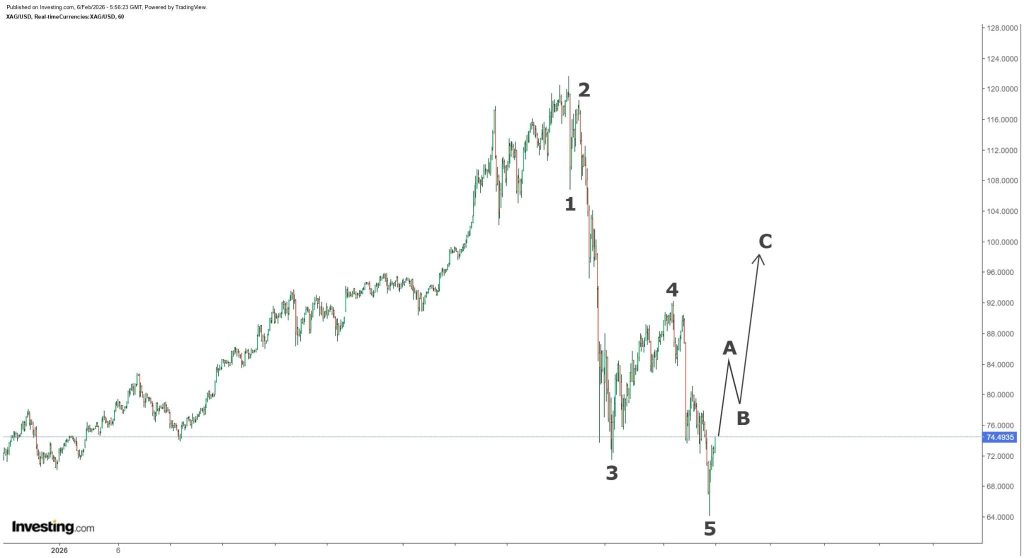
Silver Price Crash Is Over “For Real This Time,” Analyst Predicts a Surge Back Above $90

Silver Price Crash Is Over “For Real This Time,” Analyst Predicts a Surge Back Above $90

Silver has been taking a beating lately, and the Silver price hasn’t exactly been acting like a safe haven. After running up into the highs, the whole move reversed
Share
Captainaltcoin2026/02/07 03:15
