The post Google rolls out Pixel-to-iPhone file sharing via AirDrop-like tool appeared on BitcoinEthereumNews.com. On Thursday, Alphabet’s Google announced that it has introduced a new Pixel-to-iPhone sharing option, “Quick Share,” which uses Apple’s AirDrop protocol directly without Apple’s involvement. The launch of the new Pixel-to-iPhone sharing option challenges Apple’s long-standing ecosystem exclusivity by facilitating smooth, peer-to-peer file transfers between competing devices. AirDrop is integrated into Apple’s software, enabling fast wireless file transfers between iPhones, iPads, and Macs. Google has a similar feature for Android called Quick Share. According to Google, Owners of Pixel 10 devices can now use AirDrop to send and receive files with Apple devices.   Pixel 10 linking directly with iPhone, iPad, and Mac Google mentioned that it is compatible with the entire Pixel 10 series, as well as iPhone, iPad, and macOS devices. Google spokesman Alex Moriconi stated that the Pixel-maker is introducing the new experience on the Pixel 10 first, before expanding it to other devices. Moriconi confirmed that the new sharing option will only be available on Google’s recent phones. On November 20, Google said in a surprise announcement that “When it comes to sharing moments between family and friends, what device you have shouldn’t matter – sharing should just work.” According to Moriconi, Apple had no part in establishing the feature. He added that Google developed its own solution to implement the Pixel-to-iPhone sharing option. Google hired NetSPI, a third-party security company, but Google’s own privacy and security experts thoroughly examined the configuration. The security blog post mentioned an independent review from NetSPI. The NetSPI review anticipates refuting any arguments Apple might use to prevent compatibility and outlines Google’s justification for the security of this implementation. Dave Kleidermacher, VP of Platforms Security and Privacy at Google, explained that the Pixel-to-iPhone sharing option does not employ a workaround. Kleidermacher further stated that the connection is direct and peer-to-peer, meaning… The post Google rolls out Pixel-to-iPhone file sharing via AirDrop-like tool appeared on BitcoinEthereumNews.com. On Thursday, Alphabet’s Google announced that it has introduced a new Pixel-to-iPhone sharing option, “Quick Share,” which uses Apple’s AirDrop protocol directly without Apple’s involvement. The launch of the new Pixel-to-iPhone sharing option challenges Apple’s long-standing ecosystem exclusivity by facilitating smooth, peer-to-peer file transfers between competing devices. AirDrop is integrated into Apple’s software, enabling fast wireless file transfers between iPhones, iPads, and Macs. Google has a similar feature for Android called Quick Share. According to Google, Owners of Pixel 10 devices can now use AirDrop to send and receive files with Apple devices.   Pixel 10 linking directly with iPhone, iPad, and Mac Google mentioned that it is compatible with the entire Pixel 10 series, as well as iPhone, iPad, and macOS devices. Google spokesman Alex Moriconi stated that the Pixel-maker is introducing the new experience on the Pixel 10 first, before expanding it to other devices. Moriconi confirmed that the new sharing option will only be available on Google’s recent phones. On November 20, Google said in a surprise announcement that “When it comes to sharing moments between family and friends, what device you have shouldn’t matter – sharing should just work.” According to Moriconi, Apple had no part in establishing the feature. He added that Google developed its own solution to implement the Pixel-to-iPhone sharing option. Google hired NetSPI, a third-party security company, but Google’s own privacy and security experts thoroughly examined the configuration. The security blog post mentioned an independent review from NetSPI. The NetSPI review anticipates refuting any arguments Apple might use to prevent compatibility and outlines Google’s justification for the security of this implementation. Dave Kleidermacher, VP of Platforms Security and Privacy at Google, explained that the Pixel-to-iPhone sharing option does not employ a workaround. Kleidermacher further stated that the connection is direct and peer-to-peer, meaning…

Google rolls out Pixel-to-iPhone file sharing via AirDrop-like tool

On Thursday, Alphabet’s Google announced that it has introduced a new Pixel-to-iPhone sharing option, “Quick Share,” which uses Apple’s AirDrop protocol directly without Apple’s involvement. The launch of the new Pixel-to-iPhone sharing option challenges Apple’s long-standing ecosystem exclusivity by facilitating smooth, peer-to-peer file transfers between competing devices.

AirDrop is integrated into Apple’s software, enabling fast wireless file transfers between iPhones, iPads, and Macs. Google has a similar feature for Android called Quick Share. According to Google, Owners of Pixel 10 devices can now use AirDrop to send and receive files with Apple devices.  

Pixel 10 linking directly with iPhone, iPad, and Mac

Google mentioned that it is compatible with the entire Pixel 10 series, as well as iPhone, iPad, and macOS devices. Google spokesman Alex Moriconi stated that the Pixel-maker is introducing the new experience on the Pixel 10 first, before expanding it to other devices. Moriconi confirmed that the new sharing option will only be available on Google’s recent phones.

On November 20, Google said in a surprise announcement that “When it comes to sharing moments between family and friends, what device you have shouldn’t matter – sharing should just work.”

According to Moriconi, Apple had no part in establishing the feature. He added that Google developed its own solution to implement the Pixel-to-iPhone sharing option. Google hired NetSPI, a third-party security company, but Google’s own privacy and security experts thoroughly examined the configuration.

The security blog post mentioned an independent review from NetSPI. The NetSPI review anticipates refuting any arguments Apple might use to prevent compatibility and outlines Google’s justification for the security of this implementation.

Dave Kleidermacher, VP of Platforms Security and Privacy at Google, explained that the Pixel-to-iPhone sharing option does not employ a workaround. Kleidermacher further stated that the connection is direct and peer-to-peer, meaning that no additional data is shared, shared content is never logged, and users’ data is never routed through a server.

According to Google’s supporting documentation, to receive files from friends and family using Android phones, iPhone users will have to set up their AirDrop settings to display them as a recipient to “everyone for 10 minutes.” Notably, Users can accept or reject an incoming request based on the sender’s name that appears on their screen, just like with any other AirDrop transfer.

RCS upgrade signals safer cross-platform messaging evolution

Google compares the new solution to the emergence of RCS, or Rich Communication Services, which have facilitated texting and the sharing of high-quality images and videos among iPhone and Android users.

Last year, Apple implemented the RCS standards in response to pressure from regulators. Notably, Apple had resisted adopting the standard for almost a year.

Factually, RCS is an improvement over traditional SMS and MMS texting, supported by the GSM Association (GSMA), a nonprofit industry organization that promotes the interests of mobile network operators worldwide.

Tom Van Pelt, Technical Director at GSMA, stated that using the RCS Universal Profile, available on both iOS and Android, will enable users to type indicators, read receipts, and share high-quality media. Additionally, users will benefit from enhanced group messaging when interacting with contacts on other platforms.

According to Pelt,  users on both platforms will enjoy a richer, more reliable, and seamless communication experience compared to SMS and MMS.

Pelt promised that user protections, including interoperable end-to-end encryption (E2EE), will be included in the RCS Universal Profile. On March 14, Apple announced its plans to enable a new RCS specification that incorporates E2EE for the Messages app in future software updates.

The GSMA initiated efforts to E2EE on messages sent between Android and iPhone devices in September of last year. According to MacRumours, it remains unclear how long it will take Apple to integrate the upgraded profile into its software after the announcement of the new RCS specification with E2EE support.

Get $50 free to trade crypto when you sign up to Bybit now

Source: https://www.cryptopolitan.com/google-launches-pixel-iphone-airdrop/

Market Opportunity
Pixels Logo
Pixels Price(PIXEL)
$0.005454
$0.005454$0.005454
+0.14%
USD
Pixels (PIXEL) Live Price Chart
Disclaimer: The articles reposted on this site are sourced from public platforms and are provided for informational purposes only. They do not necessarily reflect the views of MEXC. All rights remain with the original authors. If you believe any content infringes on third-party rights, please contact [email protected] for removal. MEXC makes no guarantees regarding the accuracy, completeness, or timeliness of the content and is not responsible for any actions taken based on the information provided. The content does not constitute financial, legal, or other professional advice, nor should it be considered a recommendation or endorsement by MEXC.

You May Also Like

Trading time: Tonight, the US GDP and the upcoming non-farm data will become the market focus. Institutions are bullish on BTC to $120,000 in the second quarter.

Trading time: Tonight, the US GDP and the upcoming non-farm data will become the market focus. Institutions are bullish on BTC to $120,000 in the second quarter.

Daily market key data review and trend analysis, produced by PANews.
Share
PANews2025/04/30 13:50
Franklin Templeton CEO Dismisses 50bps Rate Cut Ahead FOMC

Franklin Templeton CEO Dismisses 50bps Rate Cut Ahead FOMC

The post Franklin Templeton CEO Dismisses 50bps Rate Cut Ahead FOMC appeared on BitcoinEthereumNews.com. Franklin Templeton CEO Jenny Johnson has weighed in on whether the Federal Reserve should make a 25 basis points (bps) Fed rate cut or 50 bps cut. This comes ahead of the Fed decision today at today’s FOMC meeting, with the market pricing in a 25 bps cut. Bitcoin and the broader crypto market are currently trading flat ahead of the rate cut decision. Franklin Templeton CEO Weighs In On Potential FOMC Decision In a CNBC interview, Jenny Johnson said that she expects the Fed to make a 25 bps cut today instead of a 50 bps cut. She acknowledged the jobs data, which suggested that the labor market is weakening. However, she noted that this data is backward-looking, indicating that it doesn’t show the current state of the economy. She alluded to the wage growth, which she remarked is an indication of a robust labor market. She added that retail sales are up and that consumers are still spending, despite inflation being sticky at 3%, which makes a case for why the FOMC should opt against a 50-basis-point Fed rate cut. In line with this, the Franklin Templeton CEO said that she would go with a 25 bps rate cut if she were Jerome Powell. She remarked that the Fed still has the October and December FOMC meetings to make further cuts if the incoming data warrants it. Johnson also asserted that the data show a robust economy. However, she noted that there can’t be an argument for no Fed rate cut since Powell already signaled at Jackson Hole that they were likely to lower interest rates at this meeting due to concerns over a weakening labor market. Notably, her comment comes as experts argue for both sides on why the Fed should make a 25 bps cut or…
Share
BitcoinEthereumNews2025/09/18 00:36
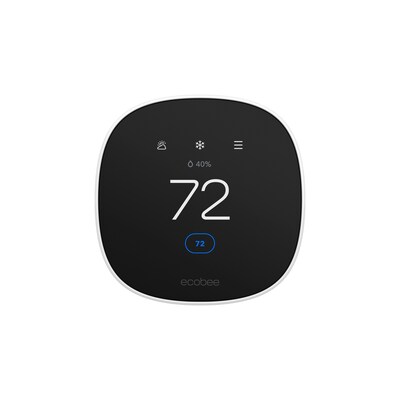
Rheem® and ecobee partner to launch the ecobee Smart Thermostat Lite | Works with EcoNet® Technology

Rheem® and ecobee partner to launch the ecobee Smart Thermostat Lite | Works with EcoNet® Technology

The ecobee Smart Thermostat Lite | Works With EcoNet® Technology is the newest addition to Rheem’s smart thermostat lineup, introducing a simplified option designed
Share
AI Journal2026/02/12 22:46