The post 24/7 Trading Meets 9-to-5 Markets as More Equities Goes Onchain appeared on BitcoinEthereumNews.com. As real-world asset (RWA) tokenization surges, the crypto industry is entering unfamiliar territory, bringing traditional equities, private credit, and commercial paper onchain and uncovering potential critical risks along the way. Marcin Kaźmierczak, co-founder of oracle provider RedStone, says a risk is potentially being overlooked: the weekend gap, where crypto trades 24/7, while Wall Street does not. In traditional finance, if disaster strikes a company over the weekend, the market is closed and then the stock “gaps down” when the opening bell rings on Monday. Meanwhile, in the crypto market, trading never stops. As more stocks are brought onchain, the gap in weekend trading on the blockchain for traditional equities versus when the market opens on Monday could pose a risk, according to Kaźmierczak. For example, a tokenized version of Tesla stock that is traded on a decentralized exchange allows traders to buy and sell it at 3:00 a.m. on a Sunday, while the TradFi market remains closed. “Imagine if a Tesla factory explodes over the weekend—traditional markets are closed, but on-chain markets are open,” Kaźmierczak said in an interview with CoinDesk at Devconnect Buenos Aires. “We might see a dislocation of the tokenized stock versus the real value on Nasdaq.” This mismatch, he argues, could create what he calls a “price dislocation,” where an on-chain asset appears stable, but only because the oracles, which send data from the outside world to a blockchain, have stopped updating prices. Major providers typically freeze equity price feeds when U.S. markets close at 4 p.m. ET Friday, resuming only Monday morning. In that window, on-chain versions of Tesla, or any other stock, could keep trading, even if their real-world price should have changed dramatically. Most tokenized stock trading activity is currently focused on centralized exchanges, where trading of these products is often limited during the… The post 24/7 Trading Meets 9-to-5 Markets as More Equities Goes Onchain appeared on BitcoinEthereumNews.com. As real-world asset (RWA) tokenization surges, the crypto industry is entering unfamiliar territory, bringing traditional equities, private credit, and commercial paper onchain and uncovering potential critical risks along the way. Marcin Kaźmierczak, co-founder of oracle provider RedStone, says a risk is potentially being overlooked: the weekend gap, where crypto trades 24/7, while Wall Street does not. In traditional finance, if disaster strikes a company over the weekend, the market is closed and then the stock “gaps down” when the opening bell rings on Monday. Meanwhile, in the crypto market, trading never stops. As more stocks are brought onchain, the gap in weekend trading on the blockchain for traditional equities versus when the market opens on Monday could pose a risk, according to Kaźmierczak. For example, a tokenized version of Tesla stock that is traded on a decentralized exchange allows traders to buy and sell it at 3:00 a.m. on a Sunday, while the TradFi market remains closed. “Imagine if a Tesla factory explodes over the weekend—traditional markets are closed, but on-chain markets are open,” Kaźmierczak said in an interview with CoinDesk at Devconnect Buenos Aires. “We might see a dislocation of the tokenized stock versus the real value on Nasdaq.” This mismatch, he argues, could create what he calls a “price dislocation,” where an on-chain asset appears stable, but only because the oracles, which send data from the outside world to a blockchain, have stopped updating prices. Major providers typically freeze equity price feeds when U.S. markets close at 4 p.m. ET Friday, resuming only Monday morning. In that window, on-chain versions of Tesla, or any other stock, could keep trading, even if their real-world price should have changed dramatically. Most tokenized stock trading activity is currently focused on centralized exchanges, where trading of these products is often limited during the…

24/7 Trading Meets 9-to-5 Markets as More Equities Goes Onchain

3 min read

As real-world asset (RWA) tokenization surges, the crypto industry is entering unfamiliar territory, bringing traditional equities, private credit, and commercial paper onchain and uncovering potential critical risks along the way.

Marcin Kaźmierczak, co-founder of oracle provider RedStone, says a risk is potentially being overlooked: the weekend gap, where crypto trades 24/7, while Wall Street does not.

In traditional finance, if disaster strikes a company over the weekend, the market is closed and then the stock “gaps down” when the opening bell rings on Monday. Meanwhile, in the crypto market, trading never stops. As more stocks are brought onchain, the gap in weekend trading on the blockchain for traditional equities versus when the market opens on Monday could pose a risk, according to Kaźmierczak.

For example, a tokenized version of Tesla stock that is traded on a decentralized exchange allows traders to buy and sell it at 3:00 a.m. on a Sunday, while the TradFi market remains closed.

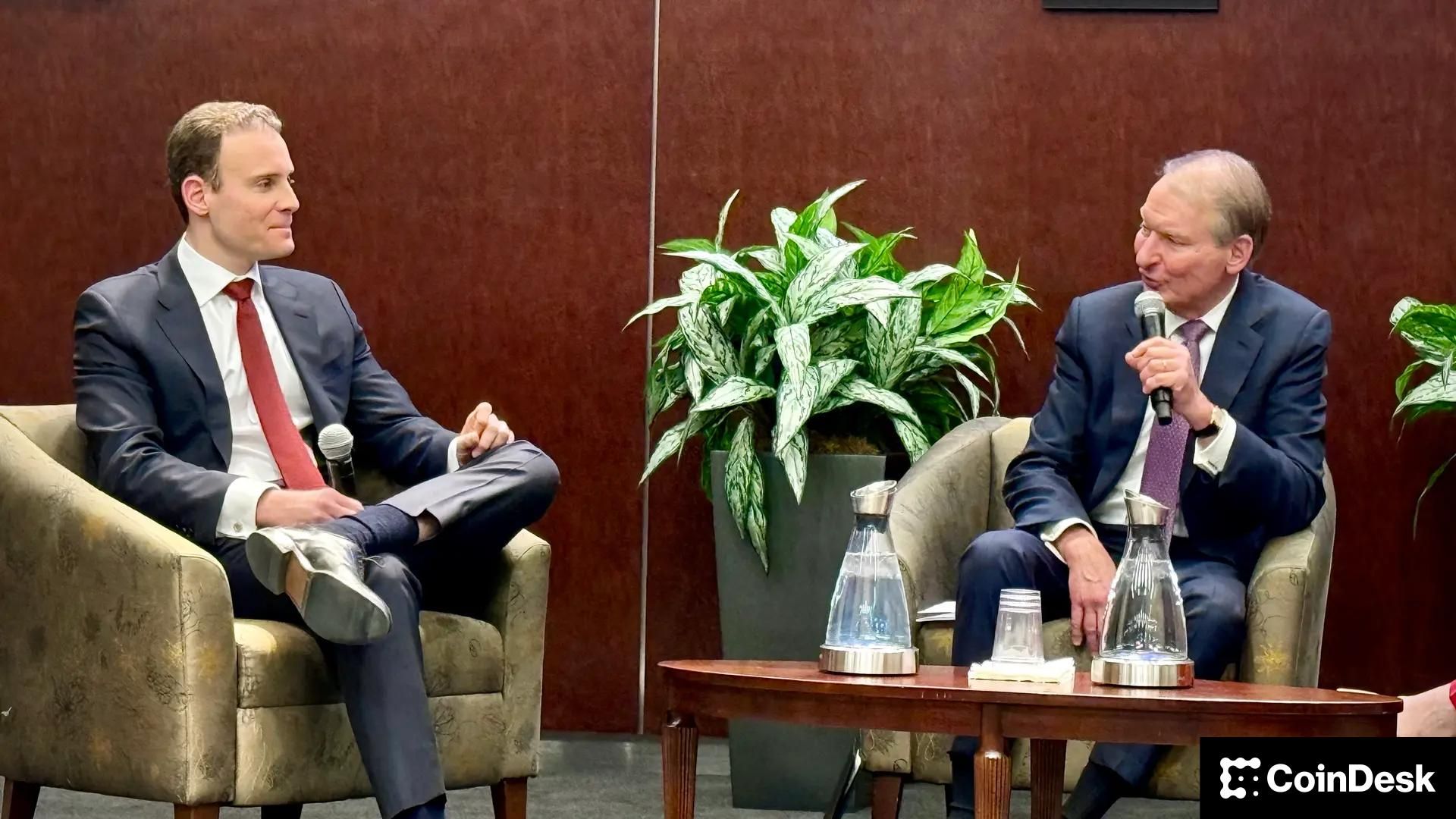
“Imagine if a Tesla factory explodes over the weekend—traditional markets are closed, but on-chain markets are open,” Kaźmierczak said in an interview with CoinDesk at Devconnect Buenos Aires. “We might see a dislocation of the tokenized stock versus the real value on Nasdaq.”

This mismatch, he argues, could create what he calls a “price dislocation,” where an on-chain asset appears stable, but only because the oracles, which send data from the outside world to a blockchain, have stopped updating prices. Major providers typically freeze equity price feeds when U.S. markets close at 4 p.m. ET Friday, resuming only Monday morning. In that window, on-chain versions of Tesla, or any other stock, could keep trading, even if their real-world price should have changed dramatically.

Most tokenized stock trading activity is currently focused on centralized exchanges, where trading of these products is often limited during the weekend. But the goal of the industry is to make these tokenized stocks permissionless and available in DeFi protocols. That means 24/7 activity.

If the oracle doesn’t update until markets reopen, on-chain protocols could be trading on “ghost” prices, creating massive arbitrage opportunities or leaving lending protocols under-collateralized.

‘Inherent risk’

The problem intensifies with complexity.

While stablecoins are relatively safe, Kaźmierczak pointed out that the market is shifting toward more complex products, such as tokenized portfolios of credit, commercial paper, and equities.

“Essentially, we are seeing launching a hedge fund on-chain,” Kaźmierczak noted, describing future portfolios that might be “50% allocated into T-Bills, 20% into private credit, 20% into commercial paper, and 10% actively managed.”

If oracles lag during real-world volatility, structured DeFi protocols could be left mispricing assets. RedStone advocates for a modular oracle architecture and supports both “Push” and “Pull” models. In the “Pull” model, users get data delivered on-chain when they interact with a protocol, meaning “the data is always fresh,” according to Kaźmierczak. However, he conceded that most protocols still rely on the older model because it is easier to integrate.

“Right now, it’s probably like 90% of solutions using the Push Oracle,” he said, noting that while “Pull” was an innovation for scaling, the majority of the market still adapts the legacy standard. Until oracles and protocols evolve to account for these timing mismatches, Kaźmierczak suggested that the premise of 24/7 tokenized finance carries inherent risks.

As more RWAs go live, the challenge will be managing the gap between open protocols and closed traditional markets.

“We still need to see how they behave on the weekend,” Kaźmierczak warned.

Read more: Nasdaq Seeks Nod From U.S. SEC to Tokenize Stocks

Source: https://www.coindesk.com/business/2025/11/23/on-chain-stocks-could-misprice-over-weekends-triggering-arbitrage-risks-redstone

Market Opportunity
Moonveil Logo
Moonveil Price(MORE)
$0.0006626
$0.0006626$0.0006626
-12.02%
USD
Moonveil (MORE) Live Price Chart
Disclaimer: The articles reposted on this site are sourced from public platforms and are provided for informational purposes only. They do not necessarily reflect the views of MEXC. All rights remain with the original authors. If you believe any content infringes on third-party rights, please contact [email protected] for removal. MEXC makes no guarantees regarding the accuracy, completeness, or timeliness of the content and is not responsible for any actions taken based on the information provided. The content does not constitute financial, legal, or other professional advice, nor should it be considered a recommendation or endorsement by MEXC.

You May Also Like

Recovery extends to $88.20, momentum improves

Recovery extends to $88.20, momentum improves

The post Recovery extends to $88.20, momentum improves appeared on BitcoinEthereumNews.com. Silver price extended its recovery for the second straight day, up by
Share
BitcoinEthereumNews2026/02/05 07:34
Fed Decides On Interest Rates Today—Here’s What To Watch For

Fed Decides On Interest Rates Today—Here’s What To Watch For

The post Fed Decides On Interest Rates Today—Here’s What To Watch For appeared on BitcoinEthereumNews.com. Topline The Federal Reserve on Wednesday will conclude a two-day policymaking meeting and release a decision on whether to lower interest rates—following months of pressure and criticism from President Donald Trump—and potentially signal whether additional cuts are on the way. President Donald Trump has urged the central bank to “CUT INTEREST RATES, NOW, AND BIGGER” than they might plan to. Getty Images Key Facts The central bank is poised to cut interest rates by at least a quarter-point, down from the 4.25% to 4.5% range where they have been held since December to between 4% and 4.25%, as Wall Street has placed 100% odds of a rate cut, according to CME’s FedWatch, with higher odds (94%) on a quarter-point cut than a half-point (6%) reduction. Fed governors Christopher Waller and Michelle Bowman, both Trump appointees, voted in July for a quarter-point reduction to rates, and they may dissent again in favor of a large cut alongside Stephen Miran, Trump’s Council of Economic Advisers’ chair, who was sworn in at the meeting’s start on Tuesday. It’s unclear whether other policymakers, including Kansas City Fed President Jeffrey Schmid and St. Louis Fed President Alberto Musalem, will favor larger cuts or opt for no reduction. Fed Chair Jerome Powell said in his Jackson Hole, Wyoming, address last month the central bank would likely consider a looser monetary policy, noting the “shifting balance of risks” on the U.S. economy “may warrant adjusting our policy stance.” David Mericle, an economist for Goldman Sachs, wrote in a note the “key question” for the Fed’s meeting is whether policymakers signal “this is likely the first in a series of consecutive cuts” as the central bank is anticipated to “acknowledge the softening in the labor market,” though they may not “nod to an October cut.” Mericle said he…
Share
BitcoinEthereumNews2025/09/18 00:23
U.S. regulator declares do-over on prediction markets, throwing out Biden era 'frolic'

U.S. regulator declares do-over on prediction markets, throwing out Biden era 'frolic'

Policy Share Share this article
Copy linkX (Twitter)LinkedInFacebookEmail
U.S. regulator declares do-over on prediction
Share
Coindesk2026/02/05 03:49