The post NYT ‘Pips’ Hints, Answers, And Walkthrough For Monday, December 1 appeared on BitcoinEthereumNews.com. Happy December, Pipsqueaks! It’s the first day of a brand new month and the last month of a year that’s almost expire. Grab your dominoes and your thinking cap. Let’s solve today’s Pips! Looking for Sunday’s Pips? Read our guide right here. How To Play Pips In Pips, you have a grid of multicolored boxes. Each colored area represents a different “condition” that you have to achieve. You have a select number of dominoes that you have to spend filling in the grid. You must use every domino and achieve every condition properly to win. There are Easy, Medium and Difficult tiers. Here’s an example of a difficult tier Pips: Pips example Screenshot: Erik Kain As you can see, the grid has a bunch of symbols and numbers with each color. On the far left, the three purple squares must not equal one another (hence the equal sign crossed out). The two pink squares next to that must equal a total of 0. The zig-zagging blue squares all must equal one another. You click on dominoes to rotate them, and will need to since they have to be rotated to fit where they belong. Play Puzzles & Games on Forbes Not shown on this grid are other conditions, such as “less than” or “greater than.” If there are multiple tiles with > or < signs, the total of those tiles must be greater or less than the listed number. It varies by grid. Blank spaces can have anything. The various possible conditions are: = All pips must equal one another in this group. ≠ All pips must not equal one another in this group. > The pip in this tile (or tiles) must be greater than the listed number. < The pip in this tile must be less than the… The post NYT ‘Pips’ Hints, Answers, And Walkthrough For Monday, December 1 appeared on BitcoinEthereumNews.com. Happy December, Pipsqueaks! It’s the first day of a brand new month and the last month of a year that’s almost expire. Grab your dominoes and your thinking cap. Let’s solve today’s Pips! Looking for Sunday’s Pips? Read our guide right here. How To Play Pips In Pips, you have a grid of multicolored boxes. Each colored area represents a different “condition” that you have to achieve. You have a select number of dominoes that you have to spend filling in the grid. You must use every domino and achieve every condition properly to win. There are Easy, Medium and Difficult tiers. Here’s an example of a difficult tier Pips: Pips example Screenshot: Erik Kain As you can see, the grid has a bunch of symbols and numbers with each color. On the far left, the three purple squares must not equal one another (hence the equal sign crossed out). The two pink squares next to that must equal a total of 0. The zig-zagging blue squares all must equal one another. You click on dominoes to rotate them, and will need to since they have to be rotated to fit where they belong. Play Puzzles & Games on Forbes Not shown on this grid are other conditions, such as “less than” or “greater than.” If there are multiple tiles with > or < signs, the total of those tiles must be greater or less than the listed number. It varies by grid. Blank spaces can have anything. The various possible conditions are: = All pips must equal one another in this group. ≠ All pips must not equal one another in this group. > The pip in this tile (or tiles) must be greater than the listed number. < The pip in this tile must be less than the…

NYT ‘Pips’ Hints, Answers, And Walkthrough For Monday, December 1

2025/12/01 14:17

Happy December, Pipsqueaks! It’s the first day of a brand new month and the last month of a year that’s almost expire. Grab your dominoes and your thinking cap. Let’s solve today’s Pips!

Looking for Sundays Pips? Read our guide right here.


How To Play Pips

In Pips, you have a grid of multicolored boxes. Each colored area represents a different “condition” that you have to achieve. You have a select number of dominoes that you have to spend filling in the grid. You must use every domino and achieve every condition properly to win. There are Easy, Medium and Difficult tiers.

Here’s an example of a difficult tier Pips:

Pips example

Screenshot: Erik Kain

As you can see, the grid has a bunch of symbols and numbers with each color. On the far left, the three purple squares must not equal one another (hence the equal sign crossed out). The two pink squares next to that must equal a total of 0. The zig-zagging blue squares all must equal one another. You click on dominoes to rotate them, and will need to since they have to be rotated to fit where they belong.

Play Puzzles & Games on Forbes

Not shown on this grid are other conditions, such as “less than” or “greater than.” If there are multiple tiles with > or < signs, the total of those tiles must be greater or less than the listed number. It varies by grid. Blank spaces can have anything. The various possible conditions are:

  • = All pips must equal one another in this group.
  • ≠ All pips must not equal one another in this group.
  • > The pip in this tile (or tiles) must be greater than the listed number.
  • < The pip in this tile must be less than the listed number.
  • An exact number (like 6) The pip must equal this exact number.
  • Tiles with no conditions can be anything.

In order to win, you have to use up all your dominoes by filling in all the squares, making sure to fit each condition. Sometimes there’s only one way to solve the puzzle. Other times, there can be two or more different solutions. Play today’s Pips puzzle here.


Today’s Pips Solutions And Walkthrough

Below are the solutions for the Easy and Medium tier Pips. After that, I’ll walk you through the Hard puzzle. Spoilers ahead.

Today’s Easy Pips

Easy Pips

Screenshot: Erik Kain

Today’s Medium Pips

Medium Pips

Screenshot: Erik Kain

Hard Pips Walkthrough And Solution

Here’s today’s Hard Pips:

Hard Pips

Screenshot: Erik Kain

Today’s Hard Pips is brought to you by the letter “U” as in “Ukelele” or “Ultimate frisbee.” We’ll start with the two Dark Blue groups on the right side.

Step 1

First, place the 6/5 domino from Dark Blue 12 into Green 10. Place the 6/2 domino from Dark Blue 12 into the Blue 12 group (which has six tiles, meaning if each one of them is a “2” it’ll work out). Place the 6/6 domino in the upper Dark Blue 12 group.

Hard Pips

Screenshot: Erik Kain

Step 2

Since we’re committed to 2’s in the Blue 12 group, place the 4/2 domino at the top-right from Orange > 3 into Blue 12. Place the 2/2 domino below that and the 3/2 domino from Orange > 2 into Blue 12.

Hard Pips

Screenshot: Erik Kain

Step 3

We have a lot of free tiles, but we’re going to save all of those for the end. Place the 2/0 domino from Blue 12 into Pink 0 and the 6/0 domino from Purple 12 into Pink 0. Next, place the 5/1 domino from Green > 4 into Purple 3 and the 3/1 domino in Pink < 4 into Purple 3. Rule of thumb: If it’s a < or > symbol, try to find a number that’s just one over.

Hard Pips

Screenshot: Erik Kain

Solution

We’ll fill in all the free tiles now. The 1/4 domino goes from Purple 3 into the first free tile. The 6/3 domino goes from Purple 12 into the second free tile. The 0/3 domino goes from Pink 0 into the third free tile. And the 5/0 domino goes from Green 10 into the final free tile. Our dirty deeds are done dirt cheap.

Hard Pips

Screenshot: Erik Kain

Did you find a different solution for today’s Hard Pips?

Let me know on Twitter, Instagram, or Facebook. Be sure to follow me for all your daily puzzle-solving guides, TV show and movie reviews and more here on this blog!

Source: https://www.forbes.com/sites/erikkain/2025/12/01/nyt-pips-hints-answers-and-walkthrough-for-monday-december-1/

Disclaimer: The articles reposted on this site are sourced from public platforms and are provided for informational purposes only. They do not necessarily reflect the views of MEXC. All rights remain with the original authors. If you believe any content infringes on third-party rights, please contact [email protected] for removal. MEXC makes no guarantees regarding the accuracy, completeness, or timeliness of the content and is not responsible for any actions taken based on the information provided. The content does not constitute financial, legal, or other professional advice, nor should it be considered a recommendation or endorsement by MEXC.

You May Also Like

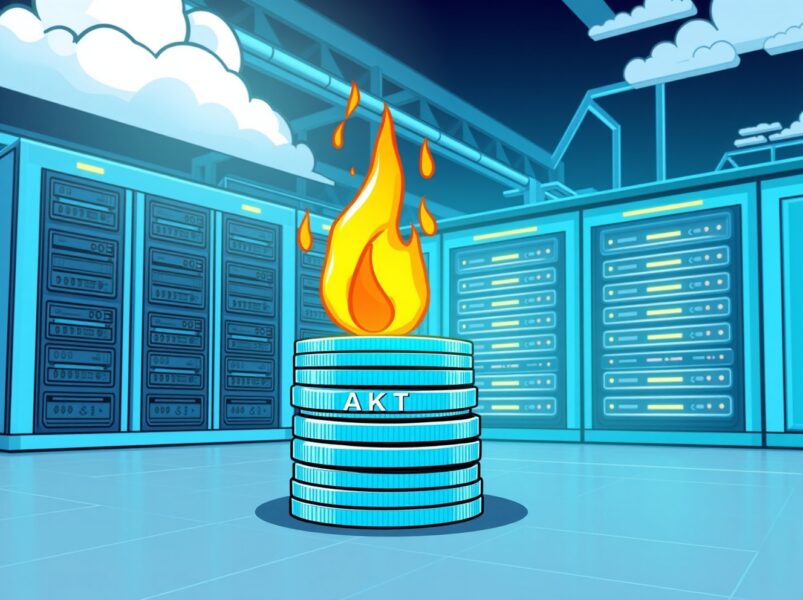
Akash Network’s Strategic Move: A Crucial Burn for AKT’s Future

Akash Network’s Strategic Move: A Crucial Burn for AKT’s Future

BitcoinWorld Akash Network’s Strategic Move: A Crucial Burn for AKT’s Future In the dynamic world of decentralized computing, exciting developments are constantly shaping the future. Today, all eyes are on Akash Network, the innovative supercloud project, as it proposes a significant change to its tokenomics. This move aims to strengthen the value of its native token, AKT, and further solidify its position in the competitive blockchain space. The community is buzzing about a newly submitted governance proposal that could introduce a game-changing Burn Mint Equilibrium (BME) model. What is the Burn Mint Equilibrium (BME) for Akash Network? The core of this proposal revolves around a concept called Burn Mint Equilibrium, or BME. Essentially, this model is designed to create a balance in the token’s circulating supply by systematically removing a portion of tokens from existence. For Akash Network, this means burning an amount of AKT that is equivalent to the U.S. dollar value of fees paid by network users. Fee Conversion: When users pay for cloud services on the Akash Network, these fees are typically collected in various cryptocurrencies or stablecoins. AKT Equivalence: The proposal suggests converting the U.S. dollar value of these collected fees into an equivalent amount of AKT. Token Burn: This calculated amount of AKT would then be permanently removed from circulation, or ‘burned’. This mechanism creates a direct link between network utility and token supply reduction. As more users utilize the decentralized supercloud, more AKT will be burned, potentially impacting the token’s scarcity and value. Why is This Proposal Crucial for AKT Holders? For anyone holding AKT, or considering investing in the Akash Network ecosystem, this proposal carries significant weight. Token burning mechanisms are often viewed as a positive development because they can lead to increased scarcity. When supply decreases while demand remains constant or grows, the price per unit tends to increase. Here are some key benefits: Increased Scarcity: Burning tokens reduces the total circulating supply of AKT. This makes each remaining token potentially more valuable over time. Demand-Supply Dynamics: The BME model directly ties the burning of AKT to network usage. Higher adoption of the Akash Network supercloud translates into more fees, and thus more AKT burned. Long-Term Value Proposition: By creating a deflationary pressure, the proposal aims to enhance AKT’s long-term value, making it a more attractive asset for investors and long-term holders. This strategic move demonstrates a commitment from the Akash Network community to optimize its tokenomics for sustainable growth and value appreciation. How Does BME Impact the Decentralized Supercloud Mission? Beyond token value, the BME proposal aligns perfectly with the broader mission of the Akash Network. As a decentralized supercloud, Akash provides a marketplace for cloud computing resources, allowing users to deploy applications faster, more efficiently, and at a lower cost than traditional providers. The BME model reinforces this utility. Consider these impacts: Network Health: A stronger AKT token can incentivize more validators and providers to secure and contribute resources to the network, improving its overall health and resilience. Ecosystem Growth: Enhanced token value can attract more developers and projects to build on the Akash Network, fostering a vibrant and diverse ecosystem. User Incentive: While users pay fees, the potential appreciation of AKT could indirectly benefit those who hold the token, creating a circular economy within the supercloud. This proposal is not just about burning tokens; it’s about building a more robust, self-sustaining, and economically sound decentralized cloud infrastructure for the future. What Are the Next Steps for the Akash Network Community? As a governance proposal, the BME model will now undergo a period of community discussion and voting. This is a crucial phase where AKT holders and network participants can voice their opinions, debate the merits, and ultimately decide on the future direction of the project. Transparency and community engagement are hallmarks of decentralized projects like Akash Network. Challenges and Considerations: Implementation Complexity: Ensuring the burning mechanism is technically sound and transparent will be vital. Community Consensus: Achieving broad agreement within the diverse Akash Network community is key for successful adoption. The outcome of this vote will significantly shape the tokenomics and economic model of the Akash Network, influencing its trajectory in the rapidly evolving decentralized cloud landscape. The proposal to introduce a Burn Mint Equilibrium model represents a bold and strategic step for Akash Network. By directly linking network usage to token scarcity, the project aims to create a more resilient and valuable AKT token, ultimately strengthening its position as a leading decentralized supercloud provider. This move underscores the project’s commitment to innovative tokenomics and sustainable growth, promising an exciting future for both users and investors in the Akash Network ecosystem. It’s a clear signal that Akash is actively working to enhance its value proposition and maintain its competitive edge in the decentralized future. Frequently Asked Questions (FAQs) 1. What is the main goal of the Burn Mint Equilibrium (BME) proposal for Akash Network? The primary goal is to adjust the circulating supply of AKT tokens by burning a portion of network fees, thereby creating deflationary pressure and potentially enhancing the token’s long-term value and scarcity. 2. How will the amount of AKT to be burned be determined? The proposal suggests burning an amount of AKT equivalent to the U.S. dollar value of fees paid by users on the Akash Network for cloud services. 3. What are the potential benefits for AKT token holders? Token holders could benefit from increased scarcity of AKT, which may lead to higher demand and appreciation in value over time, especially as network usage grows. 4. How does this proposal relate to the overall mission of Akash Network? The BME model reinforces the Akash Network‘s mission by creating a stronger, more economically robust ecosystem. A healthier token incentivizes network participants, fostering growth and stability for the decentralized supercloud. 5. What is the next step for this governance proposal? The proposal will undergo a period of community discussion and voting by AKT token holders. The community’s decision will determine if the BME model is implemented on the Akash Network. If you found this article insightful, consider sharing it with your network! Your support helps us bring more valuable insights into the world of decentralized technology. Stay informed and help spread the word about the exciting developments happening within Akash Network. To learn more about the latest crypto market trends, explore our article on key developments shaping decentralized cloud solutions price action. This post Akash Network’s Strategic Move: A Crucial Burn for AKT’s Future first appeared on BitcoinWorld.
Share
Coinstats2025/09/22 21:35