

XRP Whales Sell $780 Million, Will Price Fall Below $2?
XRP price has returned to the critical $2 level after repeated failed breakout attempts, reflecting uncertainty across the market.
Each attempt to rally above near-term resistance has been met with selling pressure, pulling the altcoin back toward this psychological floor.
XRP Holders Are In A Tug Of War
Whales have begun offloading substantial portions of their holdings. Over the past seven days, wallets holding between 1 million and 10 million XRP have sold more than 390 million XRP, worth over $783 million at current prices.
This level of distribution shows clear frustration among high-value holders who expected a stronger recovery. Such selling typically weighs heavily on market sentiment, especially when driven by a cohort that can significantly influence liquidity.
Want more token insights like this? Sign up for Editor Harsh Notariya’s Daily Crypto Newsletter here.
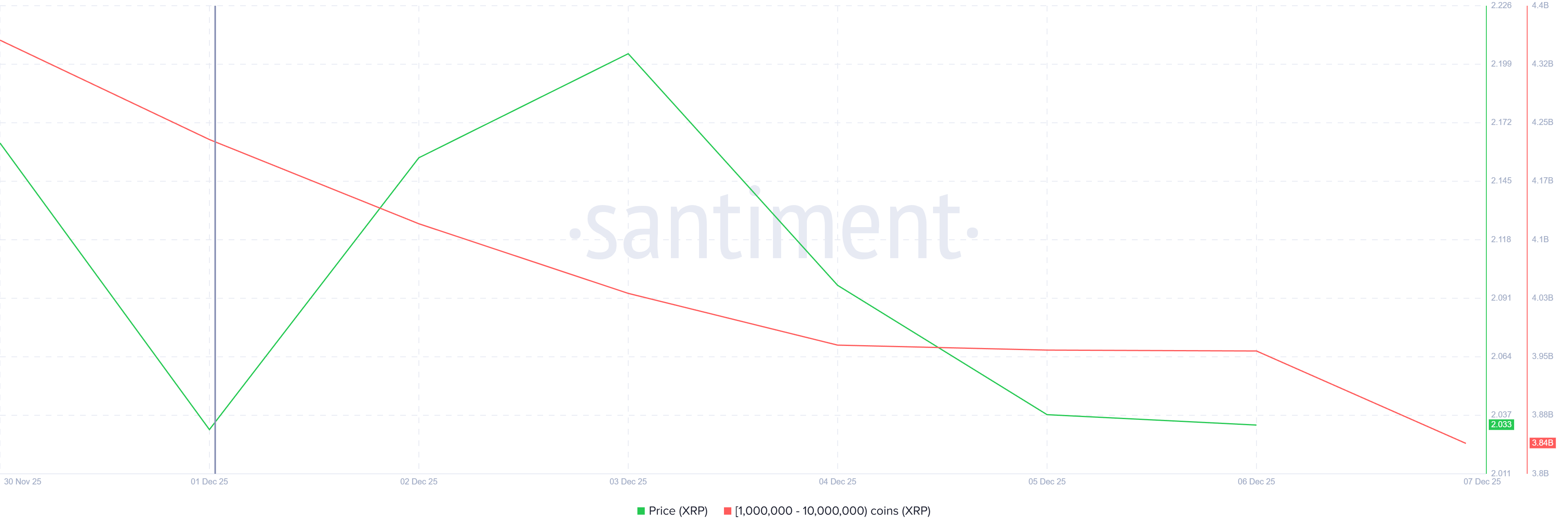 XRP Whale Holding. Source: Santiment
Despite whale distribution, long-term holders are counteracting downward pressure. HODL Waves data shows that the share of XRP supply held by the 1-year to 2-year cohort increased from 8.58 percent to 9.81 percent in the past week.
This signals growing conviction among maturing holders who acquired XRP less than a year ago and are now opting to retain their tokens through volatility. This steadiness is helping stabilize XRP at $2, softening the impact of whale selling.
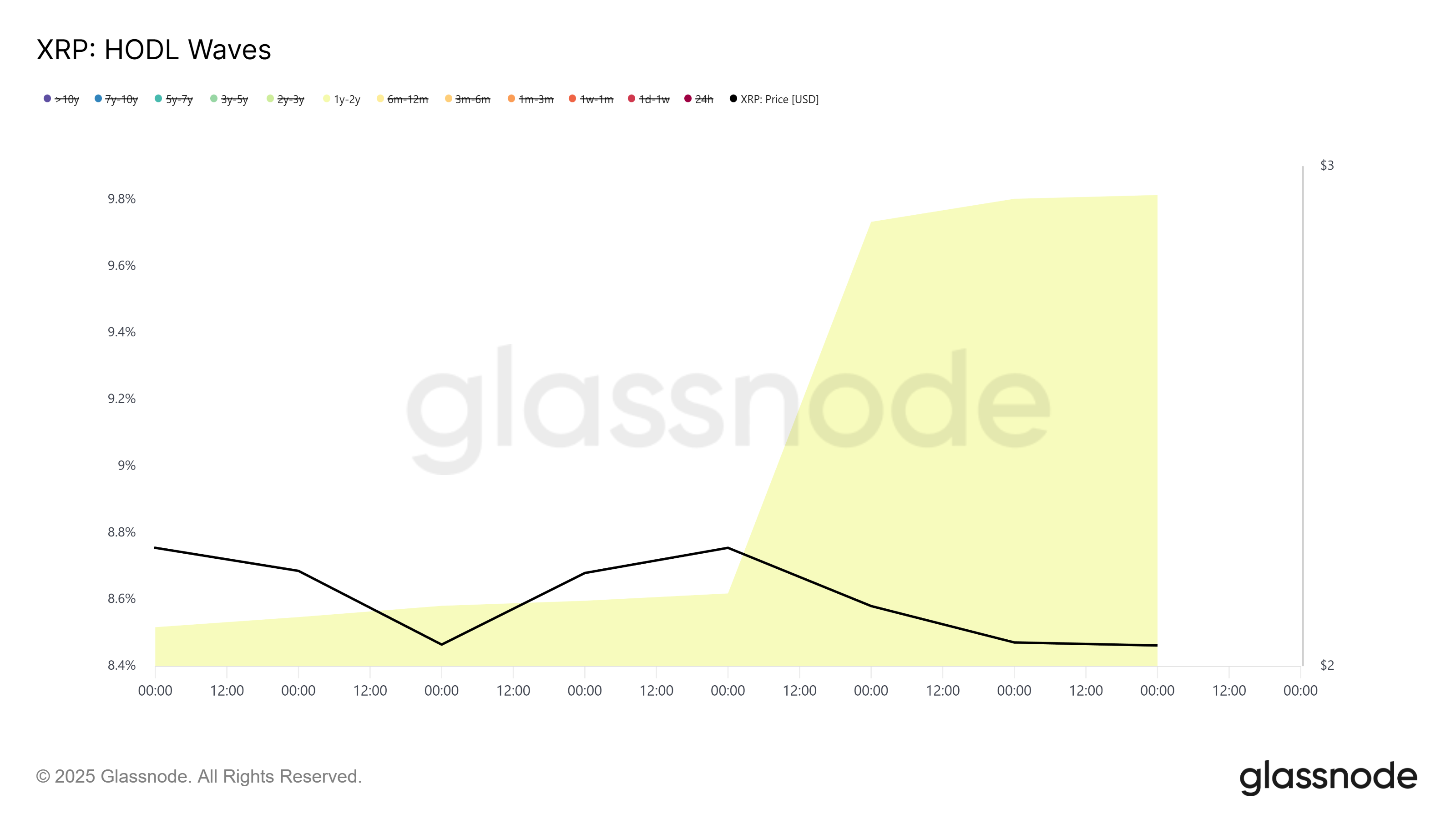 XRP HODL Waves. Source: Glassnode
XRP Price Notes A Dip
XRP is trading at $2.00 at the time of writing, a crucial psychological and technical support level. In recent days, price movements have repeatedly gravitated back to this point, confirming its importance in maintaining market structure.
Given the opposing pressure from whale selling and long-term holder accumulation, XRP will likely remain rangebound between $2.00 and $2.20 until a clear directional catalyst emerges. A shift in sentiment or improved market conditions would be needed to break this consolidation pattern.
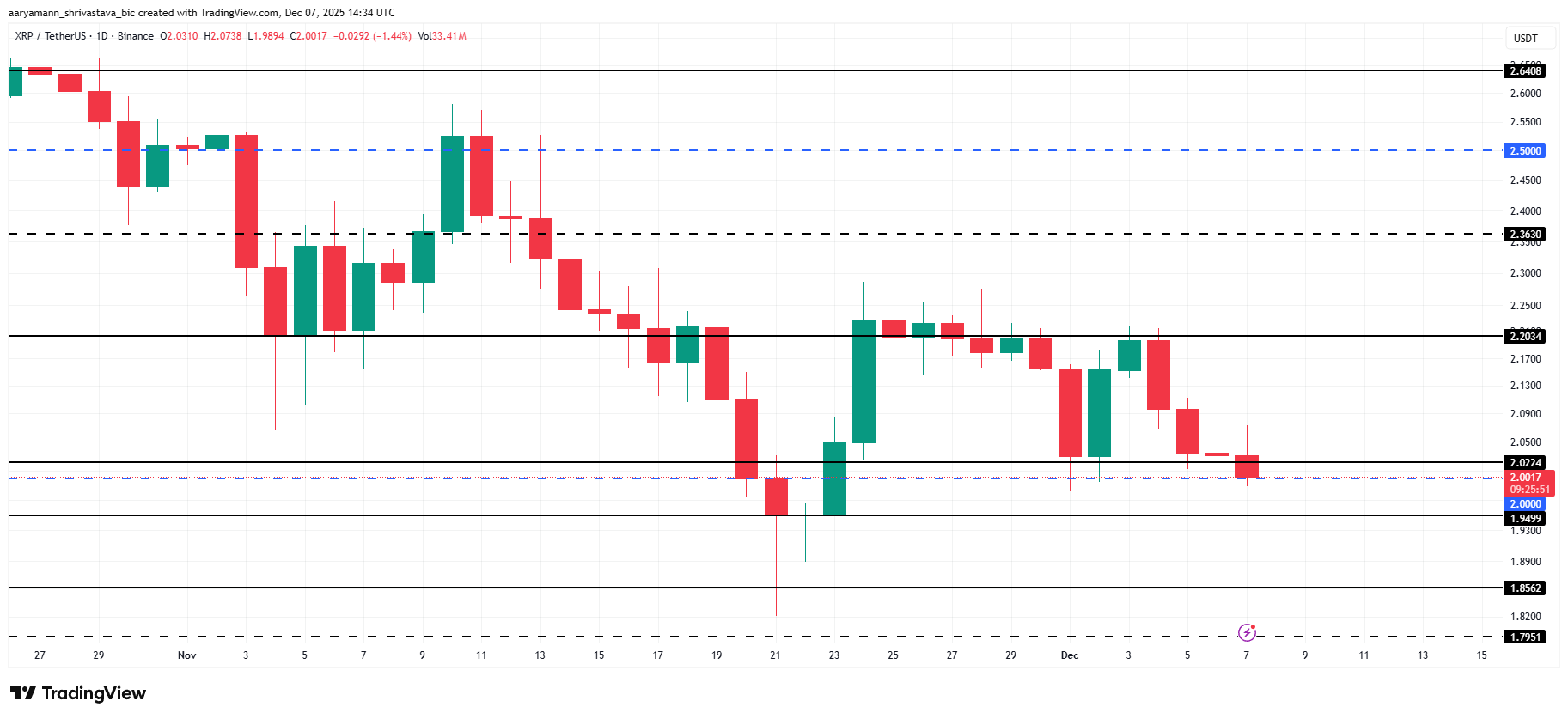 XRP Price Analysis. Source: TradingView
However, if bearish momentum strengthens and whale selling accelerates, XRP could fall through the $1.94 support. Such a breakdown would expose the price to a deeper decline toward $1.85, invalidating any near-term bullish expectations.
You May Also Like

CME Group to Launch Solana and XRP Futures Options

OCC boss says ‘no justification’ to judge banks and crypto differently
Office of the Comptroller of the Currency’s Jonathan Gould says crypto companies should have a path to supervision in the banking system, which can evolve to embrace blockchain. Crypto companies seeking a US federal bank charter should be treated no differently than other financial institutions, says Jonathan Gould, the head of the Office of the Comptroller of the Currency (OCC).Gould told a blockchain conference on Monday that some new charter applicants in the digital or fintech spaces could be seen as offering novel activities for a national trust bank, but noted “custody and safekeeping services have been happening electronically for decades.”“There is simply no justification for considering digital assets differently,” he added. “Additionally, it is important that we do not confine banks, including current national trust banks, to the technologies or businesses of the past.”Read more
